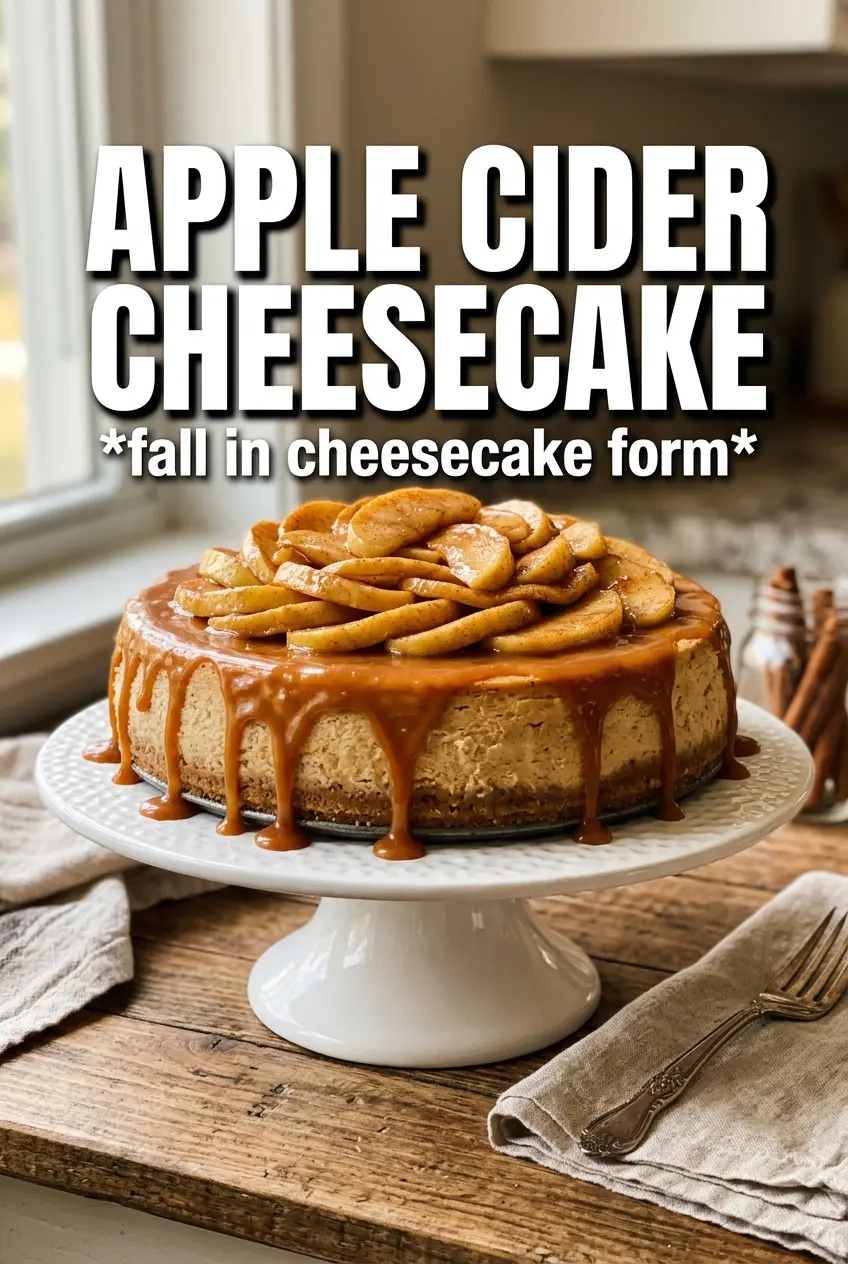
Apple Cider Cheesecake lands somewhere between classic New York-style richness and the warm, spiced finish of a cider doughnut, and that combination is exactly why it earns a spot on the table. The filling bakes up creamy and dense without feeling heavy, while the cider reduction keeps the apple flavor clear instead of watery or muted. The graham crust gives just enough crunch to hold its own under all that smooth cheesecake.
The trick here is reducing the cider before it goes into the batter. If you skip that step, the extra liquid loosens the filling and the apple flavor gets washed out. A short bake in the crust helps keep the bottom crisp, and the water bath does its job the old-fashioned way: gentle heat, even baking, and fewer cracks on top. The cider syrup drizzled over each slice pulls the whole dessert back to the fruit-and-spice direction without making it fussy.
The cider flavor came through cleanly and the texture was perfect after chilling overnight. The crust stayed crisp, and the topping made each slice taste like fall without being overly sweet.
Save this Apple Cider Cheesecake for when you want a creamy dessert with a spiced cider finish and a crisp graham crust.
The Part Most Cheesecakes Get Wrong: Too Much Liquid in the Batter
Cheesecake batter needs moisture, but it doesn’t need extra water sloshing around from uncooked cider. That’s the problem with a lot of apple cider desserts: the flavor is there in theory, but it turns thin once it hits the batter. Reducing the cider down to a quarter cup concentrates the apple note and keeps the filling thick enough to set cleanly.
The second piece that matters is temperature. Softened cream cheese blends smoothly with the brown sugar, but cold eggs or rushed mixing can leave you with lumps that never quite disappear. Mix until the batter looks glossy and unified, then stop. Overbeating adds air, and air is what gives you cracks, soufflé-like puffing, and a center that sinks as it cools.
- Cream cheese — Full-fat blocks give the filling its dense, creamy structure. Tub-style cream cheese softens too much and won’t bake with the same body.
- Apple cider reduction — This is the flavor engine. Simmer it until it measures about 1/4 cup; if it still tastes flat, it hasn’t reduced enough.
- Brown sugar — It adds a caramel note that white sugar can’t replicate. Packed brown sugar also helps the filling taste rounder, not sharp.
- Sour cream — This keeps the cheesecake from eating like pure cream cheese. If you need a swap, use full-fat Greek yogurt, but expect a slightly tangier finish.
- Graham cracker crumbs — The crust stays sturdy and lightly sweet, which matters because the filling is rich. If you only have whole crackers, crush them finely so the crust packs evenly.
What Each Ingredient Is Actually Doing in This Recipe

- Primary ingredient (the star) — Quality matters most. Choose the best you can find.
- Cooking medium (oil, butter, or broth) — This carries flavors and prevents dryness.
- Seasonings (salt, pepper, spices, herbs) — Layer flavors so nothing overpowers. Build depth gradually.
- Aromatics (garlic, onion, herbs) — Cook with fat to bloom flavors. Become the foundation.
- Supporting ingredients — Complement the main ingredient without overpowering it.
- Sauce or liquid (if applicable) — Brings flavors together. Balance richness with acid.
- Acid (lemon, vinegar, wine, or other) — Brightens and prevents flat-tasting results.
- Final finish (garnish, glaze, or sauce) — Prevents one-dimensional taste and adds visual appeal.
Building the Crust, Batter, and Cider Topping Without Breaking the Texture
Pressing and Prebaking the Crust
Stir the graham crumbs, sugar, cinnamon, and melted butter until the mixture looks like damp sand and holds together when squeezed. Press it firmly into the bottom and just slightly up the sides of a 9-inch springform pan, using the bottom of a measuring cup to pack it evenly. A quick 10-minute bake sets the crust so it doesn’t go soggy once the filling goes in. If the crust seems crumbly after pressing, it needs a little more butter; if it looks greasy, the crumbs were too fine or the butter was too hot.
Making the Filling Smooth
Beat the cream cheese and brown sugar first until completely smooth, then add the cooled cider reduction before the eggs. That order matters because it gives the sugar time to dissolve and keeps the batter from turning grainy. Add the eggs one at a time on low speed, just until each one disappears, then mix in the sour cream, cinnamon, nutmeg, and vanilla. If you beat hard at this stage, you’ll whip in air and invite cracks later.
Baking in a Water Bath
Pour the filling over the crust and set the pan in a water bath before it goes into the oven. The steam keeps the edges from racing ahead of the center, which is what causes that dry outer ring and overbaked middle. Bake until the edges look set but the center still has a slight wobble when you nudge the pan. If the whole surface is firm, it’s already gone too far.
Cooling and Finishing with Syrup
Let the cheesecake cool completely at room temperature before moving it to the fridge. If you chill it too soon, the sudden temperature drop can create condensation on top and soften the surface. Reduce the topping cider with brown sugar and cinnamon until it becomes syrupy enough to coat a spoon, then cool it before drizzling. Warm syrup on a cold cheesecake can melt the top layer and make the slices look sloppy instead of polished.
How to Adapt This Cheesecake for a Different Table
Gluten-Free Crust
Swap the graham crumbs for certified gluten-free graham-style crumbs or crushed gluten-free cookies. The filling doesn’t need any changes, but the crust may need an extra spoonful of butter if the crumbs feel dry and sandy instead of packable.
Dairy-Free Version
Use dairy-free cream cheese and a plant-based sour cream alternative with a thicker texture. The result will still be creamy, but it usually bakes a little softer, so the chill time becomes even more important before slicing.
Extra-Spiced Filling
Add a pinch of cloves or allspice to the batter if you want a deeper cider-spice note. Keep it light; too much turns the cheesecake muddy and takes away the clean apple flavor from the reduced cider.
Storage and Reheating
- Refrigerator: Keep covered for up to 5 days. The texture stays best on days 1 to 3, when the crust still has some snap.
- Freezer: Freeze slices tightly wrapped for up to 1 month. Freeze without the syrup topping and add that after thawing for the cleanest finish.
- Reheating: Cheesecake is best served cold or just barely cool, not warmed. If you want to take the chill off, let a slice sit at room temperature for 15 to 20 minutes; microwaving makes the filling soft and can separate the crust.
Answers to the Questions Worth Asking
Apple Cider Cheesecake
Ingredients
Equipment
Method
- Reduce 1/2 cup apple cider until syrupy, then cool completely so it won’t cook the batter when mixed.
- Preheat oven to 325F, then press graham cracker crumbs, sugar, cinnamon, and melted butter into a 9-inch springform pan for an even base and lightly packed crust.
- Bake the crust for 10 minutes until fragrant, then set aside to cool slightly.
- Beat cream cheese and packed brown sugar smooth until no lumps remain.
- Mix in the cooled reduced apple cider until glossy and evenly combined.
- Beat in eggs one at a time, scraping the sides, until the batter looks uniform.
- Mix in sour cream, cinnamon, nutmeg, and vanilla just until smooth, with a thick pour.
- Pour the batter over the baked crust and tap the pan gently to level the surface.
- Bake in a water bath at 325F for 55-60 minutes until the edges are set and the center still has a slight wobble.
- Cool completely at room temperature until the cheesecake no longer feels warm in the center.
- Refrigerate for 6 hours to fully chill and firm up the texture.
- Simmer apple cider with brown sugar and cinnamon until reduced by half to a syrupy consistency.
- Drizzle the cider syrup over each chilled slice right before serving, so the top stays lightly glossy.