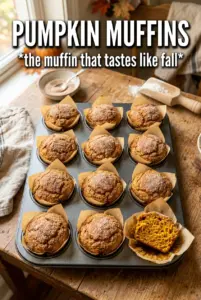
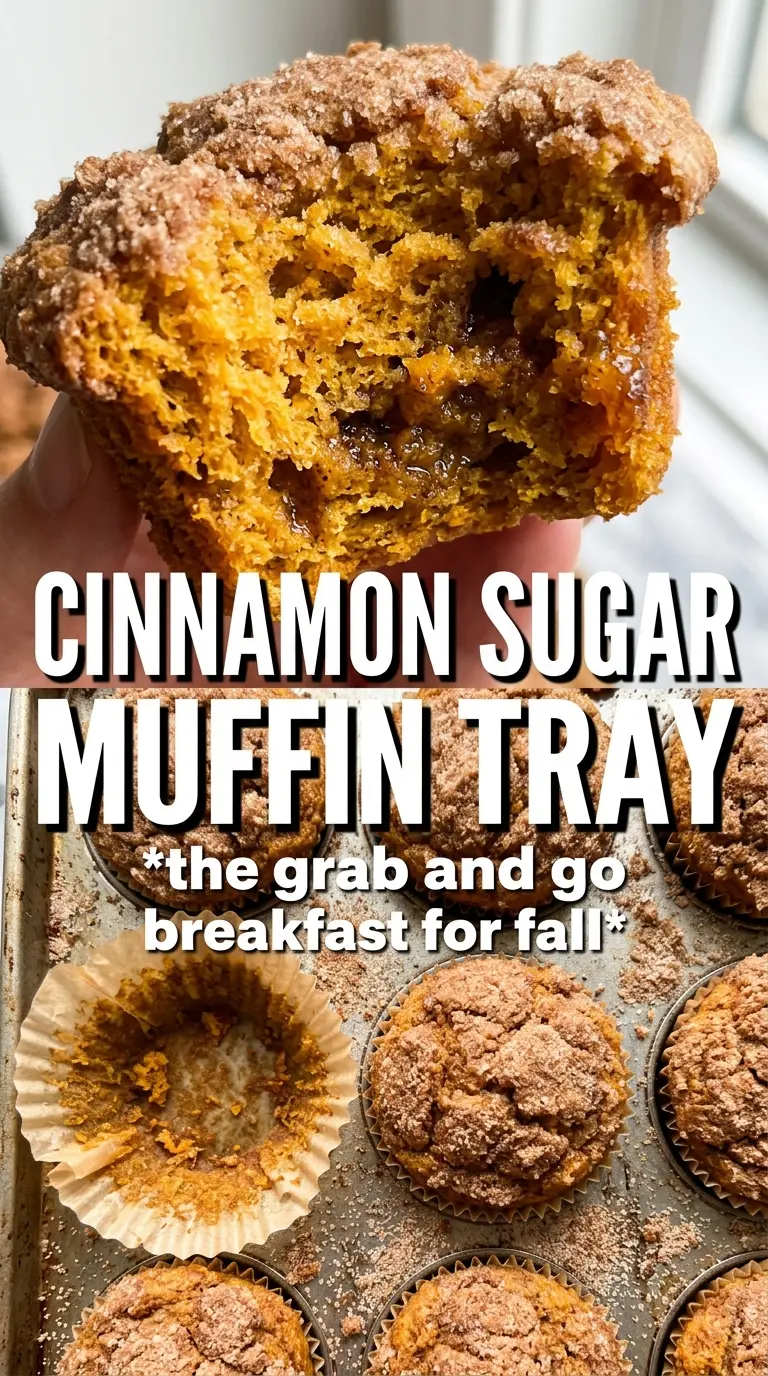
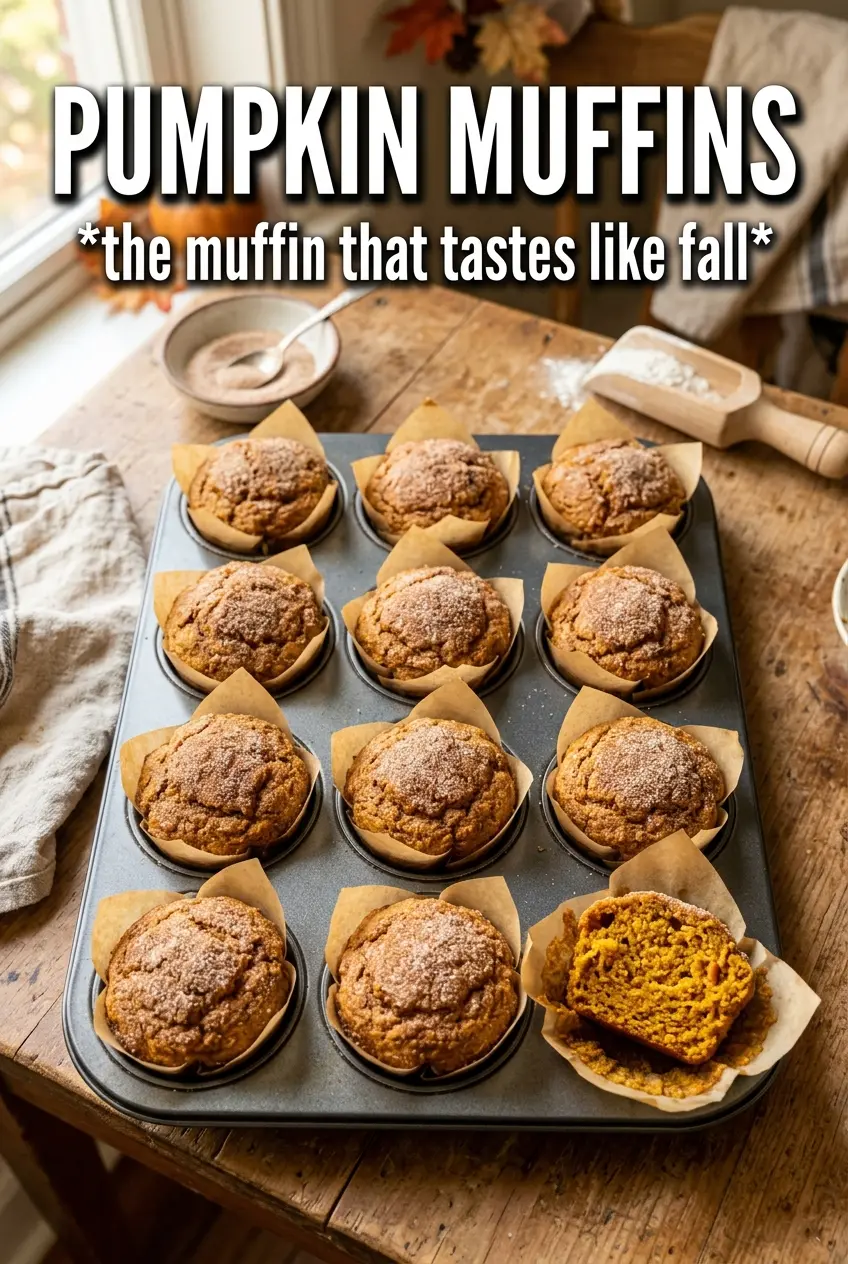
Pumpkin muffins earn their spot when they come out tall, tender, and crowned with that crackly cinnamon sugar top that shatters just a little under your teeth. The best ones taste like pumpkin first and spice second, with a moist crumb that stays soft for days instead of drying out by the next morning. These have that bakery-style dome without any tricky steps.
The texture comes from a simple balance: pumpkin puree for body, oil for lasting moisture, and sour cream for a little richness that keeps the crumb plush. The batter stays in the muffin tin only until the dry ingredients disappear, which matters more than anything else here. Overmix it and the tops turn tough; stop at the point where a few streaks are still visible and they’ll finish mixing as you portion them.
Below you’ll find the small details that make these muffins work every time, plus a few smart swaps if you need them. The cinnamon sugar topping is worth keeping in the mix, and I’ll show you exactly how to get that bakery-style finish without making the muffins heavy.
The muffins rose with those perfect domes and the cinnamon sugar top turned crisp in the oven. I was worried they’d be dense because of the pumpkin, but the crumb came out soft and light.
Save these pumpkin muffins for the mornings when you want a soft, domed muffin with a cinnamon sugar crust.
Why the Oven Temperature and Batter Thickness Matter More Than Mix-Ins
Pumpkin muffin batter is heavy by nature, and that’s why so many versions bake up flat or gummy. The fix isn’t more flour. It’s a hot enough oven to give the muffins an early lift and a batter that’s thick but still scoopable, so the tops can rise before the structure sets.
That 375°F oven does important work here. It helps the baking soda react fast enough for a good dome, while the sour cream and pumpkin keep the crumb tender instead of dry. If your muffins spread instead of rise, the batter was probably overmixed or the oven wasn’t fully preheated. Give the oven time to come to temperature and don’t let the batter sit around after mixing.
- Pumpkin puree — Use plain canned pumpkin puree, not pumpkin pie filling. Pie filling already has sugar and spices mixed in, which throws off the balance and can make the muffins too wet.
- Sour cream — This keeps the crumb soft and adds just enough tang to balance the sweetness. Plain full-fat Greek yogurt works in the same amount if that’s what you have.
- Vegetable oil — Oil gives these muffins a softer, longer-lasting texture than butter. Melted butter will work, but the muffins will set up a little firmer once cooled.
- Cinnamon sugar topping — Don’t skip it. It bakes into a thin crust that gives the tops texture and keeps the muffins from tasting plain.
What Each Ingredient Is Actually Doing in This Recipe
- Primary ingredient (the star) — Quality matters most. Choose the best you can find.
- Cooking medium (oil, butter, or broth) — This carries flavors and prevents dryness.
- Seasonings (salt, pepper, spices, herbs) — Layer flavors so nothing overpowers. Build depth gradually.
- Aromatics (garlic, onion, herbs) — Cook with fat to bloom flavors. Become the foundation.
- Supporting ingredients — Complement the main ingredient without overpowering it.
- Sauce or liquid (if applicable) — Brings flavors together. Balance richness with acid.
- Acid (lemon, vinegar, wine, or other) — Brightens and prevents flat-tasting results.
- Final finish (garnish, glaze, or sauce) — Prevents one-dimensional taste and adds visual appeal.
Building the Batter So the Tops Rise Instead of Toughening
Whisk the dry ingredients first
Mix the flour, baking soda, pumpkin pie spice, cinnamon, and salt in one bowl until the spices are evenly distributed. That step keeps the muffins from getting pockets of baking soda or cinnamon in one bite and none in the next. A quick whisk is enough; you’re not aerating here, just combining evenly.
Stir the wet mixture until it looks smooth and glossy
Whisk the pumpkin, sugars, oil, eggs, vanilla, and sour cream until the mixture looks uniform and slightly thick. The sugar won’t fully dissolve, and that’s fine. What you want is a smooth base with no streaks of egg or sour cream, because those pockets can bake unevenly and leave a dense spot in the crumb.
Fold, don’t beat
Add the dry ingredients to the wet and fold just until the flour disappears. A few small lumps are normal and better than a batter that’s been worked too long. If you keep stirring after the flour is incorporated, the muffins will bake up tight instead of soft, and the domes won’t stay as tall.
Finish with the cinnamon sugar before baking
Divide the batter between the muffin cups, filling each one fairly full for a good rise. Mix the cinnamon sugar topping and sprinkle it evenly over each muffin before they go into the oven. That topping settles into the surface as the muffins bake, which gives you that light crunch and the crackly look on top.
How to Adapt These Pumpkin Muffins Without Losing the Soft Crumb
Dairy-Free Version
Swap the sour cream for an equal amount of dairy-free plain yogurt. The muffins will still stay moist and tender, though the flavor loses a little of the tang that helps balance the sweetness. Choose an unsweetened version so the batter doesn’t get too sugary.
Gluten-Free Pumpkin Muffins
Use a 1:1 gluten-free baking flour that includes xanthan gum. The texture will be slightly more delicate, and the muffins may need an extra minute or two in the oven. Let them cool before moving them, because gluten-free bakes are more fragile while hot.
Lower-Sugar Muffins
You can reduce each sugar by a few tablespoons if you want a less sweet muffin, but don’t cut the total too far. Sugar helps with browning, moisture, and that soft bakery texture. If you want to lower sweetness more aggressively, skip some of the topping rather than changing the batter too much.
Add-Ins That Still Keep the Muffins Tall
A handful of chopped pecans or chocolate chips works well, but keep the amount modest so the batter can still rise properly. Toss add-ins with a spoonful of the flour mixture before folding them in; that keeps them from sinking to the bottom. Heavy add-ins like large chunks of fruit will weigh down the centers.
Storage and Reheating
- Refrigerator: Store in an airtight container for up to 5 days. The tops soften a little after the first day, but the crumb stays moist.
- Freezer: These freeze well. Wrap individually and freeze for up to 3 months, then thaw at room temperature or overnight in the fridge.
- Reheating: Warm in a 300°F oven for 5 to 8 minutes or microwave one muffin for 15 to 20 seconds. Don’t overheat them or they’ll turn dry at the edges.
Questions I Get Asked About This Recipe
Pumpkin Muffins
Ingredients
Equipment
Method
- Preheat oven to 375F and line or grease a 12-cup muffin tin (look for a hot, ready oven before mixing).
- Whisk all-purpose flour, baking soda, pumpkin pie spice, cinnamon, and salt until evenly combined and no streaks remain.
- Whisk pumpkin puree, granulated sugar, brown sugar, vegetable oil, eggs, vanilla, and sour cream until smooth and glossy.
- Fold the dry ingredients into the wet ingredients until just combined, then stop when you no longer see dry flour.
- Divide the batter into the muffin cups until evenly filled.
- Sprinkle the cinnamon sugar topping (2 tablespoons sugar + 1 teaspoon cinnamon) over each muffin so the tops look lightly speckled.
- Bake for 20-22 minutes at 375F until a toothpick comes out clean.
- Cool for 5 minutes in the pan so the muffins set and release more easily.