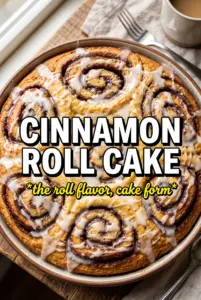
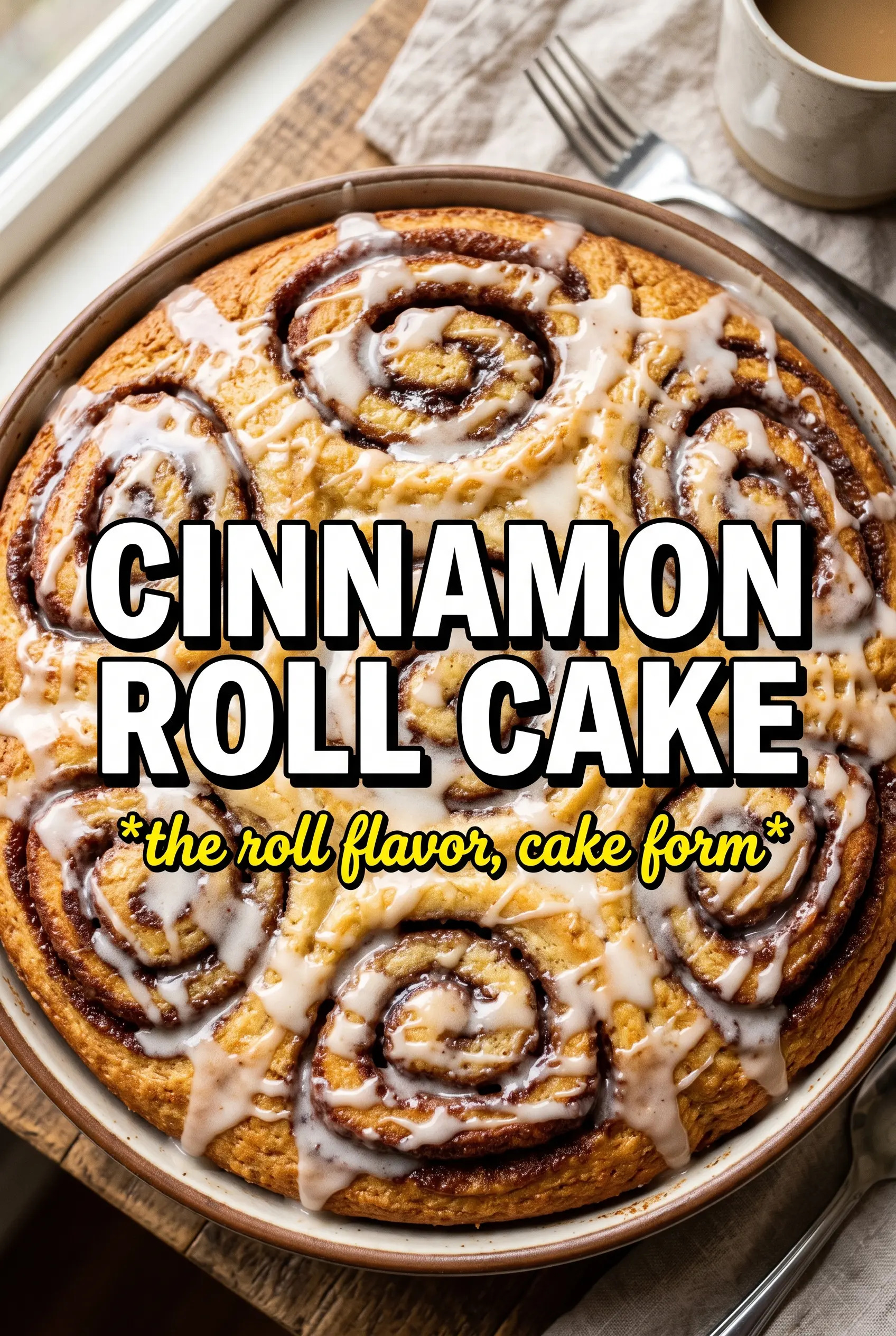
Cinnamon roll cake delivers the same swirled, buttery comfort people love in a bakery cinnamon roll, but without waiting on yeast or shaping dough. The crumb bakes up tender and moist, the cinnamon-brown sugar layer melts into ribboned pockets, and the cream cheese glaze sinks into the warm top just enough to turn every slice into something halfway between coffee cake and a frosted roll.
What makes this version work is the balance. The batter stays on the lighter side, so it can support that rich cinnamon filling without baking up dense, and the filling itself gets a little flour mixed in so it doesn’t disappear completely into the cake. I also like using a full 9×13 pan so the swirl has room to spread instead of crowding into a heavy middle layer.
Below you’ll find the exact swirl pattern that gives the best marbling, plus a few practical notes on swapping dairy, storing leftovers, and keeping the glaze smooth instead of gummy.
The swirl stayed distinct and the cake baked up soft, not greasy. I drizzled the glaze while it was still warm and it soaked into the top just enough without making it soggy.
Love the gooey cinnamon swirl and cream cheese glaze? Save this Cinnamon Roll Cake for the next time you want bakery-style comfort in one pan.
The Swirl That Stays Marbled Instead of Vanishing
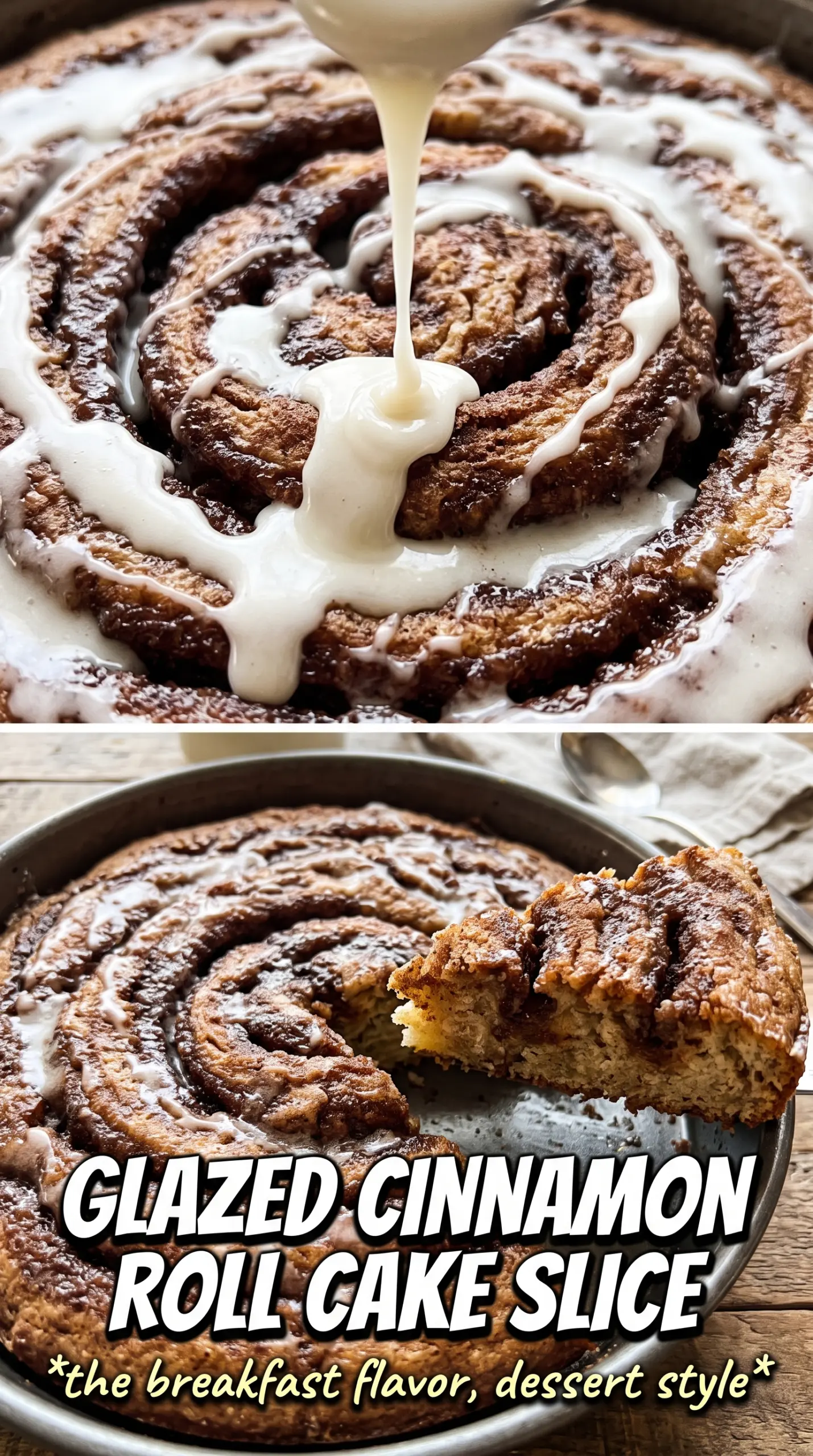
Most cinnamon cakes go wrong in one of two ways: the filling disappears into the batter, or it sinks in a heavy layer and bakes up greasy. This cake avoids both problems because the filling is thick enough to hold its shape when dropped by spoonfuls, and the batter is sturdy enough to support it. The result is a proper ribbon through the middle of the cake, not a muddy cinnamon layer.
The other detail that matters is the swirling. You want a loose figure-eight motion with a knife, not aggressive stirring. Overmixing blends the filling into the batter and wipes out the contrast that makes the slices look and taste like cinnamon rolls. Stop when you still see clear streaks on the surface.
- Brown sugar — This brings the deep caramel note you expect from cinnamon rolls. Packed brown sugar matters here; the moisture helps the filling melt into glossy swirls instead of tasting sandy.
- Butter — Softened butter is what makes the filling spreadable and rich. Melted butter belongs in the cake batter, not the swirl, because the filling needs structure while the cake needs tenderness.
- Flour in the filling — This tiny amount keeps the cinnamon mixture from turning into a runny pocket. Skip it and the filling can pool at the bottom of the pan.
- Whole milk — The fat content gives the crumb a softer, more bakery-style texture. Lower-fat milk works in a pinch, but the cake won’t taste as plush.
- Cream cheese — This is what gives the glaze that classic tangy finish. If you use only powdered sugar and milk, you get sweetness, but not the same cinnamon roll character.
What Each Ingredient Is Actually Doing in This Recipe
- Primary ingredient (the star) — Quality matters most. Choose the best you can find.
- Cooking medium (oil, butter, or broth) — This carries flavors and prevents dryness.
- Seasonings (salt, pepper, spices, herbs) — Layer flavors so nothing overpowers. Build depth gradually.
- Aromatics (garlic, onion, herbs) — Cook with fat to bloom flavors. Become the foundation.
- Supporting ingredients — Complement the main ingredient without overpowering it.
- Sauce or liquid (if applicable) — Brings flavors together. Balance richness with acid.
- Acid (lemon, vinegar, wine, or other) — Brightens and prevents flat-tasting results.
- Final finish (garnish, glaze, or sauce) — Prevents one-dimensional taste and adds visual appeal.
Building the Batter, Filling, and Glaze in the Right Order
Mixing the cake base
Whisk the flour, sugar, baking powder, and salt first so the leavening is evenly distributed. Then stir in the milk, eggs, vanilla, and melted butter just until the batter is smooth. If you beat it hard or keep mixing after the flour disappears, the cake can bake up tight instead of tender.
Spreading the cinnamon layer
Pour the batter into a greased 9×13 dish and level it gently. Beat the cinnamon filling until it looks smooth and thick, then drop it over the batter in spoonfuls. Don’t try to pour it in a stream; spooning gives you better coverage and keeps the filling from disappearing under the batter before you swirl.
Swirling without overworking the pan
Drag a knife through the batter in broad S-shapes or figure-eights, moving just enough to create visible ribbons. You should still see pockets of cinnamon on top when you’re done. If the surface looks evenly tan, you’ve gone too far and mixed away the pattern.
Baking until the center sets
Bake at 350°F until the top is set and a toothpick inserted in the center comes out clean, usually 30 to 35 minutes. The edges should be lightly browned and pulling from the dish. If the middle still looks wet but the top is already darkening, tent loosely with foil for the last few minutes so the cake finishes without overbaking.
Finishing with glaze while the cake is warm
Beat the cream cheese glaze until smooth, then drizzle it over the cake while it is still warm, not piping hot. Warm cake helps the glaze melt slightly and settle into the top. If the glaze seems too thick, add milk a teaspoon at a time until it falls from the spoon in a slow ribbon.
How to Make Cinnamon Roll Cake Fit Different Mornings and Crowds
Dairy-free version
Use a neutral plant milk and a good dairy-free butter substitute in both the batter and filling. The cake will still be tender, but the filling won’t taste quite as rich, so the cinnamon becomes more prominent. For the glaze, use dairy-free cream cheese; thinner versions may need a little less milk to stay drizzly.
Extra-cinnamon bakery style
Increase the cinnamon in the filling by 1 teaspoon if you want a stronger spice note. That small bump makes the swirl taste more like a classic cinnamon roll filling without throwing off the texture.
Gluten-free adjustment
Use a 1:1 gluten-free flour blend that already includes xanthan gum. The batter should look like standard cake batter, not a loose pour; if your blend is very fine, let it rest for 10 minutes before baking so it hydrates properly.
Storage and Reheating
- Refrigerator: Store covered for up to 4 days. The glaze will firm up and the crumb may taste a little denser straight from the fridge.
- Freezer: Freeze slices tightly wrapped for up to 2 months. Freeze without glaze if possible, then add fresh glaze after thawing for the best texture.
- Reheating: Warm individual slices in the microwave for 15 to 20 seconds or in a low oven until just heated through. Don’t overheat or the glaze can separate and the cake can dry out at the edges.
Questions I Get Asked About This Recipe
Cinnamon Roll Cake
Ingredients
Equipment
Method
- Preheat the oven to 350F and grease a 9x13 baking dish, so the cake releases cleanly. Grease all sides and corners.
- Whisk all-purpose flour, granulated sugar, baking powder, and salt until evenly combined, with no visible clumps. Then whisk in whole milk, eggs, vanilla extract, and melted unsalted butter until smooth and glossy.
- Pour the batter into the prepared 9x13 baking dish and smooth the top in an even layer. Aim for corners filled out to the edges.
- Beat the cinnamon filling ingredients together until smooth, using a thick but spoonable consistency. Stop when there are no streaks of butter or dry sugar.
- Drop the cinnamon filling by spoonfuls over the batter in an even distribution. Leave some space between spoon drops so the swirl pattern shows.
- Use a knife to swirl the filling through the batter in a pattern. Drag through the batter gently so marbling forms without fully mixing it in.
- Bake for 30-35 minutes at 350F until a toothpick inserted in the center comes out clean. The top should look set and lightly golden.
- Beat the cream cheese glaze, then drizzle over the warm cake in stripes. Let the glaze settle for a few minutes so it thickens slightly.