Thin layers of root vegetables turn soft and silky under a blanket of cream, then finish with a browned, bubbling cheese crust that cracks just a little when you spoon into it. The mix of Yukon gold potatoes, parsnips, carrots, and turnip gives every bite a different balance of sweetness and earthiness, so this gratin tastes layered instead of one-note. It lands on the table looking formal, but it eats like comfort food.
What makes this version work is the order of the bake. The vegetables steam gently under foil long enough to turn tender all the way through, then the cheese goes on only at the end so the top can brown without the dairy splitting or the crust going greasy. I also like the combination of Gruyere and parmesan here: Gruyere melts into the cream, while parmesan gives the top a sharper, drier finish that actually crisps.
If you’ve ever had a root vegetable gratin turn watery or left you with crunchy slices in the middle, the details below will help. The slicing, the layering, and the resting time all matter more than they look like they should.
The potatoes and turnip were perfectly tender, and the top stayed crisp instead of getting soggy after I let it rest. My husband went back for a second scoop before dinner was even over.
Save this cheesy root vegetable gratin for the nights when you want a golden Gruyere crust, tender layered vegetables, and a side dish that feels like the main event.
The Part That Keeps the Gratin Creamy Instead of Watery
The biggest mistake with a root vegetable gratin is packing the dish with raw slices and expecting the oven to sort it out. Dense vegetables like turnip and parsnip need time under steam before the top browns, or you end up with a burnt crust and a stubborn center. The foil-covered bake handles that first job, and the uncovered finish handles the second.
Thickness matters more than most people think. Thin, even slices cook at the same pace, which keeps the cream from separating while you wait for one thicker piece to soften. If the slices are too thick, the potatoes may go tender before the turnip catches up, and the whole dish loses its clean layered texture.
- Potatoes — Yukon golds hold their shape and turn buttery without falling apart. Russets work in a pinch, but they break down more and give you a softer, less defined slice.
- Turnip or celery root — This is the ingredient that keeps the gratin from tasting flat. Celery root gives a gentler, sweeter result; turnip brings more bite and a slight peppery edge.
- Heavy cream and milk — The cream carries richness, but the milk keeps the dish from turning cloying. Using all cream makes the sauce heavier and more likely to feel greasy after baking.
- Gruyere and parmesan — Gruyere melts smoothly; parmesan browns and sharpens the top. Don’t swap both for a single mild cheese, or the gratin loses that salty, nutty finish.
Building the Layers So Every Slice Cooks at the Same Speed

- Yukon gold potatoes — These are the backbone of the dish. Their waxy texture helps them stay tender without turning to mash, which matters when you’re layering several vegetables in cream.
- Parsnips and carrots — Both add sweetness, but parsnips bring a deeper, almost nutty note that carrots alone can’t give. Slice them as evenly as the potatoes so they don’t lag behind in the oven.
- Garlic, thyme, and nutmeg — These season the cream from the inside out. Fresh thyme tastes cleaner than dried here, and nutmeg is one of those small additions that makes dairy taste warmer and more finished.
- Butter — Generous butter on the baking dish does more than prevent sticking. It helps the edges brown and gives the first and last bites a richer flavor.
The Bake That Turns Raw Slices Into a Tender Gratin
Season the cream first
Whisk the cream, milk, garlic, thyme, nutmeg, salt, and pepper together before anything goes in the dish. That way the seasoning reaches every layer instead of sitting on the top. The mixture should smell fragrant and taste slightly over-seasoned on its own, because the vegetables will dilute it as they cook.
Overlap the vegetables, don’t pile them
Lay the slices in slightly overlapping rows, alternating the different roots as you go. You want a stacked pattern, not a jumble, so the hot cream can move through the dish evenly. If the vegetables are packed too tightly, the center steams unevenly and the top may brown before the bottom softens.
Cover for the first bake
Seal the dish tightly with foil and bake until the vegetables are starting to give when pierced. This is the part that gets them tender, so don’t rush it. If your foil leaks, the top dries out and the cream reduces too quickly before the roots are fully cooked.
Add the cheese at the end
Uncover the dish only after the vegetables are nearly tender, then scatter the Gruyere and parmesan over the top. The cheese needs direct heat to brown; if you add it too soon, it can sink into the cream and go greasy instead of forming a crust. Bake until the top is deeply golden and the sauce is bubbling at the edges.
Let it rest before serving
Give the gratin 10 minutes on the counter after it comes out of the oven. That short rest lets the cream settle back into a silky sauce instead of running across the plate. If you cut it too early, the layers slide apart and the texture looks looser than it should.
How to Tweak This Gratin Without Losing the Creamy Texture
Make it dairy-free with a rich plant cream
Use full-fat unsweetened oat cream or cashew cream in place of the heavy cream and milk, then finish with a dairy-free melting cheese if you want the same look on top. The gratin will still be rich, but it won’t brown quite as deeply, so watch the top closely near the end.
Skip the turnip for a milder, sweeter dish
Replace the turnip or celery root with more potatoes or extra carrots if you want a softer, sweeter flavor. The dish will lose a little of its earthy edge, but it becomes a better fit for guests who prefer a gentler vegetable profile.
Add ham or mushrooms for a heartier side
Fold in a thin layer of sautéed mushrooms or diced cooked ham between the vegetable rows if you want more depth. Mushrooms bring extra savoriness, while ham makes the gratin feel a little more substantial without changing the method.
Storage and Reheating
- Refrigerator: Store covered for up to 4 days. The sauce will thicken as it chills, and the top will soften a bit.
- Freezer: It freezes, but the texture gets softer after thawing because the cream can separate slightly. Freeze in portions, wrapped well, if you don’t mind a looser result.
- Reheating: Reheat covered at 350F until hot, then uncover for the last few minutes to bring the top back. Microwaving makes the cream split and the edges turn rubbery, so use the oven if you want the best texture.
Answers to the Questions Worth Asking
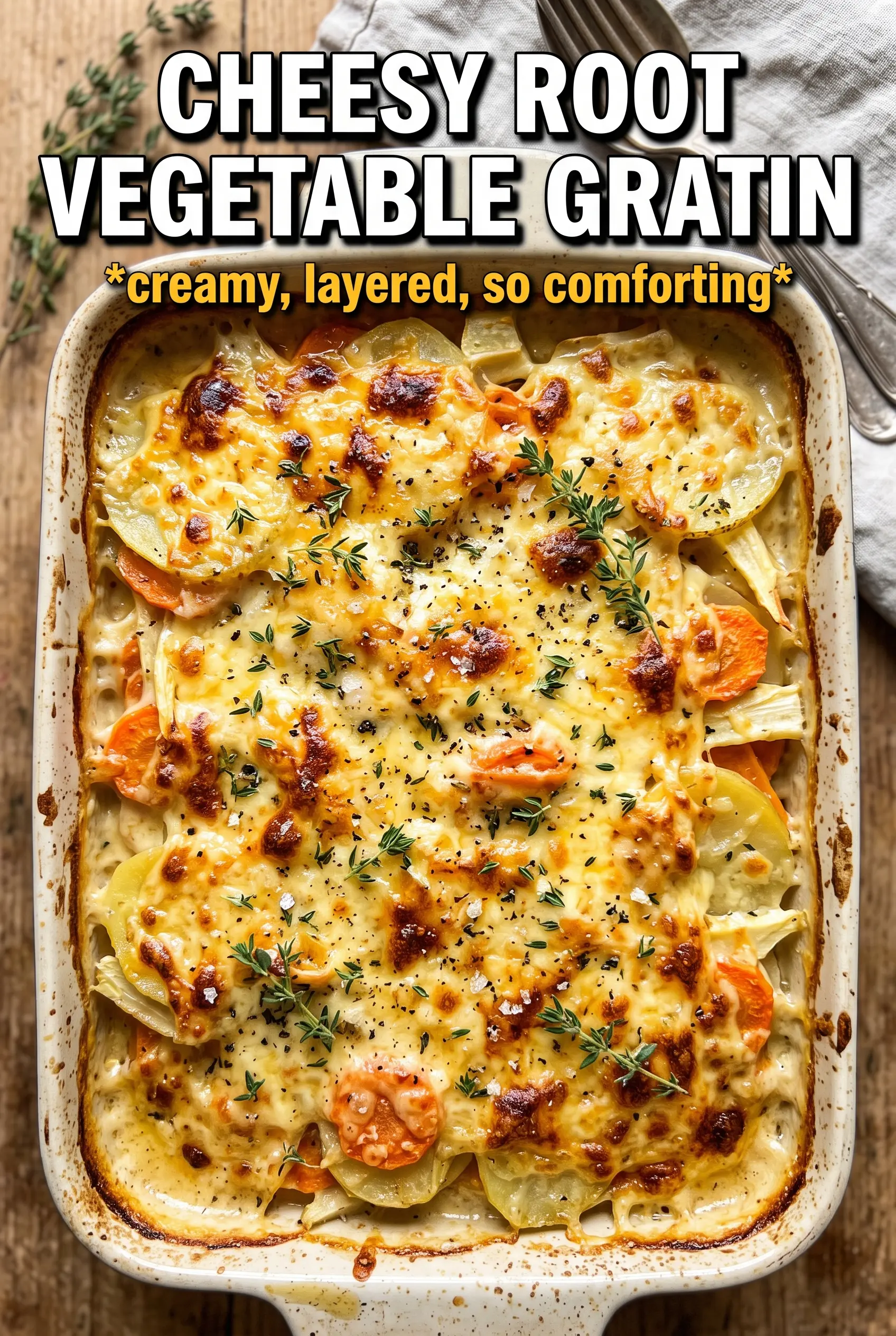
Cheesy Root Vegetable Gratin
Ingredients
Equipment
Method
- Preheat the oven to 375F, then generously butter a 9x13 baking dish.
- Whisk heavy cream, whole milk, garlic, fresh thyme, nutmeg, 1 teaspoon salt, and pepper together until smooth.
- Layer the root vegetables in the dish, alternating types in slightly overlapping rows.
- Pour the cream mixture over the vegetables, then press down gently so the liquid reaches the layers.
- Cover tightly with foil and bake for 40 minutes at 375F.
- Uncover the dish and scatter Gruyere and parmesan over the top.
- Bake 20-25 more minutes at 375F until the vegetables are completely tender and the top is golden and bubbly.
- Rest for 10 minutes before serving to let the gratin set.