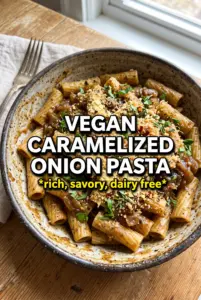
Silky, golden onion sauce clings to every ridge of pasta and turns a short ingredient list into something that tastes slow-cooked and deliberate. The onions do the heavy lifting here. Once they’ve had time to soften, brown, and collapse into sweetness, they bring the kind of depth that usually takes cheese or cream to fake.
This version works because the onions are cooked patiently in both olive oil and vegan butter, which gives them better flavor and keeps them from tasting flat. A splash of white wine loosens the browned bits from the pan, then pasta water and nutritional yeast help the sauce turn glossy instead of greasy. The balsamic vinegar doesn’t make it taste sweet; it sharpens the onions and pulls the whole bowl into focus.
Below you’ll find the timing that matters, the ingredient swaps that still keep the sauce rich, and the one mistake that usually keeps caramelized onion pasta from tasting as luxurious as it should.
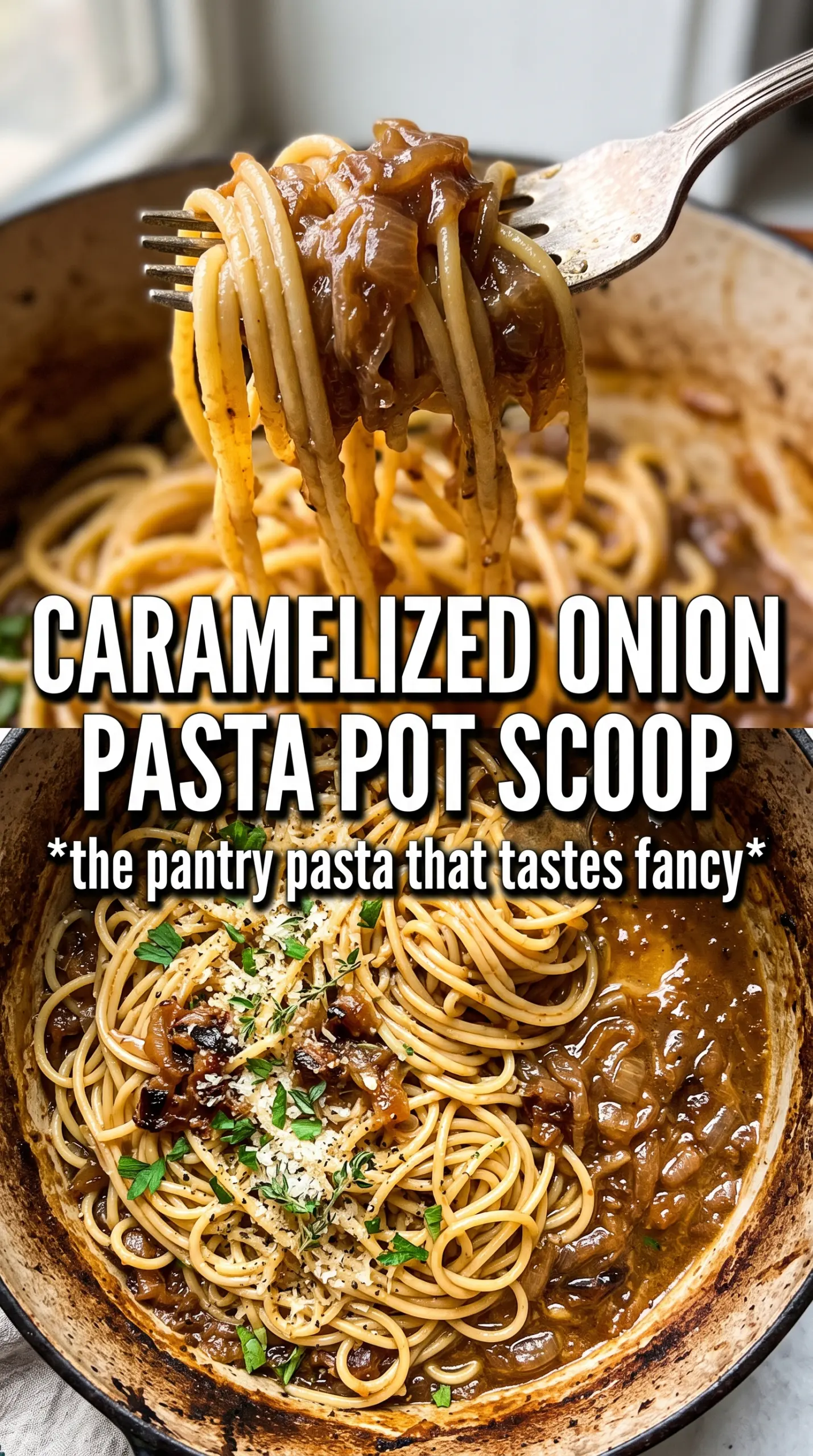
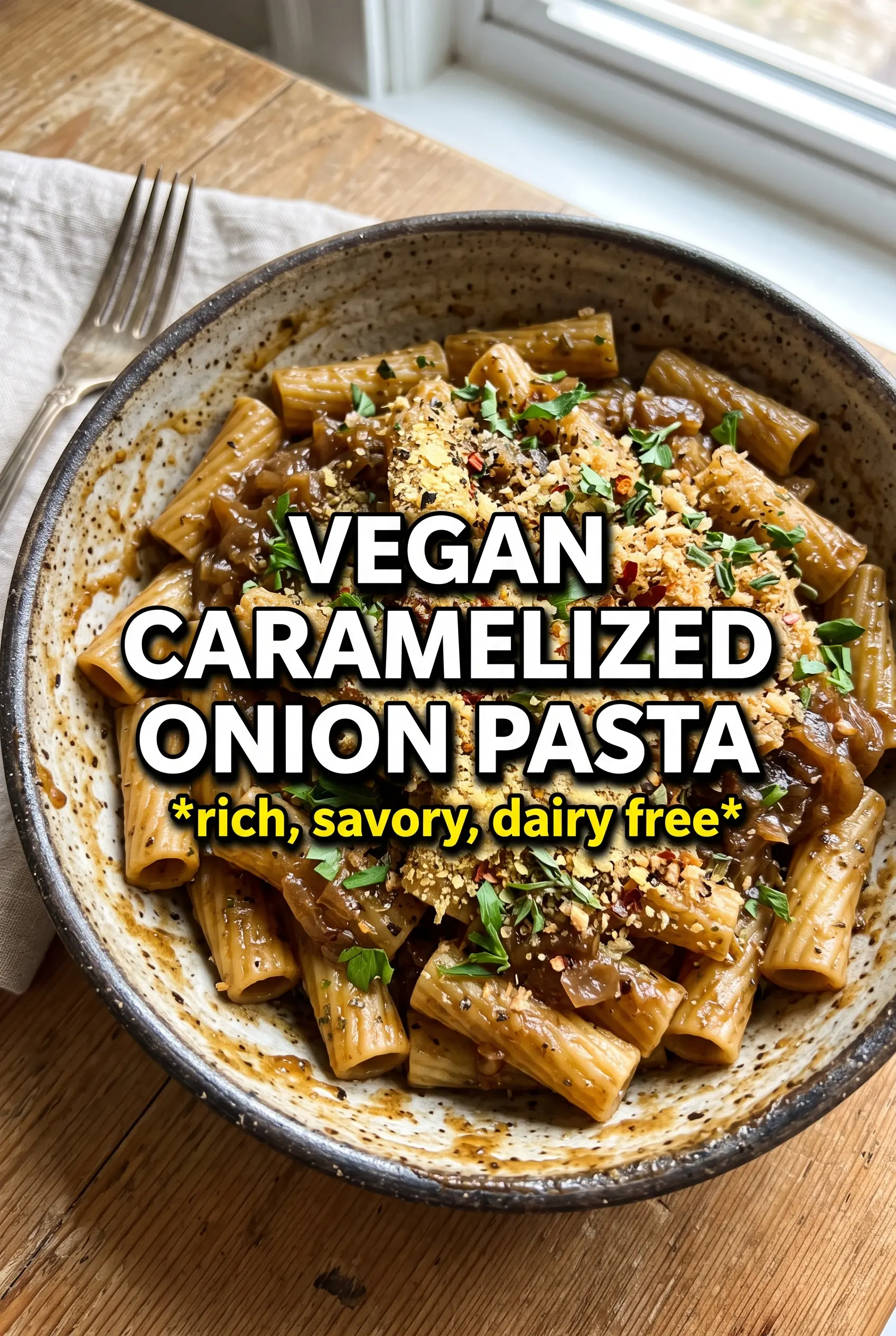
The onions turned deep amber and the sauce went glossy after I added the pasta water. I used rigatoni, and it grabbed onto every bit of that savory sweetness.
Save this vegan caramelized onion pasta for the night you want a silky onion sauce that tastes slow-cooked but still comes together in one pan.
The Slow Onion Cook Is What Keeps This Pasta from Tasting Flat
The difference between decent onion pasta and the kind people keep thinking about later comes down to patience. If the onions are still pale or only lightly softened, the sauce tastes one-note and watery. What you want is deep golden-brown onions with the edges starting to catch in the pan, because that’s where the sweetness and savory depth live.
Medium-low heat matters more than speed here. High heat browns the outside before the onion juices have time to cook off, which gives you scorched spots instead of true caramelization. Stirring every few minutes is enough to keep the onions moving without interrupting the browning. If the pan looks dry before they’re done, add a small splash of oil and keep going.
The wine isn’t there just for acidity. It lifts the browned bits from the pan and gives the sauce a base that tastes rounded instead of sweet-on-sweet.
What Each Ingredient Is Actually Doing in the Sauce
- Onions — These are the backbone of the dish, and there’s no real shortcut for the flavor they build when cooked all the way down. Yellow onions are the best choice because they caramelize evenly and taste sweet without going mushy.
- Olive oil and vegan butter — Olive oil keeps the onions from sticking, while vegan butter gives the sauce a deeper, rounder finish. If you only use oil, the result is still good, but it tastes a little leaner.
- Dry white wine — This loosens the fond in the pan and adds brightness. Use a wine you’d actually drink; cooking off cheap, harsh wine still leaves a harsh edge behind.
- Nutritional yeast — This adds the savory, slightly cheesy note that makes the sauce taste complete without dairy. It won’t melt like cheese, so whisking it in with pasta water is what helps it dissolve into the sauce.
- Pasta water — The starch in the water helps the onions cling to the pasta and gives the sauce a glossy finish. Regular water won’t do the same job.
- Balsamic vinegar — Just a little sharpens the caramelized onions and keeps the sweetness from taking over. Too much makes the sauce taste dark and muddy, so stick to the small amount here.
- Rigatoni or spaghetti — Rigatoni catches the onion pieces in its ridges, while spaghetti gives you a smoother, slurpier bowl. If you want the sauce to feel especially substantial, rigatoni is the better pick.
Building the Sauce in the Same Pan Without Breaking It
Caramelizing the Onions Properly
Start the onions in the olive oil and vegan butter over medium-low heat and give them time. They’ll first turn glossy, then soft, then pale gold before they finally deepen into amber. If they brown too fast at the edges, the heat is too high; turn it down and keep stirring. You’re looking for onions that have lost almost all of their volume and taste sweet enough to eat on their own.
Pulling Flavor from the Pan
Once the garlic and thyme go in, keep them moving for just a couple of minutes. Garlic burns quickly, and burnt garlic makes the whole pan taste bitter, so this stage is short on purpose. Add the wine right after and scrape the bottom of the pan while it sizzles. That browned layer is concentrated flavor, and it should dissolve into the liquid before you move on.
Turning Onions into Sauce
Add the balsamic vinegar, red pepper flakes, nutritional yeast, and a splash of pasta water, then toss the pasta right into the pan. The sauce should look loose at first, then turn creamy and clingy as you stir. If it seems dry, add more pasta water a tablespoon at a time. If it turns soupy, keep tossing over low heat for another minute or two and it will tighten up.
The Final Toss
Season at the end with salt and pepper, because the onions, wine, and nutritional yeast all change how salty the dish tastes. Fresh parsley gives the bowl a clean finish, and a little extra nutritional yeast on top echoes the savory base in the sauce. Serve it right away while the sauce is glossy and the pasta still has some bite.
How to Adapt It Without Losing the Savory Sweetness
Gluten-Free Version
Use your favorite gluten-free rigatoni or spaghetti and keep a close eye on the cooking time so it stays firm enough to toss with the sauce. Gluten-free pasta water can be a little less starchy, so reserve a bit extra and use it gradually until the sauce loosens and turns glossy.
No Wine, No Problem
If you don’t cook with wine, replace it with an equal amount of vegetable broth plus 1 teaspoon extra balsamic vinegar. You lose a little sharpness and complexity, but the broth still picks up the browned bits and gives the sauce enough body to taste balanced.
Extra Creamy Finish
For a richer bowl, stir in 2 to 3 tablespoons of unsweetened oat cream at the end. It softens the edges and makes the sauce feel more luxurious, but it also mutes a little of the onion sharpness, so keep the balsamic in place.
Storage and Reheating
- Refrigerator: Store leftovers in an airtight container for up to 4 days. The pasta will absorb some sauce as it sits, so it gets thicker in the fridge.
- Freezer: It freezes fairly well for up to 2 months, though the pasta softens a bit after thawing. Freeze in portions and leave a little space in the container for expansion.
- Reheating: Warm gently in a skillet over low heat with a splash of water or broth. The common mistake is blasting it in the microwave until the onions dry out and the pasta turns gummy.
Answers to the Questions Worth Asking
Vegan Caramelized Onion Pasta
Ingredients
Equipment
Method
- Heat olive oil and vegan butter in a cast iron skillet over medium-low heat. Add the thinly sliced onions and cook 35-40 minutes, stirring every few minutes, until deeply caramelized and golden.
- Add the minced garlic and fresh thyme to the caramelized onions and cook for 2 minutes, stirring, until fragrant.
- Pour in the dry white wine and cook for 2 minutes to deglaze, scraping up any browned bits on the skillet bottom.
- Stir in balsamic vinegar and red pepper flakes. Cook briefly to combine, keeping the sauce glossy.
- Cook the rigatoni or spaghetti according to package instructions until al dente. Reserve 1 cup of pasta cooking water before draining.
- Toss the drained pasta with the caramelized onion sauce, nutritional yeast, and pasta water until creamy and evenly coated, adding more pasta water as needed.
- Season with salt and pepper to taste. Top with fresh parsley and serve with extra nutritional yeast.