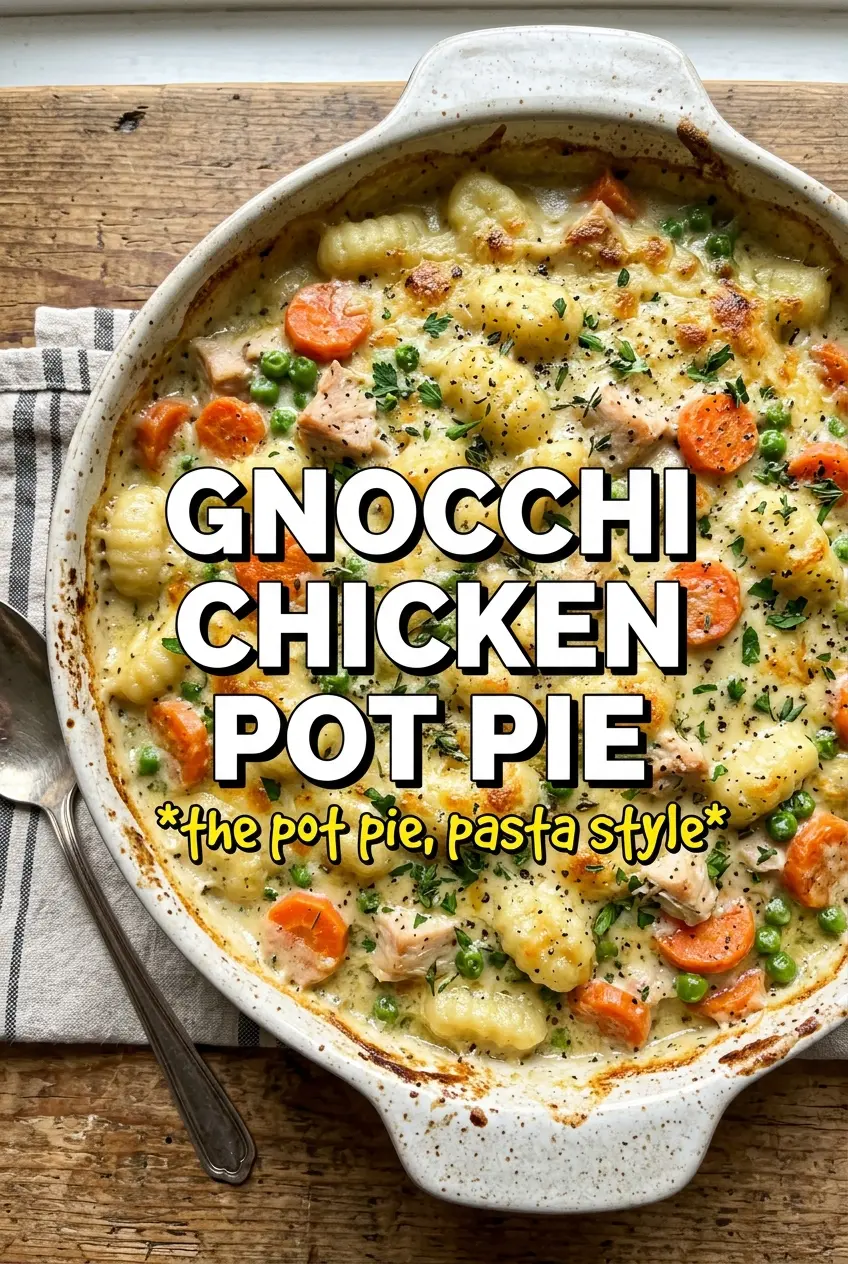
Golden, bubbling gnocchi chicken pot pie is the kind of dinner that disappears fast because it hits every note at once: creamy filling, tender chicken, sweet peas, and pillowy gnocchi tucked under a crisp, browned lid. The best bites are the ones where a fork breaks through the top and lands in that thick sauce underneath, with the gnocchi holding their shape instead of turning mushy.
What makes this version work is the timing. The gnocchi go in uncooked, so they soften right in the sauce and pick up all that chicken-and-thyme flavor without getting waterlogged. The filling also needs to thicken before it goes into the oven; if it’s still loose in the pan, it will stay loose in the baking dish. Puff pastry gives the most dramatic, flaky top, while biscuits make it a little more rustic and hearty.
Below, I’ll walk through the part that matters most: getting the sauce thick enough before baking and choosing the right topping for the texture you want. There are also a few smart swaps and storage notes, because this is the kind of meal that earns a repeat spot.
The sauce thickened up beautifully and the gnocchi stayed tender without falling apart. I used puff pastry, and the top came out flaky with the filling bubbling right up around the edges.
Save this gnocchi chicken pot pie for nights when you want a creamy filling, a crisp top, and one pan of comfort food that feels like a full meal.
The Part Most Chicken Pot Pies Get Wrong: A Filling That Actually Sets
The filling has to be thicker than you think before it goes into the oven. Once the gnocchi, chicken, and pastry hit the heat, they release a little moisture, and a thin sauce turns soupy instead of velvety. If your spoon trails across the pan and leaves a clear path for a second or two, you’re in the right place.
The other common miss is rushing the roux. Let the flour cook in the butter for a full minute so the sauce doesn’t taste pasty, then add the broth and cream gradually. That slow pour gives you a smooth base instead of little flour lumps that never fully melt out.
What Each Ingredient Is Actually Doing In This Dish
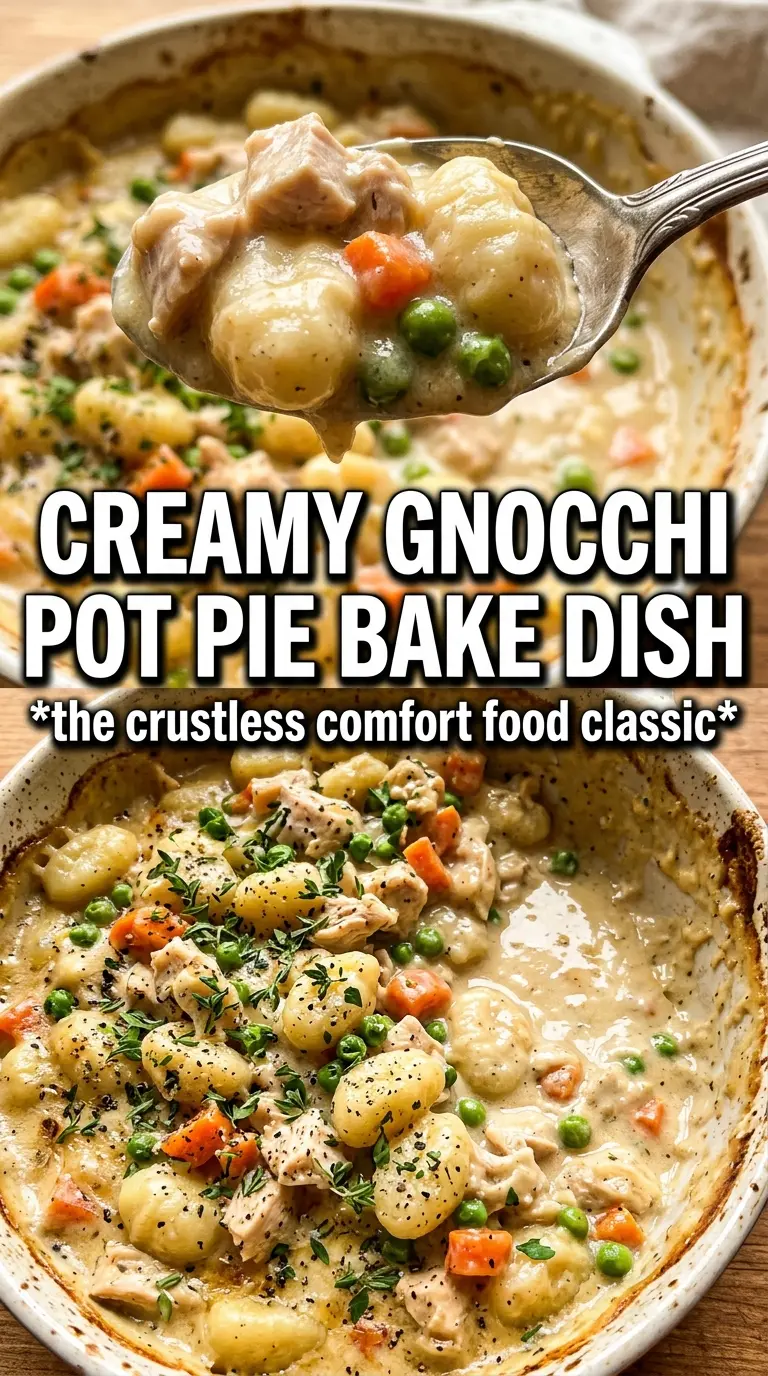
- Potato gnocchi — These act like little dumplings and soak up the sauce as they bake. Shelf-stable gnocchi works fine here, and you don’t need to boil it first.
- Cooked chicken — Shredded chicken gives you the best texture because it blends into the filling without turning stringy. Rotisserie chicken is an easy shortcut and works well.
- Butter, flour, broth, and cream — This is the sauce backbone. The butter and flour build body, the broth adds savory depth, and the cream gives the filling that pot-pie richness.
- Carrots, celery, onion, and garlic — These build the familiar pot pie base. Dice them evenly so they soften at the same pace and don’t leave crunchy pieces behind.
- Puff pastry or biscuits — Puff pastry gives a flaky, crisp top, while biscuits bake into a thicker, more rustic crust. Use whichever texture you want from the finished dish.
- Fresh thyme — A small amount is enough to make the whole pan taste finished. Dried thyme works in a pinch, but use half as much because it’s more concentrated.
Building the Sauce Before the Oven Takes Over
Softening the vegetables
Start with the onion, carrots, and celery in butter over medium heat. They should soften and smell sweet, not brown hard on the edges. If the pan looks dry before the vegetables are tender, lower the heat a touch instead of letting them scorch, because burnt onion turns the whole filling bitter.
Making the roux
Stir in the garlic and thyme just long enough to wake them up, then add the flour and cook it for about a minute. The mixture should look pasty but not dry, and it should smell nutty rather than raw. This step is what keeps the sauce from tasting thin or floury once the broth goes in.
Thickening the filling
Pour in the broth slowly while whisking, then add the cream and let everything simmer until the sauce coats a spoon. That coating matters more than the clock. If you add the chicken and gnocchi before the sauce has thickened, they’ll dilute it as they cook and you’ll lose the pot-pie texture.
Finishing under the crust
Fold in the chicken, peas, and uncooked gnocchi, then season with salt and pepper before the filling goes into the baking dish. Top it with puff pastry or biscuits, brush the surface with egg wash, and bake until the top is deeply golden and the filling is bubbling at the edges. That bubbling edge is your cue that the center is hot through and the gnocchi is cooked.
How to Adapt This for Different Kitchens and Different Moods
Use biscuits for a heavier, homier finish
Refrigerated biscuits bake into a thicker, more bread-like top than puff pastry. The result is less flaky but more substantial, and it soaks up a little of the sauce around the edges in the best way.
Make it gluten-free without losing the creamy filling
Use a gluten-free flour blend for the roux and swap in gluten-free gnocchi and a gluten-free topping. The sauce still thickens well, but cook the flour a full minute so you don’t end up with a chalky texture.
Go dairy-free with a lighter, less rich sauce
Use plant-based butter and an unsweetened dairy-free cream substitute. The filling will still be creamy, but it won’t have quite the same round, buttery finish, so lean a little harder on the thyme and black pepper.
Stretch it into a bigger meal
Add more peas, extra carrots, or a handful of mushrooms if you want a fuller vegetable count. Keep the sauce thick, since every extra vegetable brings moisture and can thin the filling if you add too much at once.
Storage and Reheating
- Refrigerator: Store leftovers covered for up to 4 days. The pastry or biscuits will soften, but the filling stays creamy.
- Freezer: Freeze the baked filling without the topping if you can. Pastry and biscuits lose their best texture after freezing, so add a fresh top when reheating for the best result.
- Reheating: Warm in a 350°F oven until the center is hot and the edges are bubbling again. The biggest mistake is microwaving it straight from the fridge, which turns the crust soggy and can leave the middle unevenly heated.
Questions I Get Asked About This Recipe
Gnocchi Chicken Pot Pie
Ingredients
Equipment
Method
- Preheat oven to 400F.
- In a pan, sauté onion, carrots, and celery in butter for 5 minutes until softened and glossy.
- Add garlic and thyme and cook for 30 seconds until fragrant.
- Whisk in flour and cook for 1 minute, stirring constantly, until the mixture looks slightly dry and golden.
- Gradually add chicken broth and heavy cream, whisking as you pour, then simmer until thickened, about 5–8 minutes, until it coats the back of a spoon.
- Fold in shredded chicken, frozen peas, and uncooked gnocchi and season with salt and pepper.
- Pour the filling into a baking dish.
- Top with puff pastry or refrigerated biscuits, covering the filling evenly.
- Brush the top with egg wash so it browns.
- Bake 25–30 minutes at 400F until golden and bubbly, with visible steam venting from the top.