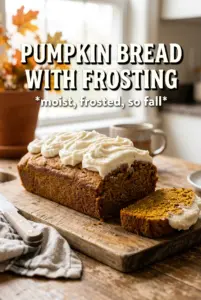
Dense, tender pumpkin bread with a thick layer of cream cheese frosting is the kind of loaf that disappears fast because it never tastes like an afterthought. The crumb stays soft and moist without turning heavy, the spice is warm without taking over, and that cool, tangy frosting turns every slice into something that feels bakery-worthy at home.
What makes this version work is balance. Pumpkin puree brings moisture and body, while the mix of granulated sugar and brown sugar gives the loaf sweetness without making it gummy. Oil keeps the texture plush for days, and the frosting stays spreadable because the loaf cools completely before it goes on. Skip that last part and the frosting melts into the bread instead of sitting on top in that thick, swoopy layer everyone wants.
Below, I’ve included the small details that matter most: how to keep the loaf from baking up dense in the middle, why room-temperature frosting ingredients matter, and a few smart swaps if you want to tweak the spice or make it dairy-free.
The loaf stayed moist for days and the frosting set up perfectly after chilling for a bit. I also liked that the pumpkin spice flavor came through without overpowering the cream cheese topping.
Save this pumpkin bread with cream cheese frosting for the days when you want a soft, spiced loaf with a thick tangy topping.
The Trick to Keeping Pumpkin Bread Tender Instead of Dense
Pumpkin bread has a bad habit of baking up heavy when the batter gets overmixed or the pan is pulled too early. The batter should look thick but still easy to spread into the loaf pan, and once the flour goes in, stop stirring as soon as you no longer see dry streaks. That’s the difference between a bread that slices cleanly and one that feels tight and gummy in the center.
The other place people go wrong is treating pumpkin puree like a thin wet ingredient. It’s dense and it holds on to moisture, which is why this loaf needs enough flour and a full bake time to set the middle. Start checking near the end, but trust the toothpick test only when it comes out with just a few moist crumbs, not raw batter.
- Pumpkin puree — Use plain pumpkin puree, not pumpkin pie filling. Pie filling is already sweetened and spiced, which throws off both the texture and the flavor balance.
- Brown sugar — This adds a little molasses depth and helps the loaf stay moist. If you swap it for all white sugar, the bread still works, but the flavor loses some warmth.
- Vegetable oil — Oil gives this bread a softer crumb than butter would. Melted butter changes the texture and makes the loaf a little firmer once it cools.
- Pumpkin pie spice and cinnamon — The two together give you layered spice without one note overpowering the pumpkin. If your pumpkin pie spice is old and flat, the loaf will taste muted even if the bread itself bakes perfectly.
What Each Ingredient Is Actually Doing in the Loaf
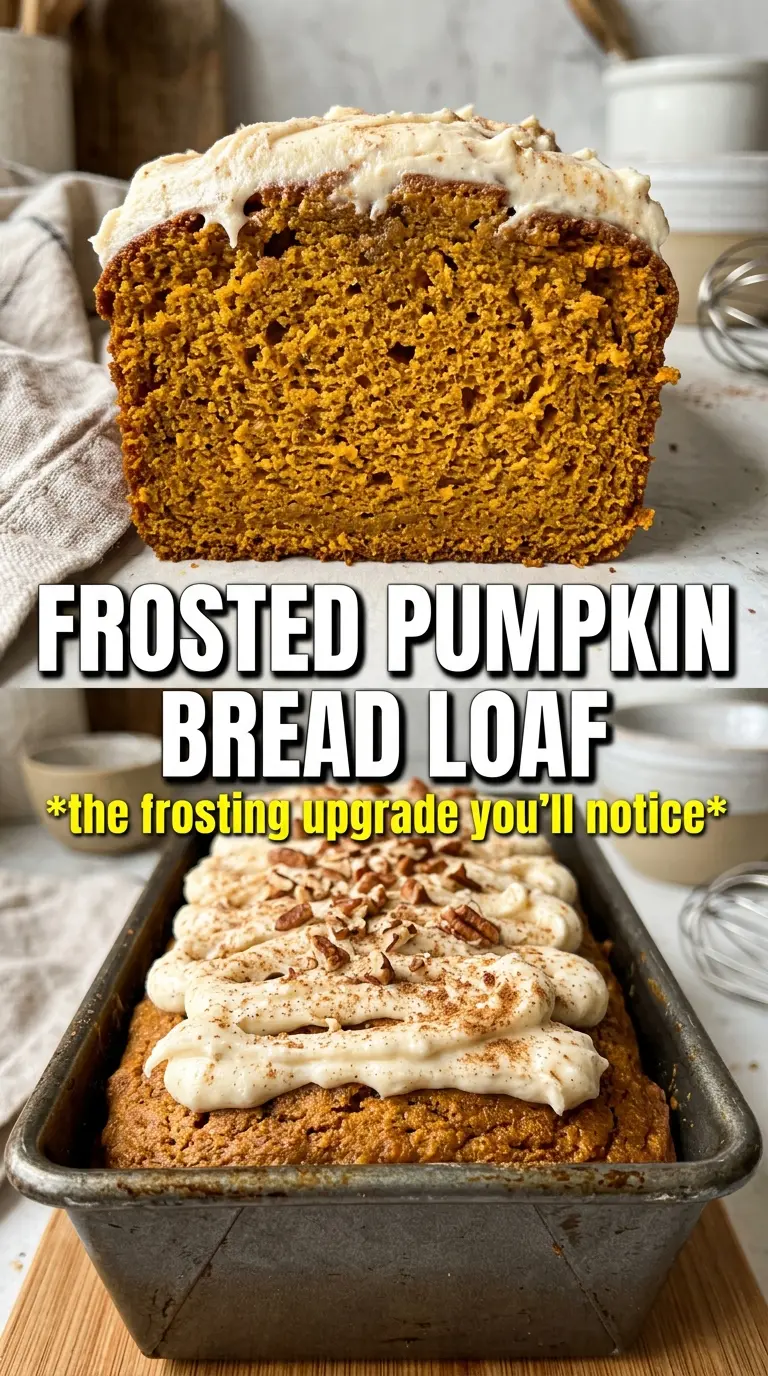
- All-purpose flour — This gives the loaf enough structure to hold up under the pumpkin puree and frosting. Don’t pack it into the cup; too much flour makes the bread dry and squat.
- Baking soda — It reacts with the moisture and acidity in the batter to help the loaf rise. If it’s old, the bread won’t get much lift and the top can bake up flat.
- Eggs — They bind the batter and help the crumb slice neatly. Room-temperature eggs mix in more smoothly, which keeps you from overworking the batter.
- Cream cheese frosting ingredients — Softened cream cheese and butter beat into a smooth base; powdered sugar thickens it without graininess; milk loosens it just enough to spread. If the frosting feels stiff, add milk a teaspoon at a time so it doesn’t turn runny.
How to Mix and Bake It Without Losing the Soft Crumb
Build the Batter Gently
Whisk the dry ingredients together first so the spice and leavening are evenly distributed. In a separate bowl, whisk the pumpkin, sugars, oil, eggs, and vanilla until the mixture looks smooth and glossy, then fold in the flour mixture just until combined. If you beat it hard at the end, the loaf gets tougher instead of lighter.
Watch the Pan, Not Just the Timer
Pour the batter into a greased 9×5 loaf pan and smooth the top so it bakes evenly. Bake at 350°F until a toothpick inserted in the center comes out clean or with a few moist crumbs, usually 60 to 65 minutes. If the top browns too fast before the center is done, tent it loosely with foil for the last stretch of baking.
Frost Only After Complete Cooling
Beat the softened cream cheese, butter, powdered sugar, vanilla, cinnamon, and enough milk to make a thick spreadable frosting. The loaf has to be completely cool before you frost it, or the topping slides right off and turns glossy instead of fluffy. Spread it thickly over the top, then finish with a dusting of cinnamon for a clean bakery-style look.
How to Adapt This for Different Kitchens and Different Diets
Dairy-Free Version
Swap the cream cheese, butter, and milk in the frosting for dairy-free versions that soften and beat well. The frosting will taste a little less tangy depending on the brand, but you’ll still get that thick, sweet topping that sits nicely on the loaf.
More Spice, Less Sweetness
Add an extra 1/2 teaspoon of cinnamon or a pinch of nutmeg if you want the loaf to taste more warmly spiced. You can also reduce the frosting layer slightly and dust the top with cinnamon instead, which lets the pumpkin flavor come through more clearly.
Cupcake or Mini Loaf Swap
Divide the batter into lined muffin cups or mini loaf pans and start checking early, since smaller bakes set much faster. The texture stays soft, but you’ll get more browned edges and a higher frosting-to-cake ratio.
Storage and Reheating
- Refrigerator: Store covered for up to 5 days. The frosting firms up in the fridge, but the loaf stays moist.
- Freezer: Freeze unfrosted slices or the plain loaf for up to 2 months, wrapped tightly and then placed in a freezer bag. Frosting doesn’t thaw as neatly, so add it after defrosting if you want the best texture.
- Reheating: Warm a slice briefly in the microwave or let it come to room temperature. If you heat it too long, the frosting softens and the crumb can turn greasy.
Questions I Get Asked About This Recipe
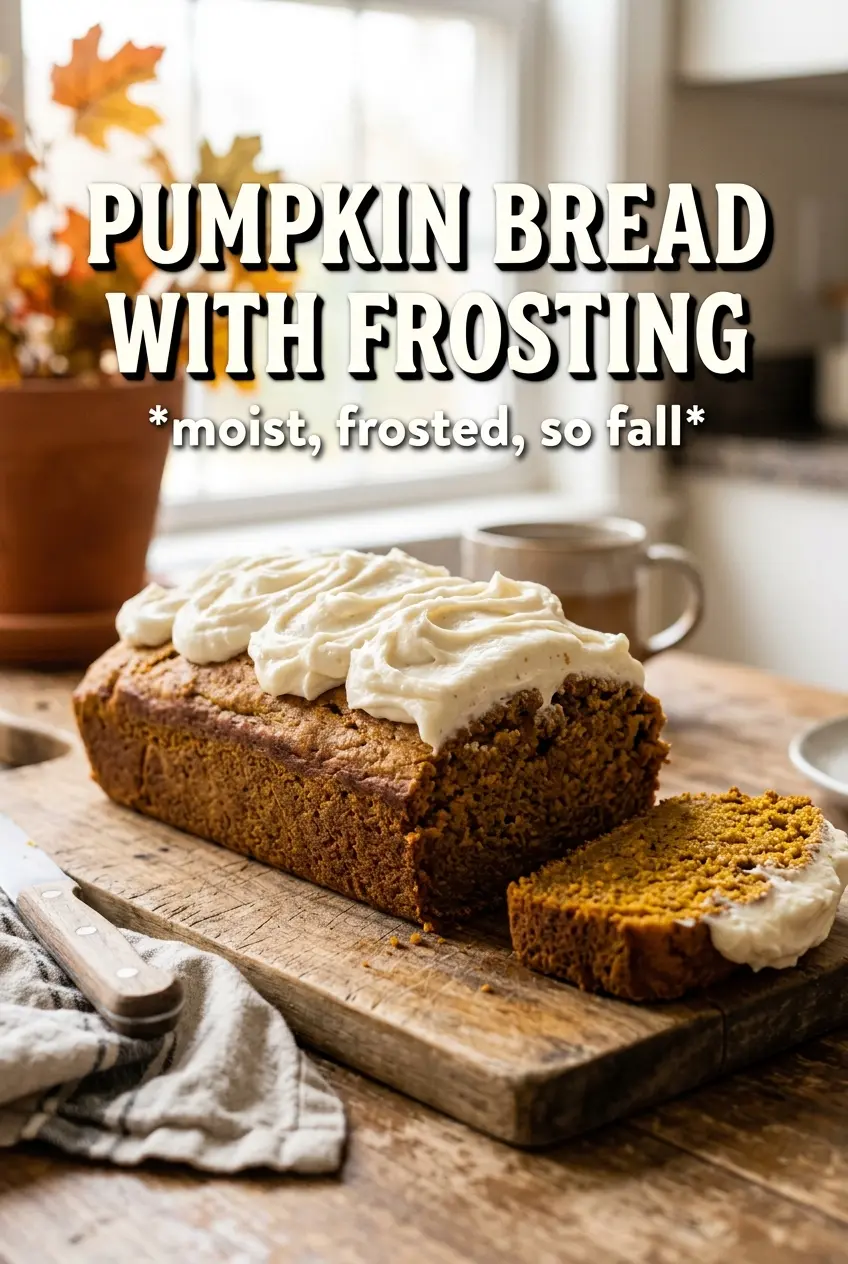
Pumpkin Bread With Cream Cheese Frosting
Ingredients
Equipment
Method
- Preheat oven to 350F, then grease a 9x5 loaf pan for easy release.
- Whisk all-purpose flour, baking soda, pumpkin pie spice, cinnamon, and salt until evenly combined, with no visible lumps.
- Whisk pumpkin puree, granulated sugar, brown sugar, vegetable oil, eggs, and vanilla until smooth and glossy.
- Fold the flour mixture into the pumpkin mixture just until no dry streaks remain, keeping the batter thick.
- Bake for 60-65 minutes, until a toothpick inserted in the center comes out clean with only a few moist crumbs.
- Cool completely in the pan before frosting to prevent melting or sliding.
- Beat cream cheese and unsalted butter until smooth and creamy, with no lumps.
- Beat in powdered sugar, vanilla, and cinnamon until the frosting is thick and smooth.
- Add milk 1 tbsp at a time until the frosting is spreadable, pausing when it slowly ribbons off the spoon.
- Spread frosting generously over the cooled loaf in an even layer.
- Dust the top with cinnamon for a finished look.