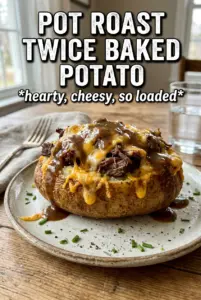
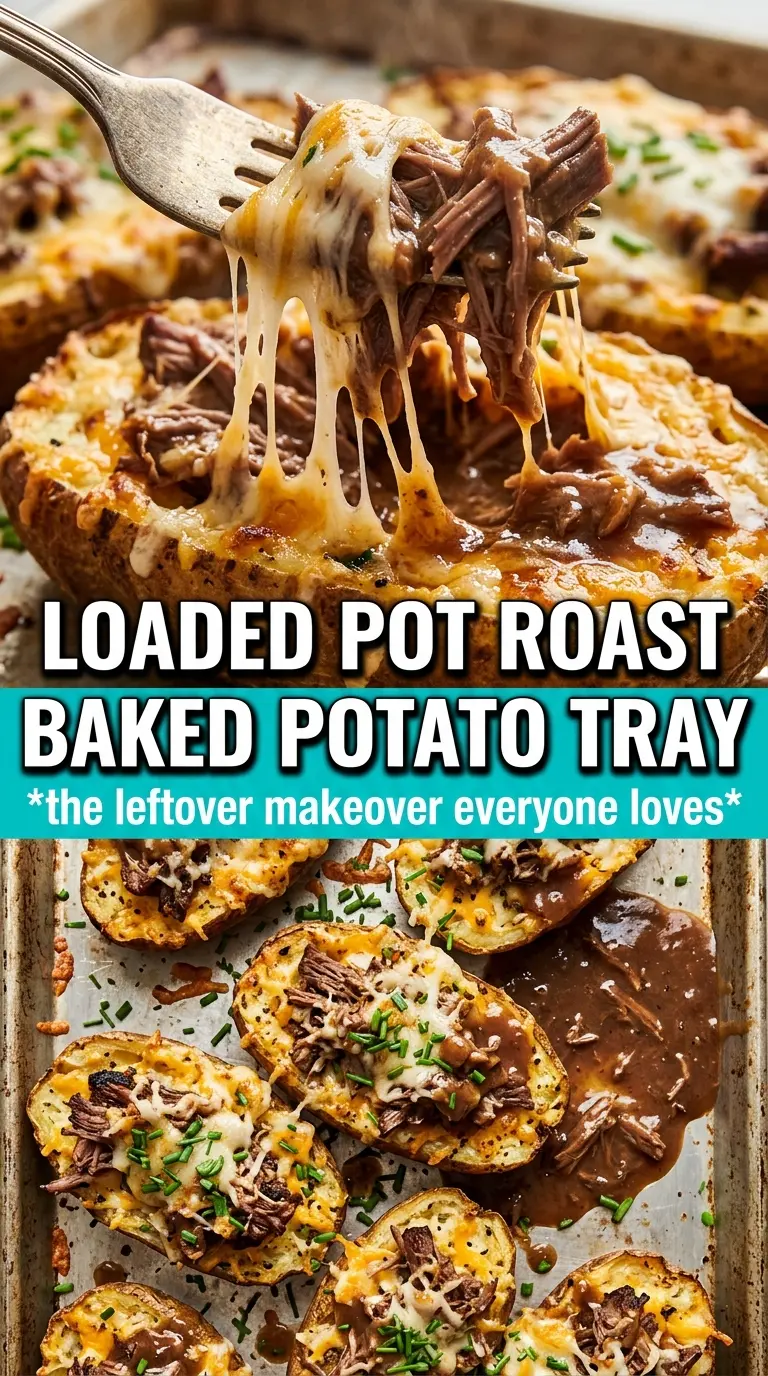
Pot roast twice baked potatoes hit that sweet spot between comfort food and leftovers that feel intentional. The potato shells stay crisp enough to hold a generous filling, while the center turns rich and creamy with shredded beef folded right through it. A little sharp cheddar on top gives you that browned, bubbling finish that makes the whole pan smell like supper is officially handled.
The trick is keeping the potato flesh light instead of dense. Butter, sour cream, and just enough milk loosen the mash so it doesn’t turn gluey once it bakes a second time. Warming the pot roast in its gravy first matters too, because cold beef straight from the fridge cools everything down and makes the filling harder to spread evenly.
Below, I’ve included the small details that keep the skins sturdy, the filling creamy, and the topping browned without drying out the beef. If you’ve got leftover pot roast in the fridge, this is one of the best ways to give it a second life.
The potato shells held up perfectly and the filling stayed creamy even after baking twice. I loved that the gravy kept the roast moist instead of drying out in the oven.
Save these pot roast twice baked potatoes for the night you want leftover beef, crisp skins, and a cheesy gravy-topped finish in one pan.
The Secret to Keeping the Potato Shells Sturdy After Scooping
Twice baked potatoes fail when the shells get too thin or the flesh inside turns wet before the second bake. Leave a 1/4-inch border all around, and don’t dig so deep that the skins lose their shape. Russets are the right potato here because their thick skins crisp up well and their starchy centers mash into something fluffy instead of heavy.
The other mistake is overworking the filling. Once the butter, sour cream, milk, and cheddar are in, mash just until smooth. If you beat it into a paste, the filling gets dense after the second bake and you lose that light, creamy middle that makes these worth making.
What Each Ingredient Is Doing in the Filling
- Russet potatoes — These are the backbone of the recipe. Their fluffy interior mashes cleanly, and the skins are thick enough to survive scooping, filling, and baking again.
- Leftover pot roast — The beef brings the main flavor and makes this feel like a full meal, not a side dish. Shred it fairly small so it folds into the potato mixture without clumping.
- Pot roast gravy — This keeps the meat moist and seasons the filling from the inside. If you don’t have gravy, use beef broth, but reduce it first if it tastes thin so it doesn’t water down the potatoes.
- Sour cream and butter — These give the mash body and richness. Sour cream adds tang that keeps the filling from tasting flat after baking.
- Sharp cheddar — Use sharp cheddar here, not mild. You want enough punch to stand up to the beef and gravy, and the divided cheese gives you both flavor in the mash and a browned top.
- Green onions — Add these at the end so they stay fresh and bright. They cut through the richness and keep each bite from feeling heavy.
Building the Filling So It Stays Creamy, Not Heavy
Warm the Roast Before It Goes In
Warm the shredded pot roast in its gravy before you fold it into the potatoes. Cold beef drags the temperature down and makes the filling stiff before it even reaches the oven. You want the roast hot enough that it blends in easily, but not boiling, which can dry out the meat and make the gravy separate.
Mash the Potatoes While They’re Still Hot
Scoop the potato flesh into a bowl while the potatoes are still warm, then mash with butter, sour cream, milk, and one cup of cheddar. Warm potatoes absorb the dairy better and break down more smoothly. If the mixture looks thick before baking, add a spoonful of milk at a time until it spreads easily without becoming loose.
Fill, Top, and Broil at the End
Spoon the mixture back into the shells and mound it slightly so the tops brown nicely. Bake just until heated through and the cheese melts, then finish under the broiler for a minute or two until the tops get spotty and golden. Keep an eye on them at that stage, because the difference between browned and burnt is about thirty seconds under a hot broiler.
Swap the Roast for Braised Beef
If you don’t have pot roast, any braised beef with some cooking liquid will work. The texture stays close, though a leaner cut may need a little extra gravy or broth so the filling doesn’t turn dry in the oven.
Make It Gluten-Free
This dish is naturally gluten-free as long as your gravy is made without flour or you use a gluten-free beef broth. That’s the only place hidden gluten usually sneaks in.
Use Leftover Pot Roast from the Fridge
Leftover pot roast works best when it’s already tender enough to shred easily. If the beef is in big chunks, chop it small so every bite gets some meat without tearing the potato shells.
Storage and Reheating
- Refrigerator: Store leftovers in an airtight container for up to 4 days. The skins soften a bit, but the filling stays creamy.
- Freezer: Freeze after baking if needed, wrapped well and stored in a freezer-safe container for up to 2 months. The texture is best if you freeze them before adding the green onions.
- Reheating: Reheat covered at 350F until hot in the center, then uncover for the last few minutes to crisp the top again. Microwave reheating works in a pinch, but it softens the skins and can make the cheese rubbery.
Questions I Get Asked About This Recipe
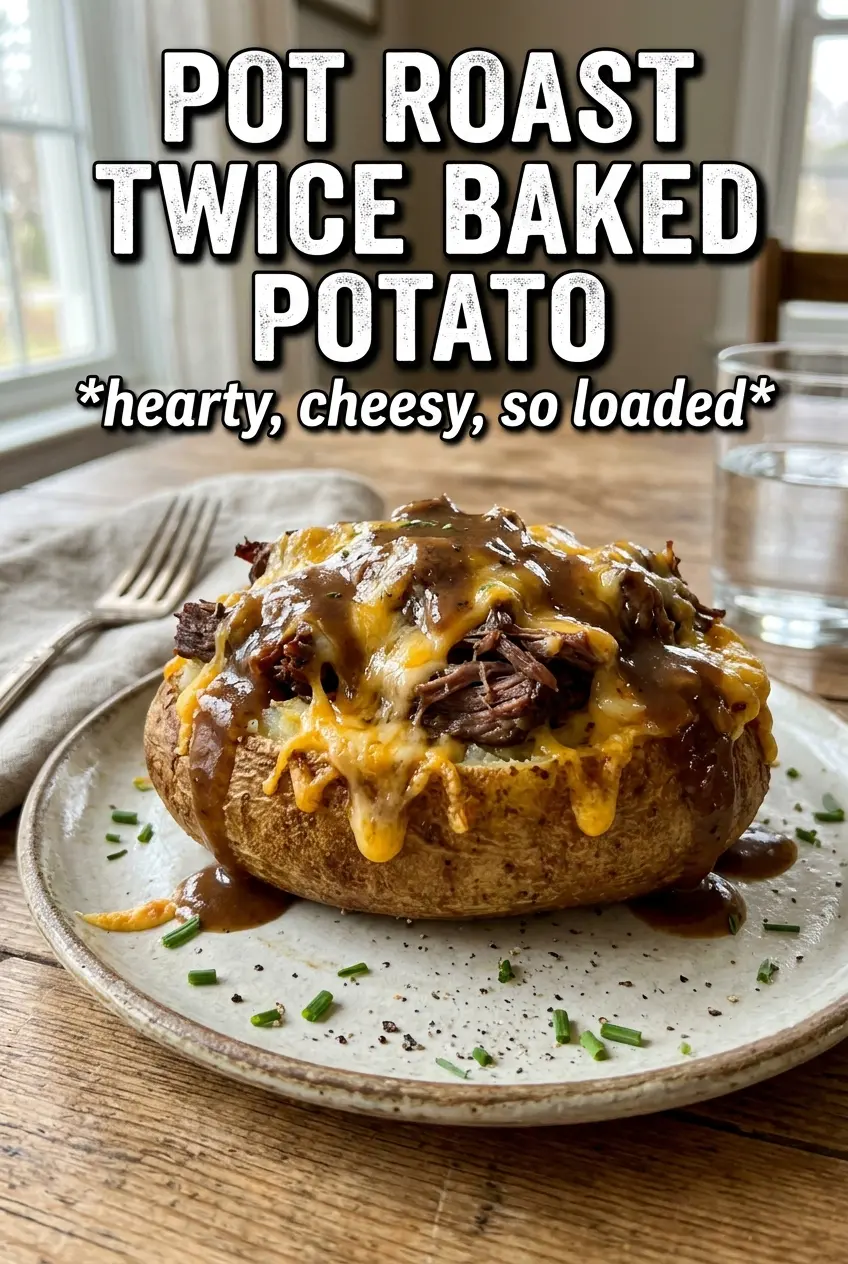
Pot Roast Twice Baked Potatoes
Ingredients
Equipment
Method
- Preheat the oven to 400F. Halve the baked potatoes lengthwise and scoop out the flesh, leaving a 1/4-inch shell.
- Mash the potato flesh with unsalted butter, sour cream, milk, 1 cup sharp cheddar, salt, and pepper until smooth.
- Warm the leftover pot roast in its gravy. Fold the warmed pot roast into the mashed potato mixture.
- Fill the potato shells with the pot roast mixture and top with the remaining sharp cheddar.
- Bake for 15-18 minutes, until heated through and the cheese is bubbly. Use a visual cue of melted, lightly browned bubbling at the edges.
- Broil for 2 minutes until golden. Top with green onions and drizzle over extra gravy.