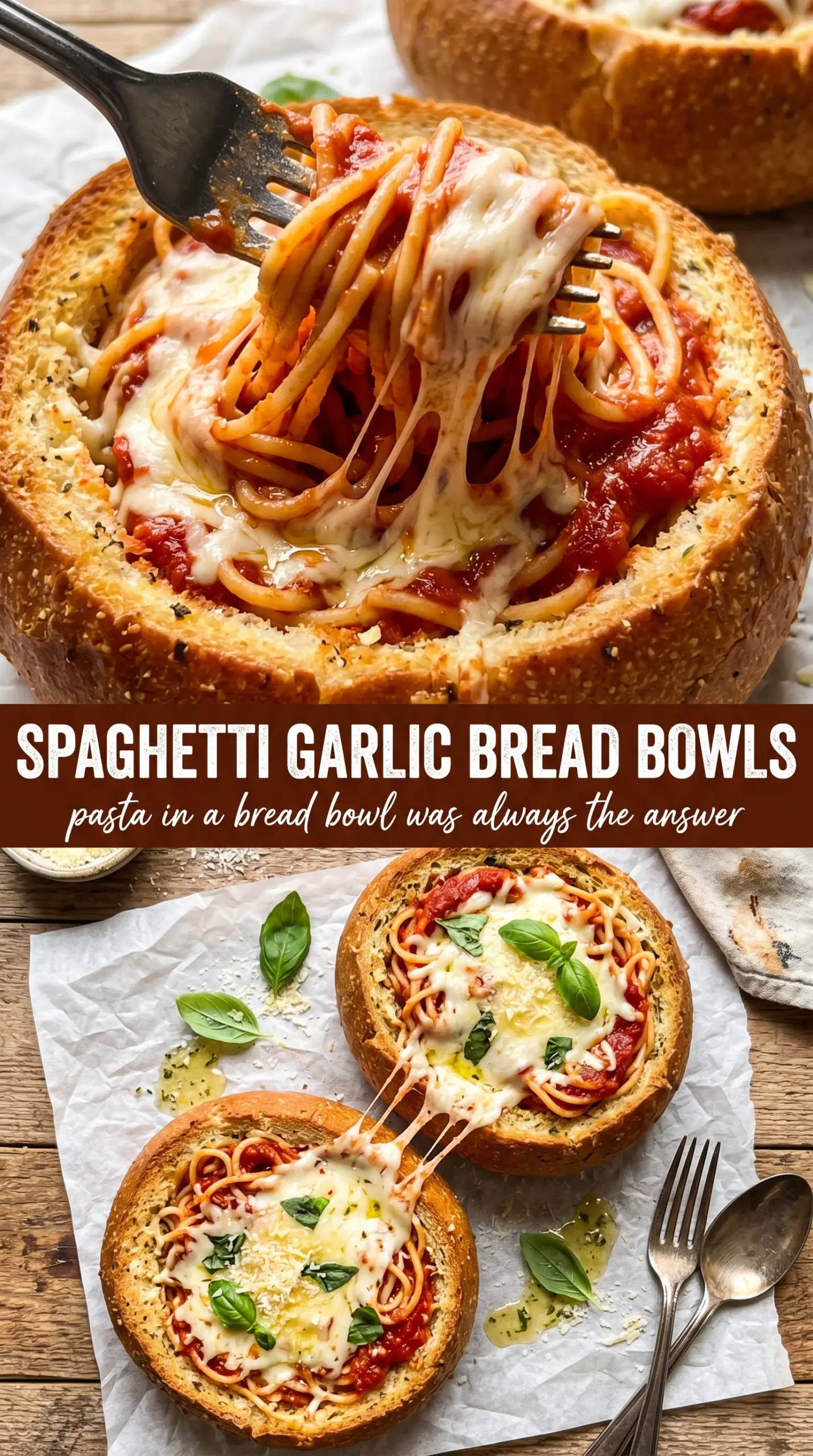
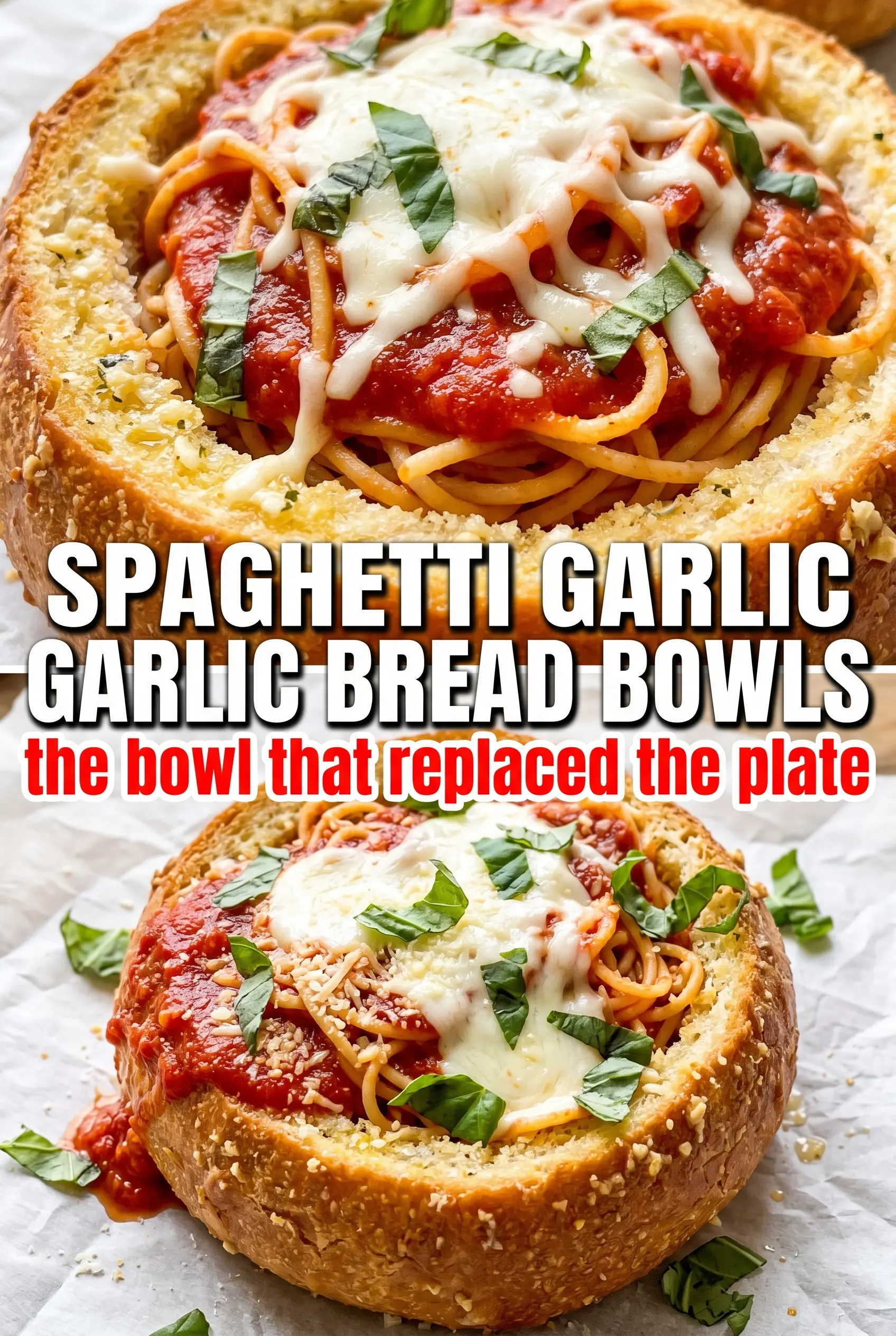
Spaghetti tucked into a crisp, garlicky bread bowl turns dinner into something people actually lean over the table for. The bread stays sturdy enough to hold the sauce, the cut edges toast up with butter and garlic, and the mozzarella melts into the pasta instead of sliding off the top. Every bite gives you noodles, meat sauce, and that browned, crunchy rim at the same time.
The part that makes this work is treating the bread bowl like more than a container. Brushing it with garlic butter and baking it first keeps the inside from going soggy too fast, and leaving a thick border gives you a shell that can handle a generous fill. I also like to simmer the meat sauce until it’s a little thick before it goes into the bowls, because thin sauce is what turns the bottom soft before dinner even hits the table.
Below you’ll find the little details that matter here: how to hollow the bread without punching through the base, why the first bake matters, and a couple of easy ways to change up the filling without losing the fun of the dish.
I was worried the bread bowls would get mushy, but baking them with the garlic butter first made the crust stay crisp all the way through dinner. The sauce was thick enough that nothing leaked, and the melted mozzarella on top was perfect.
Love the crisp-edged spaghetti filling and cheesy garlic bread shell? Save this bread bowl dinner for the night you want pasta to feel a little more fun.
The Trick to Keeping the Bread Bowl Crisp Under Spaghetti
The biggest failure point here is moisture. Bread bowls go soft when they’re hollowed too thin, skipped over in the oven, or filled with sauce that’s still loose and watery. The fix is straightforward: build a thick enough shell, toast it before filling, and keep the sauce reduced until it clings to the pasta instead of pooling underneath it.
That first bake does more than brown the bread. It dries the surface a bit so the garlic butter can soak in without turning the crumb gummy, and it gives the bowl a little structure before the spaghetti goes in. If you’ve ever had a bread bowl collapse halfway through dinner, that’s usually because the bread got loaded before it had a chance to set.
- Sourdough bread bowls — These give you a sturdy crust and a slightly tangy flavor that stands up to the meat sauce. Plain round rolls work in a pinch, but they’re softer and more likely to leak if they’re small or thin.
- Garlic butter — This isn’t just for flavor. It helps the outside toast deeply and keeps the torn bread edges from tasting dry. Brush it on generously, especially around the cut top and the inside walls.
- Marinara sauce — Use a sauce you already like, because it carries the whole dish. If it runs thin, simmer it a few extra minutes after adding the beef so it coats the spaghetti instead of collecting in the bottom of the bowl.
- Mozzarella — Low-moisture shredded mozzarella melts best here and gives you those stretchy, browned bits over the rim. Fresh mozzarella has more water and can make the topping slide.
- Parmesan — Add it at the end so you get a sharp finish over the rich sauce. It’s the easiest place to get extra savory depth without changing the structure of the dish.
What Each Ingredient Is Actually Doing in This Recipe
- Primary ingredient (the star) — This carries the main flavor. Quality matters here most of all.
- Cooking medium (oil, butter, broth, or sauce) — This carries flavors and prevents the dish from being dry or one-dimensional.
- Aromatics (garlic, onion, ginger, herbs) — These add depth and complexity. They sweeten and mellow as they cook.
- Seasonings (salt, spices, dried herbs) — These define the personality and prevent the dish from tasting flat.
- Vegetables (if using) — These add texture, nutrition, and complementary flavors. Cut to size for even cooking.
- Acid (lemon, vinegar, tomato, wine) — This brightens and prevents the dish from tasting heavy or one-dimensional.
- Optional richness (cream, cheese, butter) — These make the dish luxurious. Balance with acid so it stays bright.
- Proper technique (heat, time, stirring) — Even great ingredients need proper technique to shine and create the best results.
Building the Bread Bowls So They Hold Up
Hollowing Without Breaking the Base
Cut the tops off the bread bowls and pull out the soft center with your fingers, but leave about a 1-inch border all the way around. You want a cavity, not a tunnel to the counter. If the base feels flimsy when you press it, stop digging before you go any farther. A thick bottom is what keeps the sauce from soaking through in the oven.
Toasting the Garlic Butter Layer
Mix the melted butter with the garlic and parsley, then brush it over the inside and outside of each bowl before the first bake. The bread should smell garlicky and turn lightly crisp at the edges, not just warm through. If the butter pools in the center, spread it out with the brush so the whole surface gets coated and the crumb doesn’t go greasy in one spot.
Making the Sauce Thick Enough for the Fill
Brown the beef until there’s no pink left and drain off the fat before adding the marinara, Italian seasoning, and red pepper flakes. Let it simmer until it looks glossy and spoonable, not soupy. When you stir in the cooked spaghetti, the noodles should be coated instead of swimming. That’s the texture you want going into the bowls, because the oven will loosen everything slightly once the cheese melts.
Finishing Under the Broiler Heat
Pack the spaghetti mixture into the toasted bowls and cover the top with mozzarella. Bake until the cheese is melted and bubbling and the tops are starting to spot with gold. If the cheese browns too fast before the center is hot, your oven is running hot at the top rack; drop the pan one level lower so the bread gets time to heat through.
Three Ways to Make These Spaghetti Garlic Bread Bowls Work for Your Table
Make It Meatless Without Losing the Hearty Feel
Swap the ground beef for browned mushrooms, lentils, or a plant-based crumbles mix. Mushrooms bring the savory depth you’d normally get from beef, while lentils make the filling thicker and more spoonable. Keep the sauce on the thick side so the vegetarian filling doesn’t slump or leak.
Use Gluten-Free Pasta and a Gluten-Free Bread Bowl
This works well if you can find sturdy gluten-free round rolls or bread bowls with enough structure to hold the filling. Cook the gluten-free spaghetti just to tender so it doesn’t break apart when you toss it with the sauce, and handle the bowls gently after toasting because some gluten-free breads brown faster and dry out sooner.
Turn It Into a Lighter Tomato Pasta Bowl
Use half the beef and add extra marinara, or leave the meat out and stir in sautéed zucchini or spinach at the end. The flavor gets brighter and less rich, and the bread bowl still gives you that fun contrast of crisp crust and saucy pasta. Just keep the sauce thick enough that the vegetables don’t release too much liquid.
Storage and Reheating
- Refrigerator: Store leftover filling separately for up to 4 days. The bread bowls lose their crispness once filled, so if you expect leftovers, keep the pasta and bread apart.
- Freezer: The meat sauce freezes well for up to 2 months. Freeze the filling on its own; the assembled bread bowls don’t freeze well because the bread turns soggy when thawed.
- Reheating: Reheat the pasta filling in a skillet or microwave until hot, then spoon it into a fresh bread bowl or a newly toasted one. If you reheat the whole assembled bowl, the bread softens fast and the center cools unevenly.
Questions I Get Asked About This Recipe
Spaghetti Garlic Bread Bowls
Ingredients
Equipment
Method
- Preheat the oven to 375°F. Place a sheet pan inside if you want extra crisping on the bottoms.
- Cut the tops off each bread bowl and hollow out the centers, leaving a 1-inch border. Save the tops if you want to cover them while baking.
- Mix melted butter with garlic and parsley, then brush generously inside and outside each bread bowl. Make sure the butter reaches the border for browning.
- Bake the prepared bowls for 10 minutes at 375°F until crispy. Look for golden, set edges.
- Brown the ground beef in a skillet, then drain the fat. Keep the beef in the skillet.
- Add marinara, Italian seasoning, and red pepper flakes to the beef. Stir until evenly combined.
- Simmer the sauce for 10 minutes until slightly thickened. You should see steady bubbling across the surface.
- Toss the cooked spaghetti with the meat sauce until the noodles are well coated. Use enough sauce so the pasta looks glossy.
- Fill each bread bowl generously with the spaghetti and meat sauce. Pack it down slightly to keep the pile from tipping over.
- Top each bowl with shredded mozzarella and bake for 8–10 minutes at 375°F. Bake until the cheese is melted and bubbly over the rim.
- Serve immediately with Parmesan for serving. Finish with extra Parmesan on top if desired.