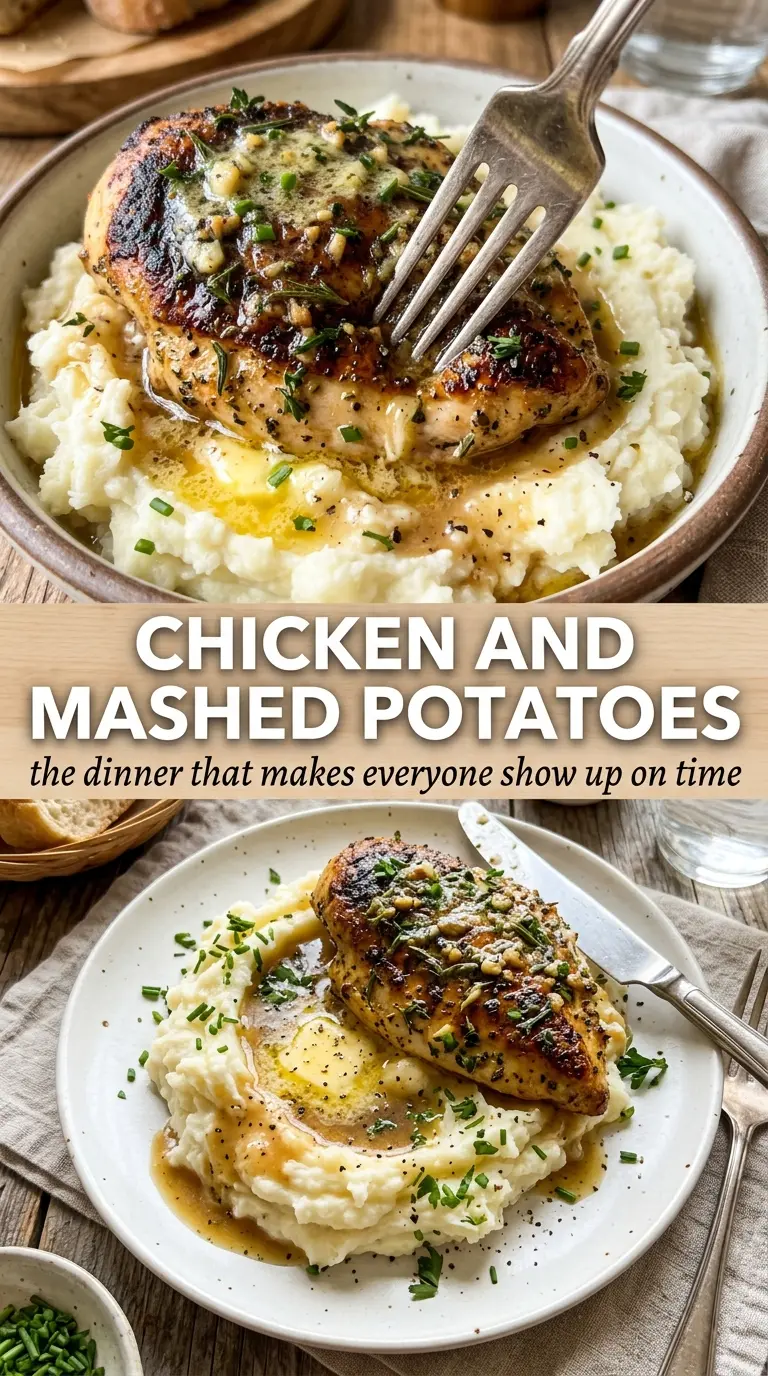
Golden seared chicken over buttery mashed potatoes is the kind of dinner that earns a permanent place in the rotation. The chicken stays juicy, the mashed potatoes turn creamy and smooth, and the garlic herb pan sauce ties everything together without turning heavy or fussy. It looks like a comfort meal, but it eats with the clean, satisfying balance of a well-made skillet dinner.
What makes this version work is the order. The chicken gets a dry seasoning blend before it ever hits the pan, so it develops a savory crust instead of steaming in its own surface moisture. Then the same pan becomes the sauce base, which means the browned bits left behind do the work of giving the broth and garlic real depth. The potatoes are Yukon Golds for a reason too: they mash into a velvety texture without needing a lot of extra handling, which keeps them from turning gluey.
Below you’ll find the little details that matter here, including how to keep the potatoes fluffy, when to pull the chicken so it stays tender, and what to do if your pan sauce looks thin at first.
The chicken browned beautifully and the sauce picked up every bit from the pan. My potatoes stayed fluffy, and the whole dinner tasted like something from a restaurant.
Love that garlic herb pan sauce over creamy mashed potatoes? Save this chicken dinner for the nights when you want comfort food that still feels polished.
The Chicken Needs a Dry Surface Before It Ever Hits the Pan
Most chicken breasts go wrong before the sear even starts. If the surface is damp, the seasoning slides off and the pan gives you pale, crowded chicken instead of a browned crust. Pat the chicken dry, then coat it evenly with the garlic powder, smoked paprika, thyme, rosemary, salt, and pepper. That seasoning layer helps the chicken taste like something even before the sauce goes on.
Use medium-high heat and give the chicken space. If the pan is crowded or the heat is too low, the chicken will steam and the outside will stay soft. You’re looking for a deep golden color and an easy release from the pan; if it sticks hard, it needs another minute.
- Chicken breasts — Boneless, skinless breasts cook fast and stay neat for plating, but they dry out if you cook them past 165°F. If yours are thick on one end and thin on the other, pound them lightly for even cooking.
- Smoked paprika and dried herbs — This blend gives the chicken a savory, almost roasted flavor without needing a marinade. Fresh herbs don’t work the same way here because they can burn before the chicken finishes.
- Olive oil and butter — Oil handles the sear, while butter finishes the pan sauce with richness. Don’t start the chicken in butter alone or it can brown too fast and turn bitter.
- Yukon Gold potatoes — These are the right potatoes for a creamy mash because they break down smoothly without turning sticky. Russets work, but they tend to need more cream and a lighter hand while mashing.
- Warm cream or milk — Cold dairy cools the potatoes down and can make the mash feel heavy. Warm it first so it blends in cleanly and stays fluffy.
What Each Ingredient Is Actually Doing in This Chicken
- Chicken breasts (the protein) — Let them sit at room temperature 15 minutes before cooking. This helps them cook evenly without drying.
- Oil or butter (the cooking medium) — This prevents the chicken from drying out and carries herb and spice flavors throughout.
- Garlic (the aromatic foundation) — Fresh minced garlic mellows and becomes sweet when cooked. Don’t brown it or it turns bitter.
- Cream or sauce (the moisture keeper) — This prevents the chicken from drying out during cooking. Balance richness with acid.
- Lemon, wine, or acid (the brightness) — This prevents heavy cream sauces from tasting flat. Add at the end to preserve freshness.
- Fresh herbs (basil, thyme, parsley) — Add some during cooking and some after so you get both cooked and fresh flavors.
- Cheese or toppings (optional richness) — These add creaminess and depth. Don’t overdo it or the dish becomes heavy.
- Proper oven temperature (375-400°F) or pan heat — This cooks chicken through without drying the edges. Use a thermometer for 165°F.
Building the Plate in the Right Order
Getting the Potatoes Smooth Without Overworking Them
Start the potatoes in salted water and cook them until a fork slides through with no resistance. Drain them well, then mash right away with the butter and warmed cream or milk. If you keep mashing after they look smooth, the starches can turn them gummy, so stop as soon as the texture is light and fluffy. Taste and season while they’re still hot, because potatoes absorb salt differently once they cool.
Sealing in the Chicken
Heat the oil until it shimmers, then lay the seasoned chicken in without moving it. Let it sear for 5 to 6 minutes per side, depending on thickness, until the crust is browned and the center reaches 165°F. If the outside darkens too fast before the middle is done, the heat is too high; lower it a little and keep cooking. Pull the chicken to a plate and let it rest while you build the sauce so the juices stay in the meat instead of running onto the cutting board.
Turning the Pan Drippings Into Sauce
After the chicken comes out, melt the butter in the same pan and add the garlic for about a minute, just until it smells sweet and sharp, not browned. Pour in the broth and scrape the bottom of the pan hard enough to loosen every brown bit. Let it simmer until it reduces slightly and turns glossy. If it still looks thin, give it another minute; the sauce should coat a spoon lightly, not puddle like broth.
Bringing It All Together
Spoon the mashed potatoes onto the plate first, then set the chicken on top so the sauce can run down both layers. Drizzle the pan sauce over the chicken while it’s still hot, and finish with parsley for a fresh note. If you slice the chicken before saucing, the juices can escape too quickly; plating it whole first keeps everything tender and neat.
How to Adapt This for a Different Pantry or a Lighter Dinner
Dairy-Free Version
Use olive oil instead of the butter in the pan, then swap the mashed potato dairy for unsweetened oat milk or a plain dairy-free milk with a little extra olive oil. The sauce will be a touch leaner, but it still picks up enough flavor from the browned chicken drippings to taste complete.
Lower-Carb Plate
Serve the chicken and pan sauce over cauliflower mash instead of potatoes. The sauce works the same way, but cauliflower needs to be cooked until very tender and drained well or the plate turns watery.
Bone-In Chicken Thighs
Thighs bring more flavor and stay juicier, but they need a longer, gentler cook. Start them skin-side down if using skin-on thighs, then finish in the oven if needed so the outside doesn’t burn before the inside is done.
Storing Leftovers
- Refrigerator: Store the chicken, mashed potatoes, and sauce in separate airtight containers for up to 4 days. The potatoes will firm up as they chill.
- Freezer: The chicken freezes well for up to 2 months. The mashed potatoes freeze, but the texture gets a little grainy after thawing, so I only freeze them if needed.
- Reheating: Warm the chicken covered in the oven or in a skillet with a splash of broth. Reheat the potatoes over low heat with a little milk, stirring gently so they don’t seize up.
Answers to the Questions Worth Asking

Garlic Herb Chicken Breast with Mashed Potatoes
Ingredients
Equipment
Method
- Boil the Yukon Gold potatoes in salted water for 15-18 minutes until fork-tender, then drain thoroughly.
- Mash the potatoes with butter, warmed heavy cream or whole milk, and salt, pepper, and garlic powder until smooth and fluffy, then keep warm.
- Season the chicken breasts with garlic powder, smoked paprika, dried thyme, dried rosemary, salt, and pepper.
- Heat olive oil in a pan over medium-high heat and sear the chicken for 5-6 minutes per side until golden and cooked through to 165°F, then remove to a plate.
- Melt 2 tablespoons of butter in the same pan, then cook the minced garlic for 1 minute while stirring.
- Add chicken broth and scrape up the browned bits, then simmer for 2-3 minutes until a simple pan sauce forms.
- Place the mashed potatoes on plates and set the seared chicken on top.
- Drizzle the garlic pan sauce over the chicken and across the plate.
- Garnish with fresh parsley and serve.