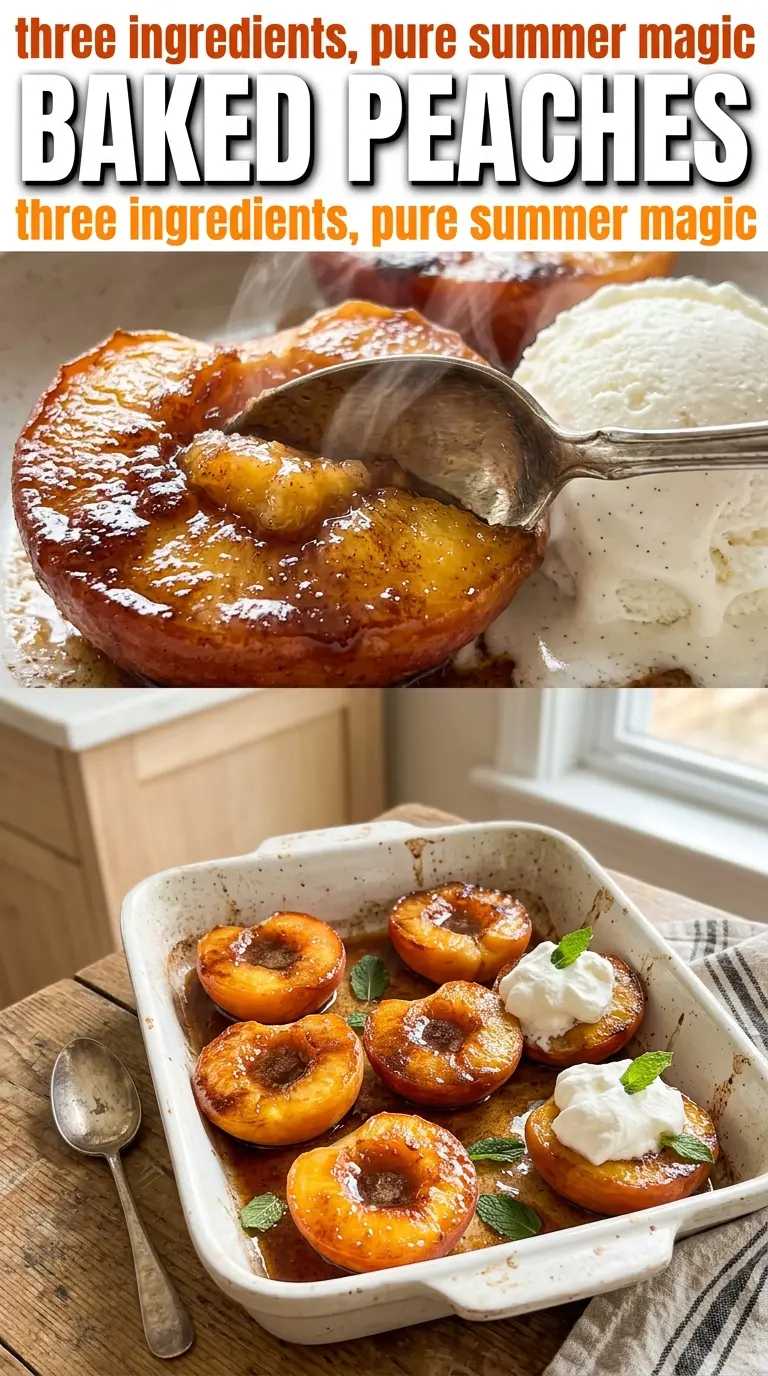
Caramelized baked peaches turn soft and jammy in the oven, with a glossy brown sugar glaze pooled right in the center and just enough cinnamon to make the fruit taste deeper and sweeter. When they’re done well, the peaches hold their shape but yield easily to a spoon, and the edges pick up those little blistered spots that taste like concentrated summer. It’s the kind of dessert that looks understated in the pan and then disappears fast once it hits the table.
The trick is choosing peaches that are ripe enough to smell fragrant but still firm enough to keep from collapsing before the sugar has time to bubble and thicken. A small amount of butter in the center helps the sugar melt into a syrup instead of staying sandy, and the pinch of salt keeps the whole dish from tasting flat. If your peaches are extra juicy, the pan sauce will be looser; if they’re firmer, you’ll get a more concentrated glaze.
Below, I’ll walk you through the exact bake time cues, the ingredient swaps that still work, and the one finishing step that turns the pan juices into the best part of the dessert.
The peaches turned tender without falling apart, and the brown sugar butter melted into the perfect syrupy glaze. I served them with vanilla ice cream and the pan juices were gone in minutes.
Save these baked peaches for the night you want a warm fruit dessert with a golden cinnamon glaze and almost no cleanup.
The Difference Between Tender Peaches and Mush
The biggest mistake with baked peaches is treating every ripe peach the same. If the fruit is too soft going in, the heat can push it past tender before the sugar has time to caramelize. If the fruit is too firm, you’ll end up with peaches that taste baked but still eat like raw fruit. The sweet spot is a peach that gives slightly when pressed and smells fragrant at the stem end.
The other thing that matters is where the sugar lands. Putting the brown sugar, butter, and spices in the hollow where the pit used to be gives you a built-in sauce that stays concentrated instead of sliding off into the pan. That little pool is what gives each bite its glossy, spoonable finish.
- Ripe peaches — Use peaches that are fully fragrant but still hold their shape. Overripe peaches collapse fast and get stringy.
- Brown sugar — Light or dark both work. Dark brown sugar gives a deeper molasses note and a darker glaze.
- Butter — This is what turns the sugar into a sauce instead of dry crystals. Use real butter here; margarine won’t give the same richness or browning.
- Cinnamon and nutmeg — Cinnamon is the main flavor, while nutmeg adds warmth. If you don’t have nutmeg, leave it out rather than adding too much.
- Vanilla extract — It rounds out the sauce and makes the peaches taste more dessert-like. Use pure vanilla if you have it, but imitation vanilla works in a pinch.
What Each Ingredient Is Actually Doing in This Recipe
- Primary ingredient (the star) — This carries the main flavor. Quality matters here most of all.
- Cooking medium (oil, butter, broth, or sauce) — This carries flavors and prevents the dish from being dry or one-dimensional.
- Aromatics (garlic, onion, ginger, herbs) — These add depth and complexity. They sweeten and mellow as they cook.
- Seasonings (salt, spices, dried herbs) — These define the personality and prevent the dish from tasting flat.
- Vegetables (if using) — These add texture, nutrition, and complementary flavors. Cut to size for even cooking.
- Acid (lemon, vinegar, tomato, wine) — This brightens and prevents the dish from tasting heavy or one-dimensional.
- Optional richness (cream, cheese, butter) — These make the dish luxurious. Balance with acid so it stays bright.
- Proper technique (heat, time, stirring) — Even great ingredients need proper technique to shine and create the best results.
Watching the Sugar Turn From Grainy to Glossy
Set the peaches up cut-side up
Place the peach halves in a baking dish with the cut side facing up so the sugar stays in the center as it melts. If they wobble around, nestle them close together so they support each other. You want the flesh exposed to the heat, but you don’t want the sweet filling leaking out before it thickens.
Build the filling in the cavity
Stir the brown sugar with cinnamon, nutmeg, vanilla, and salt, then spoon it evenly into each peach half. A little bit of precision matters here because the sugar needs direct contact with the hot fruit to dissolve properly. Drop the butter on top of the sugar rather than mixing it in; it melts slowly and helps the mixture bubble into a glaze.
Bake until the juices bubble at the edges
Bake at 375°F until the peaches are tender when pierced and the center looks syrupy, about 18 to 22 minutes. The glaze should look dark golden and glossy, not pale and wet. If the peaches are still firm but the sugar is already browning too much, tent the dish loosely with foil for the last few minutes so the fruit can catch up without burning the topping.
Finish with the pan juices
Let the peaches rest for about 5 minutes before serving. That short pause lets the syrup thicken slightly, which makes spooning it over the peaches easier and keeps the dessert from sliding apart on the plate. If you serve them straight from the oven, the glaze is still thin and you lose some of that sticky, caramelized finish.
How to Adapt These Baked Peaches Without Losing the Good Part
Dairy-Free Baked Peaches
Swap the butter for coconut oil or a plant-based butter. Coconut oil gives the glaze a faint tropical note, while vegan butter keeps the flavor closest to the original. The peaches still soften and caramelize, but the sauce will be a touch less rich.
Lower-Sugar Peaches
Cut the brown sugar back to 2 tablespoons if your peaches are very ripe. You’ll get a lighter glaze and a more fruit-forward dessert, but you still need enough sugar to help the juices thicken in the pan.
Add a Crunchy Topping
A spoonful of chopped pecans or sliced almonds can go on top for the last 5 minutes of baking. Add them too early and they’ll burn before the peaches are tender. The nuts give the soft fruit a much-needed contrast.
Make It Ahead for Dessert Tonight
You can halve and pit the peaches a few hours ahead, then keep them covered in the refrigerator until baking time. Don’t add the sugar mixture early or the fruit will start releasing juice and the topping won’t caramelize as well.
Storage and Reheating
- Refrigerator: Store leftovers in an airtight container for up to 3 days. The peaches soften more as they sit, and the glaze loosens a bit.
- Freezer: Freezing isn’t ideal here. The texture turns mushy after thawing, so this is one dessert I’d make fresh.
- Reheating: Warm gently in a 300°F oven until just heated through, about 8 to 10 minutes. The common mistake is blasting them in the microwave, which makes the fruit collapse and the sugar sauce separate.
Answers to the Questions Worth Asking
Baked Peaches
Ingredients
Equipment
Method
- Preheat the oven to 375°F and place the peach halves cut-side up in a baking dish. Arrange them in a single layer so the centers can collect the caramelized juices.
- Stir together the brown sugar, cinnamon, nutmeg, vanilla extract, and salt, then sprinkle the mixture evenly over each peach half. Make sure the spices cover the cut surfaces for a caramelized, spiced glaze.
- Place a small piece of butter in the center of each peach. The butter helps the sugar caramelize into a dark golden syrup while baking.
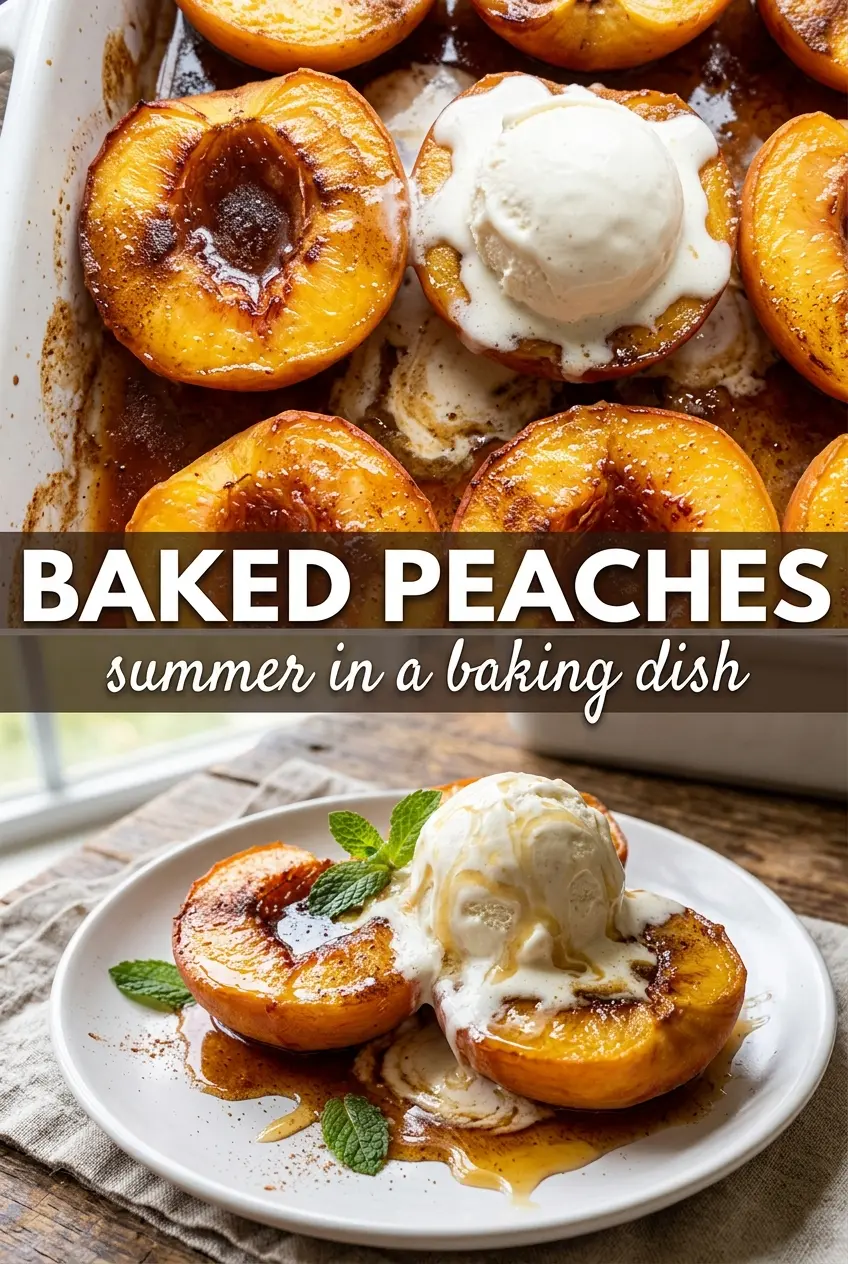
- Bake for 18-22 minutes at 375°F until the peaches are tender and the sugar turns into a dark golden glaze. Look for softened flesh and blistered caramelized edges, with glistening syrup pooling in the center cavity.
- Let the peaches cool for 5 minutes. This short rest helps the glaze thicken slightly before serving.
- Spoon the caramelized pan juices over each peach. Coat the centers so every bite has jammy fruit and concentrated spiced caramel.
- Serve warm with vanilla ice cream and fresh mint. Add the garnish right before serving so it stays bright and fresh.