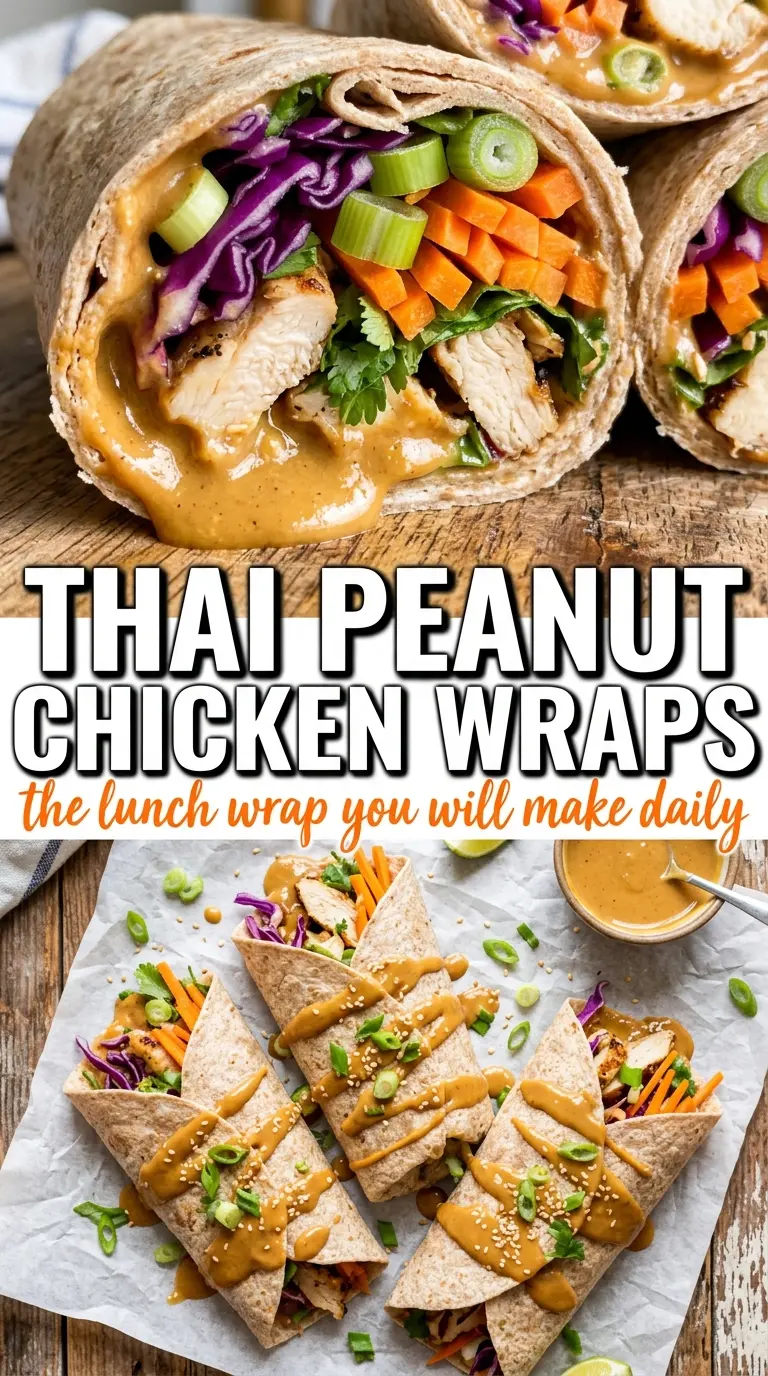
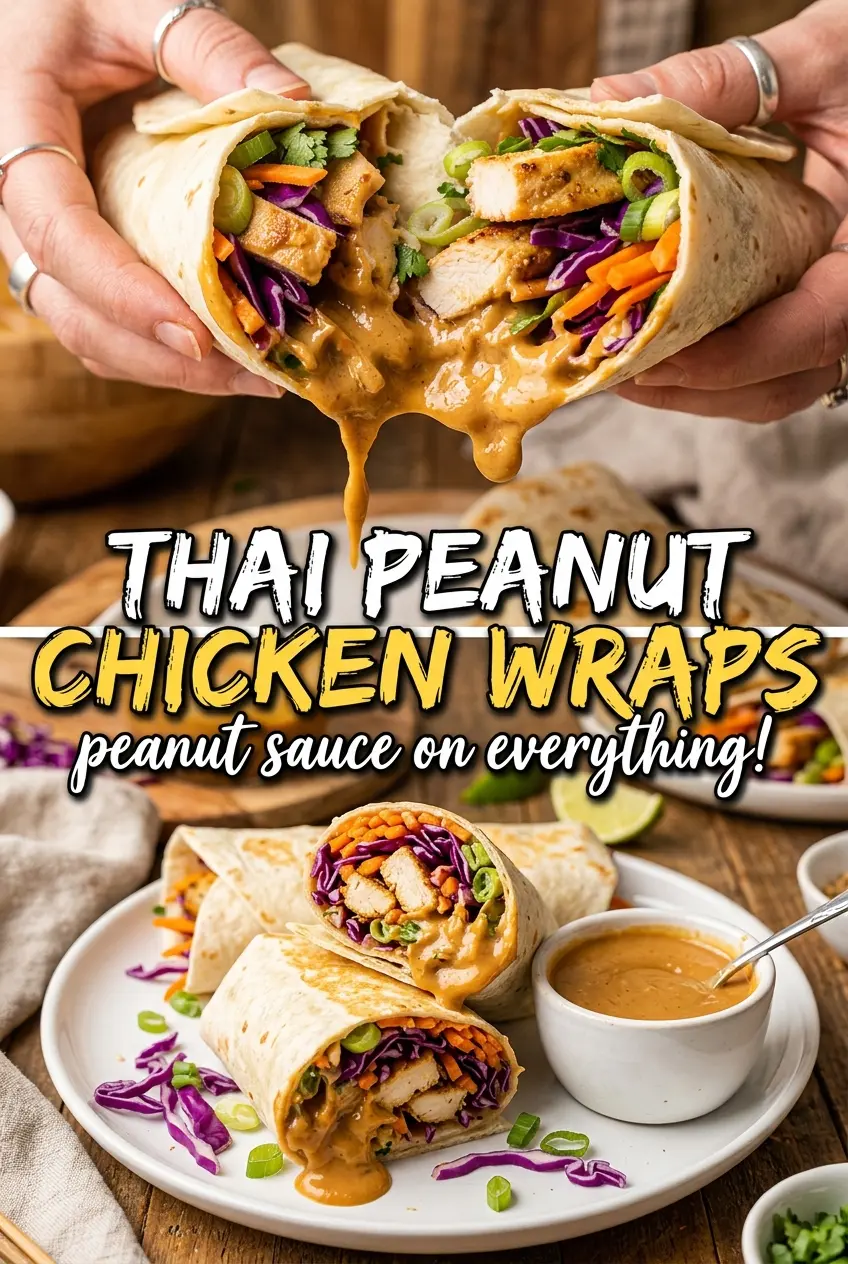
Thai peanut chicken wraps hit that sweet spot between fresh and filling: tender chicken, crisp vegetables, and a creamy peanut sauce that clings to every bite without turning the tortilla soggy. The contrast is what makes them worth making again and again. You get crunch from the cabbage and cucumber, warmth from the chicken, and just enough heat and tang in the sauce to keep each mouthful interesting.
The trick is balance. Peanut butter gives the sauce body, soy sauce brings salt, honey rounds it out, and rice vinegar plus lime juice keep it from tasting heavy. Warm tortillas matter more than people think, too — a cold tortilla tears when you try to roll it, especially once the filling is loaded. I like to slice the chicken and vegetables before I build anything so the wraps come together fast and clean.
Below, you’ll find the exact way I keep the sauce smooth, the wraps tight, and the filling from sliding out the second you cut into them. There’s also a few smart swaps if you want to make them gluten-free or use what’s already in your fridge.
The peanut sauce was silky and just thick enough to stay put, and the wraps held together better than I expected even after I cut them in half. My husband asked me to pack the leftovers for lunch the next day.
Save these Thai Peanut Chicken Wraps for a fast lunch or dinner with crisp vegetables and creamy peanut sauce.
The Roll-Up Problem Most Wraps Ignore
The filling in a wrap fails for one of two reasons: it’s too wet, or it’s stacked too high in the wrong place. Thai peanut sauce is thick enough to help bind the filling, but if you pour it on like dressing, the tortilla softens before you finish the first half. Spread a thin layer first, then add the filling in a narrow line down the center so the wrap can close around it instead of fighting it.
The other thing that matters is temperature. Warm tortillas are flexible; cold ones crack. If your chicken is hot off the pan, let it cool for a few minutes before building, because steamy chicken trapped inside a tortilla turns the whole thing limp fast. You want the wrap assembled with enough warmth to taste fresh, not enough to create condensation.
- Chicken breast — Grilled or pan-cooked chicken breast gives you clean slices and a neutral base for the sauce. Chicken thigh works too if you want a richer bite, but breast keeps the wrap lighter and easier to layer.
- Peanut butter — Use a smooth peanut butter here. Natural peanut butter can work, but stir it well first or the sauce will split into oily and dry layers before it comes together.
- Rice vinegar and lime juice — This is the brightening duo. If you skip one, the sauce leans heavy; if you only use vinegar, it tastes sharper and less round. Lime is the part that makes the peanut sauce taste alive.
- Flour tortillas — Large, soft tortillas hold the filling best. If you need gluten-free, use a sturdy gluten-free wrap and warm it gently so it doesn’t crack when you roll.
What Each Ingredient Is Actually Doing in This Chicken Dish
- Chicken (cut into uniform pieces) — Even-sized pieces cook at the same rate. Slice against the grain so each piece stays tender.
- Aromatics (garlic, ginger, onion) — Cook these first with oil to bloom the flavors. They become the foundation of the dish, not separate elements.
- Vegetables (variety, cut by size) — Add in order of cooking time so everything finishes together. Hard vegetables first, softer ones near the end.
- Sauce (soy-based, peanut, or cream) — This coats everything and brings flavors together. The right sauce-to-ingredient ratio matters.
- Oil (for high-heat cooking) — High-heat oil helps vegetables and chicken brown quickly. Don’t skimp or everything steams instead of searing.
- Acid (vinegar, lime, or citrus juice) — This brightens the dish and prevents it from tasting heavy. Add near the end to preserve freshness.
- Spices or heat (chili, ginger, hot sauce) — These add complexity and depth. Layer them so no single flavor overwhelms the others.
- High heat and quick cooking (the technique) — Fast cooking keeps chicken tender and vegetables crisp. Don’t overcook or the chicken becomes dry.
How to Keep the Sauce Smooth and the Wrap Tight
Whisking the Peanut Sauce
Start with the peanut butter, soy sauce, honey, vinegar, lime juice, and sriracha, then whisk until the mixture looks glossy and uniform. Add the water a little at a time until the sauce drizzles but still clings to a spoon. If it looks grainy, keep whisking before adding more liquid; the sauce usually just needs a moment to emulsify. A sauce that’s too thin slides out of the wrap and pools in the bottom of the plate.
Warming the Tortillas
Warm the tortillas in a dry skillet for a few seconds per side or use the microwave under a damp paper towel. You’re not trying to cook them, just relax the gluten so they bend without tearing. If they cool too fast while you’re building, warm them again before rolling. A stiff tortilla is the most common reason these split at the seam.
Layering for a Clean Roll
Spread about 2 tablespoons of sauce over each tortilla, then layer the chicken and vegetables in a narrow strip across the center. Keep the filling compact and leave space at the edges so the wrap can tuck in neatly. If you overfill it, the first cut looks great and the rest of the wrap falls apart. Roll it tightly, pulling the filling back toward you as you go, then slice on a diagonal with a sharp knife.
Small Changes That Still Keep the Wrap Working
Make It Gluten-Free
Swap the flour tortillas for certified gluten-free wraps and use tamari instead of soy sauce. The flavor stays close, but the tortillas can be a little less flexible, so warm them carefully and roll with a lighter hand.
Turn It Into a Vegetarian Wrap
Replace the chicken with baked tofu, tempeh, or even chopped roasted mushrooms. Tofu gives you the closest protein-packed feel, while mushrooms bring more moisture and a deeper savory note, so keep the sauce a little thicker if you use them.
Use What’s in the Crisper Drawer
Red bell pepper, shredded lettuce, snap peas, or sliced avocado all fit here. Just keep the total amount of filling in check, because watery vegetables can make the tortilla slip faster than the original cabbage-and-cucumber combo.
Make the Sauce Ahead
The peanut sauce can be whisked together a few days in advance and kept in the fridge. It thickens as it chills, so loosen it with a splash of water before using. That rest time actually helps the flavors settle and taste more rounded.
Storage and Reheating
- Refrigerator: Store the components separately for up to 3 days. Once assembled, the wraps soften fast, especially from the cucumber and sauce.
- Freezer: These don’t freeze well assembled. The vegetables lose their crunch and the sauce can separate, so freeze only the cooked chicken if you want to get ahead.
- Reheating: Warm the chicken gently in a skillet or microwave, then build fresh wraps. Reheating the whole wrap makes the tortilla tough and the vegetables wilted.
Answers to the Questions Worth Asking
Thai Peanut Chicken Wraps
Ingredients
Equipment
Method
- Whisk peanut butter, soy sauce, honey, rice vinegar, lime juice, sriracha, and water until smooth; if it looks too thick, add a splash more water to thin. Visual cue: the mixture should flow like a loose drizzle with no visible lumps.
- Warm the flour tortillas in a dry skillet over medium heat for 30 to 45 seconds per side, or microwave for 20 to 30 seconds until flexible. Visual cue: they should feel pliable and slightly steamy, not crisp.
- Spread 2 tablespoons peanut sauce over each warm tortilla. Visual cue: a thin, glossy layer covers the surface where the filling will sit.
- Layer sliced chicken, shredded purple cabbage, shredded carrots, julienned cucumber, fresh cilantro, and sliced green onions down the center. Visual cue: the line of filling stays centered so the wrap can roll tight without spilling.
- Drizzle extra peanut sauce over the filling, then sprinkle sesame seeds for garnish. Visual cue: sesame seeds dot the top and the sauce glazes the center.
- Roll up tightly, folding in the sides as you go to keep the filling contained. Visual cue: the wrap seam faces down and the edges look snug.
- Slice each wrap in half and serve immediately with extra peanut sauce for dipping. Visual cue: you can see the colorful layered filling and the peanut sauce drizzle on the cut face.