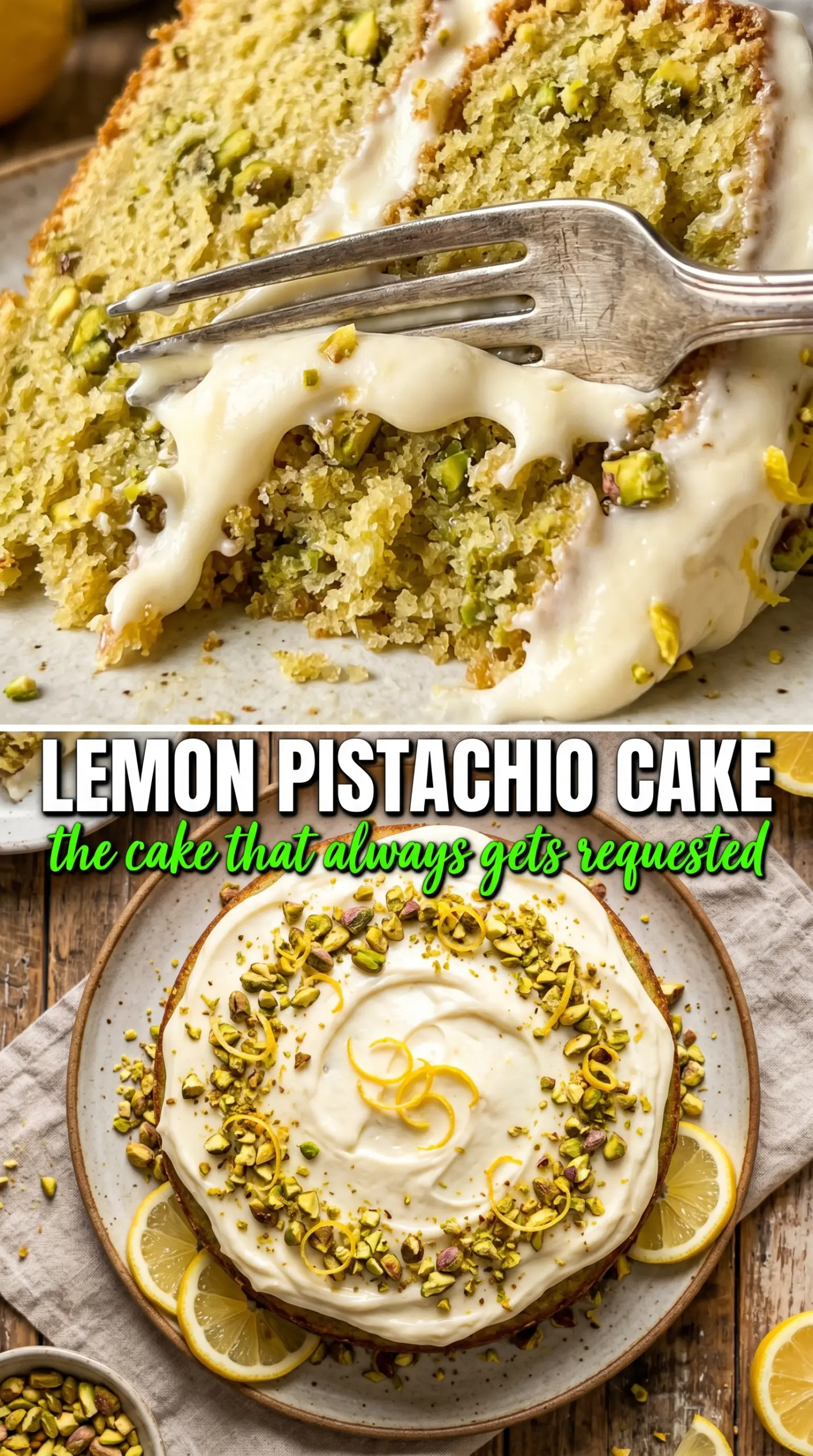
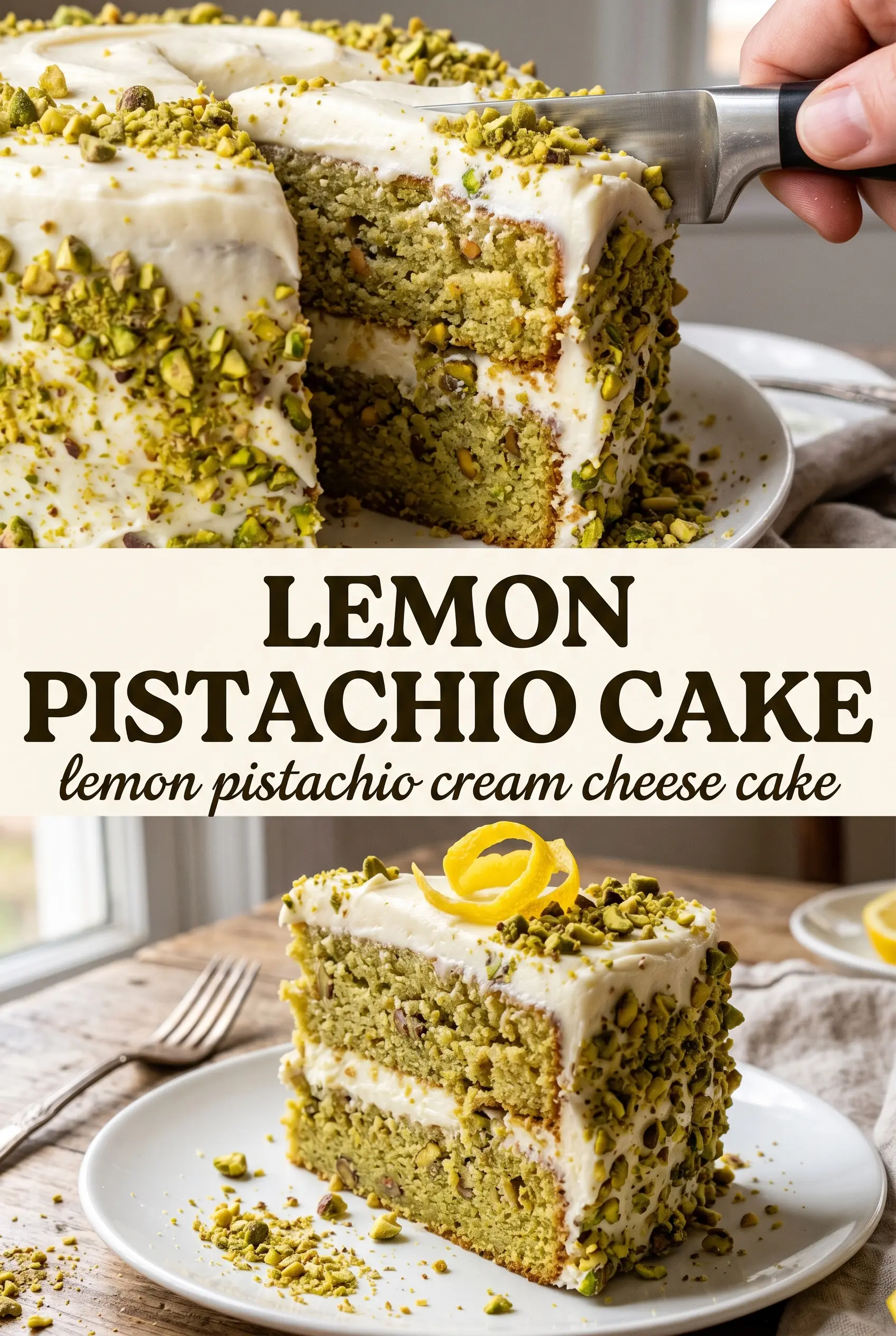
Lemon pistachio cake lands in that sweet spot between elegant and completely approachable. The crumb stays tender and pale green from finely ground pistachios, while the lemon keeps the whole cake bright instead of heavy. With lemon cream cheese frosting between the layers, you get a clean citrus lift, a soft nutty bite, and enough contrast to make each slice feel special.
What makes this version work is balance. Ground pistachios bring flavor and structure, but they can dry out a cake if you overdo the flour or overbake it. Sour cream steps in to keep the crumb plush, and the lemon juice goes into both the batter and frosting so the citrus flavor runs through the entire cake instead of sitting only on top. The frosting is tangy enough to cut the sugar, which matters here because pistachios have a gentle flavor that gets buried fast if the filling is too sweet.
Below you’ll find the exact cues to look for when the layers are done, plus a few smart swaps if you’re working with different nuts or want to prep ahead.
The pistachio flavor came through beautifully, and the cake stayed so moist for two days. I loved that the frosting wasn’t overly sweet, and the lemon zest on top made it look bakery-worthy.
Save this lemon pistachio cake for the days when you want a showy layer cake with bright citrus and a nutty crumb.
The Mistake That Makes Pistachio Cakes Taste Flat
Pistachio cake only works when the nuts are ground finely enough to disappear into the batter, but not so long that they turn into paste. If the pistachios are too coarse, the cake bakes up sandy and uneven. If they turn oily, the crumb gets heavy and the nut flavor muddies instead of staying clean.
The other place people lose this cake is in the frosting. Lemon cream cheese frosting can go slack if the butter and cream cheese are too warm, or grainy if they’re still cold. Beat them until smooth first, then add the sugar gradually. That gives you a thick, spreadable frosting that can hold the pistachio-coated sides without sliding off.
- Pistachios — Finely ground pistachios do the main flavor work and give the cake its pale green tint. A food processor works best, but pulse in short bursts so you stop before the nuts start clumping. If pistachios are expensive or hard to find, almonds will work in the texture sense, but the flavor will shift away from that distinct pistachio note.
- Sour cream — This is what keeps the crumb soft and helps the cake stay tender after chilling. Plain Greek yogurt can stand in, but the cake will taste a little tangier and may bake up slightly firmer.
- Fresh lemon zest and juice — Use both. Zest carries the aromatic lemon oil that flavor alone can’t replace, while juice brings the sharpness that balances the frosting. Bottled juice tastes flatter here and the difference shows.
- Cream cheese — Full-fat cream cheese gives the frosting structure and tang. Reduced-fat versions tend to loosen as they warm, which makes it harder to get clean sides on the cake.
- Butter — Softened butter matters in both the cake and frosting because it traps air when beaten with sugar. If it’s melted or greasy, the batter won’t hold as much lift and the frosting can turn loose.
What Each Ingredient Is Actually Doing in This Dessert
- Sugar (the sweetness and structure) — Sugar tenderizes baked goods and creams with butter to create air. Don’t reduce it too much or the dessert becomes dense and dry.
- Butter or fat (the richness and texture) — This carries flavors and creates tender crumb. Proper creaming with sugar adds volume to cakes and bars.
- Eggs (the binder and lift) — These create structure and help baked goods rise. Room temperature eggs incorporate better than cold ones.
- Flour (the structure base) — This holds everything together. Don’t overmix or the texture becomes tough and dense instead of tender.
- Fruit (the flavor and moisture) — Fresh or cooked fruit adds natural sweetness and moisture. Layer it evenly so every bite has balanced flavor.
- Leavening (baking powder or soda) — This creates rise and light crumb. Too much makes the dessert taste bitter and fall flat.
- Flavoring (vanilla, spices, citrus) — These define the personality. Use good quality flavorings so they shine through the sweetness.
- Final finish (glaze, whipped cream, topping) — This adds moisture, flavor, and visual appeal. Don’t skip it or the dessert feels incomplete and one-dimensional.
Why the Batter Needs the Pistachios Folded In at the Very End
Once the butter, sugar, eggs, lemon, and sour cream are combined, the batter already has enough structure. The pistachio-flour mixture goes in last so you don’t overwork the batter or knock out the air you just built. Overmixing at this stage is what turns a tender cake into a dense one.
The finished batter should look thick and spoonable, with the pistachios evenly dispersed but not beaten to death. If it looks dry before it hits the pans, stop and check your measurements. Ground nuts absorb moisture differently from flour, so even a small extra spoonful of flour can throw the texture off.
Building the Butter Base
Beat the butter and sugar until the mixture turns pale and fluffy. That color change matters. It means air has been worked into the fat, which gives the cake lift before the baking powder even starts doing its job. If the butter is still cold, the mixture will look grainy and stay heavy.
Adding the Eggs Without Breaking the Emulsion
Add the eggs one at a time and let each one disappear before adding the next. If the batter looks curdled for a moment, keep mixing briefly; that often happens when the eggs are cold. What you don’t want is a greasy pool at the bottom of the bowl, which means the batter has split and needs a slower, more patient mix.
Folding in the Pistachio Flour
Add the ground pistachios and flour mixture with a spatula and fold just until no dry streaks remain. The batter should keep its volume and look evenly speckled. Stop the second the flour disappears; if you keep stirring, the cake will tighten and lose the soft crumb that makes this recipe work.
Make It Gluten-Free
Swap the all-purpose flour for a good 1:1 gluten-free baking blend. The pistachios already give the cake a lot of body, so this works better than in many layer cakes, though the crumb will be a touch more delicate. Let the layers cool completely before moving them because gluten-free cakes break more easily when warm.
Use Almonds Instead of Pistachios
Blanched almonds, ground very fine, give you a similar tender nut cake, but the flavor becomes milder and less distinctive. Keep the lemon frosting exactly the same so the cake still reads bright and elegant. This is a good backup when pistachios are pricey or already destined for another recipe.
Turn It Into Cupcakes
Divide the batter among lined muffin cups and start checking for doneness around 18 to 20 minutes. Cupcakes bake faster and dry out sooner, so pull them the moment the tops spring back and a tester comes out clean. The frosting still pipes well, and the crushed pistachios add a clean finish without any extra work.
Storage and Reheating
- Refrigerator: Store covered for up to 4 days. The frosting firms up in the fridge, but the cake stays moist.
- Freezer: Freeze unfrosted layers tightly wrapped for up to 2 months. Frosted slices can be frozen, but the cream cheese frosting softens slightly after thawing.
- Reheating: Let chilled slices sit at room temperature for 20 to 30 minutes before serving. Microwaving makes the frosting greasy and softens the crumb unevenly.
Questions I Get Asked About This Recipe
Lemon Pistachio Cake
Ingredients
Equipment
Method
- Preheat oven to 350°F and grease two 9-inch round pans; line with parchment. Make sure the parchment covers the bottoms for easy release.
- Whisk ground pistachios, all-purpose flour, baking powder, and salt together in a bowl. Stop when the mixture looks evenly speckled.
- Beat softened butter and granulated sugar until fluffy. The mixture should look lighter in color and hold a ribbon briefly.
- Add eggs one at a time and beat just until each egg is incorporated. Scrape the bowl as needed for a smooth batter.
- Stir in lemon zest, fresh lemon juice, and sour cream. The batter should look creamy and uniform.
- Fold in the pistachio-flour mixture until no dry pockets remain. Mix gently to keep the batter tender.
- Divide the batter between the two pans. Use a spatula to smooth the tops so the layers bake evenly.
- Bake at 350°F for 30-35 minutes until a toothpick comes out clean. Look for lightly golden edges and set centers.
- Cool completely. Let the layers rest until they’re room temperature to avoid melting the frosting.
- Beat softened cream cheese and butter until smooth. Stop when no lumps remain.
- Add powdered sugar, fresh lemon juice, and lemon zest, then beat until fluffy. The frosting should be thick enough to spread.
- Fill and frost the cake with the lemon cream cheese frosting. Spread a thick layer between the cakes and cover the outside evenly.
- Press crushed pistachios around the sides of the cake. Press firmly so the coating adheres in an even layer.
- Arrange lemon zest curls on top. Place curls like small ribbons so they stand out against the frosting.