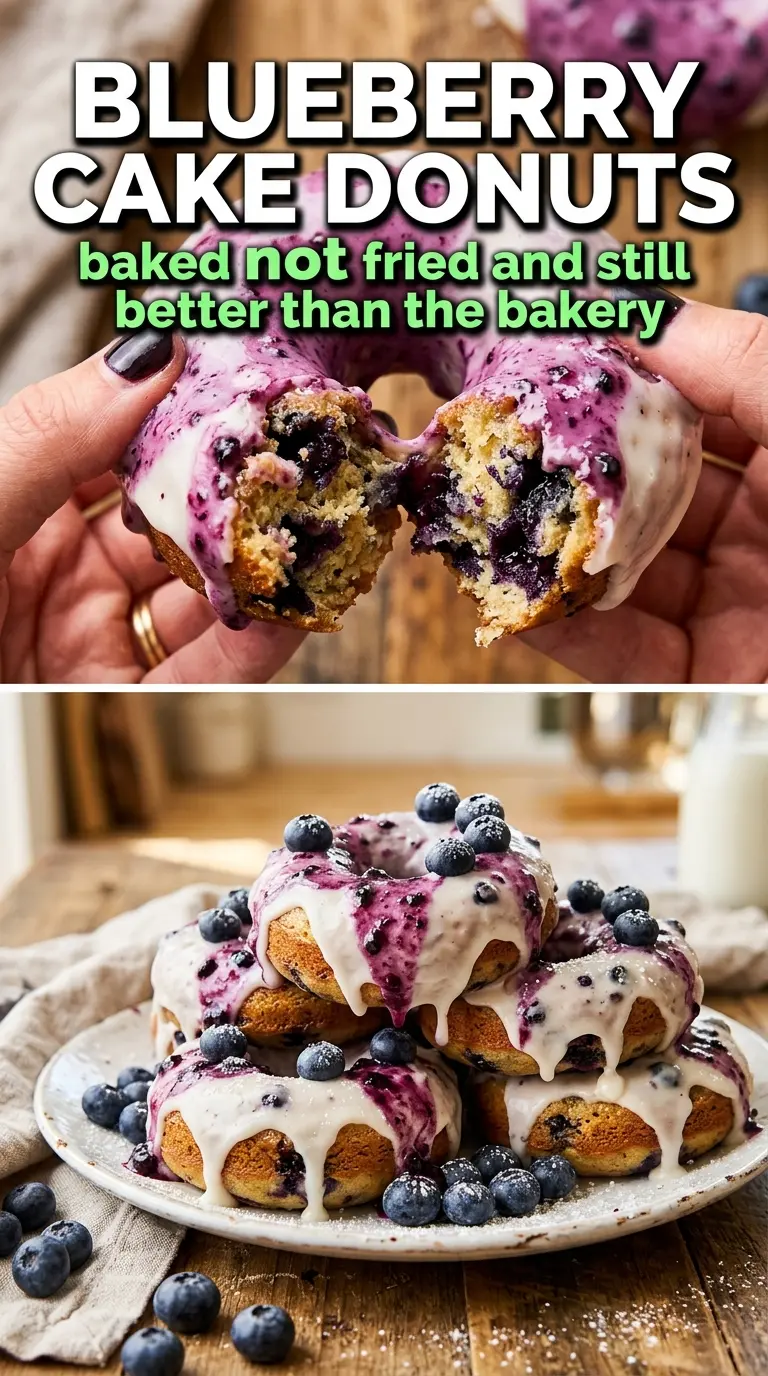
Soft blueberry cake donuts have a tender crumb, a little cinnamon warmth, and that fresh-baked look that makes them disappear fast. The baked version lands somewhere between a muffin and a classic donut, but with a cleaner bite and a pale purple glaze that sets with just enough shine to make the berries in the crumb pop. They’re the kind of breakfast treat that feels special without asking for yeast, frying oil, or a long rise.
What makes these work is the balance of structure and moisture. Buttermilk keeps the crumb soft and gives the batter a little tang, while oil stays fluid after baking so the donuts don’t turn dry the way butter-heavy batters sometimes do. Fresh blueberries are folded in at the end so they stay mostly intact instead of turning the whole batter gray, and the glaze uses a quick blueberry reduction instead of plain milk so the fruit flavor carries all the way through.
The biggest trick is not overmixing the batter. Once the flour goes in, stop as soon as everything is blended. That keeps the donuts light and keeps the crumb from tightening up. Below, I’ve included the one pan-filling method that keeps the centers neat, plus a couple of easy swaps if you need to adjust for what’s in your kitchen.
The donuts came out soft and cakey, and the blueberry glaze set beautifully instead of sliding off. I used a spoon to fill the pan and they still baked up with nice clean centers.
Blueberry cake donuts with that soft crumb and shiny berry glaze are worth keeping on hand for easy weekend baking.
The Trick to Keeping Blueberry Donuts Light Instead of Dense
Blueberry cake donuts go heavy fast when the batter is overworked or the blueberries get smashed into the flour too early. The goal is a batter that looks a little rough, not whipped smooth. Once the wet and dry ingredients come together, stop mixing the moment you stop seeing dry flour. That short mixing time keeps the crumb tender and helps the donuts rise evenly in the pan instead of baking up squat and tight.
The other place people lose the texture is in the oven. These need heat that’s hot enough to set the edges quickly, but not so hot that the outside browns before the center is done. A properly filled donut pan gives you those clean ring shapes and a soft interior. If you overfill, the centers puff into little muffin caps and the glaze has nowhere to settle nicely.
What Each Ingredient Is Actually Doing in These Donuts
- All-purpose flour — This gives the donuts enough structure to hold their shape in the pan without turning bready. Cake flour will make them a little softer, but the donut may not set as neatly. If that’s what you have, use it, but don’t expect quite the same sturdy crumb.
- Buttermilk — This is one of the reasons the crumb stays tender. It adds acidity, which helps the baking soda work, and it also gives the donuts a subtle tang that keeps the sweetness from feeling flat. If you don’t have buttermilk, use milk mixed with 2 teaspoons lemon juice or vinegar and let it sit for 5 minutes.
- Fresh blueberries — Fresh berries hold their shape better than frozen ones and bleed less into the batter. Frozen blueberries will work in a pinch, but don’t thaw them first or they’ll streak the batter purple and can make the donuts wet in spots. Toss them in a spoonful of flour right before folding them in if you want even better distribution.
- Vegetable oil — Oil keeps the donuts soft even after they cool. Melted butter tastes nice, but it firms up as the donuts sit and can make the crumb feel drier by the next day. Neutral oil is the better choice here.
- Blueberry glaze — Cooking the berries first concentrates the flavor and gives the glaze that pretty natural color. Straining out the skins makes the finish smooth enough to dip. Lemon juice sharpens the glaze and keeps it from tasting like powdered sugar with a little fruit mixed in.
How to Fill, Bake, and Glaze Them Without Losing the Shape
Mix the Batter Just Until It Comes Together
Whisk the dry ingredients in one bowl and the wet ingredients in another, then combine them with a light hand. The batter should look thick and slightly lumpy, not silky. That’s your cue to stop. If you keep stirring until it looks perfectly smooth, the gluten tightens and the donuts bake up dense instead of tender.
Fill the Pan Without Smearing the Rings
Spoon or pipe the batter into the donut pan so each cavity is about two-thirds full. A piping bag makes this cleaner, but a zip-top bag with the corner snipped works fine too. Wipe away any batter that lands in the center hole or on the top rim, because stray batter can bake into ragged edges. The donuts need space to rise into clean rings.
Watch for the Spring-Back Test
Bake until the tops look set and a toothpick comes out clean, usually around 10 to 12 minutes. The best sign is the light spring when you press the top gently with a fingertip. If it leaves an indent, they need another minute. Pull them before they start to darken too much, because baked donuts dry out quickly once they go a minute too long.
Cook the Glaze Until It Dips Smoothly
Simmer the blueberries just until they burst and release their juices, then strain the mixture before whisking in the powdered sugar and lemon juice. If the glaze looks too thick, a tiny splash of water or more lemon juice loosens it. If it’s too thin, add powdered sugar a spoonful at a time until it coats the back of a spoon. The goal is a glaze that clings, not one that runs off the donut in a purple puddle.
How to Adapt These Blueberry Cake Donuts
Use Frozen Blueberries When Fresh Aren’t in Season
Frozen blueberries work, but add them straight from the freezer and fold them in at the very end. Thawing makes them bleed and soften the batter, which can leave purple streaks and wet pockets. The flavor stays good, but the crumb won’t look as clean.
Make Them Dairy-Free
Swap the buttermilk for unsweetened non-dairy milk mixed with 2 teaspoons lemon juice. That gives you the acidity the batter needs so the baking soda still does its job. The donuts stay soft, though the tang is a little milder.
Skip the Glaze for a Less Sweet Breakfast Donut
These are good plain, especially warm from the pan. Without the glaze, you get more of the muffin-like blueberry flavor and less sweetness, which works well if you want them for breakfast instead of dessert. A dusting of powdered sugar is enough if you still want a finished look.
Storage and Reheating
- Refrigerator: Store glazed donuts in an airtight container for up to 3 days. The glaze will soften a little, and the crumb is best on day one, but they still hold up well.
- Freezer: Freeze the unglazed donuts for up to 2 months. Wrap them individually once cooled, then thaw at room temperature before glazing. Glazing before freezing can make the finish sticky and dull.
- Reheating: Warm the donuts in the microwave for 8 to 10 seconds or let them sit at room temperature. Don’t overheat them, or the glaze melts and the crumb turns dry at the edges.
Answers to the Questions Worth Asking

Blueberry Cake Donuts
Ingredients
Equipment
Method
- Preheat the oven to 375°F and grease a 12-cavity donut pan.
- Whisk together all dry ingredients in one bowl.
- Whisk together the eggs, buttermilk, vegetable oil, and vanilla extract in a separate bowl.
- Combine wet and dry ingredients and mix just until blended; stop as soon as no dry streaks remain.
- Fold in the fresh blueberries gently so they stay intact.
- Fill each donut cavity about 2/3 full using a piping bag or spoon.
- Bake for 10-12 minutes until a toothpick comes out clean and the donuts spring back when touched.
- Cool in the pan for 5 minutes, then transfer the donuts to a rack to cool completely.
- Cook the blueberries in a small saucepan over heat until they burst.
- Strain the blueberry mixture and whisk it with powdered sugar and lemon juice until smooth.
- Dip the top of each cooled donut in the blueberry glaze, letting excess drip down the sides.
- Let the glazed donuts set on the rack until the glaze looks shiny and firm.