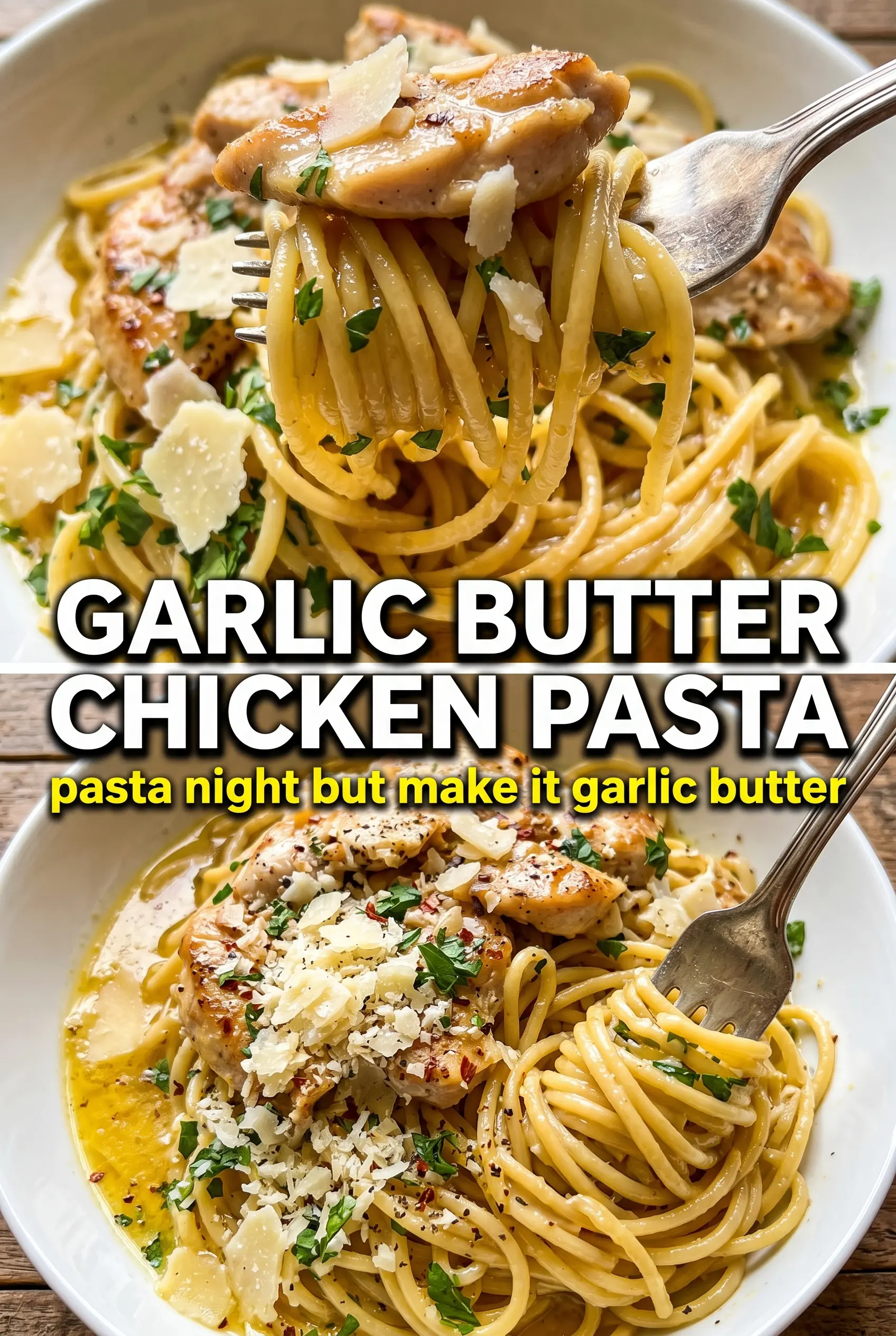
Garlic butter chicken pasta lands in that sweet spot between comforting and impressive: glossy spaghetti, golden chicken strips, and a sauce that clings to every strand instead of pooling at the bottom of the bowl. The butter gives it that rich, round finish, while the garlic and lemon keep it from tasting heavy. It eats like something you’d order at a neighborhood Italian-American spot, but it comes together fast enough for a weeknight.
The trick is treating the pasta water like part of the sauce, not an afterthought. A splash at a time helps the butter and Parmesan emulsify, so the noodles turn silky instead of greasy. I also like searing the chicken first and building the sauce in the same skillet because those browned bits add depth without any extra work.
Below, you’ll find the small details that matter here: how to keep the garlic from turning bitter, when to stop adding pasta water, and the substitutions that still give you a glossy, well-seasoned dinner.
The sauce coated the spaghetti perfectly and didn’t turn oily at the bottom of the bowl. My husband kept saying the chicken stayed juicy even after I tossed it back into the pan.
Save this garlic butter chicken pasta for the nights when you want glossy spaghetti, seared chicken, and a sauce that comes together in one skillet.
The Mistake That Makes Garlic Butter Pasta Greasy Instead of Silky
The biggest risk in a dish like this is treating the butter like the entire sauce. Butter alone will coat the pasta for a minute, then slide off and leave a slick pool in the bowl. What changes the texture is the combination of starchy pasta water, freshly grated Parmesan, and a little lemon juice. That trio helps the sauce cling, sharpen, and finish clean instead of heavy.
Another place people go wrong is with the garlic. If it goes too dark, the whole pan turns bitter. You want it fragrant and just kissed with gold at the edges, then get the pasta in quickly so the residual heat finishes the job without burning it.
What Each Ingredient Is Actually Doing In This Dish
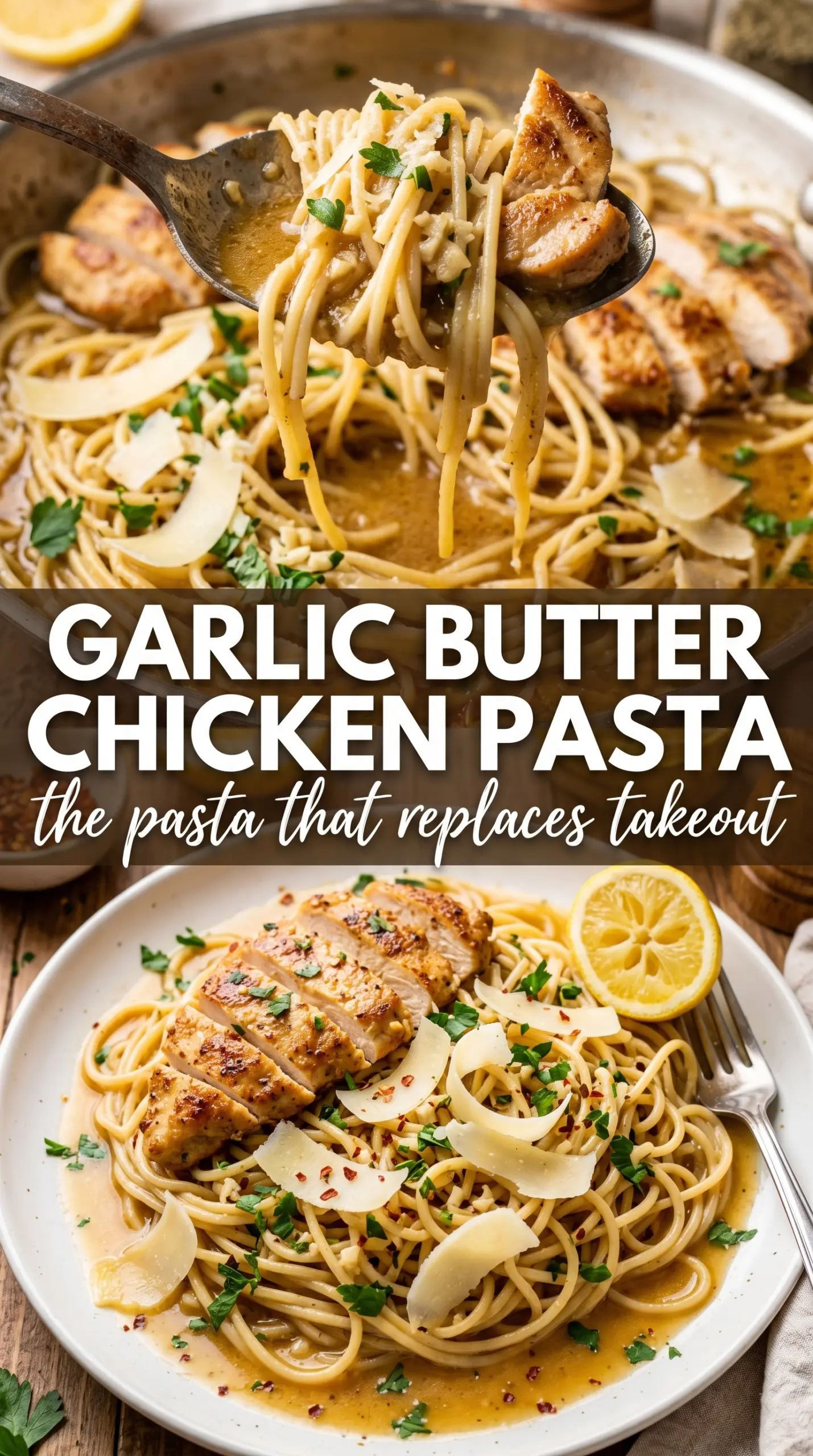
- Chicken breasts — Sliced into strips, they cook fast and pick up more seasoning than whole cutlets. Thighs work too if you want a richer, more forgiving result, but you’ll need a minute or two more in the pan.
- Butter and olive oil — The olive oil keeps the butter from scorching while the chicken sears. The butter brings the sauce together at the end, so don’t swap it for all oil unless you’re okay with losing that glossy finish.
- Garlic — Eight cloves sounds bold, and it should. Fresh minced garlic is what gives this pasta its backbone; jarred garlic won’t taste as clean and can turn the sauce muddier.
- Parmesan — Freshly grated is the move here. Pre-shredded cheese often has anti-caking agents that can make the sauce grainy instead of smooth.
- Lemon juice — A small amount brightens the butter and keeps the whole dish from tasting flat. Don’t skip it unless you replace that brightness somewhere else, like a little extra Parmesan and black pepper.
- Spaghetti — Long pasta works best because it grabs the sauce and chicken in the same forkful. If you use another shape, choose one with enough surface area to catch the butter sauce, like linguine or fettuccine.
Building The Sauce In The Same Pan As The Chicken
Searing The Chicken To A Deep Golden Edge
Season the chicken well before it hits the skillet. In a hot pan, the strips should sizzle immediately and start browning within the first couple of minutes. Leave them alone long enough to develop color, then turn them and cook until the centers are no longer pink. If you crowd the pan, the chicken will steam and the sauce will taste flatter later, so cook in batches if your skillet is small.
Letting The Garlic Bloom Without Burning
After the chicken comes out, lower the heat before the garlic goes in. You want a gentle bubble in the butter, not an aggressive fry. Stir the garlic and red pepper flakes for just a minute or two until the garlic smells sweet and looks lightly golden at the edges. If it starts to brown fast, pull the pan off the heat for a few seconds; bitter garlic can take over the whole dish.
Turning Butter And Pasta Water Into A Real Sauce
Add the cooked spaghetti straight into the skillet, then loosen it with pasta water a splash at a time. Toss constantly so the starch helps the butter and Parmesan emulsify into a coating sauce. Stop adding water when the noodles look glossy and the sauce clings in a thin sheen instead of slipping around the pan. Bring the chicken back to the top at the end so it warms through without drying out.
Ways To Adjust The Pan Without Losing The Good Part
Make It Gluten-Free With A Better Pasta Choice
Use a gluten-free spaghetti that holds up to stirring, not a delicate rice noodle that breaks apart in the skillet. Cook it just to al dente and keep a little extra pasta water on hand, since gluten-free pasta often needs more help coating smoothly.
Dairy-Free Version With A Different Finish
Use a plant-based butter that melts cleanly and skip the Parmesan, then finish with extra lemon juice, black pepper, and parsley. You’ll lose a little of the savory richness, but the sauce will still cling if you lean on the pasta water and keep the pan moving.
Swap In Thighs For A Juicier Chicken Bite
Boneless skinless thighs stay tender even if they sit in the skillet a little longer, and they bring a deeper savory flavor. Cut them into similar strips so they cook at the same pace as the breasts, then sear until the edges are browned and the centers are fully cooked.
Storage And Reheating
- Refrigerator: Store leftovers in an airtight container for up to 3 days. The pasta will absorb some of the sauce, so it won’t stay as glossy as it is right after cooking.
- Freezer: It freezes, but the sauce loses some of its silky texture after thawing. If you do freeze it, cool it completely first and pack it tightly; expect the Parmesan and butter to separate a bit when reheated.
- Reheating: Warm it gently in a skillet over low heat with a splash of water or broth. High heat is the mistake here — it dries out the chicken and can make the butter look broken before the pasta loosens back up.