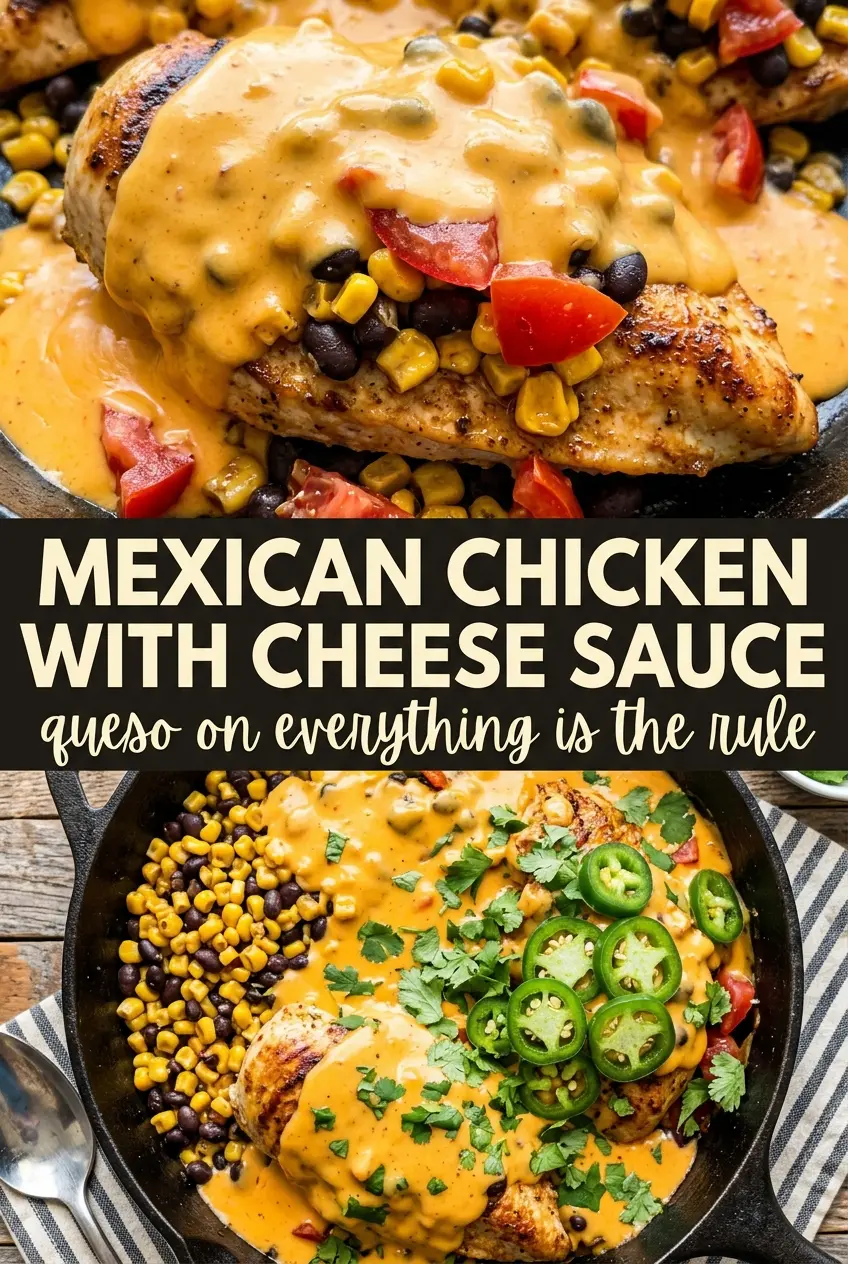
Pan-seared Mexican chicken with cheese sauce lands on the plate with crisp-edged chicken, a silky queso blanket, and just enough heat from Rotel and jalapeños to keep every bite interesting. The chicken stays juicy because it’s seared first, then smothered at the end instead of simmered until dry, and the sauce clings instead of sliding off in a thin puddle.
What makes this version work is the balance. The spice rub on the chicken gives you a savory base before the sauce even hits the skillet, and the cheese sauce stays smooth because the milk and Velveeta melt gently over steady heat. The Rotel adds brightness and texture without making the sauce watery, which is where a lot of queso-style chicken goes wrong.
Below, I’ve included the timing cue that keeps the chicken tender, the ingredient swap that still gives you a proper queso sauce, and the storage notes you’ll want if you’re cooking ahead for the week.
The queso turned out smooth and glossy, and the Rotel gave it just enough kick without overpowering the chicken. I served it with rice, and even the leftovers reheated without the sauce breaking.
Save this Mexican Chicken with Cheese Sauce for the nights when you want juicy skillet chicken under a glossy, Rotel-studded queso.
The Trick to Keeping the Queso Smooth Instead of Grainy
The sauce here only needs gentle heat. Once the milk goes in, keep the burner at a low simmer and stir the cheese in gradually. If you rush it over high heat, the sauce can turn oily or grainy before the chicken even gets back to the pan. Velveeta melts smoothly because it’s built for exactly this kind of sauce, which is why it gives you a glossy finish that cheddar alone won’t always deliver.
Rotel brings acidity and moisture, but half a can is enough. Too much liquid and the sauce gets loose; too little and it tastes flat. The goal is a sauce that coats the back of a spoon and falls in thick ribbons over the chicken.
What Each Ingredient Is Doing in This Skillet

- Chicken breasts — Boneless, skinless breasts give you a fast-cooking base that can take on the sauce without disappearing under it. If your pieces are thick in the center, pound them lightly so they cook evenly and don’t dry out before the outside gets color.
- Cumin, chili powder, and smoked paprika — This seasoning mix gives the chicken its Tex-Mex backbone. Don’t skip the paprika; it adds a subtle smoky note that keeps the dish from tasting one-dimensional.
- Olive oil — You need just enough for a hard sear and a good crust. A neutral oil works too, but olive oil gives the chicken a little more depth under the cheese.
- Velveeta — This is the ingredient that makes the sauce silky instead of fussy. If you swap it for shredded cheese, the sauce can clump unless you’re careful with heat and emulsifiers; Velveeta takes that problem off the table.
- Rotel — The tomatoes and green chiles cut through the richness and keep the sauce lively. Drain nothing here; the small amount of liquid is part of what helps the sauce stay spoonable.
- Whole milk — Whole milk gives the sauce body. Lower-fat milk will work in a pinch, but the sauce won’t feel as plush or stable.
- Jalapeños, pico de gallo, and cilantro — These are the finishing layer, not decoration. They add freshness and crunch, and they keep the dish from eating like pure melted cheese.
Getting the Chicken Sear and the Sauce Finish in the Right Order
Seasoning the Chicken
Coat the chicken evenly with the spice mix before it ever touches the pan. The seasoning needs direct contact with the meat to build flavor, and a bare patch will stay bland under all that sauce. A light, even layer of salt and pepper matters here because the cheese sauce is rich and needs the chicken itself to be seasoned well.
Building a Golden Crust
Heat the oil until it shimmers, then lay the chicken in and leave it alone until it releases easily from the skillet. If you move it too soon, you’ll tear the crust and lose the color you worked for. Five to six minutes per side is the right target for average breasts, but what matters most is a deep golden exterior and an internal temperature of 165°F.
Making the Queso in a Separate Pan
Use a small saucepan for the sauce so you can control the heat. Melt the butter, soften the garlic for a minute, then add the milk before the cheese goes in. If the garlic browns, the sauce can pick up a bitter edge, so keep the heat gentle and steady while the cheese melts into a smooth base.
Bringing It All Together
Pour the queso over the chicken right before serving. That keeps the crust from turning soggy and keeps the sauce looking glossy. Add the pico de gallo, cilantro, and jalapeños at the end so the fresh toppings stay bright and don’t collapse into the hot sauce.
How to Adapt This for a Bigger Crowd or a Lighter Plate
Make It Dairy-Free
Use a plain unsweetened oat milk or cashew milk and a dairy-free melting cheese designed for sauces. The texture will be a little less velvety than Velveeta-based queso, but gentle heat still keeps it smooth. Don’t use a milk that separates easily, or the sauce can look broken before it even reaches the chicken.
Swap in Chicken Thighs
Boneless thighs work well if you want richer, juicier meat and a little more forgiveness on the stovetop. They may need a few extra minutes to cook through, but they’re less likely to dry out than breasts. The sauce and toppings stay exactly the same.
Turn It Into a Gluten-Free Dinner
This recipe is naturally gluten-free as written, but check the label on your Rotel and cheese product if you’re cooking for someone with a strict sensitivity. Serve it with rice, roasted potatoes, or cauliflower rice instead of tortillas if you want to keep the whole plate gluten-free.
Storage and Reheating
- Refrigerator: Store leftovers in an airtight container for up to 3 days. The sauce will thicken as it chills, but it still reheats well.
- Freezer: The chicken freezes fine, but the cheese sauce can separate after thawing. If you want to freeze it, do so without the sauce and make a fresh batch when serving.
- Reheating: Reheat gently in a covered skillet over low heat with a splash of milk to loosen the sauce. Microwaving on high can make the cheese turn greasy or split, so use short bursts and stir between them if that’s your only option.
Answers to the Questions Worth Asking
Mexican Chicken with Cheese Sauce (Queso Chicken)
Ingredients
Equipment
Method
- Season the chicken breasts with cumin, chili powder, smoked paprika, salt, and black pepper.
- Heat the olive oil in a skillet over medium-high heat and sear the chicken for 5–6 minutes per side, until golden and cooked through; set aside.
- In a small saucepan, melt the butter over medium heat, then add the minced garlic and cook for 1 minute.
- Add the whole milk, bring it to a gentle simmer, then stir in the Velveeta, Rotel tomatoes with green chiles, and cayenne until completely smooth.
- Pour the queso sauce generously over the seared chicken and serve immediately.
- Top with pico de gallo, fresh cilantro, and jalapeño slices before serving.