Golden, bubbly creamy baked chicken breasts are the kind of dinner that disappears fast because the sauce does more than coat the chicken — it settles into the dish, browns at the edges, and turns the whole pan into something spoonable. The chicken stays tender under all that sauce, and the top gets just enough caramelization to give each bite a little contrast.
This version works because the sauce is built from ingredients that stay stable in the oven. Sour cream and mayonnaise bring body without turning grainy, while cream of chicken soup and ranch seasoning add the salty, savory backbone that makes the dish taste finished instead of flat. Parmesan on top gives you that golden crust people always hope for when they see a casserole come out of the oven.
Below, I’ve included the small details that matter here: how to keep the chicken from drying out, why the sauce should be mixed smooth before it goes in the pan, and a few smart swaps if you need to change the dairy or seasoning.
The sauce bubbled up thick and creamy without separating, and the chicken stayed juicy even after 30 minutes in the oven. I served it over rice, and my husband went back for seconds before I even sat down.
Save these creamy baked chicken breasts for a night when you want juicy chicken, a golden Parmesan top, and one pan that does the heavy lifting.
The Reason This Chicken Stays Creamy Instead of Drying Out
The most common mistake with baked chicken breasts is treating the oven like it owes you a fast dinner. Chicken breasts need a saucy environment and a close eye on the clock. Once they go over 165°F, they start losing the tenderness that makes this dish worth making in the first place.
The sauce helps in two ways. First, it insulates the chicken so the surface doesn’t dry out before the center is done. Second, it gives you a visual cue: when the sauce is bubbling around the edges and the Parmesan has turned spotted gold, the dish is usually right where it needs to be.
- Even thickness matters — If one breast is much thicker than the others, pound it gently or slice it into a more even shape so everything finishes at the same time.
- Don’t crowd the pan — Give the breasts a little room in the baking dish so the sauce can bubble instead of steaming the chicken into a softer, paler finish.
- Use the thermometer — The center should hit 165°F. Pull it from the oven right then; carryover heat will finish the job.
What the Sauce Ingredients Are Actually Doing Here
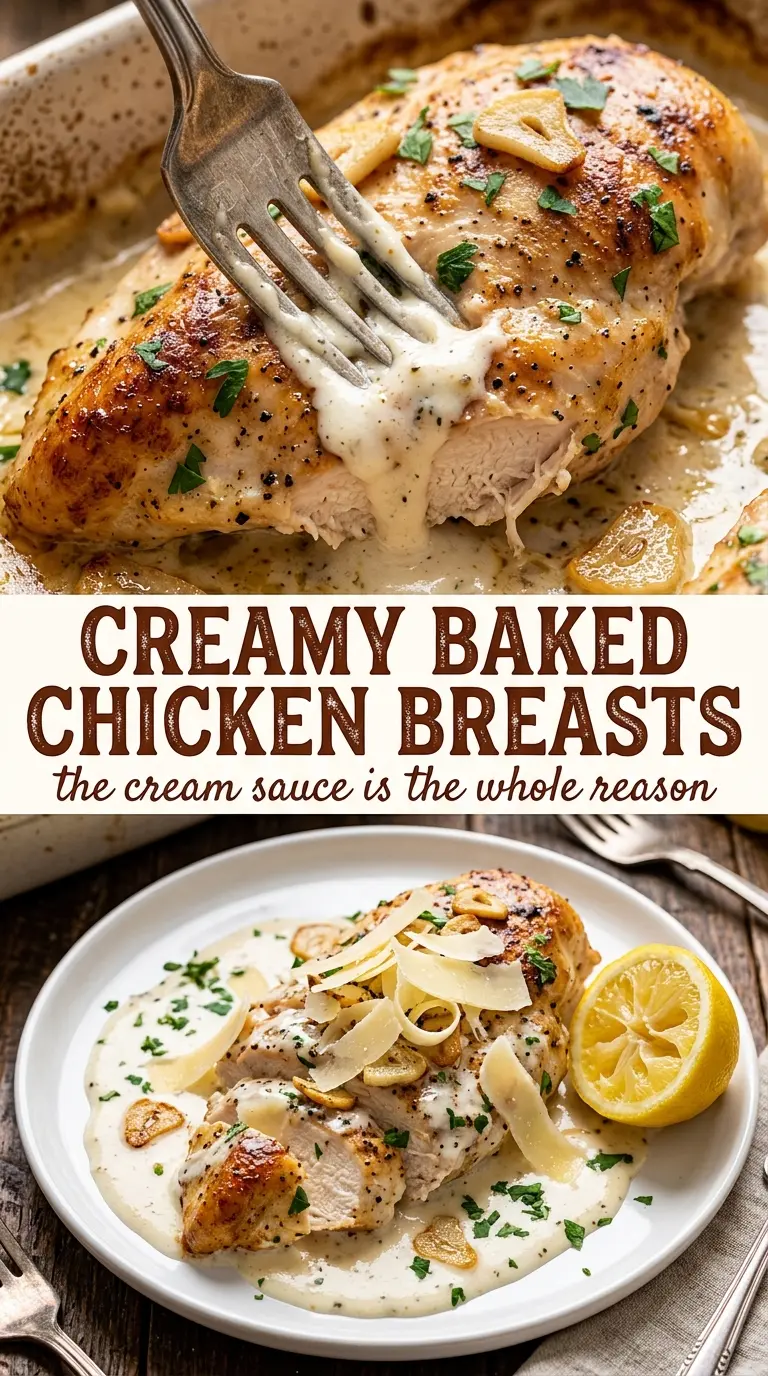
- Cream of chicken soup — This gives the sauce its base and helps it bake into a thick, spoonable coating instead of separating in the oven. A different cream soup will work in a pinch, but this one keeps the flavor closest to the dish as written.
- Sour cream — This adds tang and a little thickness. Full-fat sour cream holds up best under heat, and light versions can work, but they’re a little more likely to thin out.
- Mayonnaise — Mayo is what makes the sauce plush. It doesn’t taste like mayonnaise once baked; it just rounds everything out and helps the top turn rich and glossy.
- Ranch seasoning — This is the shortcut that gives the sauce its savory backbone. If you swap it out, you’ll lose some of the salt-herb-garlic balance that makes the whole pan taste complete.
- Parmesan — Use grated Parmesan, not the powdery shelf-stable stuff if you can avoid it. Real Parmesan browns better and gives the top a nutty crust.
How to Layer the Pan So the Sauce Browns and the Chicken Stays Juicy
Season the Chicken First
Season both sides of the chicken breasts with salt, pepper, garlic powder, and onion powder before they go in the dish. This is not the place to rely on the sauce alone for seasoning, because the topping sits on the surface and won’t season the meat all the way through. A light, even coating is enough; too much seasoning can make the finished dish taste harsh once the sauce reduces.
Whisk the Sauce Until It’s Completely Smooth
Stir the cream of chicken soup, sour cream, mayonnaise, ranch seasoning, and garlic powder until no streaks remain. If the mixture still looks marbled, those pockets can bake unevenly and leave you with sharp bites of seasoning instead of a balanced sauce. The goal is a thick, pourable mixture that spreads easily over the chicken.
Bake Until the Edges Bubble and the Top Turns Gold
Pour the sauce over the chicken, then cover the meat completely with Parmesan. Bake at 375°F until the sauce is bubbling around the edges, the cheese has browned in spots, and the thickest part of the chicken reaches 165°F. If the top is browning too fast before the chicken is done, lay a loose piece of foil over the dish for the last few minutes.
Let It Sit Before Serving
Give the pan about 5 minutes after it comes out of the oven. The sauce settles and thickens a little more, which makes it easier to spoon over rice, pasta, or mashed potatoes. If you cut into the chicken immediately, the juices run out faster and the sauce can look thinner than it really is.
How to Adapt This Chicken When You Need a Different Pantry
Gluten-Free Version
Use a certified gluten-free cream of chicken soup and check that your ranch seasoning is gluten-free too. The texture stays the same, but this only works if both packaged ingredients are verified, since the flour or starch blend in either one can be the hidden problem.
Dairy-Free Swap
Use a dairy-free sour cream and a mayo made without dairy, then replace the Parmesan with a dairy-free shredded topping or skip it and finish with extra seasoning. You’ll lose a little of the browned, savory finish, but the sauce still bakes up creamy and coats the chicken well.
Using Chicken Thighs Instead
Boneless skinless thighs work well here and stay even juicier than breasts. They usually need a few extra minutes in the oven, so rely on temperature instead of the timer and pull them when they reach 165°F.
Storage and Reheating
- Refrigerator: Store leftovers in an airtight container for up to 3 days. The sauce thickens as it chills, which is normal.
- Freezer: It freezes, but the dairy sauce can turn a little grainy after thawing. If you do freeze it, wrap portions tightly and thaw in the refrigerator before reheating.
- Reheating: Warm gently in a covered baking dish at 325°F with a splash of milk or broth. High heat is the fastest way to dry out the chicken and separate the sauce.
Answers to the Questions Worth Asking
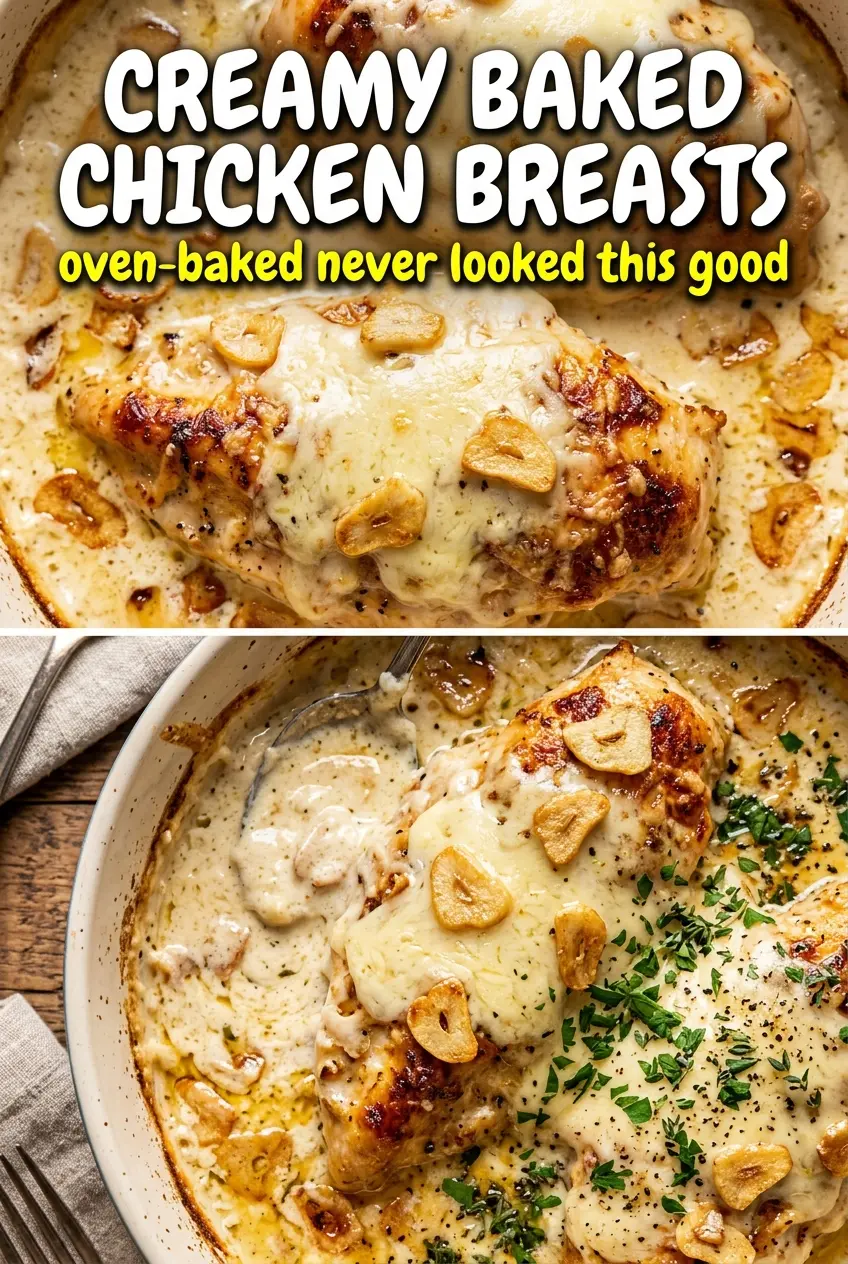
Creamy Baked Chicken Breasts
Ingredients
Equipment
Method
- Preheat the oven to 375°F and grease a 9x13 baking dish until lightly coated for easy release.
- Season the chicken breasts on both sides with salt, pepper, garlic powder, and onion powder, then place them in the prepared dish in a single layer.
- Whisk together cream of chicken soup, sour cream, mayonnaise, ranch seasoning mix, and garlic powder until smooth and pourable.
- Pour the cream sauce evenly over the chicken, coating completely so the sauce pools thickly around each breast.
- Top with Parmesan cheese, then bake at 375°F for 28-32 minutes until the sauce is bubbly and golden.
- Check doneness by ensuring the internal temperature reaches 165°F, then remove from the oven when the sauce looks caramelized at the edges.
- Garnish with fresh parsley and serve warm over pasta or rice, spooning the thick cream sauce over the chicken.