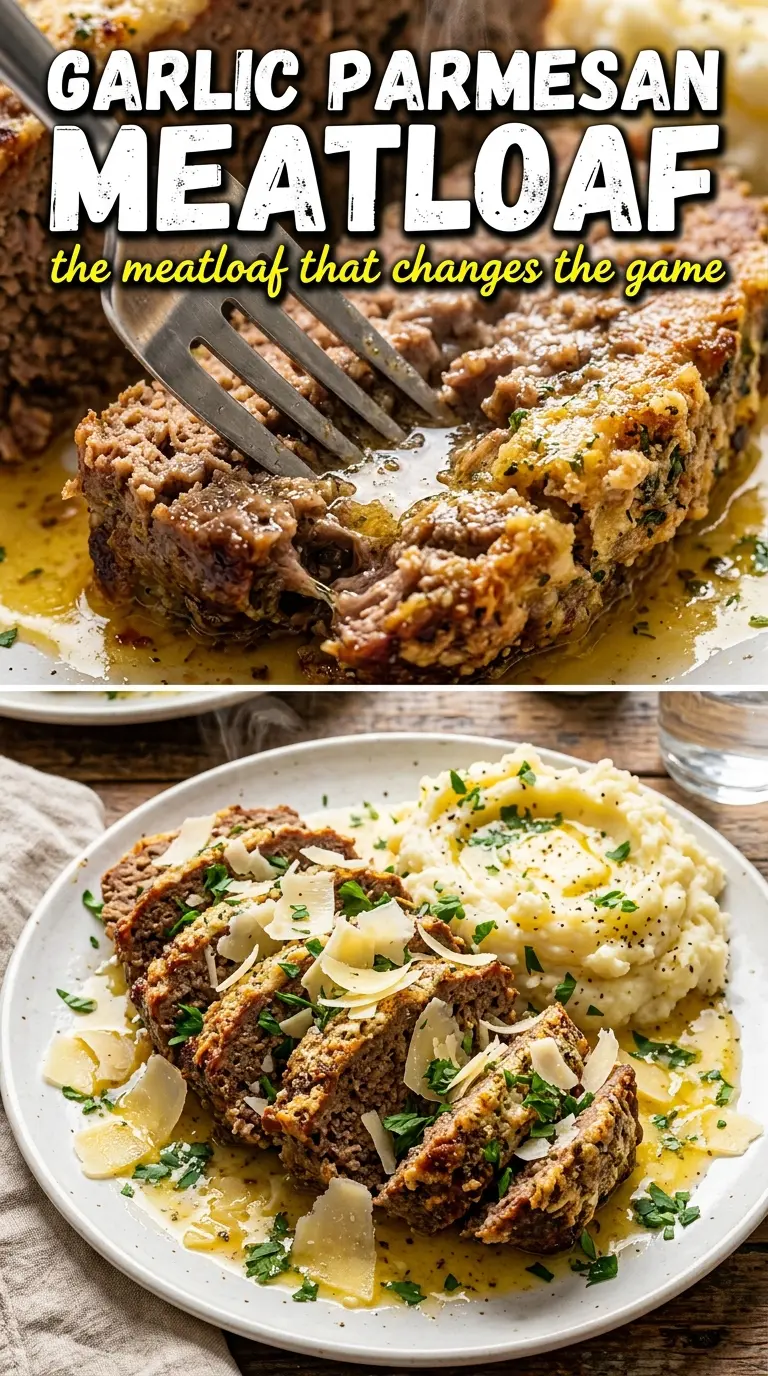
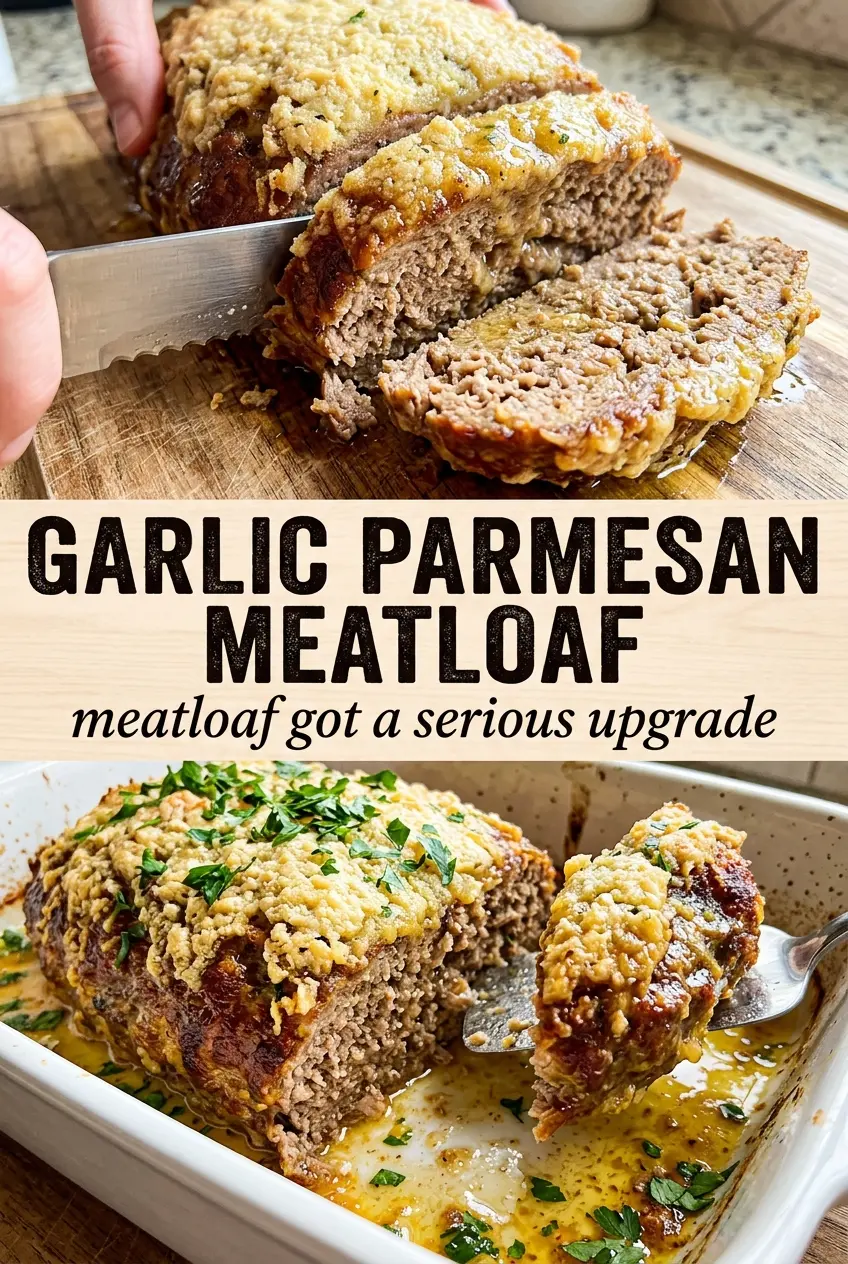
Garlic Parmesan Meatloaf brings the kind of dinner that slices cleanly, holds together on the plate, and still stays juicy in the middle. The top bakes into a crackled, savory crust from the butter, garlic, and parmesan, while the inside stays tender and well seasoned instead of dense or crumbly.
What makes this version work is the balance of moisture and structure. Milk, eggs, and onion keep the beef from tightening up, but the real key is not overmixing once everything goes into the bowl. That’s the fastest way to end up with a heavy loaf. The parmesan does double duty here too: some goes into the meat for salty depth, and the rest forms that golden topping that tastes much bigger than the short ingredient list suggests.
Below, I’ve laid out the small details that matter most, from the garlic timing to the reason the loaf needs a short rest before slicing. If you’ve had meatloaf fall apart, dry out, or bake up bland, this version fixes the usual trouble spots.
The parmesan crust turned out crisp and golden, and the loaf stayed juicy all the way through. I used a sheet pan instead of a loaf pan and the edges browned up beautifully in about an hour.
Save this garlic parmesan meatloaf for a dinner with a crisp, buttery crust and a juicy center.
The Reason This Meatloaf Stays Juicy Instead of Tight
Most dry meatloaf comes from two places: not enough moisture and too much handling. The milk and eggs here keep the beef from baking into a hard block, while the onion gives off a little steam as it cooks. That combination matters more than extra seasoning. The loaf should be mixed just until everything disappears into the beef. Once the mixture looks uniform, stop. If you keep working it, the proteins bind too tightly and the texture turns dense.
The other detail that makes a difference is the pan choice. A loaf pan gives you a softer exterior because the fat has nowhere to go, while a sheet pan or parchment-lined pan lets the edges brown and the bottom set up with more flavor. Either works, but the sheet pan version gives you more of that golden crust people always fight over.
What the Garlic, Parmesan, and Breadcrumbs Are Doing Here
- Ground beef 80/20 — This fat level keeps the loaf juicy without turning greasy. Leaner beef can work, but it dries out faster and needs the milk and onion to carry more of the moisture load.
- Parmesan — Use the real grated stuff if you can. It melts into the meat for saltiness and depth, then browns on top into that savory crust. Pre-shredded parmesan won’t melt as smoothly.
- Italian breadcrumbs — These absorb the milk and help the loaf hold together. If you only have plain breadcrumbs, add a pinch more Italian seasoning and a little extra garlic powder.
- Milk and eggs — This is the binder and moisture system. Whole milk gives a softer texture than low-fat milk, and the eggs keep the loaf cohesive so it slices cleanly after resting.
- Fresh garlic plus garlic powder — The minced garlic gives the loaf its sharp, aromatic base, while garlic powder rounds everything out. Using both keeps the flavor from fading during the long bake.
- Butter topping — The melted butter carries the garlic over the surface and helps the parmesan brown instead of drying out. That topping is what gives you the crackled finish instead of a pale lid.
Building the Loaf So It Bakes, Browns, and Slices Cleanly
Mix the Beef Gently
Put the beef, half the parmesan, breadcrumbs, milk, eggs, garlic, onion, Italian seasoning, garlic powder, salt, and pepper in a large bowl. Use your hands or a fork and stop as soon as everything is evenly distributed. The mixture will look a little loose at first, but it tightens as it bakes. If it feels pasty before it goes into the oven, it’s already been overmixed.
Shape It with a Light Touch
Form the mixture into a loaf on the prepared pan and smooth the top just enough so the topping sticks. Don’t pack it down hard. A tightly compressed loaf bakes up dense and can crack in uneven places. If you’re using a loaf pan, press it in gently and leave a little room for the fat to collect around the edges.
Make the Parmesan Crust
Stir the melted butter with the remaining garlic, then brush it over the loaf. Pat the remaining parmesan over the entire surface so it clings to the butter. That layer should look heavily coated, not lightly dusted. The crust needs enough cheese to brown and form those crisp little edges in the oven.
Bake Until the Center Reaches the Right Temperature
Bake at 375°F for 55 to 65 minutes, until the top is deeply golden and the center reaches 160°F. If the top browns too quickly, lay a piece of foil loosely over it for the last 15 minutes. Pulling it early leaves the center soft and unsafe; baking it too far takes away the juices you worked to keep in.
Let It Rest Before the First Slice
Give the loaf 10 minutes on the counter before cutting. That resting time lets the juices settle back into the meat instead of running out onto the cutting board. Slice too soon and the loaf can crumble, especially with all that cheese on top.
How to Adjust This Meatloaf for Different Kitchens and Different Eaters
Gluten-Free Version
Swap the Italian breadcrumbs for certified gluten-free breadcrumbs in the same amount. The texture stays close to the original, though some brands absorb a little more liquid, so the mixture may feel slightly firmer before baking.
Dairy-Free Adaptation
Use an unsweetened dairy-free milk with a neutral flavor and replace the butter topping with olive oil or a dairy-free butter substitute. You’ll lose a little of the buttery finish, but the garlic and parmesan-style topping still gives the loaf plenty of richness if you use a good dairy-free hard cheese.
Make It with Half Beef and Half Pork
If you want a softer, richer slice, replace one pound of the beef with ground pork. Pork brings extra fat and a more tender bite, which works well here, but it also softens the structure a bit, so the rest time matters even more.
Storage and Reheating
- Refrigerator: Store sliced or whole, covered, for up to 4 days. The crust softens a little, but the flavor holds up well.
- Freezer: It freezes well. Wrap individual slices tightly and freeze for up to 3 months, or freeze the whole cooled loaf before slicing for easier meals later.
- Reheating: Reheat covered in a 300°F oven with a splash of water or broth in the pan until warmed through. Microwaving works in a pinch, but it can make the edges rubbery and the cheese topping tough.
Answers to the Questions Worth Asking
Garlic Parmesan Meatloaf
Ingredients
Equipment
Method
- Preheat the oven to 375°F and line a loaf pan or sheet pan with parchment so the meatloaf releases cleanly.
- In a large bowl, mix ground beef, 1/2 cup parmesan, breadcrumbs, milk, eggs, 3 minced garlic cloves, onion, Italian seasoning, garlic powder, salt, and black pepper just until combined.
- Shape the mixture into a loaf on the pan and smooth the top for even browning.
- Mix melted butter with the remaining minced garlic and brush it over the loaf to start the crust formation.
- Pat the remaining parmesan over the entire surface to create a crackly, golden top during baking.
- Bake for 55–65 minutes at 375°F until the internal temperature reaches 160°F and the top is deeply golden, watching for a firm, browned crust.
- Let the meatloaf rest 10 minutes before slicing so the juices set and each slice stays moist.
- Garnish with fresh parsley right before serving for a fresh finish on the golden parmesan crust.