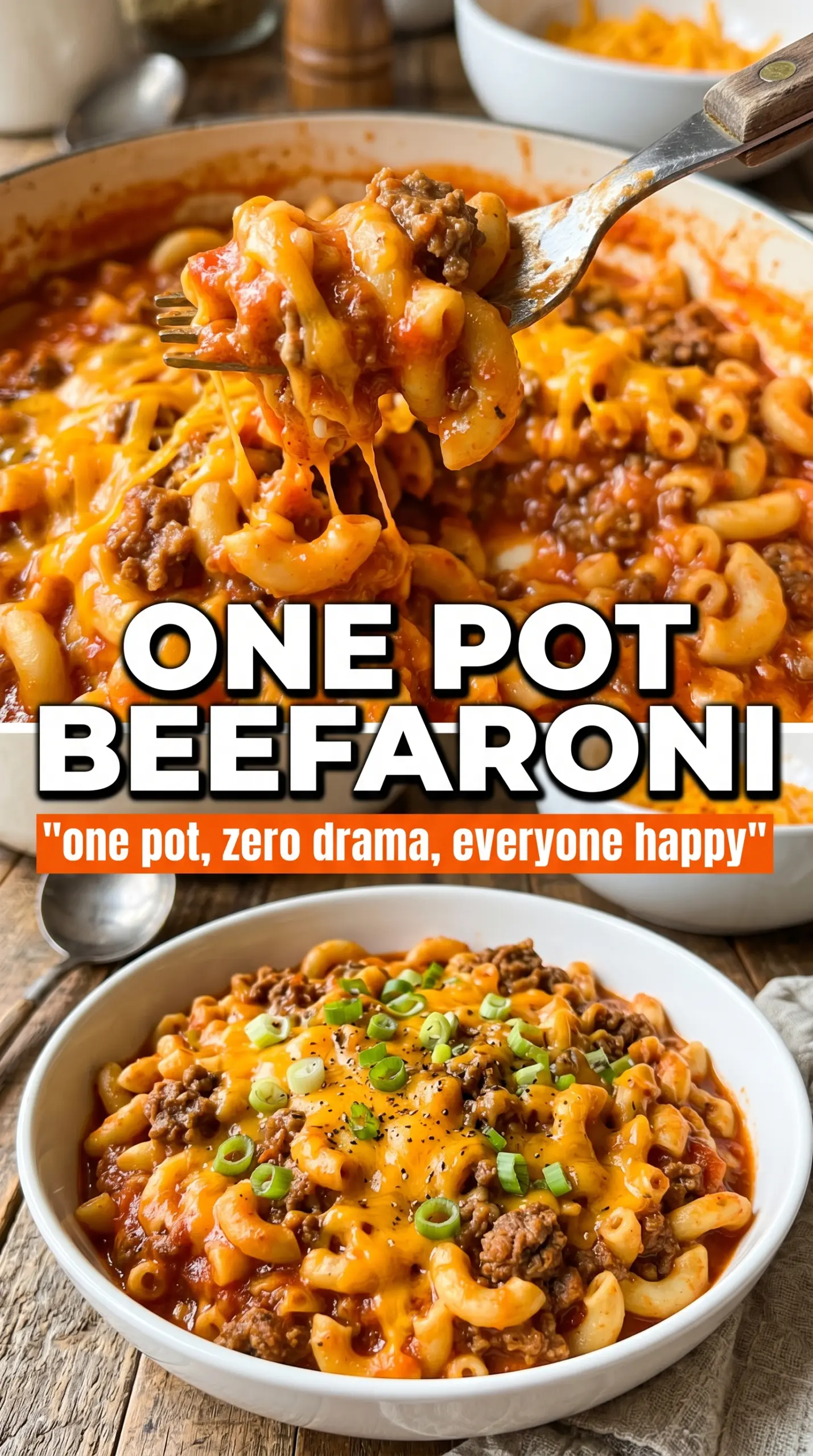
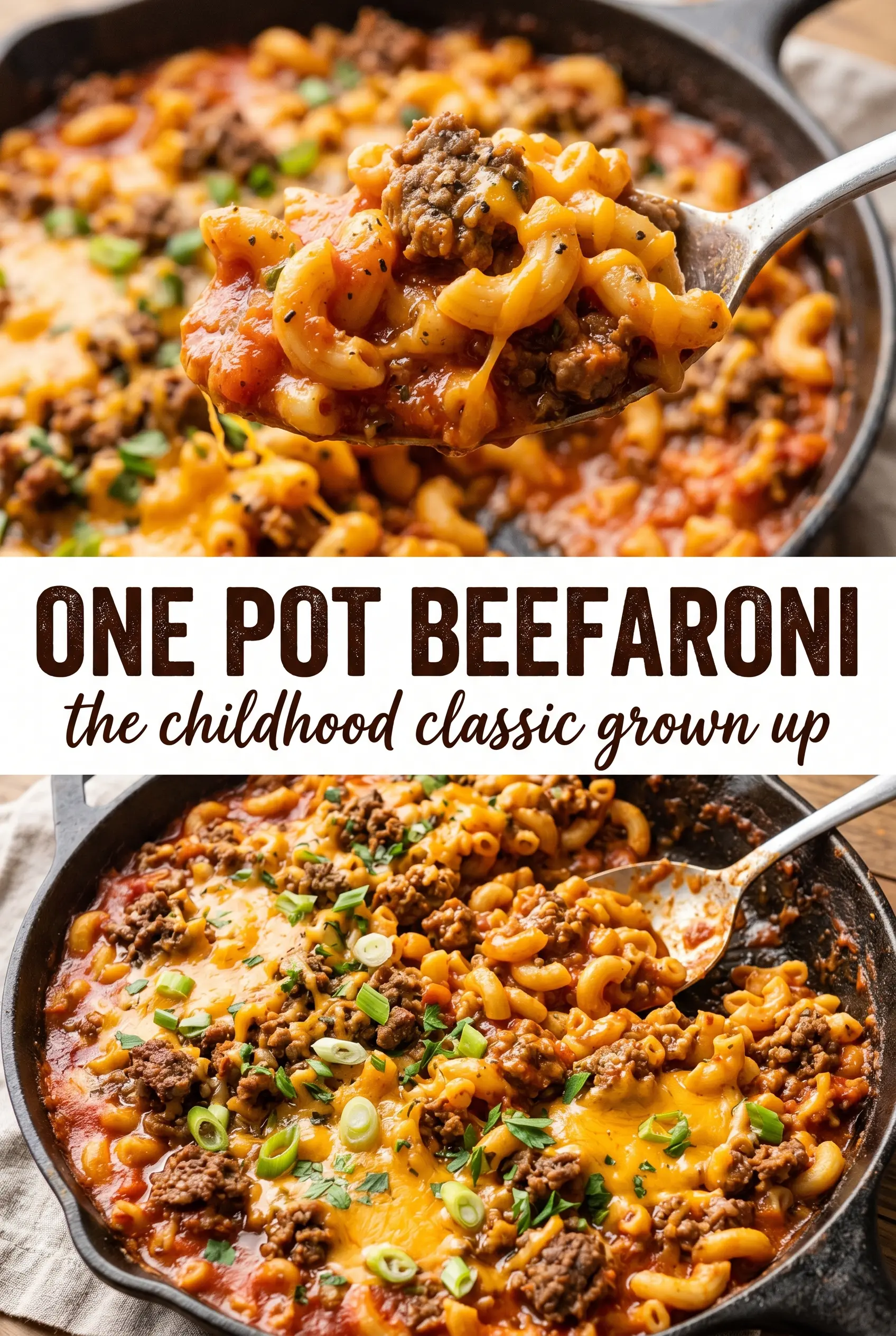
One pot beefaroni lands in that sweet spot between nostalgic and practical: tender elbow macaroni, a thick tomato beef sauce, and melted cheddar in every bite, all made in a single pot. It eats like the kind of meal you remember from childhood, but the texture is better than the boxed version because the pasta cooks right in the sauce instead of getting boiled separately and drained into the sink.
The key is building enough flavor before the macaroni goes in. Browning the beef with the onion gives you a savory base, and the tomato paste deepens the sauce so it tastes cooked, not just mixed together. Once the pasta is in, the liquid level matters. You want enough broth to simmer the macaroni until it’s tender, but not so much that the final dish turns soupy. The sauce should cling to the pasta when it’s done.
Below, I’ll walk through the one step that keeps the sauce from thinning out too much, plus a few simple swaps if you need to work around what’s in your pantry.
The macaroni cooked perfectly in the sauce and I loved that the cheddar melted all the way through instead of sitting on top. It was thick enough to scoop after just a few minutes off the heat, which made leftovers the next day even better.
Save this one pot beefaroni for a night when you want cheesy macaroni, rich tomato beef sauce, and one pot to wash.
The Trick to Keeping Beefaroni Thick Instead of Soupy
The biggest mistake with one pot beefaroni is treating the liquid like pasta water. It isn’t. The broth and tomatoes have to do double duty: they need to cook the macaroni and become the sauce, which means the ratio has to be tight. Too much liquid and the pasta finishes while the pot still looks loose. Too little and the noodles grab the bottom before they’re tender.
The other thing that matters is heat management. Once the macaroni goes in, keep the simmer gentle and cover the pot. A hard boil kicks the starch around too aggressively and can make the sauce look thin at first, then suddenly dry as the pasta absorbs too much. You’re looking for a steady bubble around the edges and a sauce that visibly coats the spoon near the end of cooking.
- Crushed tomatoes give the sauce body without needing extra simmer time. Tomato sauce can work in a pinch, but it usually makes the dish softer and less textured.
- Tomato paste deepens the flavor fast. That one tablespoon keeps the sauce from tasting flat and canned.
- Sharp cheddar matters because it stands up to the tomato base. Mild cheddar melts fine, but the finished pot tastes quieter.
- Elbow macaroni is the right shape here because it traps sauce in the curve. Any small pasta with a similar cook time can work, but larger shapes change the balance and may need a touch more liquid.
What Each Ingredient Is Doing in the Pot
- Ground beef brings the savory base that makes this feel like a full meal. An 85/15 or 80/20 blend gives the best flavor; if you use leaner beef, the dish still works, just with a little less richness.
- Onion and garlic build the backbone of the sauce. Cook them in the beef drippings so they soften and pick up flavor instead of tasting raw.
- Crushed tomatoes and beef broth create the cooking liquid and the sauce at the same time. Broth adds depth that water can’t give, so don’t swap it unless you’re willing to lose some savoriness.
- Italian seasoning, garlic powder, and smoked paprika layer in background flavor without making this taste like spaghetti. The paprika is subtle, but it gives the beef a warm, cooked note.
- Cheddar gets stirred in off the heat so it melts smoothly. If you add it while the pot is still boiling, it can turn grainy.
Building the Pot in the Right Order
Browning the Beef First
Start with the beef and onion in a large pot over medium-high heat and cook until the meat is no longer pink and the onion looks soft and translucent. You want some browned bits on the bottom of the pot; that’s where the flavor is. Drain the excess fat if there’s a lot, but leave enough behind to keep the base from tasting dry. Add the garlic at the end and cook for about a minute, just until it smells fragrant.
Letting the Sauce Come Together
Stir in the crushed tomatoes, broth, tomato paste, and seasonings, then bring the pot to a boil before adding the pasta. The boil wakes up the tomato paste and helps the sauce start thickening right away. Once the macaroni goes in, reduce the heat to medium-low and cover the pot. If the heat stays too high, the bottom can scorch before the pasta is done.
Cooking the Pasta in the Sauce
Cook the macaroni for 12 to 15 minutes, stirring once or twice so it doesn’t stick. The pasta should be al dente and the sauce should look noticeably thicker than it did when you started. If the pot still looks loose at the end, let it sit uncovered for a few minutes; the sauce tightens as it rests. If it dries out before the pasta is tender, splash in a little more broth.
Melting in the Cheese
Take the pot off the heat before adding the cheddar. Stir until the cheese disappears into the sauce and the whole pot turns creamy and glossy. This is the point where the texture changes from tomato beef pasta to actual beefaroni. Finish with parsley if you want a little freshness on top, then serve it while the cheese is still soft and stretchy.
What to Change When You Need a Different Version
Gluten-Free Beefaroni
Use a sturdy gluten-free elbow pasta and watch the simmer closely, because gluten-free noodles can go from firm to soft faster than wheat pasta. The sauce itself is naturally gluten-free as long as your broth is, but the texture is best when you stop cooking the pasta the moment it turns tender.
Lighter Beefaroni with Ground Turkey
Ground turkey works well if you want a leaner pot, but it needs a little extra help with flavor. Add a drizzle of olive oil when browning and keep the tomato paste in the recipe so the sauce still tastes full and balanced instead of thin.
Dairy-Free Version
Skip the cheddar and finish with a spoonful of olive oil or a sprinkle of nutritional yeast for a little richness. You lose the creamy melt, but the tomato-beef base still holds up well on its own and stays satisfying.
Stretching It for a Bigger Crowd
This recipe scales cleanly if you keep the liquid ratio close. For a larger batch, use a wider pot so the macaroni cooks evenly and doesn’t clump at the bottom. Add a splash more broth only if the pasta is still firm near the end and the sauce looks too tight.
Storage and Reheating
- Refrigerator: Store for up to 4 days. The pasta keeps soaking up sauce, so it’ll thicken in the fridge.
- Freezer: It freezes well for up to 2 months, though the pasta will soften a little on thawing. Cool it completely first and pack it in airtight containers.
- Reheating: Reheat gently on the stove or in the microwave with a splash of broth or water. The common mistake is blasting it on high heat, which tightens the sauce and makes the pasta go mushy before the center is hot.
Answers to the Questions Worth Asking
One Pot Beefaroni
Ingredients
Equipment
Method
- Heat a large pot over medium-high heat and brown the ground beef with the diced onion until the meat is no longer pink. Drain excess fat, then add the minced garlic and cook for 1 minute, stirring so it doesn’t burn.
- Add the crushed tomatoes, beef broth, tomato paste, Italian seasoning, garlic powder, smoked paprika, salt, and black pepper to the pot. Stir to combine, then bring everything to a boil over medium-high heat, with visible bubbling across the surface.
- Add the uncooked elbow macaroni, stir well, and reduce heat to medium-low. Cover and cook for 12–15 minutes, stirring once halfway, until the pasta is al dente and the sauce looks thick enough to cling to the elbows.
- Remove the pot from heat and stir in the shredded sharp cheddar until fully melted and glossy throughout. Taste and adjust seasoning with more salt and black pepper if needed, then serve topped with fresh parsley.