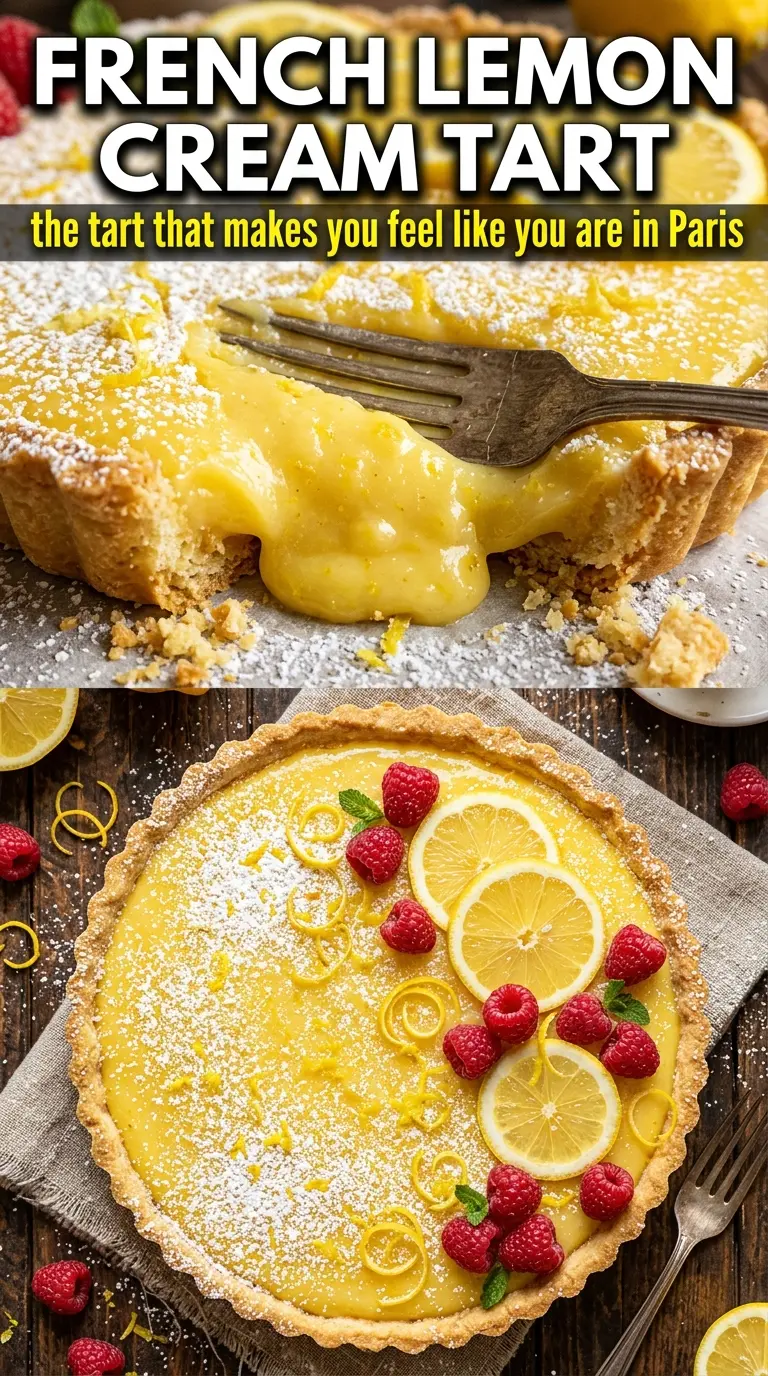
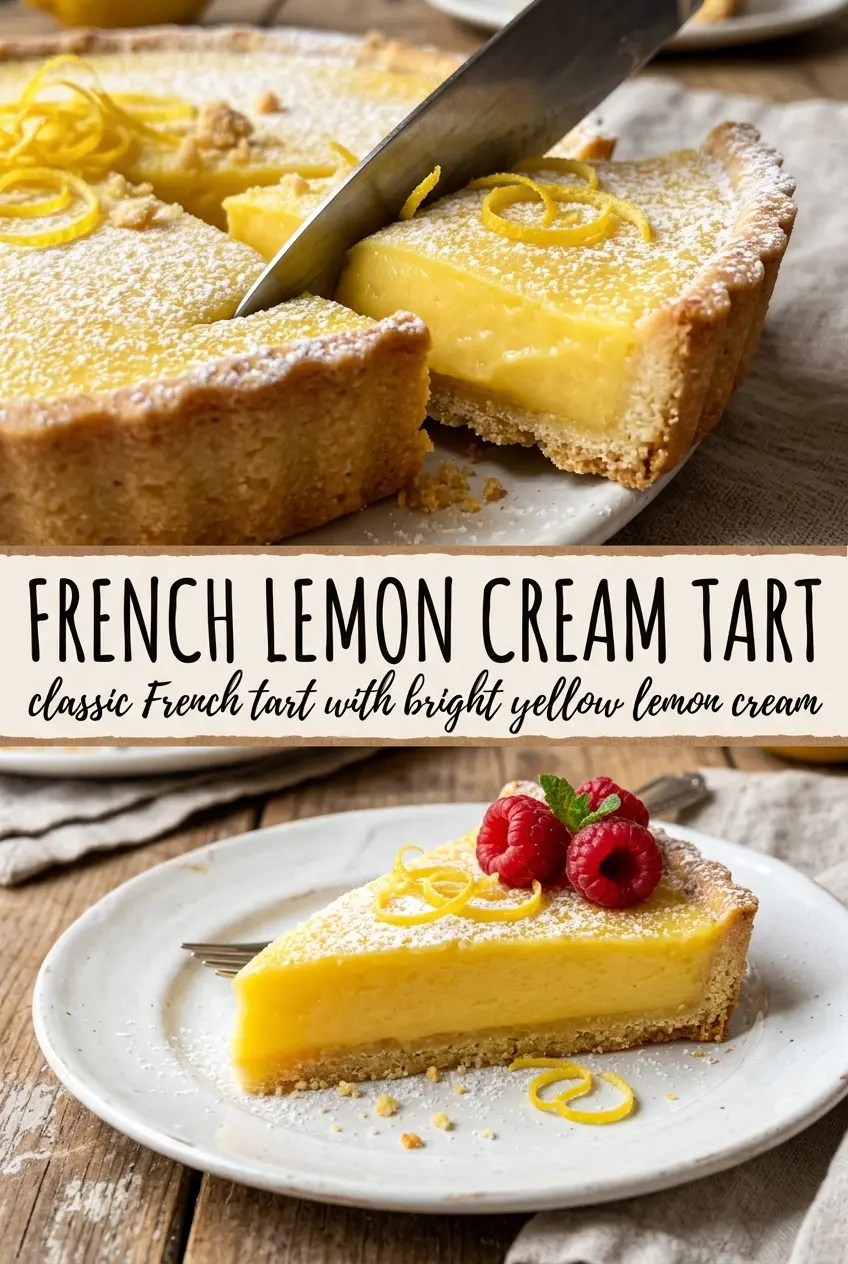
Pale, silky lemon cream tucked into a buttery tart shell is the kind of dessert that disappears fast because every bite gives you something different: crisp pastry, cool citrus custard, and that thin crackle of caramelized sugar on top. The filling should set into a smooth sliceable cream, not a loose curd, and the shell ought to stay firm enough to carry the filling without going soggy. That contrast is what makes this tart feel polished instead of plain.
The method matters here. The tart shell starts with powdered sugar, which keeps the pastry fine and tender, while the lemon cream is cooked just until it coats the back of a spoon. Pull it off the heat before it looks fully thick in the pan; it will continue to tighten as it chills, and if you push it too far on the stove, the eggs can turn grainy. Straining the filling gives you that smooth, glossy finish that makes the slice look clean on the plate.
Below, you’ll find the exact point where the tart shell stops from overbrowning, how to keep the lemon cream from splitting, and the easiest way to get that brittle bruleed top right before serving.
The filling set up beautifully and sliced clean after chilling, and the bruleed sugar on top cracked just like the photo. I was nervous about cooking the eggs, but straining it made the texture turn out completely smooth.
Love the silky filling and crackly sugar top on this French Lemon Cream Tart? Save it to Pinterest for the days when you want a tart that slices clean and looks bakery-worthy.
The Trick to a Tart Shell That Stays Crisp Under Lemon Cream
The shell has to be fully baked and completely cool before the filling goes in. A warm crust softens fast once the lemon cream is poured in, and no amount of chilling can fully bring back that crisp edge. Blind baking gives you a shell that can stand up to the filling, and the powdered sugar in the dough helps it bake into a tender crust instead of a tough one.
The other thing that matters is thickness. Press the dough evenly into the tart pan so the sides and bottom bake at the same pace. If the rim is too thick, it will brown before the center is done; if the base is too thin, it can turn fragile and break when you slice it.
What Each Ingredient Is Actually Doing in This Tart
- All-purpose flour — This gives the tart shell its structure. It’s the right middle ground for a pâte sucrée: sturdy enough to hold the filling, but not so strong that the crust eats like bread.
- Powedred sugar — It sweetens the dough and keeps the crumb fine and short. Granulated sugar would make the shell a little rougher and less delicate.
- Cold butter — Cold butter is what creates tenderness in both the shell and the filling. In the crust, it limits gluten development; in the lemon cream, it emulsifies into a glossy finish once the custard comes off the heat.
- Fresh lemon juice and zest — Fresh juice is essential here. Bottled juice tastes flat and dull, and the zest carries the oils that give the cream its bright lemon smell before you even take a bite.
- Eggs — These thicken the lemon cream and give it body. If you cook them too fast, they’ll scramble, which is why constant stirring and medium heat matter so much.
Building the Cream, Chilling It, and Bruleeing the Top
Mixing the Pâte Sucrée
Pulse the flour, powdered sugar, salt, and cold butter just until the mixture looks sandy with a few pea-size bits of butter still visible. Add the egg yolk and cold water and stop as soon as the dough comes together. If you work it until it feels smooth, the crust will bake up dense instead of tender.
Blind Baking Until the Edges Turn Gold
Press the dough into the tart pan in an even layer, then chill it before baking so it keeps its shape. Bake until the shell looks dry and the edges are a light golden color. If the base still looks pale and soft, give it a few more minutes; underbaked pastry turns limp once the lemon cream hits it.
Cooking the Lemon Cream
Whisk the eggs, sugar, lemon juice, and zest in a saucepan over medium heat and keep the mixture moving the whole time. You’re looking for a texture that coats the back of a spoon and leaves a clean line when you drag a finger through it. If the heat is too high, the eggs can curdle before the cream thickens, so use patience instead of rushing the burner.
Straining and Finishing the Fillings
Press the hot cream through a fine sieve, then whisk in the cold butter one cube at a time until the filling looks smooth and glossy. This step removes any little bits of cooked egg and makes the texture velvety. Pour it into the cooled tart shell only after the shell is fully cool, or the bottom can soften before the filling sets.
Chilling and Bruleeing
Refrigerate the tart until the center is set and no longer wobbly when you nudge the pan. Right before serving, sprinkle the sugar evenly over the surface and torch it in passes until it melts into an amber shell. If you pile the sugar too thickly, it burns in spots before it caramelizes evenly.
How to Adapt This for Different Diets and Serving Plans
Gluten-Free Tart Shell
Use a 1:1 gluten-free baking blend in place of the flour. The texture will be a little more fragile, so chill the dough well and press it into the pan instead of rolling it. The filling stays exactly the same.
Dairy-Free Version
Swap the butter in the shell for a firm plant-based butter, then use the same amount in the lemon cream. The result won’t be quite as rich or as glossy, but it still sets well and keeps the bright citrus flavor front and center.
Make It Ahead Without Losing the Crackle
Bake the tart and chill it up to a day ahead, but wait to brulee the sugar until right before serving. Once the sugar sits under refrigeration, it starts to dissolve and lose that glassy crackle.
Turning It Into Tartlets
Use mini tart pans and cut the blind-bake time by several minutes. The smaller size gives you more crisp edge in each bite, but the lemon cream will still need a full chill to set cleanly.
Storage and Reheating
- Refrigerator: Store covered for up to 3 days. The crust softens a bit on day two, but the filling stays smooth.
- Freezer: The tart can be frozen without the sugar topping, tightly wrapped, for up to 1 month. Thaw overnight in the refrigerator and torch the sugar after thawing.
- Reheating: Don’t reheat this tart. Serve it chilled or at cool room temperature; heat will loosen the filling and ruin the bruleed top.
Answers to the Questions Worth Asking
French Lemon Cream Tart
Ingredients
Equipment
Method
- Pulse all-purpose flour, powdered sugar, salt, and cold butter until the mixture looks like fine crumbs. Add egg yolk and cold water and pulse just until the dough comes together.
- Press the dough into a 9-inch tart pan, pressing evenly into the bottom and up the sides. Chill for 30 minutes to firm the crust.
- Blind bake at 375°F for 18-20 minutes, until the shell is golden. Cool completely so the filling won’t melt into the crust.
- Whisk eggs, granulated sugar, fresh lemon juice, and lemon zest in a saucepan over medium heat. Stir constantly for 8-10 minutes until thick enough to coat the back of a spoon and the surface looks smooth.
- Remove from the heat and strain through a fine sieve. Whisk in cold butter cubes one at a time until fully melted, smooth, and glossy.
- Pour the lemon cream into the cooled tart shell and smooth the top. Refrigerate for 3 hours until set and wobble-free in the center.
- Before serving, sprinkle 2 tablespoons sugar evenly over the surface. Brûlée with a kitchen torch until amber and crackled.
- Garnish with lemon zest curls right after brûlée so they look bright. Slice and serve immediately while the sugar crust shatters.