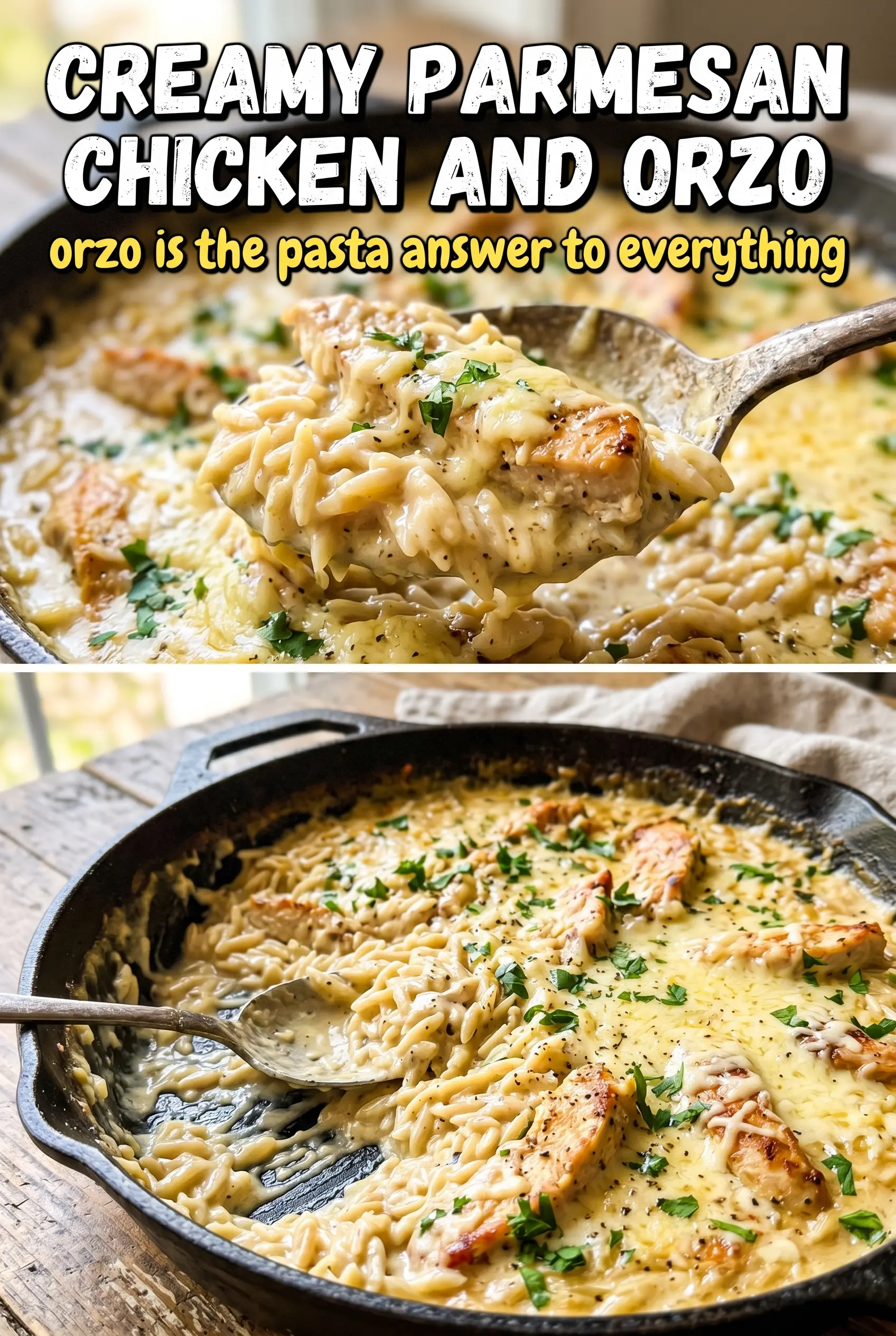
Golden chicken thighs over silky Parmesan orzo is the kind of skillet dinner that earns a permanent spot in the rotation. The chicken stays juicy, the sauce clings to every piece of pasta, and the spinach and sun-dried tomatoes keep it from feeling heavy. You get comfort food, but it still eats like a proper meal.
The trick is building the dish in one pan without rushing the orzo. Searing the chicken first gives you browned bits that season the sauce, and toasting the dry orzo for a minute before the liquid goes in keeps the pasta from tasting flat. The cream and broth simmer together until the orzo turns tender and the sauce thickens on its own, then the Parmesan goes in off the hottest part of the heat so it melts smoothly instead of turning grainy.
Below you’ll find the part that matters most: how to keep the sauce creamy, how to swap a few ingredients without wrecking the texture, and what to do if your pan looks a little too tight before the orzo finishes cooking.
The orzo turned out creamy without getting mushy, and the Parmesan melted in smoothly after I lowered the heat. My husband went back for seconds and asked if there was enough for lunch tomorrow.
Creamy Parmesan chicken and orzo is the kind of skillet dinner worth saving for when you want one pan, a silky sauce, and barely any cleanup.
The Part That Keeps the Orzo Creamy Instead of Gluey
Orzo can go from perfectly tender to sticky in a hurry, especially in a creamy skillet dish. The difference here is that the liquid starts loose and the pasta cooks uncovered, so the starch has room to thicken the sauce gradually instead of trapping everything in a heavy paste. Stir often, but not constantly. You want the orzo moving enough to cook evenly while still letting the sauce reduce.
The other place people run into trouble is the Parmesan. If it goes in while the pan is still at a hard boil, the sauce can turn grainy or clump up around the cheese. Pull the heat down once the orzo is tender, then stir in the Parmesan with the spinach and tomatoes. That gives you a smooth finish and keeps the dairy from separating.
What Each Ingredient Is Doing in the Pan

- Chicken thighs — Thighs stay juicier than breasts in a one-pan recipe like this, and they can handle the longer simmer without drying out. If you swap in chicken breasts, cut them thicker and pull them earlier so they don’t overcook while the orzo finishes.
- Orzo — This is the pasta that makes the dish feel creamy and spoonable. It releases starch as it cooks, which helps thicken the sauce without needing a flour roux. Don’t substitute a larger pasta shape unless you’re willing to add more broth and cooking time.
- Heavy cream — Cream gives the sauce its body and keeps it smooth while the Parmesan melts in. Half-and-half will work in a pinch, but the sauce will be thinner and a little more fragile. If you use it, keep the heat lower and don’t let the pan boil hard.
- Parmesan — Freshly grated Parmesan melts best and tastes sharper than the shelf-stable kind. Pre-grated cheese can work, but it often contains anti-caking agents that make the sauce less silky.
- Sun-dried tomatoes — These bring a concentrated tang that cuts through the cream. Oil-packed tomatoes are ideal here because they stay tender; if yours are dry-packed, soak them briefly in hot water and drain before slicing.
- Baby spinach — Spinach disappears into the sauce just enough to add color and a little freshness without changing the texture. Add it at the end so it wilts instead of melting into a dull, overcooked tangle.
Building the Skillet in the Right Order
Getting the Chicken Browned First
Season the chicken thighs generously and lay them in a hot skillet with olive oil. They should sizzle the second they hit the pan, and after 4 to 5 minutes per side you want a deep golden crust and an internal temperature that reaches 165°F. If the pan is too crowded, the chicken will steam instead of sear, so work in batches if needed. Pull the chicken out and leave the browned bits in the pan; that stuck-on fond is part of the sauce’s backbone.
Waking Up the Garlic and Toasting the Orzo
Add the garlic to the same pan and stir for about 30 seconds, just until it smells fragrant. Then add the dry orzo and let it toast for a minute, coating it in the oil and picking up the flavor left behind by the chicken. If the garlic starts to brown, the heat is too high and it will turn bitter fast. Keep it moving, then pour in the broth and cream before anything burns.
Simmering Until the Sauce Clings
Once the liquid goes in, bring the pan to a steady simmer, not a hard boil. Stir often and scrape the bottom so the orzo doesn’t catch. You want the pasta tender with a little bite and the sauce loose enough to move, then thickened enough to coat a spoon. If the pan looks dry before the orzo is done, add a splash of broth; if it looks soupy at the end, give it another minute or two uncovered.
Finishing With Cheese, Greens, and Chicken
Stir in the Parmesan, spinach, and sun-dried tomatoes after the orzo is cooked. The cheese should melt into the sauce, the spinach should wilt in a minute or two, and the tomatoes should stay a little chewy. Nestle the chicken back in and heat everything together for just long enough to warm through. Finish with basil right before serving so it stays bright and doesn’t blacken in the heat.
How to Adjust It Without Losing the Creamy Texture
Make It Dairy-Free Without a Broken Sauce
Use a full-fat unsweetened oat or cashew cream and swap the Parmesan for a dairy-free hard cheese or nutritional yeast. The sauce will taste a little less sharp and won’t have the same salty finish, so season in layers and add an extra pinch at the end. Keep the heat low once the liquid goes in because plant-based creams can split if they boil hard.
Use Chicken Breasts if That’s What You Have
Chicken breasts work, but they dry out faster than thighs, so pound them to an even thickness and watch the sear closely. Pull them as soon as they hit 165°F, then return them only at the end to warm through. The sauce keeps the dish moist, but overcooked breast meat will still turn stringy.
Make It Gluten-Free With the Right Pasta Swap
Use gluten-free orzo or a small gluten-free pasta shape that cooks in a similar time. Keep a close eye on the liquid because some gluten-free pastas absorb broth faster and can go from done to mushy quickly. Add broth a splash at a time if the pan tightens before the pasta is tender.
How to Store the Leftovers So They Stay Creamy
- Refrigerator: Store in an airtight container for up to 3 days. The orzo will firm up as it sits and the sauce will thicken.
- Freezer: It freezes, but the cream sauce can separate a little when thawed, so I only freeze it if I have to. Cool it completely, portion it tightly, and thaw in the fridge overnight.
- Reheating: Warm gently on the stove with a splash of broth or cream, stirring as it loosens. The biggest mistake is blasting it in the microwave until the sauce splits and the chicken dries out.
Answers to the Questions Worth Asking
Creamy Parmesan Chicken and Orzo
Ingredients
Equipment
Method
- Season the chicken thighs with salt, pepper, garlic powder, Italian seasoning, and smoked paprika. Heat olive oil in a large skillet over medium-high heat and sear the chicken for 4-5 minutes per side until golden and cooked through, then remove to a plate.
- In the same skillet, cook the minced garlic for 30 seconds. Add the uncooked orzo and toast for 1 minute.
- Pour in the chicken broth and heavy cream, then bring to a simmer. Cook uncovered for 10-12 minutes, stirring often, until the orzo is tender and the sauce is creamy.
- Stir in the grated Parmesan, baby spinach, and sliced sun-dried tomatoes. Cook just until the spinach wilts.
- Nestle the chicken thighs back into the creamy orzo and heat through for 2 minutes. Garnish with fresh basil and serve.