Cast iron-seared steak gets even better when it’s finished with a cold slice of cowboy butter melting over the top. The butter runs into the pan drippings, pulls up the garlic, herbs, lemon, and paprika, and turns an already good ribeye into the kind of dinner that feels restaurant-made without asking much from you. What makes this version worth keeping is the timing: the steak gets a hard sear first, then the butter melts at the end so the herbs stay bright and the flavor stays clean instead of muddy.
The other thing that matters here is the butter itself. Softened butter blends smoothly with garlic, mustard, citrus, and spices, then firms back up in the fridge so you can slice it cleanly and tuck it onto a hot steak when it’s ready. That contrast is what gives the dish its payoff — crisp crust, juicy center, and a glossy finish that coats each bite.
Below, I’m walking through the small details that keep the steak from overcooking and the butter from disappearing into the pan too soon. If you’ve ever wanted a steak dinner that looks as good as it tastes, this is the one to make.
The cowboy butter melted over the steak at just the right moment, and the ribeye came out with a crisp crust and a juicy center. I loved that the garlic and herbs stayed fresh tasting instead of getting lost in the pan.
Save this cowboy butter steak for the night you want a hard-seared ribeye with a glossy garlic-herb finish and almost no cleanup.
The Trick to Keeping Cowboy Butter Bright Instead of Greasy
The failure point in a dish like this is usually the butter, not the steak. If the garlic goes straight into a screaming-hot pan, it loses its edge and can turn bitter; if the butter goes in too early, it can separate before the steak finishes searing. The better move is to build the cowboy butter ahead of time, then add it at the end when the steak is off the heat and resting.
That order keeps the herbs fresh and the lemon sharp. It also gives you control over the texture: the butter should melt into a glossy sauce, not puddle into an oily mess. With ribeye, the marbling already brings enough richness, so the cowboy butter should lift the steak instead of burying it.
What Each Ingredient Is Actually Doing in This Steak Dinner
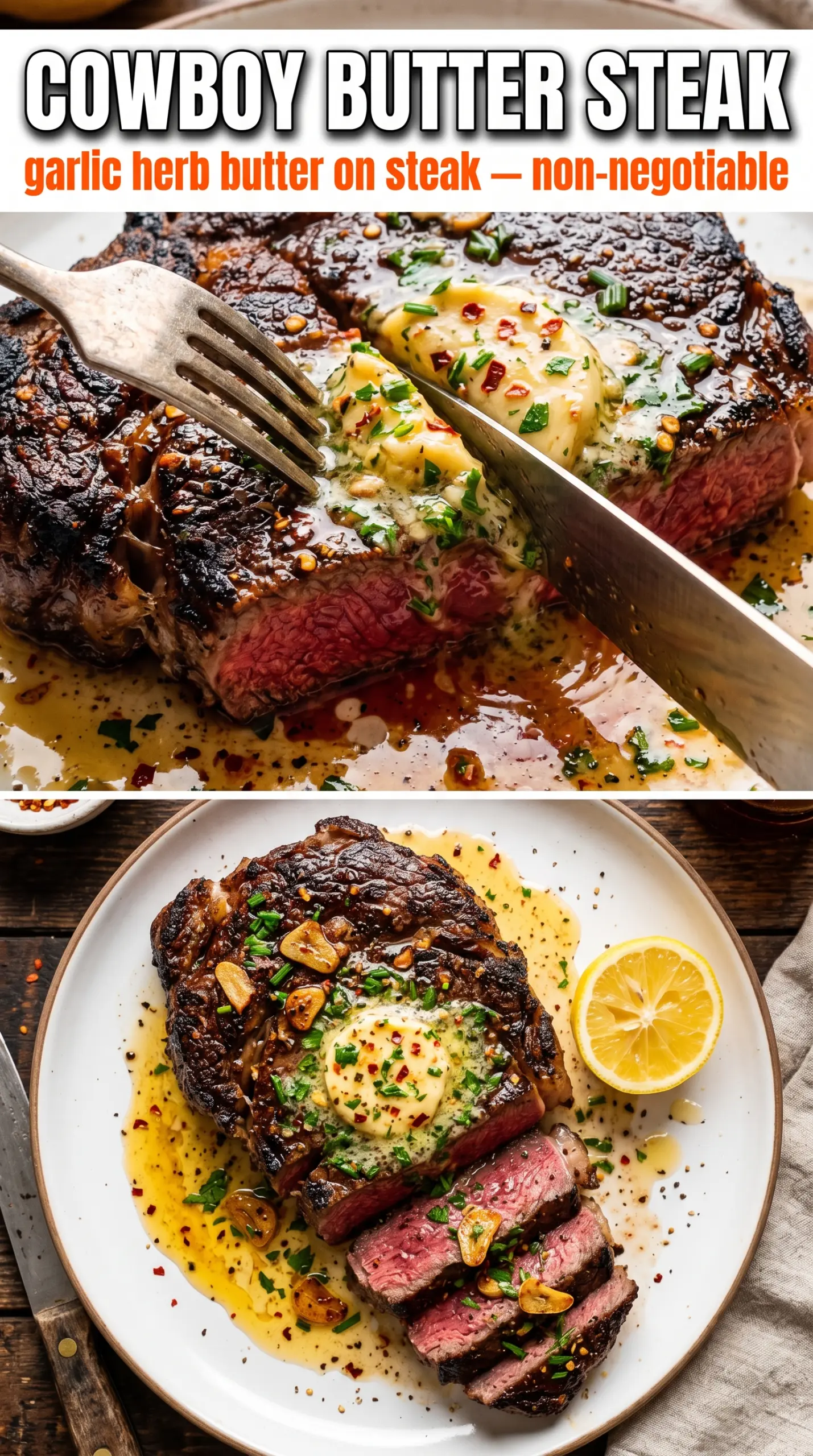
- Ribeye steaks — Ribeye is the right cut here because the marbling keeps the meat juicy under high heat. If you swap in a leaner steak, the sear still works, but you’ll lose some of that buttery texture in the center.
- Unsalted butter — Unsalted butter gives you control over the finish, especially since the steak is already seasoned heavily. Salted butter can work in a pinch, but taste the cowboy butter before you shape it and keep the salt light.
- Garlic, parsley, and chives — These are the fresh backbone of the butter. Don’t use dried herbs here; they won’t melt into the butter the same way and they’ll make the finish taste flat.
- Dijon mustard and lemon juice — Dijon helps the butter emulsify a little and gives it a subtle bite, while lemon keeps the richness from feeling heavy. If you skip both, the butter tastes rounder but also duller.
- Smoked paprika and red pepper flakes — These bring warmth without making the steak taste spicy. The paprika is one of the small details that gives cowboy butter its color and depth, so don’t leave it out unless you want a plain herb butter instead.
How to Sear the Ribeye Before the Butter Goes On
Shaping the Cowboy Butter First
Mix the softened butter with the garlic, herbs, lemon, Dijon, paprika, red pepper flakes, and salt until it looks evenly speckled and smooth. Roll it into a tight log in plastic wrap and chill it until firm enough to slice. If the butter is too soft when it hits the steak, it disappears too fast and you lose the dramatic finish that makes this dish work.
Building the Crust in a Smoking-Hot Skillet
Season the steaks generously on all sides, then heat the cast iron until it’s truly hot and just starting to smoke. Add the oil, lay the steaks in, and leave them alone long enough to form a deep brown crust before turning. If the pan isn’t hot enough, the steak steams and turns gray at the edges instead of developing that crisp exterior.
Finishing with Butter Without Overcooking the Center
During the last minute, add a pat of the cowboy butter and tilt the pan so the melted butter pools. Spoon it over the steak once or twice, then pull the meat off the heat as soon as the crust is set and the center is still juicy. Resting matters here; if you cut too soon, the juices run out and the butter can’t rescue the texture.
The Final Slice and Serve
Let the steak rest for 5 minutes, then set a thick slice of the chilled butter on top while the meat is still warm. The butter should melt slowly and drift into the seared ridges, not vanish instantly. Serve with extra cowboy butter on the side if you want more richness at the table, but don’t drown the steak before anyone gets the first bite.
How to Adapt Cowboy Butter Steak Without Losing the Point
Dairy-Free Version with Olive Oil Spread
Use a high-quality dairy-free butter alternative that firms up in the fridge, then mix it the same way and chill it into a log. The flavor will be a little less rich and the melt won’t be quite as silky, but the garlic, herbs, and lemon still carry the dish.
Leaner Steaks Like Strip or Sirloin
A strip steak or sirloin works if that’s what you have, but pull it a little earlier because there’s less fat protecting the meat. You’ll still get the cowboy butter payoff, though the final bite will be a touch less lush than ribeye.
Milder Heat for Sensitive Palates
Cut the red pepper flakes in half or leave them out completely. The butter will still taste balanced because the Dijon and lemon keep it lively; you just lose that little background heat that gives cowboy butter its kick.
Make-Ahead for Faster Dinner Service
Shape the butter up to 5 days ahead and keep it chilled, or freeze it and slice off rounds as needed. That prep turns the recipe into a fast steak dinner because the only live cooking is the sear.
Storage and Reheating
- Refrigerator: Store leftover steak in an airtight container for up to 3 days. The butter will firm up again, and the crust won’t stay crisp.
- Freezer: The cowboy butter freezes well for up to 2 months. The cooked steak can be frozen, too, but the texture softens after thawing, so I only do that if I have to.
- Reheating: Warm the steak gently in a low oven or in a covered skillet over low heat until just heated through. High heat dries it out fast, and microwaving turns the butter greasy instead of glossy.
Answers to the Questions Worth Asking
Cowboy Butter Steak
Ingredients
Equipment
Method
- Blend unsalted butter, minced garlic, lemon juice, parsley, chives, Dijon mustard, smoked paprika, red pepper flakes, and salt to taste until smooth and speckled with herbs.
- Roll the cowboy butter into a log wrapped in plastic wrap, then refrigerate until firm, about 5 minutes (or longer if needed).
- Pat ribeye steaks dry, then season generously with salt and coarse black pepper on all sides to form a visible crust.
- Heat a cast iron skillet over high heat until smoking, then add vegetable oil and swirl to coat.
- Sear steaks 3–4 minutes per side for medium-rare, turning once and basting with a pat of cowboy butter in the final minute so it foams and melts.
- Remove steaks to a plate and rest for 5 minutes tented with foil so juices redistribute without steaming the crust.
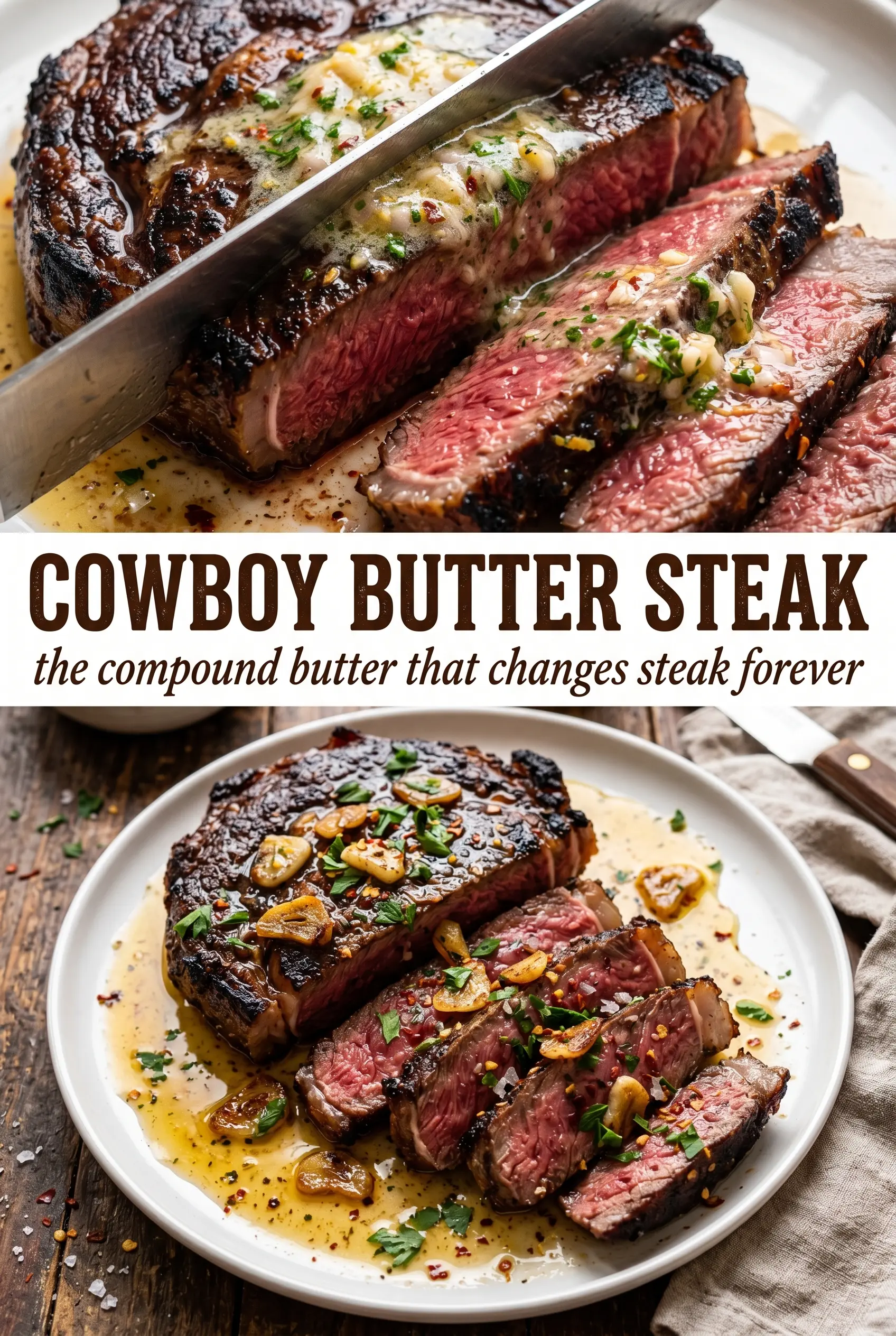
- Place a thick slice of cowboy butter directly on each steak while still warm so it melts immediately into a glossy coating.
- Serve right away with extra cowboy butter on the side for dipping.