Golden chicken, smoky broth, sweet corn, and black beans give this Santa Fe chicken skillet the kind of weeknight payoff that makes a one-pan dinner worth repeating. The chicken stays juicy because it sears first, then finishes gently in the simmering sauce instead of spending the whole cook time in liquid. The vegetables pick up all the seasoned drippings from the pan, and the cheddar melts into the top just long enough to turn the whole skillet into something spoonable and deeply satisfying.
What makes this version work is the order. A hard sear builds color before anything wet goes in, and that browned layer seasons the broth without needing extra effort. Using Rotel instead of plain diced tomatoes adds instant acidity and chile flavor, while the black beans and corn make the skillet hearty enough to serve as a full dinner with only a few garnishes.
Below, I’ve included the small details that keep the chicken from drying out and the sauce from tasting flat. If you’ve ever had a skillet dinner turn watery or bland, the fix is in the timing.
The chicken stayed juicy and the sauce thickened just enough around the beans and corn. I loved that the cheddar melted right over the top without turning greasy, and the lime at the end made the whole skillet pop.
Save this Santa Fe Chicken Skillet for the nights when you want seared chicken, smoky beans, and melted cheddar in one pan.
The Sear Is What Keeps This Skillet from Tasting Flat
A lot of chicken skillets go wrong because everything gets dumped into the pan at once. That gives you cooked chicken, sure, but not much flavor. Here, the seasoning hits the chicken first, then the chicken goes into hot oil long enough to build a deep golden crust before the wet ingredients show up. Those browned bits at the bottom are the backbone of the sauce.
The other place people lose this dish is heat. If you rush the simmer, the broth stays thin and the chicken can tighten up. Medium heat gives the beans, corn, and tomatoes time to mingle with the taco seasoning while the chicken finishes gently to 165°F. You want the sauce bubbling around the edges, not roaring.
- High heat for the sear — this is what gives you color and a savory pan base. If the chicken sticks for a moment, leave it alone; once it browns, it releases cleanly.
- Medium heat for the finish — that slower cook keeps the chicken juicy and lets the broth reduce just enough to cling to the beans and corn.
- Cheese added at the end — cheddar melts best off the heat with a lid on. If you stir it in over a hard simmer, it can turn oily instead of creamy.
What Each Ingredient Is Actually Doing in the Pan

- Chicken breasts — boneless, skinless breasts work well here because they sear quickly and finish in the sauce without needing a long braise. If yours are very thick, pound them to an even thickness so the centers cook at the same pace as the edges.
- Taco seasoning — this brings salt, cumin, chile, and garlic in one step. Homemade or store-bought both work; just watch the salt level if your blend is heavy-handed.
- Rotel — the diced tomatoes with green chiles do more than add liquid. They bring acidity and a little heat, which keeps the skillet from tasting like plain chicken and beans.
- Black beans and corn — these give the dish body and contrast. Canned beans are perfect here; frozen corn stays sweeter and firmer than canned, so it’s the version I reach for.
- Chicken broth — just enough to loosen the pan drippings into a sauce. Use low-sodium broth if your taco seasoning is salty, since the liquid concentrates as it simmers.
- Cheddar cheese — it melts into a blanket that ties the sauce together. Pre-shredded works in a pinch, but freshly shredded cheddar melts smoother and faster.
Building the Skillet in the Right Order
Season and Sear the Chicken
Rub the taco seasoning onto both sides of the chicken so the spice blend has direct contact with the meat. Heat the oil until it shimmers, then lay the chicken in without crowding the pan. You’re looking for a dark golden crust and an easy release from the skillet; if it tears when you try to turn it, it needs another minute. Pull the chicken out once it’s browned on both sides, even though it won’t be fully cooked yet.
Turn the Pan Drippings into Sauce
Add the black beans, corn, tomatoes, and broth straight into the same pan. Stir and scrape the bottom well so the browned bits dissolve into the liquid. That’s where the flavor is. Bring it to a simmer, not a boil. If the pan looks too dry, the broth should loosen everything into a saucy base, not turn the skillet into soup.
Finish the Chicken Gently
Set the chicken back into the simmering mixture and cover the skillet. The lid traps steam, which finishes the chicken without drying the outside. After 8 to 10 minutes, check the thickest part with a thermometer; 165°F is the target. If you keep cooking past that point, the chicken gets stringy fast.
Melt the Cheese Without Breaking the Sauce
Sprinkle the cheddar over the top, cover the skillet again, and turn off the heat. Two minutes is usually enough for the cheese to melt into soft, glossy strands. If you leave it over high heat, the cheese can separate and get greasy. The skillet should look finished, not overworked.
How to Adapt This for What You Have on Hand
Make It Dairy-Free
Skip the cheddar and finish with avocado, extra cilantro, and a squeeze of lime. You lose the creamy melt on top, but the skillet still tastes complete because the beans, corn, and seasoned broth carry plenty of body on their own.
Use Chicken Thighs Instead of Breasts
Boneless thighs stay a little juicier and forgive a longer simmer, which makes them a good swap if you’re worried about overcooking. They’ll need a couple extra minutes to reach temperature, but the method stays the same.
Make It Lower-Carb
Leave out the corn and add extra black beans or diced zucchini if you want more volume. The skillet won’t have the same sweetness from the corn, so finish with plenty of lime to keep the flavor bright.
Stretch It for More Servings
Add an extra can of beans and another half cup of broth, then serve it over rice or with tortillas. The sauce stays balanced because the tomatoes and seasoning are already doing the heavy lifting.
Storage and Reheating
- Refrigerator: Store leftovers in an airtight container for up to 4 days. The sauce thickens as it chills, which actually helps the flavors settle in.
- Freezer: This freezes well for up to 2 months, though the texture of the tomatoes and beans softens a bit after thawing. Freeze in portions for the easiest reheating.
- Reheating: Warm gently on the stove over medium-low with a splash of broth or water. Don’t blast it in the microwave for too long, or the chicken can dry out before the center is hot.
Answers to the Questions Worth Asking
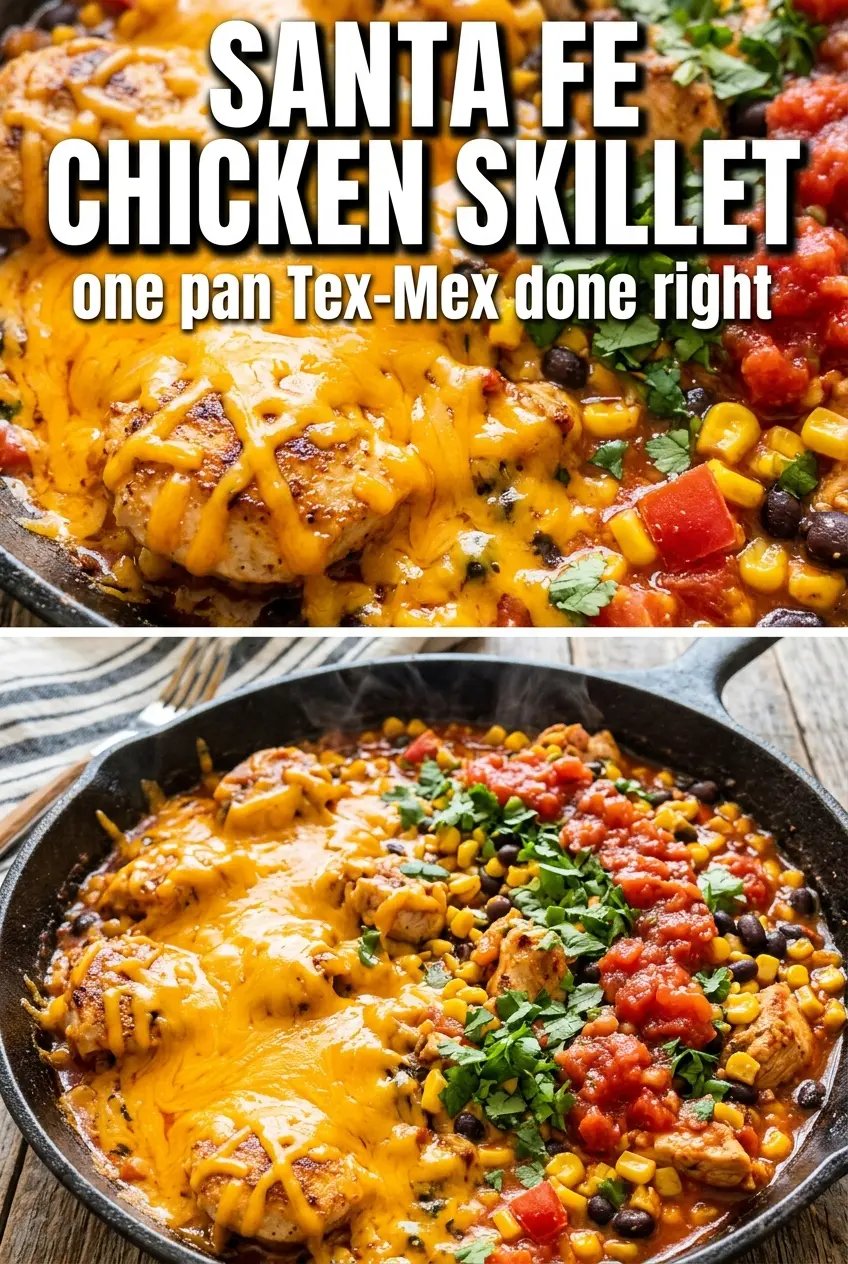
Santa Fe Chicken Skillet
Ingredients
Equipment
Method
- Rub the chicken breasts with taco seasoning on both sides.
- Heat olive oil in a large cast iron skillet over medium-high heat, then sear the chicken for 4-5 minutes per side until golden; remove to a plate.
- Add black beans, corn, Rotel, and chicken broth to the skillet, stir, and bring to a simmer.
- Nestle the chicken breasts into the bean and corn mixture, cover, and cook over medium heat for 8-10 minutes until the chicken reaches 165°F.
- Sprinkle cheddar cheese over the top, cover, and let it melt for 2 minutes.
- Garnish with cilantro, sour cream, avocado, and lime wedges before serving.