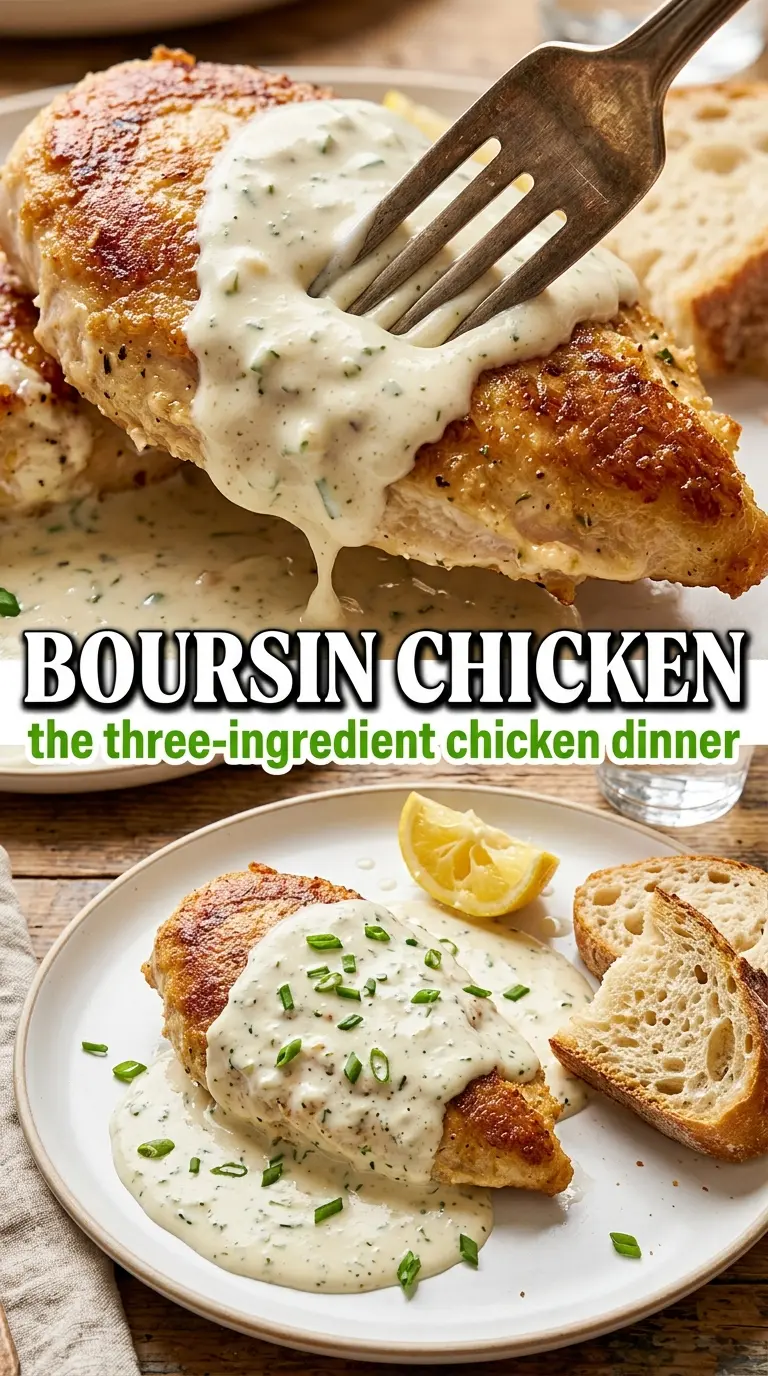
Golden-seared chicken breasts tucked into a glossy Boursin sauce are the kind of weeknight dinner that feels a little dressed up without asking for much more work. The sauce lands somewhere between silky and spoonable, with garlic, herbs, and pepper folding into the cream instead of sitting on top of it. It clings to the chicken and pools around mashed potatoes or pasta in the best possible way.
What makes this version work is the order: sear the chicken first for color, then use the same pan for the sauce so every browned bit gets pulled into the finish. Boursin melts smoothly when it goes into a simmering broth base, but it can turn grainy if the heat is too high or if you rush the cream in too early. A brief simmer is enough to thicken it without losing that soft, luxurious texture.
Below, I’ve included the little details that matter most, like how to keep the sauce from breaking, which swaps actually hold up, and what to do if your chicken breasts are on the thick side.
The sauce thickened up right after I added the cream, and the Boursin melted into it without any lumps. I served it over mashed potatoes and my husband went back for seconds before I even sat down.
Love that silky Boursin chicken sauce? Save it to Pinterest for an easy elegant chicken dinner that tastes restaurant-worthy with almost no extra effort.
The Trick to Keeping Boursin Sauce Smooth Instead of Grainy
The mistake most people make with a cheese sauce like this is letting the heat stay too high once the Boursin goes in. Soft cheese melts beautifully, but if the pan is boiling hard, the dairy can separate and the sauce turns streaky instead of glossy. A gentle simmer is all you need.
The other thing worth watching is the order of the liquids. The broth loosens the cheese first, then the cream rounds it out and gives the sauce that plush texture. If the sauce looks thin at first, don’t chase it with more cheese right away; let it bubble for a few minutes and it will tighten naturally as the water cooks off.
What Each Ingredient Is Actually Doing In This Dish
- Chicken breasts — Boneless, skinless breasts cook quickly and stay neat under the sauce. If yours are thick, pound them to an even thickness so the outside doesn’t overcook before the center reaches temperature.
- Boursin garlic and herb cheese — This is the backbone of the sauce. You can swap in another soft herbed cheese in a pinch, but Boursin has the strongest garlic-herb balance and melts with the cleanest texture.
- Dry white wine or chicken broth — Wine gives the sauce a brighter finish and helps lift the browned bits from the pan. Broth works fine if that’s what you have, and it keeps the dish family-friendly.
- Heavy cream — This adds body and helps the sauce stay smooth once it’s reduced. Half-and-half can work, but the sauce will be thinner and a little less stable.
- Fresh thyme — Thyme cuts through the richness without taking over. Dried thyme works in a smaller amount, but fresh thyme gives the sauce a cleaner, more fragrant finish.
Building the Pan Sauce Around the Chicken, Not Beside It
Getting the Sear First
Season the chicken well, then cook it in a hot skillet with the olive oil until the outside turns deep golden and the chicken releases easily from the pan. That crust is more than color; it gives the sauce its base. If the chicken sticks, give it another minute instead of forcing it loose. Pull it out when it reaches 165°F and let it rest while you start the sauce.
Using the Same Pan for the Sauce
Drop the garlic into the drippings and stir it for just 30 seconds until it smells sweet and sharp, not browned. Pour in the wine or broth and scrape the pan well, because those stuck bits are what make the sauce taste like it took longer than 25 minutes. If you skip the deglaze or rush this part, the sauce will taste flat.
Melting the Boursin Without Breaking It
Add the chicken broth and let it come to a steady simmer before stirring in the cheese. The Boursin should melt into the liquid in seconds, turning the pan cloudy and then smooth. Once the cream goes in, keep the heat low and give the sauce 3 to 4 minutes to thicken. If it starts to bubble hard, pull the pan off the burner for a moment.
Finishing the Chicken in the Sauce
Return the chicken to the skillet and spoon the sauce over the top so it reheats gently without drying out. The sauce should coat the spoon and cling to the chicken in a glossy layer. Finish with fresh thyme and cracked pepper. If the sauce gets thicker than you want, loosen it with a splash of broth.
How to Adapt This for a Lighter Pan, a Bigger Crowd, or No Wine
Make it gluten-free
This recipe is naturally gluten-free as written, as long as your broth and Boursin package are certified gluten-free. Serve it with rice, potatoes, or gluten-free pasta and the sauce behaves the same.
Skip the wine and use broth only
Use chicken broth in place of the wine if you want a milder, family-friendly version. You’ll lose a little brightness, so add an extra pinch of black pepper or a squeeze of lemon at the end if the sauce tastes too soft.
Use chicken thighs instead of breasts
Boneless thighs bring a little more richness and stay juicier if you’re worried about overcooking. They may need a few extra minutes in the skillet, but the sauce works the same and tastes a touch deeper.
Double it for guests
You can double the sauce without changing the method, but cook the chicken in batches so the pan stays hot and the pieces sear instead of steam. Use a wider skillet or transfer the finished chicken to a plate while the second batch cooks.
Storage and Reheating
- Refrigerator: Store leftovers in an airtight container for up to 3 days. The sauce will thicken as it chills.
- Freezer: It can be frozen, but cream sauces sometimes separate a little after thawing. If you do freeze it, cool it fully first and reheat gently so the sauce has the best chance of coming back together.
- Reheating: Warm it slowly in a skillet over low heat with a splash of broth to loosen the sauce. High heat is what makes the cheese sauce split, so don’t microwave it hard and fast unless you want to gamble with the texture.
Answers to the Questions Worth Asking

Boursin Chicken
Ingredients
Equipment
Method
- Season the chicken breasts with salt, pepper, and garlic powder to taste. Heat olive oil in a large skillet over medium-high heat until shimmering.
- Add chicken breasts and sear for 5-6 minutes per side until golden and the internal temperature reaches 165°F. Remove to a plate.
- Cook the minced garlic in the same pan for 30 seconds until fragrant. Deglaze with the white wine and cook for 2 minutes.
- Pour in the chicken broth, bring it to a simmer, and add the Boursin cheese. Stir until completely melted and smooth.
- Stir in the heavy cream and fresh thyme leaves, then simmer for 3-4 minutes until the sauce thickens slightly. The sauce should look glossy and lightly cling to the spoon.
- Return the chicken to the pan and spoon the Boursin sauce over each breast. Let the sauce coat the chicken as it warms through.
- Garnish with fresh thyme and serve over mashed potatoes or pasta. Plate with the sauce pooling thickly around the chicken.