Soft sugar cookie rounds piled with cream cheese frosting and fresh fruit are one of those desserts that disappear fast because they hit every note at once: buttery, tangy, sweet, and juicy. Fruit pizza cookies give you the fun of a full fruit pizza without the slicing, the sticky serving mess, or the pressure of cutting clean wedges at the table. Each cookie stands on its own, and that makes them easy to serve for parties, potlucks, or anytime you want a dessert that looks cheerful without much fuss.
The part that makes these work is balance. The cookies bake into a sturdy-but-tender base, so they can hold the frosting and fruit without turning soggy too quickly. The cream cheese layer needs to be smooth and spreadable, not overly sweet, because the fruit and apricot glaze bring plenty of brightness on their own. Cooling the cookies completely before frosting them matters just as much as the baking itself; if they’re even a little warm, the topping slides right off.
Below, I’ve included the small details that keep the cookies soft, the frosting thick, and the fruit looking fresh instead of weepy. There’s also a helpful note on how to make them ahead without losing that clean, colorful finish.
The cookies stayed soft under the frosting, and the apricot glaze gave the fruit that bakery-style shine without making anything soggy. I made a batch for my daughter’s school party and every single one disappeared.
Save these fruit pizza cookies for the next time you want soft sugar cookie rounds topped with glossy fruit and cream cheese frosting.
The Part That Keeps Fruit Pizza Cookies from Getting Soggy
The mistake with fruit-topped cookies is usually a soft base that turns damp before the tray even reaches the table. These cookies need enough structure to hold frosting and fruit, but not so much flour that they bake up dry and stubborn. The goal is a tender sugar cookie with edges that set cleanly and centers that stay soft once cooled.
Cooling is the line between neat little dessert cookies and a slide of frosting on a warm tray. If the cookies are even slightly warm, the cream cheese layer loosens and the fruit starts to sink. The apricot glaze works best on top of dry fruit, not wet fruit, so pat berries and kiwi slices dry before arranging them.
- Butter — Softened butter gives these cookies their tender, bakery-style crumb. If it’s too warm and greasy, the dough spreads too much; if it’s too cold, the sugar won’t cream in properly and the texture turns dense.
- Cream cheese — Full-fat cream cheese makes the frosting tangy and thick enough to hold the fruit. Reduced-fat versions can work in a pinch, but they usually loosen faster and don’t spread as smoothly.
- Apricot jam — This glaze adds shine and helps the fruit look fresh longer. If you don’t have apricot, warm peach jam is the best swap because it brushes on thinly and stays clear enough not to muddy the colors.
- Fresh fruit — Use firm fruit that holds its shape after slicing. Soft berries are fine, but overly juicy fruit will bleed into the frosting and make the tops look messy fast.
What Each Ingredient Is Actually Doing in This Dessert
- Sugar (the sweetness and structure) — Sugar tenderizes baked goods and creams into butter to create air. Don’t skip it or reduce it too much.
- Fat (butter, oil, or cream cheese) — This carries flavors and creates tender crumb. Proper creaming with sugar adds volume to cakes.
- Eggs (the binder and lift) — Eggs create structure and help baked goods rise. Room temperature eggs incorporate better than cold ones.
- Flour (the structure) — This is what makes baked goods hold together. Don’t overmix or the texture becomes tough and dense.
- Flavoring (vanilla, chocolate, fruit, spices) — These define the personality of the dessert. Use good quality flavorings so they shine.
- Leavening (baking powder, baking soda, whipped eggs) — This creates rise and light crumb. Too much makes the dessert taste bitter.
- Liquid (milk, water, or fruit juice) — This hydrates flour and carries flavors. Too much makes the dessert dense; too little makes it dry.
- Final finish (frosting, glaze, fruit, whipped cream) — The topping adds moisture, flavor, and visual appeal. Don’t skip it or the dessert feels incomplete.
Building the Cookies, Frosting, and Fruit in the Right Order
Creaming the Butter and Sugar
Beat the butter and sugar until the mixture looks pale and fluffy, not just combined. That extra air gives the cookies lift so they bake as soft rounds instead of flat disks. Add the eggs one at a time if you can, then the vanilla, and stop mixing as soon as the batter looks smooth. If it starts to look curdled, the dough is still fine once the flour goes in.
Shaping for Even Baking
Scoop the dough into 24 portions and flatten each one into a round about 3 inches wide. The cookies need to be similar in size so they finish baking at the same time and look uniform under the fruit. If the dough sticks, dampen your hands lightly or dust them with a little flour, but don’t overdo it or the cookies can bake up dry around the edges.
Baking Until Just Set
Bake until the edges are set and only barely turning golden. Pull them before the centers look deeply browned; they keep cooking on the sheet pan for a few minutes after they come out. If you wait until they look fully done in the oven, they’ll end up firmer than you want once cooled. Move them to a rack and let them cool all the way before touching the frosting.
Frosting and Decorating
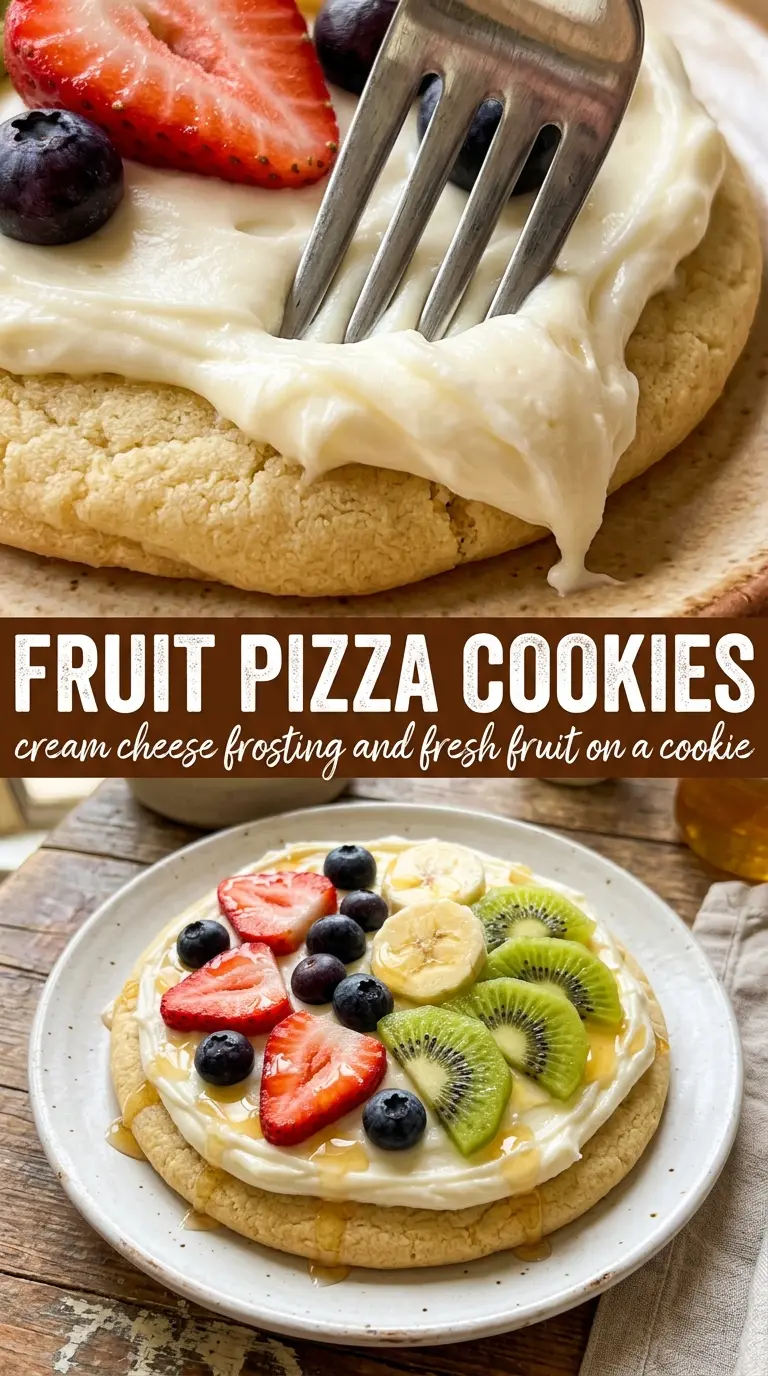
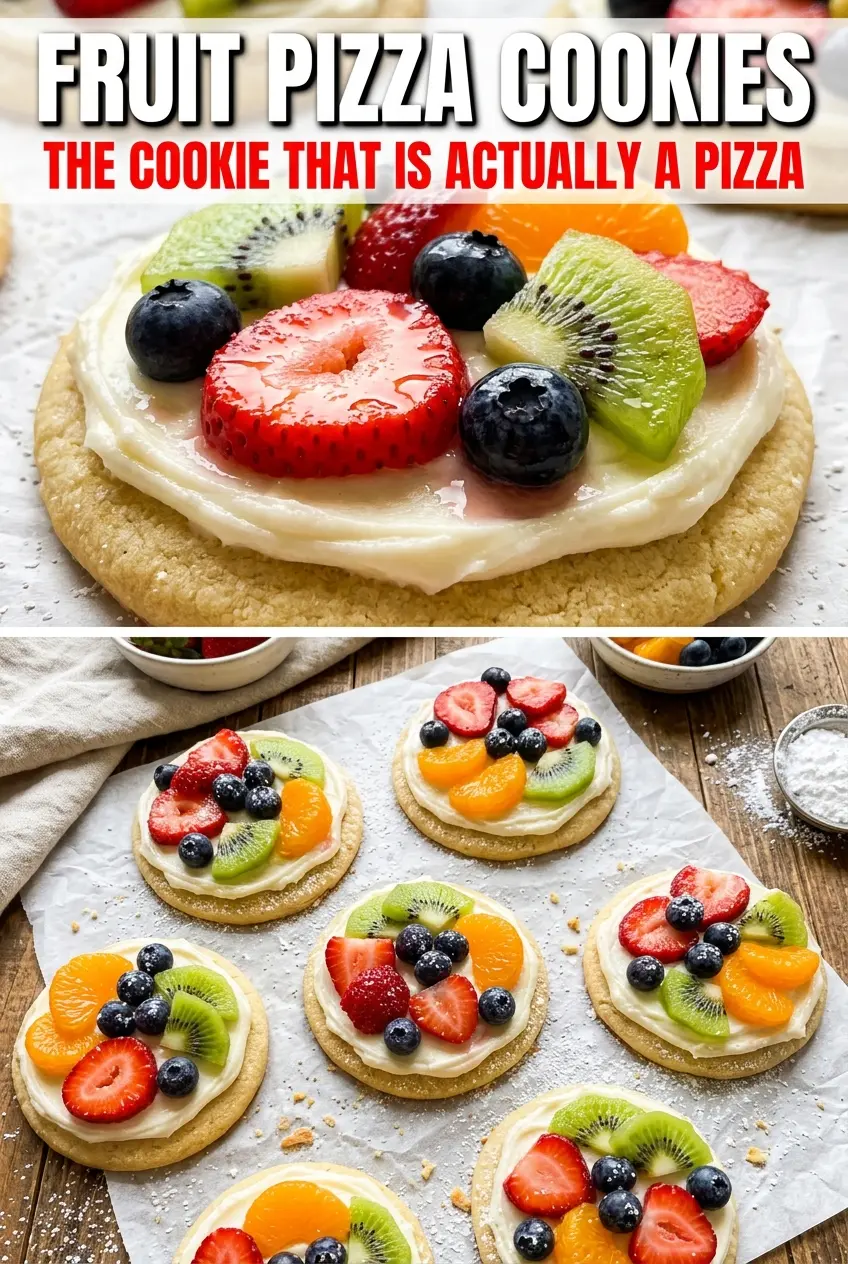
Beat the cream cheese, powdered sugar, and vanilla until smooth and spreadable. A thick frosting holds fruit better, so stop as soon as it’s silky; overbeating can make it too loose. Spread it to the edges of each cookie, then arrange the fruit in tight, colorful patterns so every bite gets a little bit of everything. Brush the fruit lightly with warm jam at the end for a glossy finish that makes the tops look polished and keeps cut fruit from drying out.
How to Adapt These Fruit Pizza Cookies for Different Occasions
Gluten-Free Version
Swap the all-purpose flour for a good 1:1 gluten-free baking blend. The cookies should still hold their shape, but the texture may be a little more delicate, so let them cool completely on the pan before moving them.
Dairy-Free Approach
Use plant-based butter for the cookie dough and a dairy-free cream cheese for the topping. The flavor stays close, but dairy-free cream cheese can be softer, so chill the frosted cookies briefly before adding fruit if the topping feels loose.
Make-Ahead Party Prep
Bake the cookies a day ahead and store them unfrosted, then make the frosting and cut the fruit the day you plan to serve them. That keeps the cookies crisp at the edges and the fruit bright instead of watery.
Storage and Reheating
- Refrigerator: Store assembled cookies in a single layer for up to 2 days. After that, the fruit starts to soften and release juice into the frosting.
- Freezer: Freeze the baked cookies without frosting or fruit for up to 2 months. Thaw at room temperature before topping; the assembled cookies don’t freeze well because the fruit turns mushy.
- Reheating: These aren’t meant to be reheated. If the cookies are chilled, let them sit out for 10 to 15 minutes before serving so the frosting softens slightly and the fruit tastes fresh.
Questions I Get Asked About This Recipe
Fruit Pizza Cookies
Ingredients
Equipment
Method
- Beat butter and granulated sugar until fluffy, 2–4 minutes, scraping the bowl as needed to fully combine.
- Add large eggs and vanilla extract, then mix until smooth and evenly blended.
- Mix in all-purpose flour, baking powder, and salt until a dough forms with no dry pockets.
- Preheat the oven to 375°F and line sheet pans with parchment paper.
- Scoop dough into 24 balls and flatten each into 3-inch rounds on the parchment-lined sheet pans.
- Bake at 375°F for 10–12 minutes until edges are set and just barely golden.
- Cool cookies completely on the pan, about 30 minutes, until no longer warm to the touch.
- Beat cream cheese, powdered sugar, and vanilla extract until smooth, thick, and spreadable.
- Spread frosting over each cooled cookie to cover the surface.
- Arrange the assorted fresh fruit decoratively on each cookie in colorful patterns, using kiwi and mandarin for contrast.
- Warm apricot jam until loose, then brush over the fruit for a glossy finish and serve immediately or refrigerate.