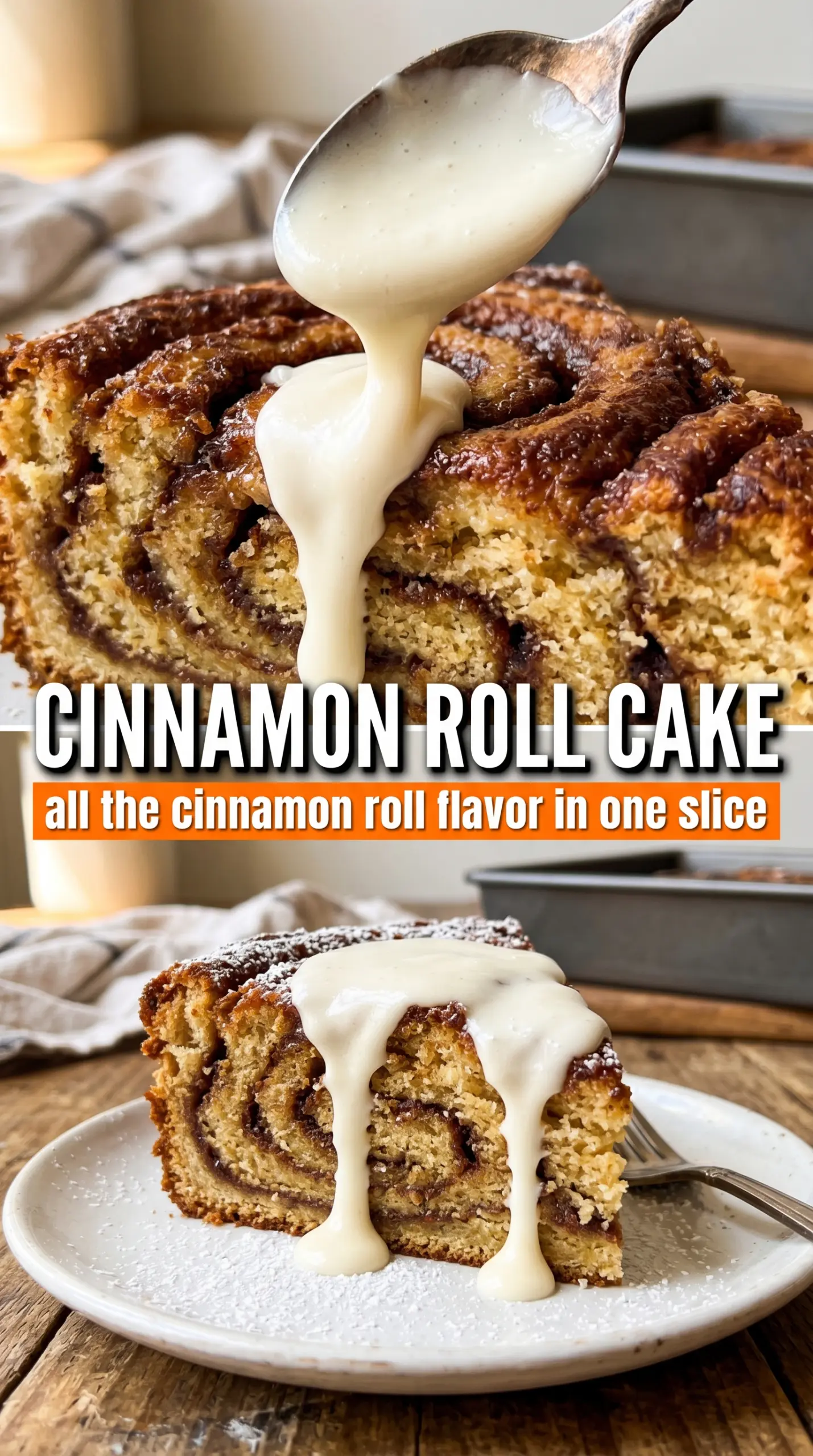
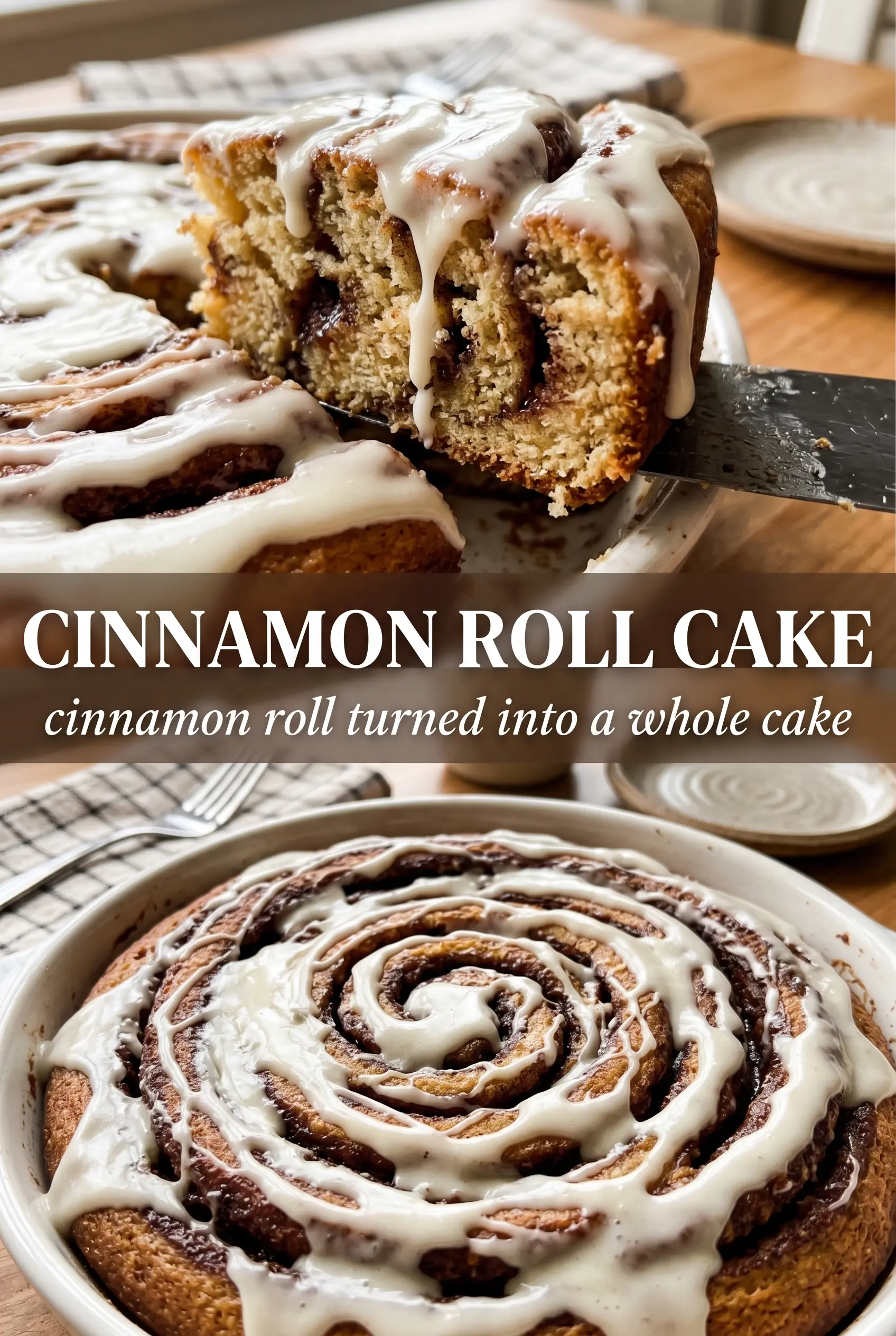
Cinnamon Roll Cake bakes up with the soft, tender crumb of a simple breakfast cake and the sticky, gooey cinnamon ribbons people usually only get from a pan of rolls. The best part is that you get the same warm brown sugar-cinnamon pull without kneading, rising, or waiting around for dough to cooperate. Once the cream cheese glaze goes on, it melts into the swirls and settles into the cracks, which gives every slice that bakery-style, just-frosted finish.
This version works because the batter stays just thick enough to hold the cinnamon mixture without letting it sink straight to the bottom. The melted butter in the cake keeps the crumb plush, while the softened butter in the swirl creates those rich pockets that bake into fudgy streaks instead of disappearing into the batter. The glaze is poured on while the cake is still warm, which matters more than people think — that’s what lets it soak in instead of sitting on top like icing on a cold cake.
Below you’ll find the small details that make this cake turn out evenly swirled, plus a few smart swaps if you need to work around what’s in your kitchen.
The cinnamon swirl baked into thick ribbons instead of disappearing, and the cream cheese glaze melted into every crack while the cake was still warm. I took it to brunch and came home with an empty pan.
Save this cinnamon roll cake for the mornings when you want gooey brown sugar swirls and cream cheese glaze without making yeast rolls.
The Swirl That Stays on Top Instead of Melting Away
Most cinnamon coffee cakes fail in one of two ways: the swirl disappears into the batter, or it sinks in one heavy layer at the bottom. This cake avoids both problems by using a thick batter and a soft, spreadable cinnamon mixture. You drop it over the top in spoonfuls, not in one giant sheet, so the cake can hold onto the swirl instead of swallowing it whole.
The other part that matters is the batter thickness. It should spread easily, but it shouldn’t look runny. If your batter is too thin, the cinnamon mixture will streak downward and leave you with a dense layer at the base of the pan. A few visible ribbons on top before baking is exactly what you want; the oven does the rest.
What Each Ingredient Is Actually Doing in This Cake
- All-purpose flour — This gives the cake its structure without turning it bready. Cake flour will make it a little softer, but all-purpose is the better choice here because it can support the heavy swirl and glaze.
- Whole milk — The fat in whole milk keeps the crumb tender and helps the batter stay rich enough to bake up like a breakfast cake instead of a dry snack cake. Lower-fat milk works in a pinch, but the texture won’t be as lush.
- Melted butter — This keeps the cake easy and gives it that soft, slightly dense crumb that feels right for a cinnamon roll-inspired bake. Use real butter here; oil will make the cake moist, but it won’t give you the same flavor.
- Softened butter for the swirl — This is what lets the brown sugar and cinnamon stay in thick spoonable patches. If it’s too cold, it won’t mix well; if it’s melted, it turns greasy and runs right through the batter.
- Cream cheese — This gives the glaze that tangy, bakery-style finish that cuts through the sweetness. Full-fat cream cheese melts into the smoothest glaze, but reduced-fat can work if that’s what you have, as long as it’s fully softened first.
How to Bake the Swirl So the Cake Stays Tender
Mix the Batter Only Until It Comes Together
Whisk the dry ingredients first so the baking powder is evenly distributed, then stir in the wet ingredients just until the flour disappears. A few small streaks are better than overmixing, because beating the batter too long builds gluten and makes the cake tight instead of soft. Spread it into the pan in an even layer so the swirl bakes consistently from edge to center.
Drop the Cinnamon Filling, Don’t Spread It
Beat the cinnamon swirl ingredients until fluffy, then use spoonfuls to dot the surface of the batter. That method keeps the mixture thick enough to marble instead of dissolving into the cake. Drag a knife through in broad figure-eight motions, and stop while you still see distinct ribbons; if you over-swirl it, you lose the pattern and end up with a muddy middle.
Glaze It While the Cake Is Warm
Pull the cake when the top is golden and a toothpick comes out clean from the cake part, not from a cinnamon pocket. Mix the glaze until it’s smooth and pour it over while the cake is still warm, then let it sit for about five minutes so the glaze can soak into the swirls. If you wait until the cake is cool, the glaze sets on top and you lose that sticky, melt-in effect that makes this cake special.
Make It Dairy-Free Without Losing the Swirl
Use a plant-based butter and an unsweetened non-dairy milk for the cake, then swap in a dairy-free cream cheese for the glaze. The texture stays close to the original, though the glaze will taste a little less tangy and a touch sweeter, so add the powdered sugar slowly and stop when it’s pourable.
Turn It Into a Stronger Coffee Cake
Add a pinch of nutmeg to the batter or a handful of chopped pecans to the cinnamon swirl. That gives you a more bakery-style flavor and a little crunch, but keep the pieces small so they don’t break up the swirl or sink into the batter.
Make It a Little Less Sweet
Cut the glaze in half and pour it on in a thin layer, or leave the glaze off entirely and dust the cake with powdered sugar once it cools. The cake itself is already sweet enough to stand on its own, so this is the easiest way to tone it down without changing the texture.
Storage and Reheating
- Refrigerator: Store covered for up to 4 days. The glaze firms up in the fridge, but the cake stays moist.
- Freezer: Freeze slices individually, wrapped well, for up to 2 months. Thaw overnight in the fridge for the best texture.
- Reheating: Warm a slice in the microwave for 15 to 20 seconds. Heat just enough to loosen the glaze; too long and the cake turns rubbery.
The Things That Trip People Up With This Cake
Cinnamon Roll Cake
Ingredients
Equipment
Method
- Preheat the oven to 350°F and grease a 9x13 baking dish so the cake releases cleanly after baking.
- Whisk together the all-purpose flour, granulated sugar, baking powder, and salt, then stir in whole milk, eggs, vanilla extract, and melted butter until just combined.
- Spread the batter into the prepared dish in an even layer so the swirl bakes throughout.
- Beat the softened butter, brown sugar, and cinnamon until fluffy.
- Drop spoonfuls of the cinnamon mixture over the batter and use a knife to swirl it in, creating deep streaks and pockets.
- Bake for 30-35 minutes at 350°F until a toothpick comes out clean and the top is golden.
- While the cake is still warm, beat the softened cream cheese, powdered sugar, milk, and vanilla extract until smooth.
- Pour the glaze over the warm cake, letting it pool into every swirl and crevice for a glossy finish.
- Let the glaze soak in for 5 minutes before serving warm.