Golden parmesan crusted chicken with roasted asparagus and blistered cherry tomatoes is the kind of sheet pan dinner that earns repeat requests because the chicken stays juicy while the topping turns crisp and nutty in the oven. The vegetables pick up the chicken drippings and the parmesan crumbs toast right on the pan, so every bite has a mix of crunchy edges, savory cheese, and bright lemon at the end.
The trick here is the coating. Dijon and mayonnaise give the crumbs something to cling to, but they also help the top brown before the chicken dries out. Parmesan brings the savory backbone, while panko keeps the crust from turning dense. If you’ve ever had a breadcrumb topping slide off halfway through baking, this method fixes that.
Below, I’m walking through the exact order that keeps the crust crisp and the vegetables from going soggy. There’s also a quick storage note for making the leftovers worth eating the next day, plus a few swaps if you want to change up the vegetables or make it gluten-free.
The chicken stayed juicy and the parmesan crust actually stayed on, which never happens for me. I also loved that the asparagus and tomatoes finished right in the same pan without getting mushy.
Save this parmesan crusted chicken sheet pan dinner for the nights when you want a crisp topping, roasted vegetables, and one pan to wash.
The Part That Keeps the Crust Crisp Instead of Soggy
Sheet pan chicken often goes wrong when the coating meets too much moisture before it has a chance to set. That’s why the chicken gets a light layer of Dijon and mayonnaise before it goes into the parmesan mixture. The mustard adds sharpness, but the real job is helping the crust grip the meat and brown evenly.
Another common problem is crowding the pan. Asparagus and tomatoes release moisture as they roast, and if everything is jammed together, the chicken steams underneath instead of crusting on top. Give each breast a little space and keep the vegetables in a single layer so the oven can do its job.
- High heat matters — 425°F is hot enough to brown the topping before the chicken overcooks.
- Panko keeps the texture light — regular breadcrumbs work, but panko gives you the craggy crunch that makes this dinner worth repeating.
- Press the coating firmly — don’t just dip and lay the chicken down. Use your fingers to press the parmesan mix into the sauce layer so it stays put.
- Line the pan — foil makes cleanup easier and helps the crust release instead of sticking to the sheet pan.
What the Dijon, Mayo, and Parmesan Are Each Doing
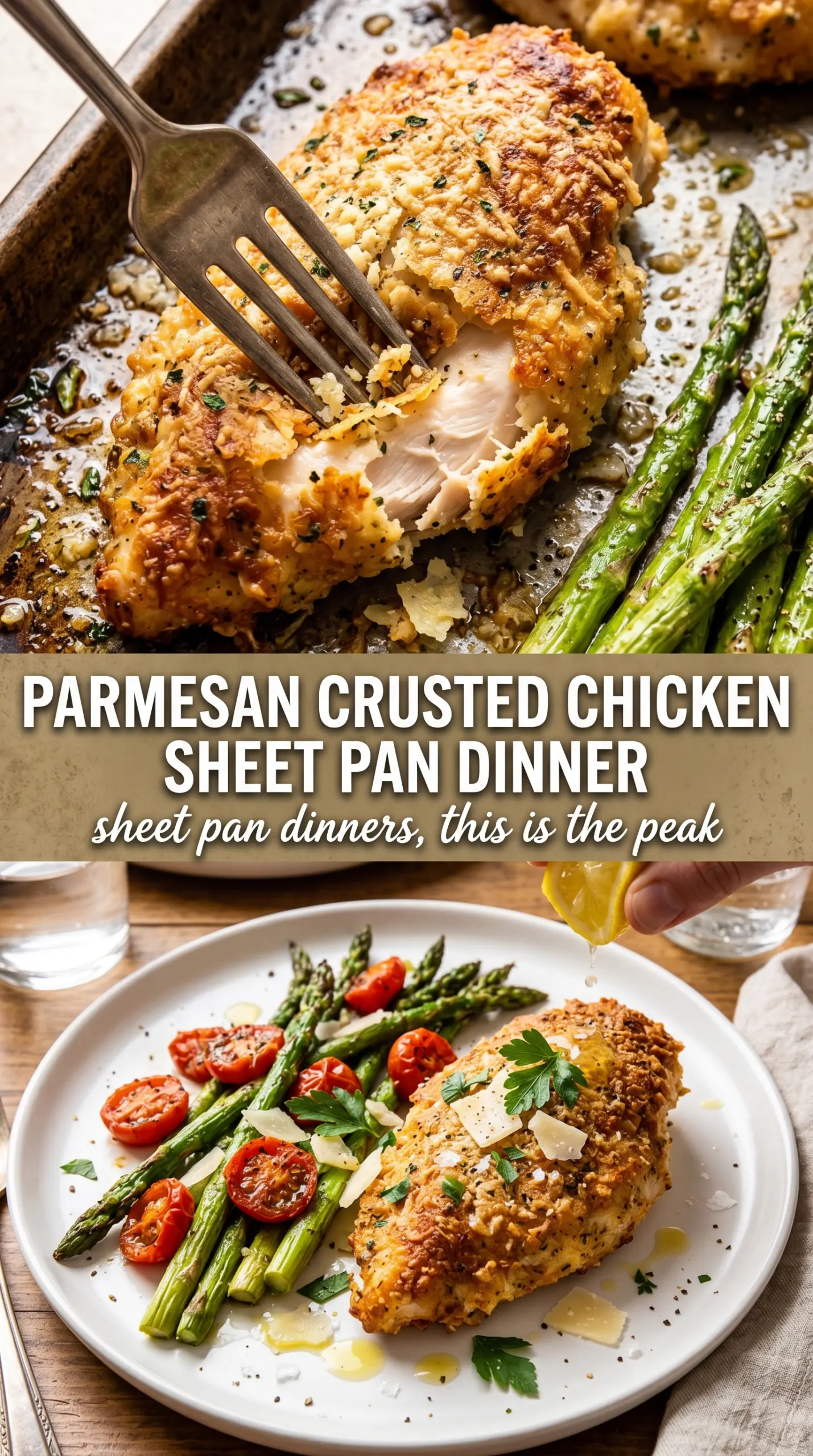
- Parmesan cheese — use finely grated parmesan, not the dusty shelf-stable kind if you can help it. Freshly grated cheese melts and browns into a tighter, more flavorful crust.
- Panko breadcrumbs — these add lift and crunch. If you swap in regular breadcrumbs, the crust will be a little denser and less crisp.
- Dijon mustard — this adds tang and balances the saltiness of the cheese. Yellow mustard isn’t the same; it tastes flatter and won’t give the same depth.
- Mayonnaise — it sounds odd, but it helps the topping brown and keeps the chicken from drying out. Greek yogurt can work in a pinch, though the crust won’t be quite as rich.
- Asparagus and cherry tomatoes — asparagus roasts fast and stays bright, while tomatoes burst and make a little sauce on the pan. If your asparagus spears are thick, trim the woody ends well so they finish at the same time as the chicken.
How to Build the Pan So Everything Finishes at Once
Mix the Crust First
Stir the parmesan, panko, garlic powder, and Italian seasoning together before you touch the chicken. That keeps the coating even, which matters because any bare patch will bake up soft instead of crisp. The mixture should look sandy and clumpy at the same time.
Brush on the Binder
Spread the Dijon-mayonnaise mixture over the top of each chicken breast in a thin layer. Don’t coat the sides unless the breasts are unusually small; too much binder can make the crust slide. You want enough to make the crumbs stick, not enough to smear under the topping.
Press and Arrange
Set the chicken on the sheet pan and press the parmesan mixture firmly into the top with your fingers. Then tuck the asparagus and tomatoes around it in a single layer, tossing them with olive oil, salt, and pepper first. If the vegetables pile up, they’ll steam and turn soft before they caramelize.
Bake Until the Top Is Deep Gold
Slide the pan into the oven and bake until the crust is deeply golden and the chicken reaches 165°F at the thickest part, usually 22 to 25 minutes. The tomatoes should be split and glossy, and the asparagus should be tender with browned tips. If the top is pale, give it another minute or two rather than opening the oven repeatedly and losing heat.
Three Ways to Adjust This Dinner Without Losing What Makes It Good
Gluten-Free Crust
Use certified gluten-free panko or crushed gluten-free crackers. The texture stays crisp, though crackers will brown a little faster, so watch the oven near the end of the bake.
Dairy-Light Version
Swap in a hard aged dairy-free parmesan style cheese if needed. It won’t melt quite the same way, so press it on a little more firmly and expect a drier, crunchier topping rather than the same savory melt.
Vegetable Swaps That Still Roast Well
Broccoli florets, zucchini half-moons, or trimmed green beans all work here. Pick vegetables that cook in about 20 to 25 minutes; anything wetter or thicker may need to be added partway through so the chicken and vegetables finish together.
Storage and Reheating
- Refrigerator: Store leftovers in an airtight container for up to 3 days. The crust softens a bit, but the flavor holds up well.
- Freezer: It freezes, but the topping won’t stay crisp. Freeze only if you need to, tightly wrapped and sealed for up to 2 months.
- Reheating: Warm in a 375°F oven or toaster oven until the chicken is hot through. The microwave makes the coating rubbery and the asparagus watery, so use it only if you don’t mind losing the texture.
Answers to the Questions Worth Asking
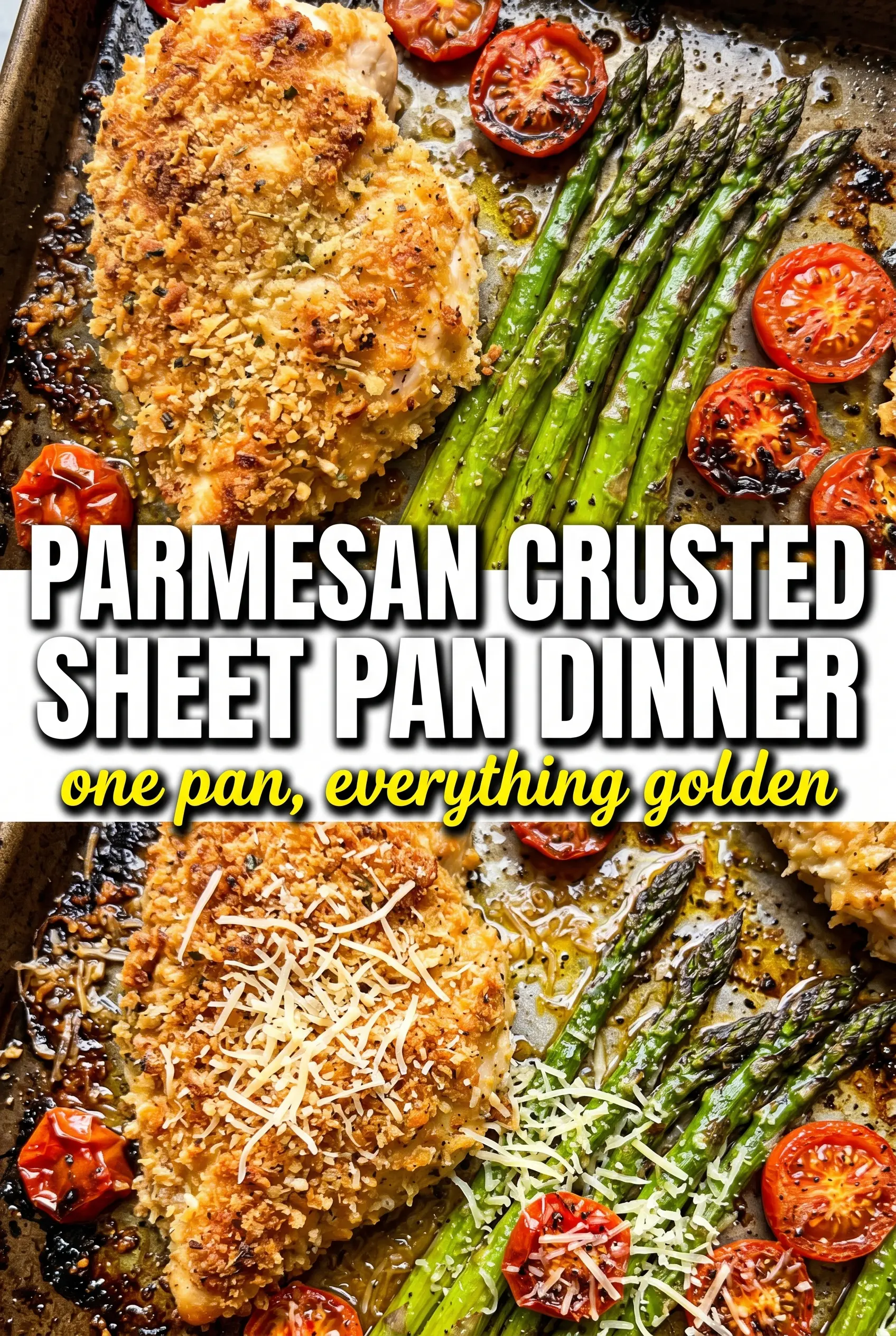
Parmesan Crusted Chicken Sheet Pan Dinner
Ingredients
Equipment
Method
- Preheat the oven to 425°F and line a large sheet pan with foil for easy cleanup.
- Mix the parmesan, panko, garlic powder, and Italian seasoning together until evenly combined.
- Brush each chicken breast with the Dijon mustard and mayonnaise mixture, then press firmly into the parmesan coating so the top is thick and adherent.
- Place the coated chicken on the sheet pan with space around each piece so the crust can crisp.
- Toss the asparagus and cherry tomatoes with olive oil, salt, and black pepper, then arrange them around the chicken on the sheet pan.
- Bake for 22–25 minutes at 425°F until the crust is deeply golden and the chicken is cooked through; serve immediately with lemon wedges.