Seared chicken breasts under a tangle of soft onions, browned mushrooms, and melted Monterey Jack hit that sweet spot between comfort food and steakhouse dinner. The chicken stays juicy because it gets browned first, then finishes under the broiler only long enough to melt the cheese and warm everything through. You end up with a skillet full of savory juices that want to be spooned over rice, mashed potatoes, or bread right away.
The part that makes this version worth making at home is the way the onions and mushrooms are cooked all the way down before the broth goes in. That extra time turns them from a simple topping into the backbone of the sauce. The broth also matters more than people think; it loosens the browned bits left in the pan and carries that flavor back into the dish instead of letting it stay stuck to the skillet.
Below, I’ve included the small details that keep the chicken from drying out and the cheese from turning greasy. If you’ve ever had a smothered chicken skillet come out watery or bland, the fix is in the timing.
The chicken stayed juicy and the onions cooked down into the broth instead of turning watery. My husband kept going back for more of the pan sauce and asked if I could make it again next week.
Save this Texas Roadhouse smothered chicken copycat for a skillet dinner with golden chicken, caramelized onions, and melty jack cheese.
The Mistake That Makes Smothered Chicken Watery
The biggest failure in a smothered chicken skillet happens before the cheese ever goes on. If the mushrooms and onions are rushed, they dump moisture into the pan and you end up with a pale, soupy layer under the chicken instead of a concentrated savory topping. Cooking them long enough for the liquid to evaporate is what gives this dish that restaurant-style finish.
Two things help the most: a hot skillet for the chicken and medium heat for the vegetables. The chicken needs a deep golden crust so the pan has browned bits to build on, but the onions and mushrooms need enough time to soften and caramelize without scorching. Once the broth goes in, it should deglaze the pan and reduce slightly, not pool around the chicken.
What the Chicken, Mushrooms, and Jack Cheese Are Each Doing

- Chicken breasts — Pounding them thin is what keeps the cook time short and even. Thick chicken breasts brown on the outside before the center is done, which usually means dry meat by the time the cheese melts. If your breasts are huge, slice them in half horizontally before pounding.
- Mushrooms — They bring the earthy, steakhouse-style backbone here. White button mushrooms work fine, but cremini give you a deeper flavor and darker color. Slice them evenly so they release and reabsorb moisture at the same pace.
- Onion — This is where the sweetness comes from. A yellow onion is the best choice because it softens and caramelizes without turning sharp or grassy. Red onion works in a pinch, but the flavor reads a little louder and less classic.
- Monterey Jack cheese — Jack melts smoothly and blankets the chicken without splitting into oil. Pre-shredded cheese works, but freshly shredded melts cleaner and with less graininess because it doesn’t carry the anti-caking starch that slows melting.
- Chicken broth — A small amount is enough to pull up the browned bits and turn the mushroom-onion layer into a pan sauce. Low-sodium broth gives you more control over seasoning, especially because the cheese adds salt of its own.
Building the Smothered Layer Without Overcooking the Chicken
Searing the Chicken First
Season the chicken all over, then sear it in hot olive oil until the first side turns deep golden and releases easily from the pan. If it sticks hard, it isn’t ready to turn yet. You want color on the surface, not a pale steamed exterior, because that browning carries the whole dish.
Set the chicken aside once it’s cooked partway through. It will finish later under the broiler, and that short second cook is what keeps it from turning stringy. If you cook it all the way through in the skillet, the broiler will push it over the edge.
Cooking the Mushrooms and Onions Down
Add the butter to the same skillet and use the browned chicken drippings already in the pan. Cook the onions and mushrooms until the onions are soft and caramelized at the edges and the mushrooms have given up their liquid and started to brown. If the pan looks dry before they’re done, the mushrooms need a little more time, not more heat.
This is the stage that gives you the savory, spoonable topping instead of a pile of soft vegetables. Stir often enough to keep the onions from scorching, but not so often that the vegetables never get a chance to sit and brown.
Deglazing and Nestling Everything Back In
Pour in the chicken broth and scrape the bottom of the pan until the browned bits dissolve into the liquid. That step takes only seconds, but it’s where the sauce gets its depth. Return the chicken to the skillet and tuck it into the onions and mushrooms so the juices collect underneath instead of running off the top.
The broth should reduce slightly, not boil away completely. If the pan looks dry before the broiler step, the sauce was cooked too hard. Lower heat next time and stop once the liquid turns glossy.
Melting the Cheese Under the Broiler
Pile the Monterey Jack over each piece of chicken and slide the skillet under the broiler just until the cheese bubbles and blisters in spots. Stay close. This part goes from melted to scorched fast, especially in an oven with a strong top element.
Pull it as soon as the cheese looks fully melted and the edges are just beginning to brown. That gives you the creamy top people expect from smothered chicken without drying out the chicken underneath.
How to Adapt This Smothered Chicken for Different Tables
Dairy-Free Version
Swap the butter for olive oil and use a good dairy-free melting cheese if you want the same smothered finish. The texture won’t be identical, but the onions, mushrooms, and pan juices still carry the dish. Skip the broiler if your cheese alternative browns too quickly and melt it under a lid on the stove instead.
Gluten-Free Dinner
This recipe is naturally gluten-free as written as long as your chicken broth is certified gluten-free. That matters because broth labels vary more than people expect, and a hidden thickener can change the finished sauce. Everything else here works without adjustment.
Using Chicken Thighs Instead
Boneless, skinless thighs bring a richer flavor and stay juicy even if you give them a little extra time in the skillet. They’re a smart swap if your chicken breasts are uneven or on the small side. Keep the broiler time short because thighs already hold onto more fat and can get greasy if the cheese browns too long.
Make It a Fuller Pan Dinner
Add sliced peppers with the onions if you want a little more color and a sweeter vegetable base. They soften quickly and fit right in with the mushrooms, but they do add more moisture, so let the pan cook down until the vegetables look glossy rather than wet. The flavor shifts slightly toward sweeter and lighter, which is nice with mashed potatoes or rice.
Storage and Reheating
- Refrigerator: Store leftovers in an airtight container for up to 3 days. The cheese will set up a little, and the mushrooms will soften more, but the flavor holds well.
- Freezer: You can freeze it, but the cheese and mushrooms both lose some texture. If you do freeze it, cool it completely, wrap it well, and thaw overnight in the refrigerator before reheating.
- Reheating: Warm it covered in a 325°F oven until hot, or reheat gently in a skillet with a splash of broth. The common mistake is blasting it in the microwave, which makes the chicken tough and the cheese greasy before the center is warm.
Questions I Get Asked About This Recipe
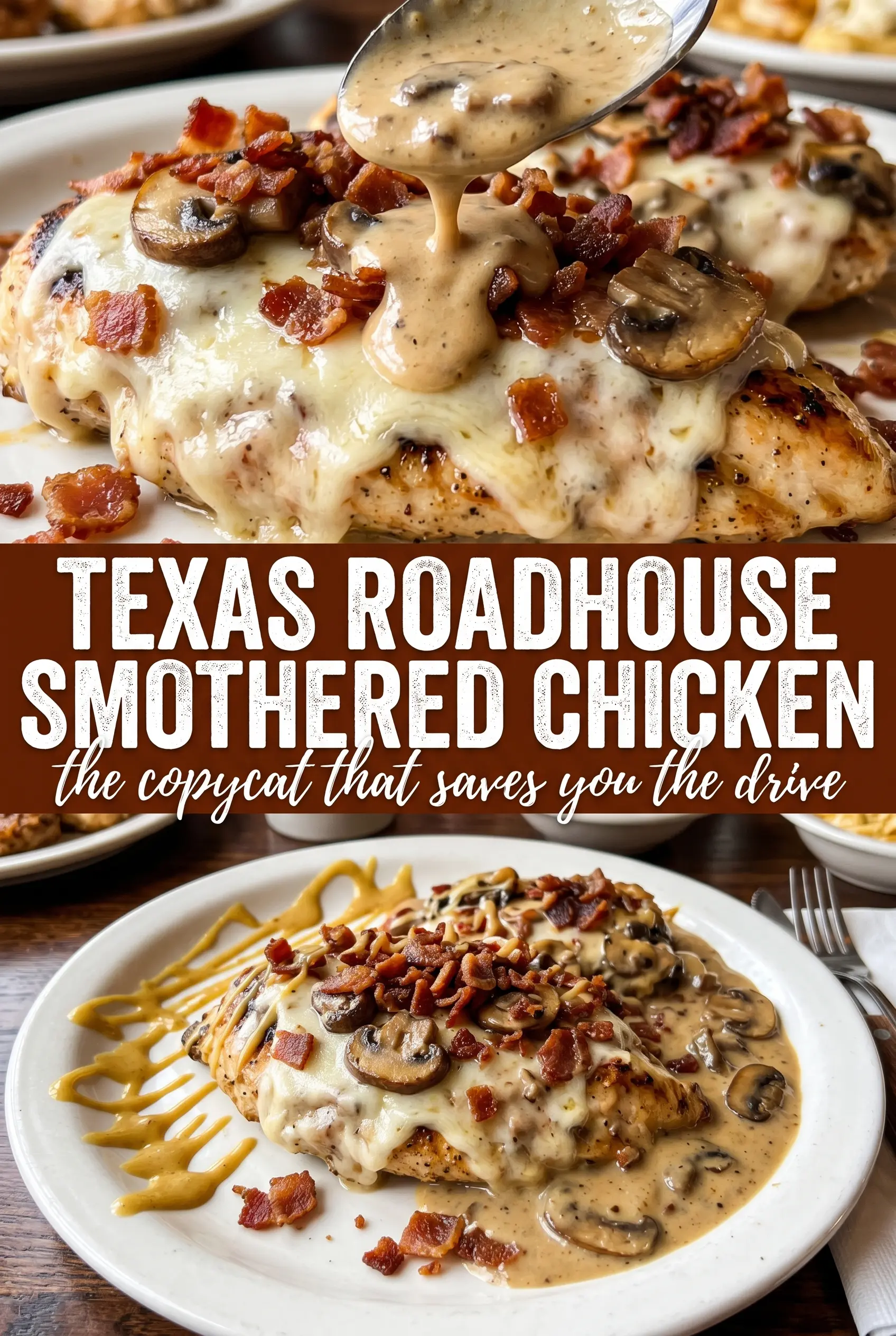
Texas Roadhouse Smothered Chicken Copycat
Ingredients
Equipment
Method
- Season both sides of the pounded chicken breasts with garlic powder, onion powder, salt, and black pepper.
- Heat the olive oil in an oven-safe cast iron skillet over medium-high heat, then sear the chicken for 5–6 minutes per side until golden; set aside.
- Melt 2 tablespoons of the butter in the same skillet, then add the onions and mushrooms and cook over medium heat for 8–10 minutes until caramelized.
- Add the chicken broth and stir to deglaze, scraping up the browned bits from the pan.
- Nestle the chicken back into the skillet on top of the mushroom-onion mixture.
- Pile the shredded Monterey jack cheese generously on top of each chicken breast.
- Place the skillet under the broiler for 3–4 minutes until the cheese is melted and bubbly.
- Garnish with fresh parsley and serve hot.