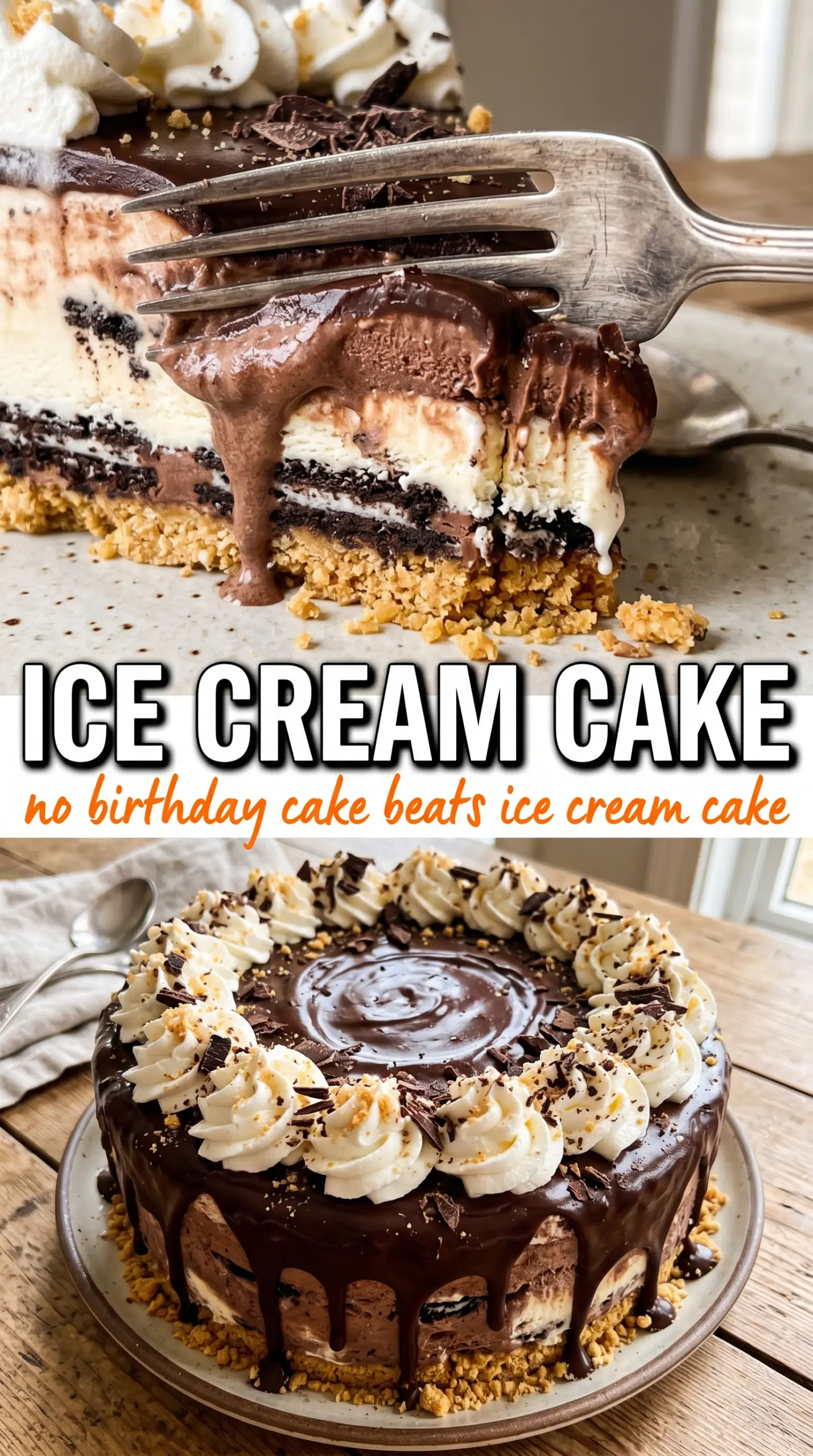
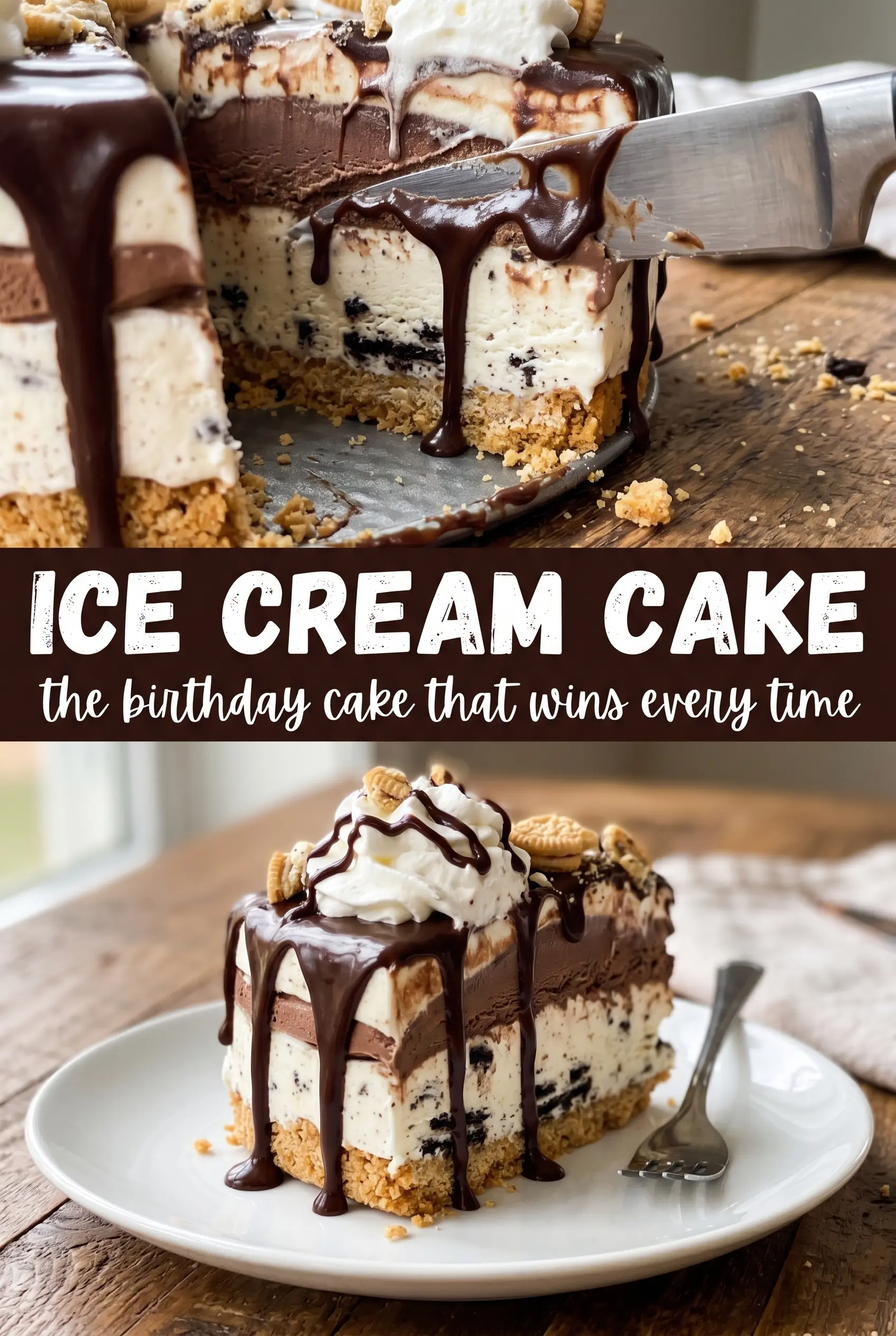
Ice cream cake is the kind of dessert that disappears fast because every slice hits a different texture at once: crunchy Oreo crust, two creamy ice cream layers, and a thin ribbon of fudge that stays soft enough to cut cleanly. The finished cake looks celebratory without demanding any real baking, and that makes it a keeper for birthdays, cookouts, and those nights when you want something cold, layered, and memorable.
The trick is building in stages so each layer has enough freezer time to firm up before the next one goes on. That’s what keeps the vanilla from mixing into the crust and the strawberry from sliding over the fudge. Slightly softened ice cream spreads without tearing, but it still needs to be cold enough to hold its shape once it’s smoothed.
Below, I’m walking through the timing that keeps the layers sharp, the small detail that makes slicing easier, and a few swaps that help if you want to change the flavor without wrecking the structure.
The layers held their shape perfectly, and the hot knife tip made the slices come out clean instead of dragging the fudge all over the pan. My kids thought it came from a bakery.
Pin this Oreo ice cream cake for birthdays, summer parties, and the freezer-friendly dessert that slices cleanly every time.
The Freezer Timing That Keeps the Layers from Sliding
The mistake most people make with ice cream cake is rushing the layers. If the crust isn’t fully chilled before the ice cream goes in, the bottom softens and turns sandy instead of staying firm. If the vanilla layer isn’t set before the fudge goes on, the fudge sinks and disappears instead of making that clean middle stripe you want when you slice it.
Working in short freeze intervals gives each layer just enough structure to support the next one. That’s what lets you get a tall, neat cake with distinct bands instead of a melted jumble. The springform pan matters here too, because it releases the cake without forcing you to dig around the edges and crack the sides.
What Each Ingredient Is Really Doing Here
- Oreos — These build the crust and give the cake its best contrast. Crushing them finely helps the crust pack together, but leave a few small bits if you want a more obvious cookie texture. Chocolate sandwich cookies from the store work better than homemade crumbs here because they already have enough fat to hold the crust together.
- Melted butter — This is what turns the cookie crumbs into a sliceable base. Too little butter and the crust falls apart when you cut it; too much and it gets greasy and hard in the freezer. Stir until the crumbs look evenly damp, like wet sand, then press them firmly into the pan.
- Vanilla ice cream — Use a good, sturdy vanilla because it forms the first major layer and sets the tone for the whole cake. Slightly softened is the key phrase: it should spread easily, but not look soupy. If it’s too warm, the layer melts into the crust and makes the whole cake harder to slice.
- Strawberry ice cream — This layer gives the cake color and a bright finish that cuts through the fudge and cookie base. Any fruit ice cream works if you want to change the flavor, but strawberry keeps the layers easy to read when you serve it. Let it soften only enough to spread smoothly, not long enough to turn runny.
- Hot fudge sauce — A thick fudge sauce gives you that ribbon in the middle without bleeding through the ice cream. Let it cool a bit before drizzling so it doesn’t melt the vanilla layer underneath. The goal is a soft, fudgy line, not a hot puddle.
- Whipped topping or stabilized whipped cream — This finishes the cake with a clean, pipeable border. Stabilized whipped cream holds longer if the cake sits out for a few minutes before serving, while whipped topping is the easier no-fuss option. Use the stiffer choice if you want the swirls to stay sharp.
Building the Cake So Every Slice Stays Clean
Pressing the Crust
Mix the crushed Oreos and melted butter until every crumb looks coated, then pack them down hard in the bottom of the springform pan. A flat-bottomed glass or measuring cup helps you get an even layer with no loose spots at the edges. Freeze it for 15 minutes so the base sets before the ice cream goes on; if you skip that pause, the crust can shift when you spread the first layer.
Spreading the Vanilla Layer
Scoop the softened vanilla ice cream over the chilled crust and spread it from the center outward in a thick, even layer. Work quickly but gently so you don’t pull up crumbs from below. Once it looks smooth, freeze it for about an hour until it’s firm to the touch; that firm base is what keeps the fudge from sinking.
Adding the Fudge Stripe
Drizzle the cooled fudge over the set vanilla layer in a thin, even ribbon. If the fudge is too warm, it will melt a trench into the ice cream instead of sitting on top, so let it cool until it’s still pourable but no longer hot. Return the cake to the freezer for 15 minutes so the fudge can settle before the strawberry layer goes in.
Finishing with Strawberry Ice Cream
Spread the strawberry ice cream over the fudge and smooth the top all the way to the edges. Cover the pan with plastic wrap before the long freeze so the top doesn’t collect freezer frost. Four hours is the minimum for a clean slice, but overnight gives you the firmest result and the neatest layers.
Decorating and Slicing
Run a warm knife around the edge before releasing the springform pan. That small step keeps the cake from tearing at the sides. Pipe the whipped cream swirls on top, add the sprinkles, and use a hot knife for slicing; wipe the blade between cuts if you want those layers to stay distinct on every plate.
How to Change the Cake Without Losing the Layered Look
Make it gluten-free
Use certified gluten-free sandwich cookies in place of Oreos. The crust will set the same way as long as the cookie crumbs are fine and the butter ratio stays the same, so you don’t lose the structure.
Swap the fruit layer
Raspberry, cherry, or cookies-and-cream ice cream all work in place of strawberry. Pick a flavor that’s firm in the freezer and not overly icy, since watery ice cream can create a softer top layer that smears when sliced.
Use homemade whipped cream
Homemade whipped cream tastes lighter, but it needs stabilization if you want the swirls to hold in the freezer. A little powdered sugar or a stabilizer keeps the topping from weeping while the cake sits out for serving.
Storage and Reheating
- Refrigerator: Not recommended. Ice cream cake softens fast in the fridge and loses the clean layers that make it worth serving.
- Freezer: Keeps well for up to 1 week when wrapped tightly in plastic wrap and then foil. After that, the texture can turn icy and the cookie crust starts to lose its snap.
- Reheating: No reheating needed. For easier slicing, let the cake sit at room temperature for 5 to 10 minutes, then cut with a knife dipped in hot water and wiped dry between slices.
Answers to the Questions Worth Asking
Ice Cream Cake
Ingredients
Equipment
Method
- Mix the crushed Oreo cookies with the melted butter until evenly coated, then press firmly into the bottom of a 9-inch springform pan. Freeze for 15 minutes to set the crust.
- Spread the slightly softened vanilla ice cream in an even layer over the Oreo crust and smooth the top. Freeze for 1 hour until firm.
- Drizzle the slightly cooled hot fudge sauce over the vanilla layer in an even ribbon. Freeze for 15 minutes to firm up the fudge.
- Spread the slightly softened strawberry ice cream over the fudge layer, smoothing the top, then cover with plastic wrap. Freeze for at least 4 hours or overnight until completely firm.
- Run a warm knife around the edge, release the springform, and transfer the cake to a serving plate. Keep it cold while you prepare the topping.
- Pipe whipped cream swirls around the top edge, scatter sprinkles across the center, and slice with a hot knife. Serve immediately for clean layers and crisp crumbs.