Fork-tender steak and thin-sliced potatoes turn into something deeply comforting in the slow cooker, especially when the sauce has enough body to coat every layer instead of running to the bottom. This casserole lands in that sweet spot where the potatoes go creamy, the beef softens into chunks you can cut with a spoon, and the cheddar melts into the top just enough to make every serving feel finished.
The trick is treating the potatoes like the backbone of the dish, not a filler. Thin slices cook through evenly in the time it takes chuck steak to become tender, and the sour cream plus condensed soup create a sauce that stays rich without needing a separate roux. I also like seasoning the beef before it goes in, because the slow cooker mutes seasoning more than people expect. A little smoked paprika gives the whole pot a deeper, almost roasted edge that keeps it from tasting flat.
Below, you’ll find the layering order that keeps the potatoes from staying firm in spots, plus a few swaps that still give you that creamy, cheesy finish without losing the hearty feel of the dish.
The potatoes got tender all the way through and the steak was fall-apart soft by dinner time. I added the cheddar at the end like you said and it melted into the sauce instead of turning greasy.
Save this slow cooker steak and cheddar potato casserole for the kind of night when you want tender beef, creamy potatoes, and barely any hands-on time.
The Layering Trick That Keeps the Potatoes Tender and the Beef Soft
The biggest mistake with a casserole like this is stacking the potatoes too thick or burying them in liquid so they steam unevenly. Thin, even slices give you the best chance of everything cooking at the same pace, and the alternating layers help the beef juices and the sauce move through the dish instead of sitting in one heavy pocket at the bottom.
Chuck steak works here because it has enough connective tissue to turn plush over a long cook. Lean steak would taste dry and stringy by the time the potatoes were done. The slow cooker’s low, steady heat is doing the heavy lifting, but the order of the layers matters just as much as the cook time. Keep the potatoes on the bottom where they can absorb the sauce first, then build the steak and onion around them.
What Each Ingredient Is Actually Doing in the Crockpot
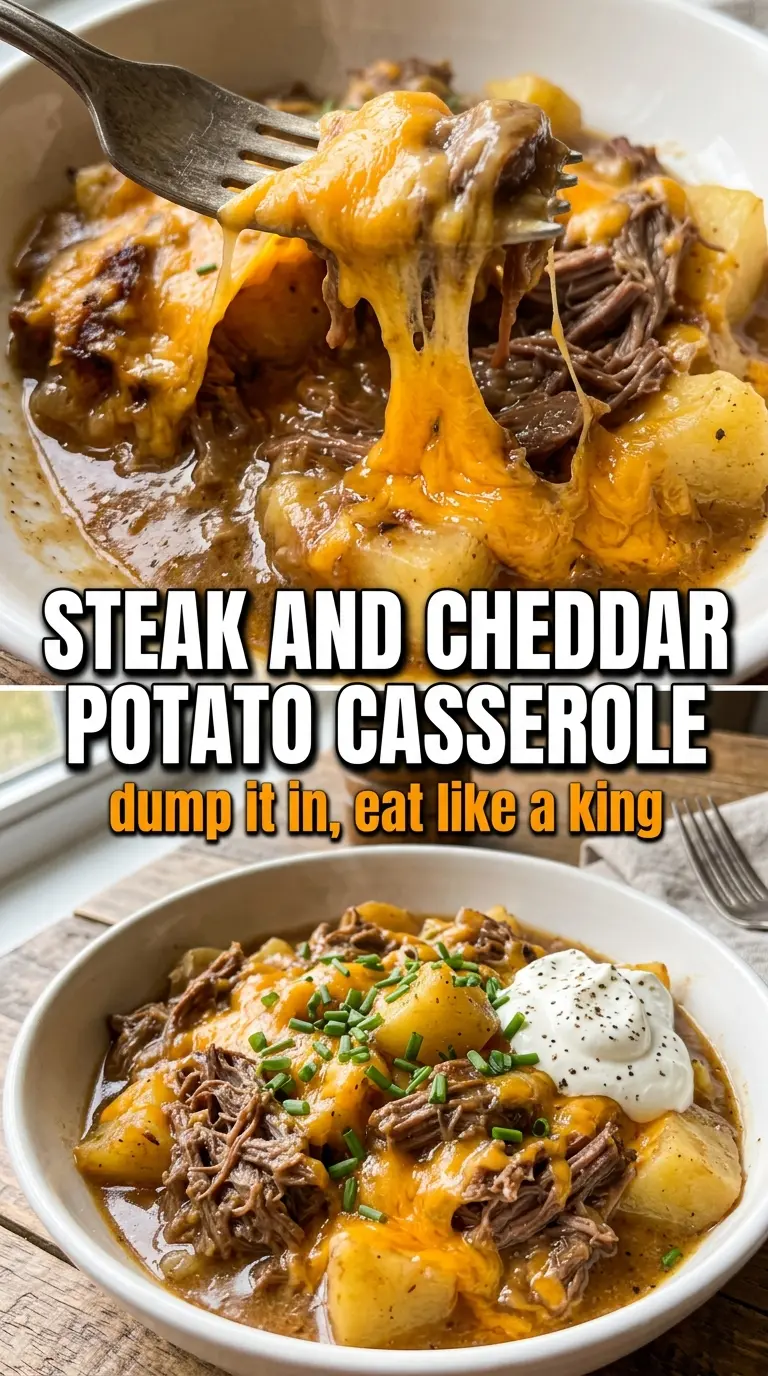
- Chuck steak — This is the cut that turns tender instead of drying out. It needs the long cook, so don’t swap in a lean quick-cooking steak unless you’re ready for a firmer texture.
- Russet potatoes — Russets soften into that creamy, casserole-style bite. Yukon Golds work too if that’s what you have, but they stay a little more intact and give you a denser finish.
- Cream of mushroom soup — It gives the casserole body and a built-in savory base. A homemade white sauce can work, but it won’t bring the same concentrated mushroom depth unless you add sautéed mushrooms and extra seasoning.
- Sour cream — This is what keeps the sauce tangy and lush. Stir it in with the broth before layering so it blends smoothly; adding it in cold clumps can leave pockets that don’t distribute well.
- Sharp cheddar — Sharp cheddar matters more than mild here because it can stand up to the beef and potatoes. Pre-shredded cheese works, but freshly shredded melts more cleanly and gives you a better top layer.
Building the Casserole So Nothing Cooks Unevenly
Seasoning the Steak First
Coat the steak cubes with garlic powder, smoked paprika, salt, and pepper before they go into the pot. That seasoning doesn’t just sit on the surface; it helps flavor the cooking juices that will eventually move through the potatoes and sauce. If the beef tastes bland at the end, it’s usually because all the seasoning was left for the top layer instead of being worked in from the start.
Whisking the Sauce Until It’s Smooth
Mix the soup, broth, sour cream, garlic, salt, and pepper until the mixture looks even and loose. You want it pourable so it can work down through the layers as the casserole cooks. If it’s too thick going in, the center potatoes can stay dry while the edges over-soften. The sauce should look like a creamy gravy, not a paste.
Layering for Even Heat
Start with half the potatoes, then half the onions, then half the steak, and repeat. That pattern helps the heat move through the dish and prevents a dense meat cap on top that can slow the potatoes underneath. Pour the sauce over each layer as evenly as you can, and don’t stir. Stirring turns the whole thing muddy and can break up the stack before it has a chance to settle into a casserole.
Finishing With Cheddar at the End
Add the cheddar only after the potatoes are tender and the steak gives easily with a fork. If you cook the cheese the whole time, it can split and take on a grainy texture. A short covered rest melts it into the top without turning the sauce oily. Chives go on right before serving so they stay bright and fresh.
How to Adapt It When You Need a Different Shortcut
Make It Gluten-Free
Use a certified gluten-free cream of mushroom soup and check that your broth is gluten-free too. The texture stays the same, which makes this one of the easier swaps to pull off without changing the final result.
Swap the Beef for a More Budget-Friendly Cut
Beef stew meat can stand in for chuck steak if that’s what you find on sale. The texture will be a little more rustic and less steakhouse-like, but the long cook still gets you tender pieces and a hearty casserole.
Make It Even Richer
Add a handful of sautéed mushrooms or a splash of Worcestershire to the sauce mixture for extra depth. Both additions lean into the beefy, savory side of the dish without changing the slow cooker method.
Lighter Dairy Finish
Use plain Greek yogurt instead of sour cream if you want a sharper, lighter finish. Stir it into the sauce before cooking, not at the end, so it blends smoothly and doesn’t curdle from direct heat.
Storage and Reheating
- Refrigerator: Keeps for 3 to 4 days in a sealed container. The potatoes will absorb more sauce as they sit, so the casserole gets thicker.
- Freezer: Freezes well for up to 2 months, though the potatoes soften a bit more after thawing. Freeze in portions for the easiest reheating.
- Reheating: Reheat covered in the oven at 325°F until hot, or warm individual portions in the microwave with a splash of broth to loosen the sauce. Don’t blast it on high heat or the cheese can separate and the steak can tighten up.
Answers to the Questions Worth Asking
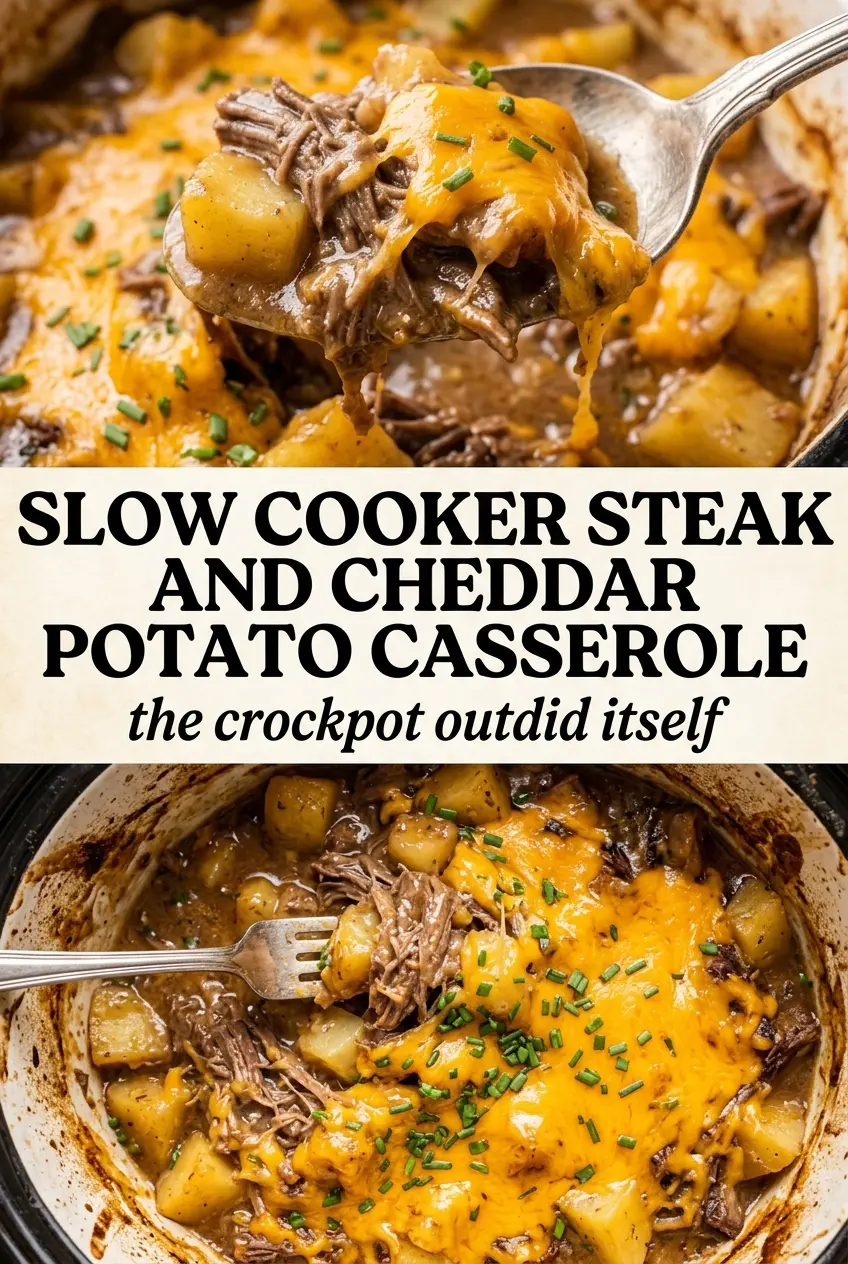
Slow Cooker Steak and Cheddar Potato Casserole
Ingredients
Equipment
Method
- Season the chuck steak cubes generously with garlic powder, smoked paprika, salt, and pepper.
- Whisk cream of mushroom soup, beef broth, sour cream, garlic, salt, and pepper together until smooth.
- Layer half the potato slices in the bottom of the crockpot, then top with half the onions and half the steak.
- Pour half the soup mixture over the first layer, then repeat with remaining potatoes, onion, steak, and soup mixture.
- Cook on low for 7–8 hours or high for 4 hours until the potatoes are tender and the steak is fall-apart.
- Top with shredded cheddar, cover for 10 minutes, and melt until the cheese is fully melted and slightly bubbling.
- Garnish with fresh chives and serve.