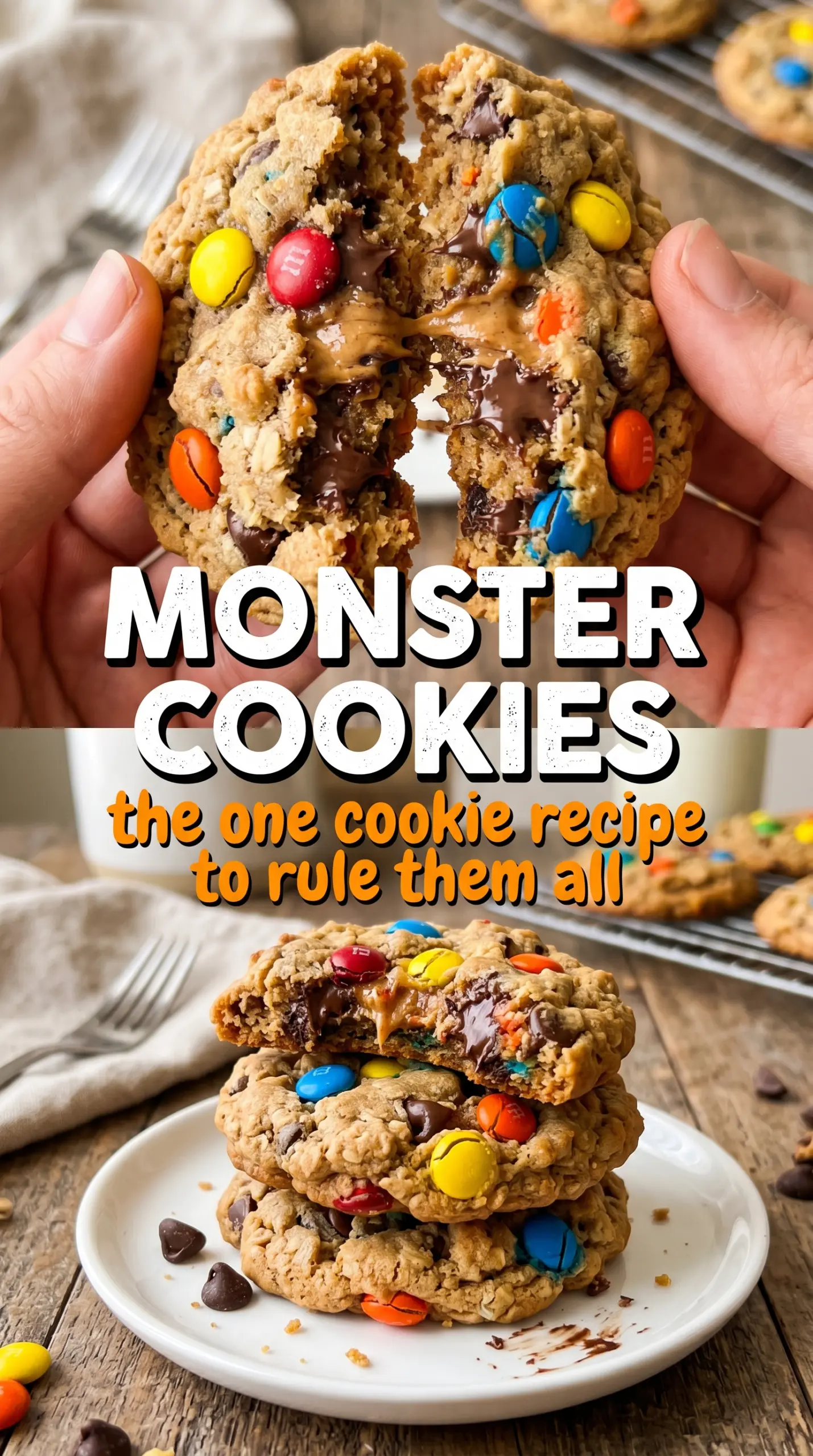
Monster cookies bake up thick, chewy, and packed with texture in a way that plain drop cookies never quite manage. You get the peanut butter richness first, then the oats, then those pockets of melted chocolate and candy shells that keep every bite a little different. The edges set into a light golden ring while the centers stay soft, which is exactly what you want here.
This version works because the dough is built for structure without flour. Peanut butter, eggs, and oats do the heavy lifting, and the cookies hold together best when the oats are fully mixed in before the candies and chocolate chips go in. That order keeps the dough cohesive instead of crumbly and helps the mix-ins stay evenly distributed instead of sinking to the bottom.
Below, I’ve included the little details that matter most: how to keep the centers chewy, what to do if your peanut butter is a little runny, and the best way to swap the candies for whatever you have in the pantry.
The centers stayed soft for days and the M&Ms didn’t bleed all over the dough. I also liked that they set up enough to move after five minutes without falling apart.
Pin these thick, chewy monster cookies for the days when you want a no-flour cookie loaded with oats, peanut butter, M&Ms, and chocolate chips.
The Trick to Keeping Monster Cookies Thick Instead of Spreading
Monster cookies can go from thick and chewy to flat and greasy if the dough is too warm or the peanut butter is too loose. The good news is that this recipe has enough oats to stabilize the dough, but the dough still needs to be mixed until the peanut butter and sugars are fully combined before the eggs go in. That gives the cookies a strong base and keeps the centers from collapsing in the oven.
The other thing that matters is portioning. Two-tablespoon mounds are the sweet spot here because they bake through without drying out, and a light flattening with your palm helps them spread just enough to look like a proper cookie instead of a scoop of dough. Pull them when the edges are set and the centers still look a little soft; they finish on the pan, and that carryover heat is what keeps them chewy.
What Each Ingredient Is Actually Doing in These Cookies
- Creamy peanut butter — This is the backbone of the dough, giving the cookies their structure, saltiness, and dense chew. Use a standard no-stir peanut butter for the most predictable result; natural peanut butter can work, but if it’s oily the cookies may spread more.
- Quick-cooking oats — These replace flour and help the cookies hold together while still baking up tender. Quick oats blend into the dough more cleanly than old-fashioned oats, which keeps the texture chewy instead of rough and chunky.
- Brown sugar and granulated sugar — Brown sugar brings moisture and a deeper caramel note, while granulated sugar helps the edges set and adds a little crispness. If you cut the granulated sugar too much, the cookies can turn a little too soft and miss that classic monster cookie finish.
- Eggs — Three eggs might look like a lot, but they are essential here because there’s no flour to bind the dough. They give the cookies lift, help the oats hydrate, and keep the centers from crumbling once they cool.
- M&Ms and chocolate chips — The M&Ms add color and little bursts of candy sweetness, while the chocolate chips melt into richer pockets. Using both keeps the cookies from tasting one-note, and the mini chocolate chips help every bite get some chocolate even if the larger chips are spaced out.
- Baking soda — This gives the cookies a small amount of spread and a softer bite. Without it, the cookies would bake up heavier and tighter.
Mixing the Dough So the Cookies Stay Chewy
Start with the Peanut Butter Base
Beat the peanut butter with both sugars until the mixture looks fully blended and a little fluffy around the edges of the bowl. This is where the cookie gets its structure, so don’t stop as soon as the ingredients disappear into each other. If the base still looks streaky, the dough won’t bake evenly and the cookies can have dense pockets.
Add the Eggs and Keep Going Until Smooth
Crack in the eggs, add the vanilla and baking soda, then mix until the batter looks glossy and uniform. It will loosen at first, then come together. If the mixture looks curdled, keep mixing a little longer before you add the oats; that usually means the eggs just haven’t been fully absorbed yet.
Fold in the Oats Before the Candy
Stir in the oats until every bit of dough looks coated and substantial. That’s the point where the mixture should feel thick enough to scoop cleanly without sliding off the spoon. After that, fold in the M&Ms and chocolate chips just until distributed; overmixing at this stage can break the candy shells and smear the dough.
Bake Until the Centers Still Look Soft
Scoop the dough onto parchment-lined baking sheets, flatten each mound slightly, and bake until the edges are set and the centers still look a touch underdone. They should look puffed and pale in the middle, not dry all the way across. Let them sit on the pan for five minutes before moving them, because that’s when they finish setting without losing the soft middle.
How to Adapt These Cookies Without Losing the Chewy Center
Make Them Gluten-Free Without Changing the Texture
These are already naturally gluten-free as long as your oats are certified gluten-free. That matters here because oats are the structure, not an add-on, so the texture stays chewy and sturdy without any flour swap getting in the way.
Swap the Candy for What’s in the Pantry
You can trade the M&Ms for chopped peanut butter cups, chopped chocolate bars, or even butterscotch chips. Keep the total mix-in amount the same so the dough doesn’t get overloaded and fall apart.
Use Natural Peanut Butter Carefully
Natural peanut butter brings a deeper roasted flavor, but it can make the dough looser if the oil isn’t fully stirred in. If you use it, mix the jar thoroughly first and chill the dough for 15 to 20 minutes if it looks too soft to scoop.
Make a Smaller, Crispier Cookie
If you want more edge and a little less center, scoop smaller portions and bake them a minute or two longer. The cookies will still be chewy, but the thinner shape gives you more crunch around the rim.
Storage and Reheating
- Refrigerator: Store in an airtight container for up to 5 days. The oats will keep absorbing moisture, so the cookies turn even chewier by day two.
- Freezer: Freeze baked cookies for up to 2 months, or freeze scooped dough balls and bake straight from frozen with 1 to 2 extra minutes.
- Reheating: Warm baked cookies in the microwave for 8 to 10 seconds or in a low oven for a few minutes. Too much heat dries them out fast, so just warm until the chocolate softens again.
Answers to the Questions Worth Asking
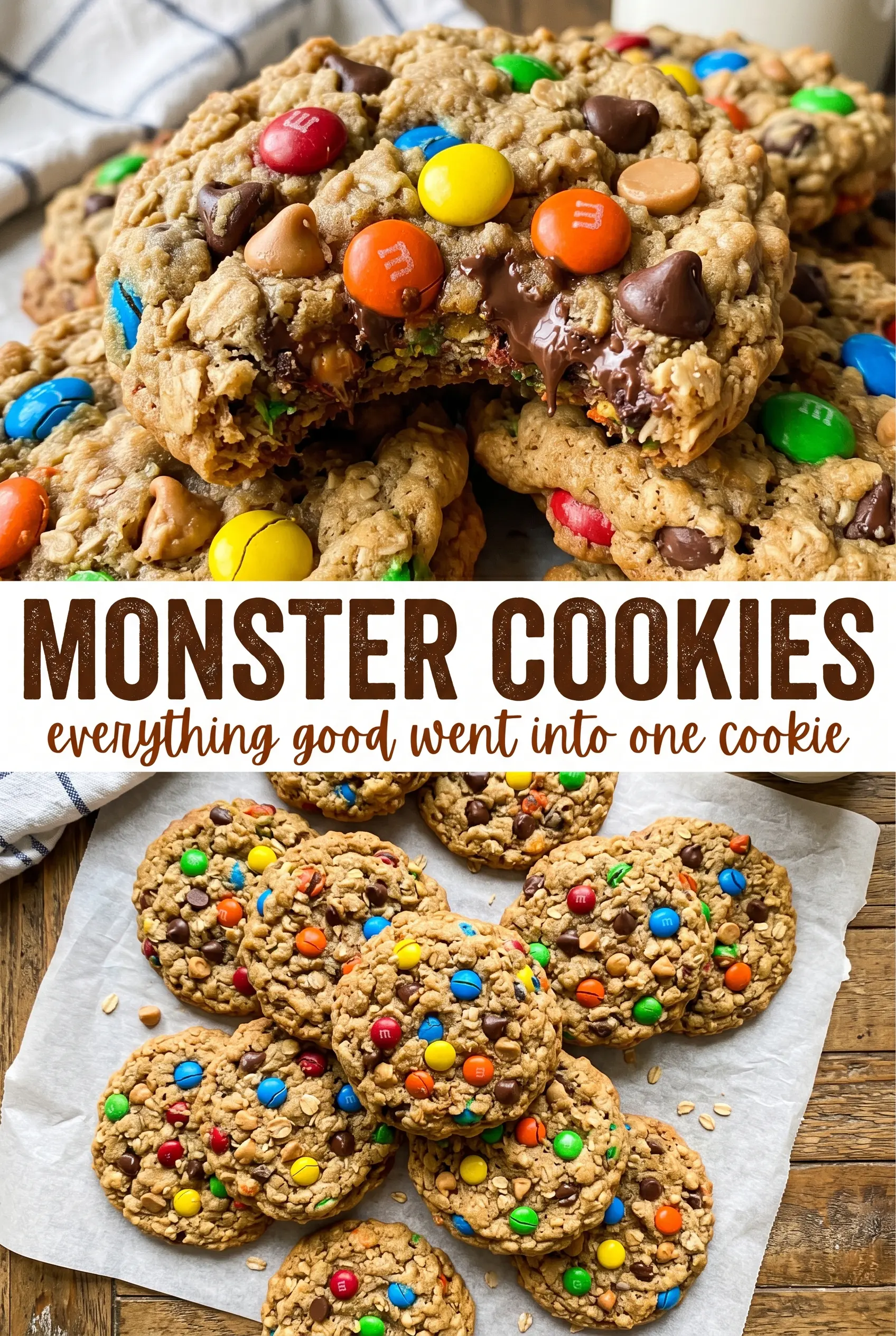
Monster Cookies
Ingredients
Equipment
Method
- Preheat oven to 350°F and line two baking sheets with parchment paper, so the cookies bake evenly and release easily.
- Beat creamy peanut butter, brown sugar, and granulated sugar together until combined and smooth.
- Add large eggs, vanilla extract, and baking soda, then mix until smooth and uniform.
- Stir in quick-cooking oats until fully incorporated, keeping the dough thick with visible oats.
- Fold in M&Ms (red, white, and blue for patriotic version) and chocolate chips until every portion is loaded with mix-ins.
- Scoop dough into 2-tablespoon balls and place 2 inches apart on the prepared baking sheets, flattening slightly with your palm.
- Bake for 10–12 minutes at 350°F until edges are set but centers still look slightly underdone for a soft center.
- Let cookies cool on the baking sheet for 5 minutes, then transfer to a wire rack so they firm up as they cool.