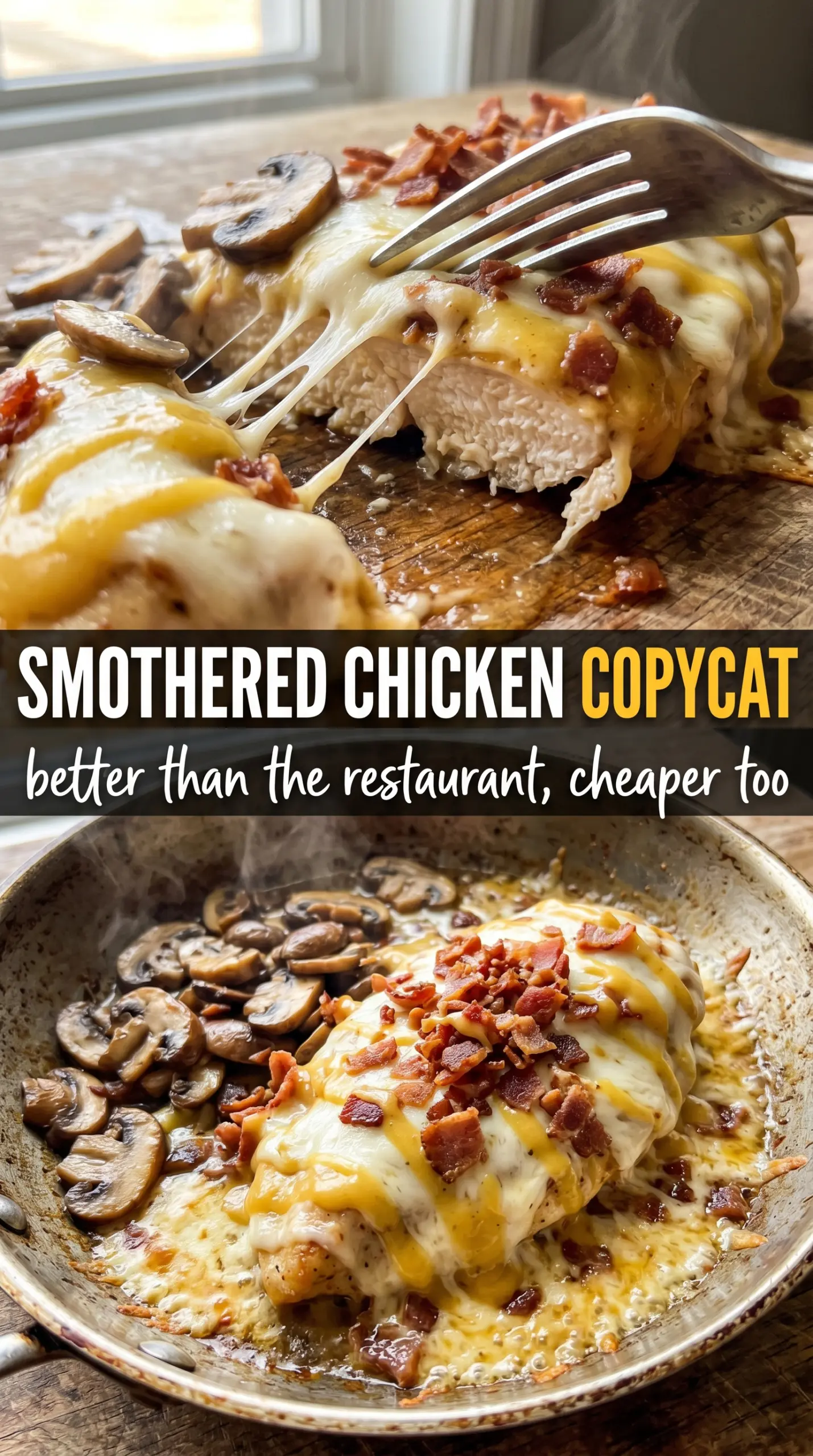
Golden seared chicken breasts under a blanket of sautéed mushrooms, sweet onions, and melted Monterey Jack are the kind of dinner that disappears fast. The chicken stays juicy because it gets a hard sear first, then finishes under the broiler just long enough to melt the cheese without drying out the meat. What you end up with is steakhouse-style comfort food with a crisp edge, a savory pan sauce, and that familiar smothered-chicken look that makes the whole plate feel special.
The part that makes this copycat work is the order of operations. The chicken sears before anything else, which builds flavor in the pan and keeps the meat from steaming under the vegetables. Then the onions cook until they turn soft and sweet, the mushrooms go in after that so they brown instead of turning watery, and the deglazing step pulls every browned bit off the skillet before the cheese goes on top. That’s the difference between a sauce-like finish and a soggy pile.
Below, I’m breaking down the one pan detail that matters most, the ingredient swap that still gives you that restaurant-style finish, and a few ways to adapt it if you want to keep dinner moving without losing the good stuff.
The chicken stayed juicy, the onions turned sweet and jammy, and the mushrooms soaked up all that seasoning from the pan. I broiled it for two minutes and the cheese melted into those perfect golden bubbles just like the restaurant.
Save this Texas Roadhouse smothered chicken for the nights when you want juicy chicken, caramelized onions, and melted Jack cheese in one skillet dinner.
The Sear Is What Keeps the Chicken from Going Flat
Most smothered chicken falls apart because the meat starts to stew before it ever gets color. That’s the mistake to avoid here. A properly seared breast gives you browned bits in the pan, a better-tasting base for the onions and mushrooms, and enough structure that the chicken still tastes like chicken after the toppings go on.
Use medium-high heat and stop at deep golden edges, not pale beige. If the chicken sticks at first, leave it alone for another minute; it’ll release when the crust forms. Pull it as soon as the center reaches 165°F, because it will go back into the skillet later and you don’t want to chase dryness with cheese.
What the Seasoning, Cheese, and Deglazing Are Each Doing
- Cajun seasoning or steak seasoning — This does the heavy lifting on the chicken itself. Cajun seasoning brings heat and paprika-forward color; steak seasoning leans saltier and more peppery. If your blend is very salty, use a lighter hand and finish with extra salt only after the mushrooms go in.
- Cremini mushrooms — These hold their shape and brown well, which matters because watery mushrooms can make the whole topping slump. White button mushrooms work in a pinch, but they taste milder and release more liquid. Slice them evenly so they cook at the same pace.
- Monterey Jack cheese — Jack melts cleanly and gives you that smooth, gooey cap without turning greasy. Shredded Jack melts even faster than slices, but the slices make the finished chicken look more like the restaurant version. If you use a different cheese, pick one that melts well; sharp cheddar gets heavier and less silky.
- Jack Daniel’s whiskey or chicken broth — The deglazing liquid loosens the browned bits and turns them into flavor instead of leaving them stuck to the skillet. Whiskey adds a deeper, slightly sweet edge, while broth keeps it family-friendly and still gives you moisture for the topping. Don’t skip this step unless the pan looks clean already, because those browned bits are the point.
Building the Skillet Topping Without Making It Watery
Caramelizing the Onions First
The onions need time before the mushrooms show up. Cook them in the butter over medium heat until they turn soft, glossy, and deeply golden around the edges. If they start to brown too fast, lower the heat; burned onions bring bitterness, while slow caramelization gives you the sweet base that makes this dish taste like a restaurant copycat instead of plain chicken with toppings.
Letting the Mushrooms Brown, Not Steam
Add the mushrooms after the onions have softened, and keep the pan uncrowded. They’ll first release moisture, then the liquid will cook off and the edges will darken. That dry-to-browned transition is the whole game here. If there’s a puddle in the pan, keep cooking until it disappears before you move on to the garlic and deglazing.
Finishing Under the Broiler
Once the chicken is back in the skillet with the topping, lay the cheese on top and broil just until it melts and bubbles. Stay close. The line between “perfectly golden” and “the cheese turned greasy” is short. A hot broiler gives you that melted top fast enough that the chicken stays juicy underneath, which is exactly what you want in a smothered chicken copycat.
Three Ways to Make This Copycat Work for Your Kitchen
Use Chicken Thighs for Extra Juiciness
Boneless skinless thighs stay juicy and forgiving, especially if your stovetop runs hot. They’ll need a little more time to cook through than breasts, but the flavor works beautifully with the mushrooms and cheese. The finished dish will be richer and a little more rustic.
Skip the Whiskey and Keep It Family-Friendly
Chicken broth works cleanly here and still lifts the fond off the pan. You’ll lose the faint caramel note from the whiskey, but the dish stays savory and full-bodied. If you want a little extra depth, let the broth reduce for a minute before you return the chicken to the skillet.
Make It Gluten-Free Without Changing the Method
This recipe is naturally gluten-free as long as your seasoning blend and broth are safe. Read the label on Cajun or steak seasoning, since some blends sneak in wheat-based anti-caking ingredients. The cooking method doesn’t need to change at all.
Add Peppers for a Little More Steakhouse Feel
A handful of sliced bell peppers can go in with the onions if you want a sweeter, more loaded-topping finish. They’ll soften as they cook and add color to the skillet. Just keep the pan moving so the vegetables caramelize instead of turning soft and bland.
Storage and Reheating
- Refrigerator: Store leftovers in an airtight container for up to 3 days. The cheese will firm up and the onions will soften more, but the flavor holds up well.
- Freezer: It freezes, but the texture of the mushrooms and cheese changes a bit after thawing. For best results, freeze the cooked chicken and topping separately if you can.
- Reheating: Warm in a covered skillet over low heat or in a 325°F oven until hot. Don’t blast it in the microwave or the chicken can dry out while the cheese turns rubbery.
Answers to the Questions Worth Asking
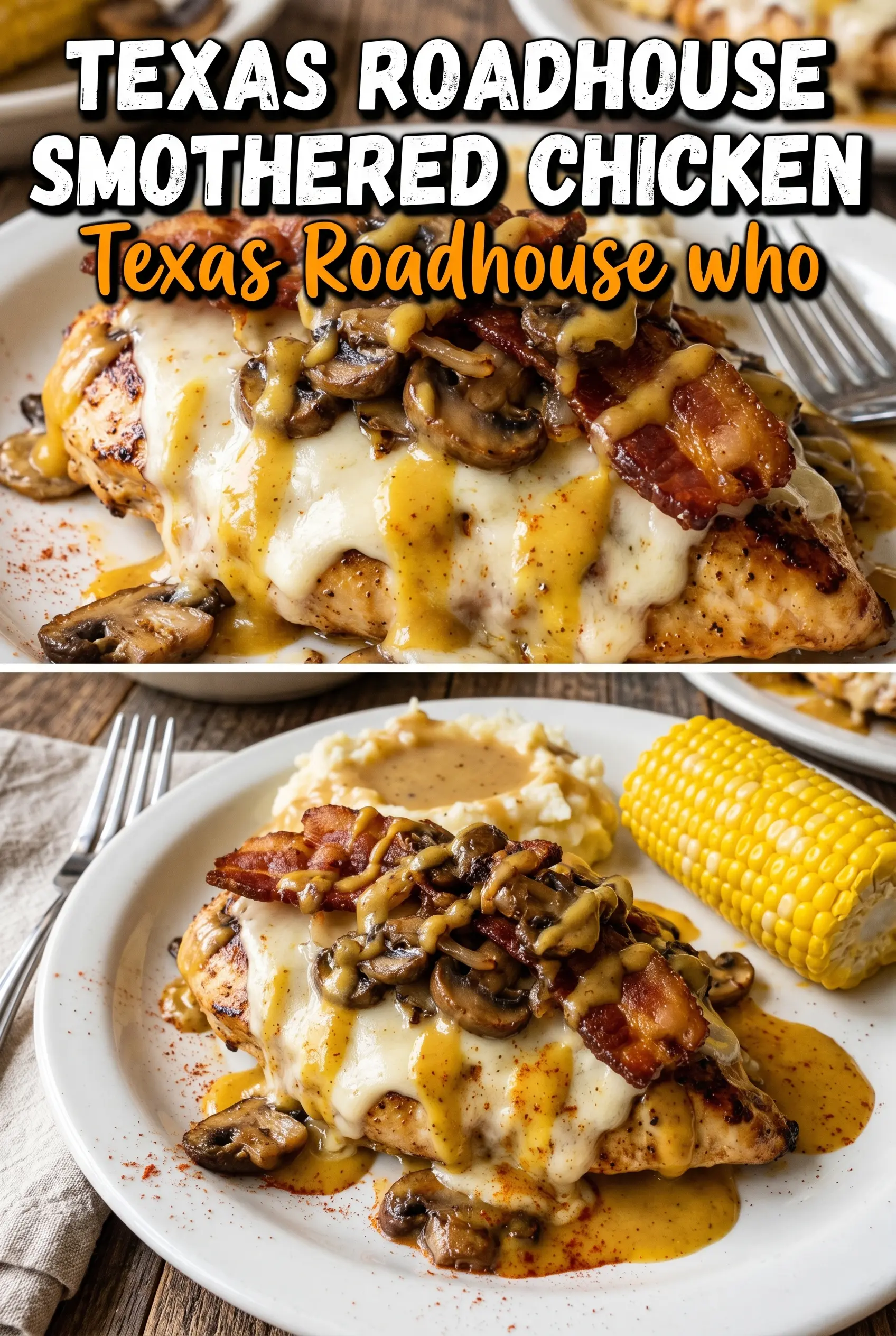
Texas Roadhouse Smothered Chicken Copycat
Ingredients
Equipment
Method
- Season the chicken generously with Cajun seasoning. Heat olive oil in an oven-safe skillet over medium-high and sear the breasts for 5-6 minutes per side until golden and the internal temperature reaches 165°F, then remove.
- Melt the butter in the same pan. Cook the sliced onions over medium heat for 8-10 minutes until deeply caramelized.
- Add the sliced mushrooms and minced garlic to the pan. Cook for 4-5 minutes until golden, then deglaze with Jack Daniel's whiskey or chicken broth and season with salt and pepper.
- Return the chicken to the pan. Spoon the mushroom-and-onion mixture over each breast, then lay 2 slices of Monterey Jack on top of each.
- Broil the skillet for 2-3 minutes until the cheese is melted, bubbly, and golden.
- Garnish the chicken with fresh parsley and serve.