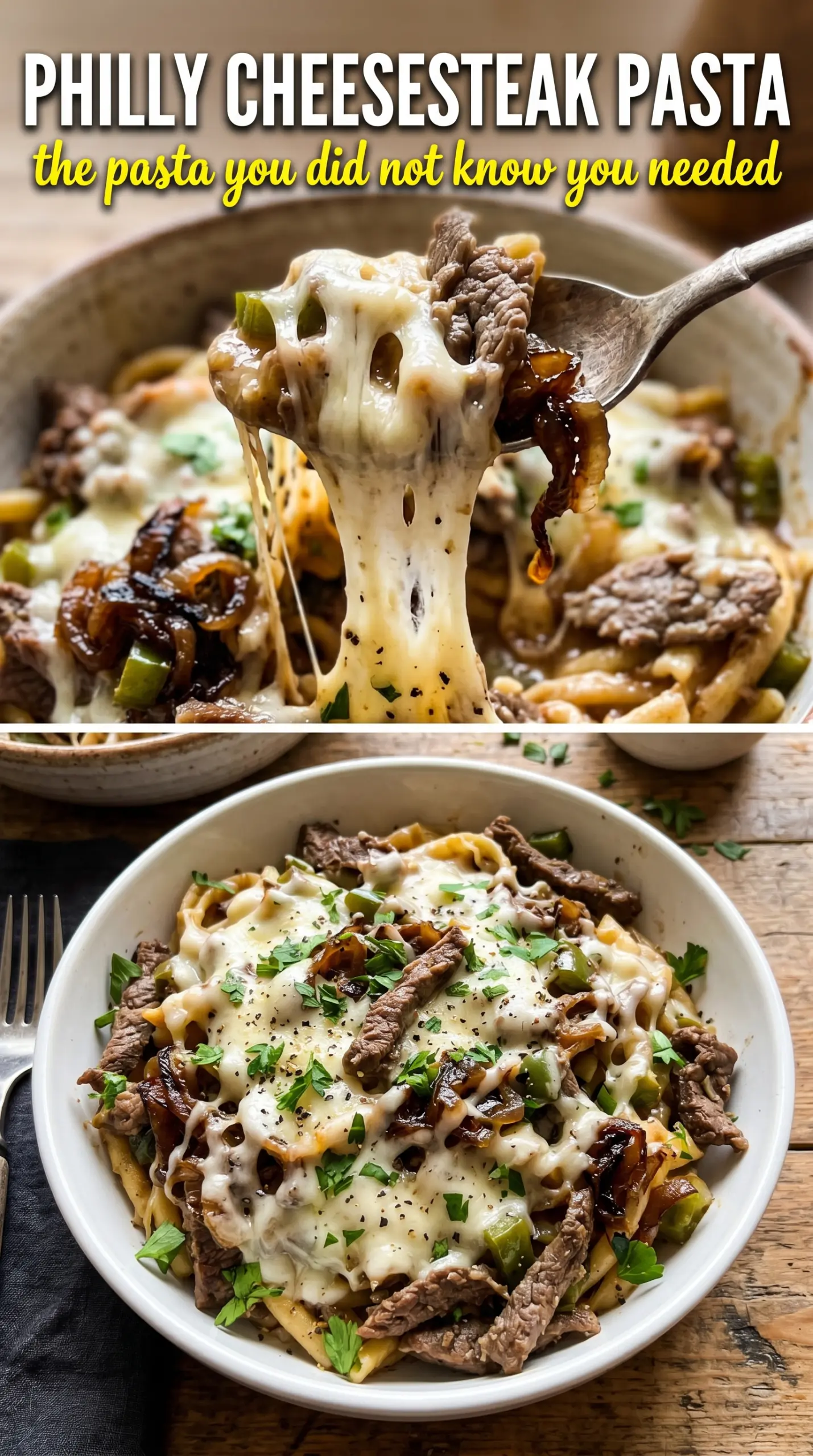
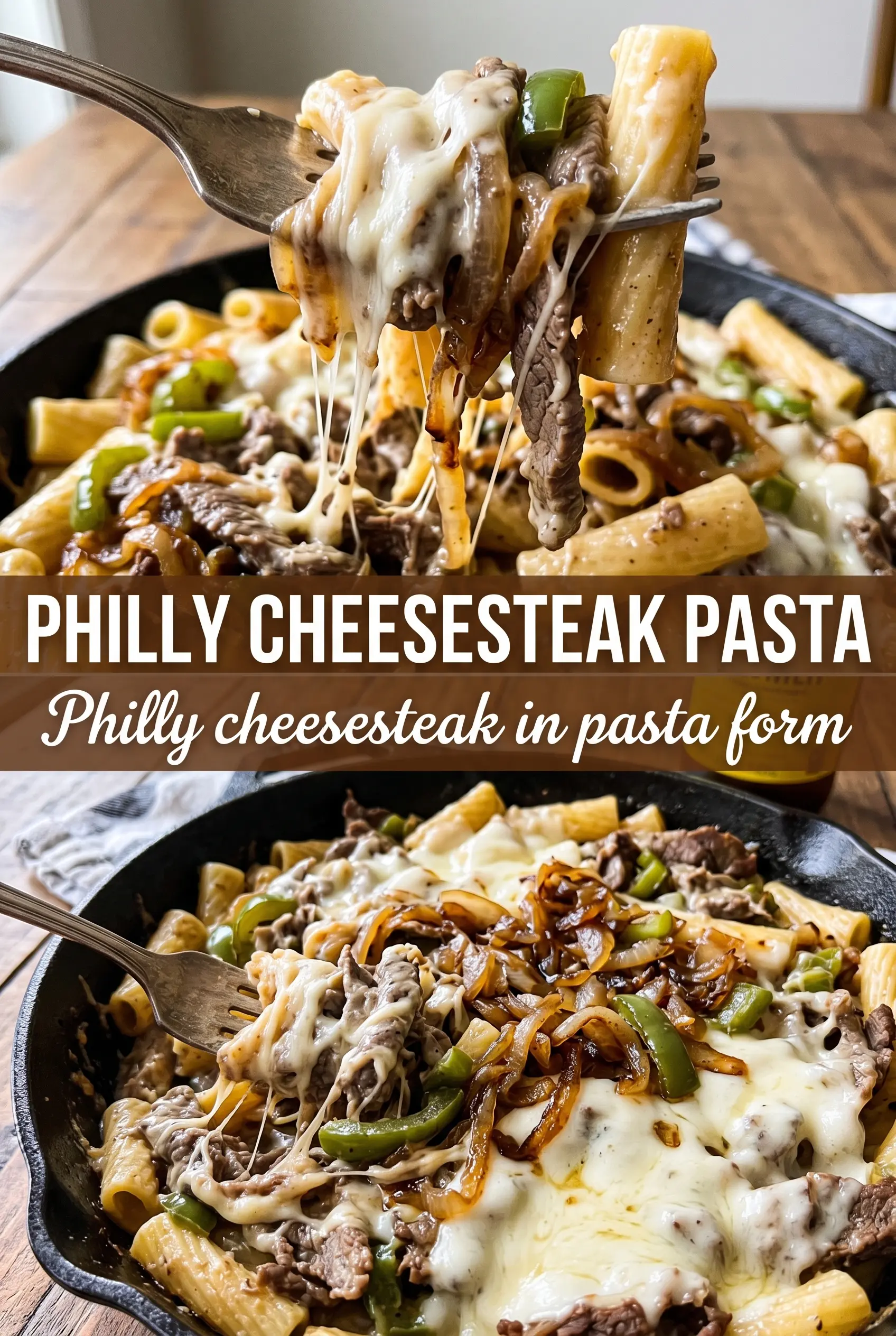
Penne coated in provolone cream sauce, tender shaved steak, and sweet peppers makes this the kind of dinner that disappears fast. It has the comfort of a baked pasta without the extra work, and the cheesesteak flavors stay front and center instead of getting buried under too much sauce or too many add-ins.
What makes this version work is the order. The steak gets a quick hard sear first, then the onions, peppers, and mushrooms cook in the same pan so they pick up every bit of browned flavor left behind. The provolone goes in after the cream has had a minute to reduce, which keeps the sauce smooth instead of grainy.
Below, I’ve laid out the one detail that keeps the sauce from turning heavy, plus a few smart swaps if you want to use what’s already in your fridge.
The sauce turned out silky and the steak stayed tender, not chewy. I loved that the peppers still had a little bite, and the whole pan came together faster than I expected.
Save this Philly Cheesesteak Pasta for the nights when you want a creamy skillet dinner with shaved steak, peppers, and provolone in one pan.
The Trick to Keeping the Provolone Sauce Smooth, Not Stringy
The biggest risk in a cheesesteak pasta is ending up with a sauce that clumps or turns greasy. Provolone needs gentle heat and a little reduction already happening in the pan before it goes in. If the skillet is roaring hot when the cheese lands, the sauce tightens up fast and the texture gets uneven.
That’s why the broth and cream simmer first. The liquid drops a little, the flavor concentrates, and the cheese has something stable to melt into. You’re aiming for a sauce that coats the pasta in a glossy layer, not one that sits on top of it like melted cheese dip.
- Shaved steak — This cooks fast and stays tender. Thinly sliced sirloin works too, but slice it against the grain and keep the sear short so it doesn’t turn chewy.
- Provolone — Mild provolone melts smoothly and gives you that classic cheesesteak flavor. Freshly shredded cheese melts better than pre-shredded because it doesn’t carry the anti-caking starches that can make the sauce feel grainy.
- Worcestershire sauce — This is the quiet backbone here. It adds the beefy, savory edge that keeps the sauce from tasting flat once the cream goes in.
- Pasta water — Save it. A splash at the end helps the sauce cling to the pasta and loosens it without watering down the flavor.
What Each Ingredient Is Actually Doing in This Cheesesteak
- Thin sliced beef (the protein foundation) — Ribeye stays tender on high heat because of the fat. Freezing for 20-30 minutes before slicing makes the job much easier.
- Onions and peppers (the sweetness layer) — Cook them long enough to caramelize and turn sweet. Pale vegetables release moisture and make the sandwich soggy.
- Cheese (the binding richness) — American melts fastest and smoothest; provolone is more classic. Apply while the meat is still hot so it adheres instead of sliding.
- Hoagie roll (the vessel that matters) — Sturdy bread doesn’t collapse under the wet filling. Toast the cut sides in butter to create a moisture barrier.
- Oil or fat for cooking (the cook and flavor) — Good fat helps everything brown and brown bits build the pan flavor.
- Salt and pepper (proper seasoning) — Don’t underseason the meat or vegetables. The bread and cheese are mild, so the filling needs bold seasoning.
- Timing (the technique that matters most) — Vegetables first, then beef, then cheese. Each step matters for the final texture and melt.
- Speed of assembly (keeping heat alive) — Everything must stay hot from pan to mouth or the sandwich flops and the cheese firms up instead of staying creamy.
Building the Skillet in the Right Order
Cooking the Pasta First
Boil the pasta until it’s just al dente, then drain it and keep a little pasta water back. The noodles will finish softening in the sauce, so if you overcook them now, they’ll turn mushy by the time dinner hits the table. Salt the water well; it’s the only chance the pasta has to be seasoned from the inside.
Searing the Steak Fast
Get the skillet hot before the steak goes in, and don’t crowd the pan. The meat should brown in spots within a couple of minutes and still look juicy in the center when you pull it out. If it sits too long, it steams and loses that savory edge you want in every bite.
Softening the Vegetables Until They Taste Sweet
Melt the remaining butter, then cook the onions, peppers, and mushrooms over medium-high heat until the onions turn golden and the peppers lose their raw snap. The mushrooms should shrink and pick up color, not just sit there sweating. This is where the dish gets its deep, cheesesteak-style flavor, so don’t rush it.
Finishing the Sauce and Bringing It Together
Add the garlic and Worcestershire at the end of the vegetable cook so the garlic doesn’t burn. Pour in the broth and cream, simmer until the liquid thickens slightly, then pull the heat down before stirring in the provolone. Toss in the pasta and steak last, and use a splash of pasta water only if the sauce needs help coating everything evenly.
How to Adapt This for a Bigger Batch, a Lighter Plate, or No Dairy
Make it gluten-free
Use your favorite gluten-free penne or rigatoni and keep the pasta just barely al dente so it doesn’t break apart in the sauce. The rest of the recipe stays the same, though you may need a little extra pasta water because gluten-free pasta tends to absorb more liquid once it hits the pan.
Skip the cream and keep it lighter
Replace half the cream with extra beef broth for a looser, less rich sauce. You’ll lose some body, but the dish still tastes hearty because the steak, peppers, and provolone carry so much flavor on their own.
Use another melty cheese
If provolone isn’t in the fridge, mozzarella will melt cleanly, while white American gives you an even silkier sauce. Both are a little milder than provolone, so add an extra splash of Worcestershire or a pinch more black pepper to keep the flavor grounded.
Stretch it for more people
Add another half pound of pasta and one extra bell pepper if you need to feed a bigger crowd. Keep the steak amount the same if you want the dish to stay pasta-forward, or increase it if you want a heavier, more filling skillet meal.
Storage and Reheating
- Refrigerator: Store leftovers in an airtight container for up to 4 days. The sauce will thicken as it sits, and the pasta will absorb some of it.
- Freezer: It freezes, but the cream sauce can turn a little grainy after thawing. If you do freeze it, cool it completely first and reheat gently with a splash of broth or cream.
- Reheating: Warm it in a skillet over low heat with a small splash of broth, cream, or water. High heat is what breaks the sauce and toughens the steak, so take your time and stir often.
Questions I Get Asked About This Recipe
Philly Cheesesteak Pasta
Ingredients
Equipment
Method
- Boil a pot of salted water and cook the penne or rigatoni until al dente, stirring occasionally. Reserve 1/2 cup pasta water, then drain and set aside.
- Season the shaved steak or sirloin with salt and black pepper. Sear it in a hot skillet with 1 tablespoon butter for 2–3 minutes until browned, then set aside.
- Melt the remaining butter in the same skillet. Cook the onions, bell peppers, and mushrooms over medium-high heat for 6–8 minutes until caramelized, then add the garlic and Worcestershire.
- Pour in the beef broth and heavy cream, bring to a simmer, and cook for 3–4 minutes until slightly reduced. Stir in the provolone cheese until melted and smooth.
- Toss the cooked pasta with the steak and sauce in the skillet. Add reserved pasta water as needed to loosen, then serve immediately with extra provolone on top.