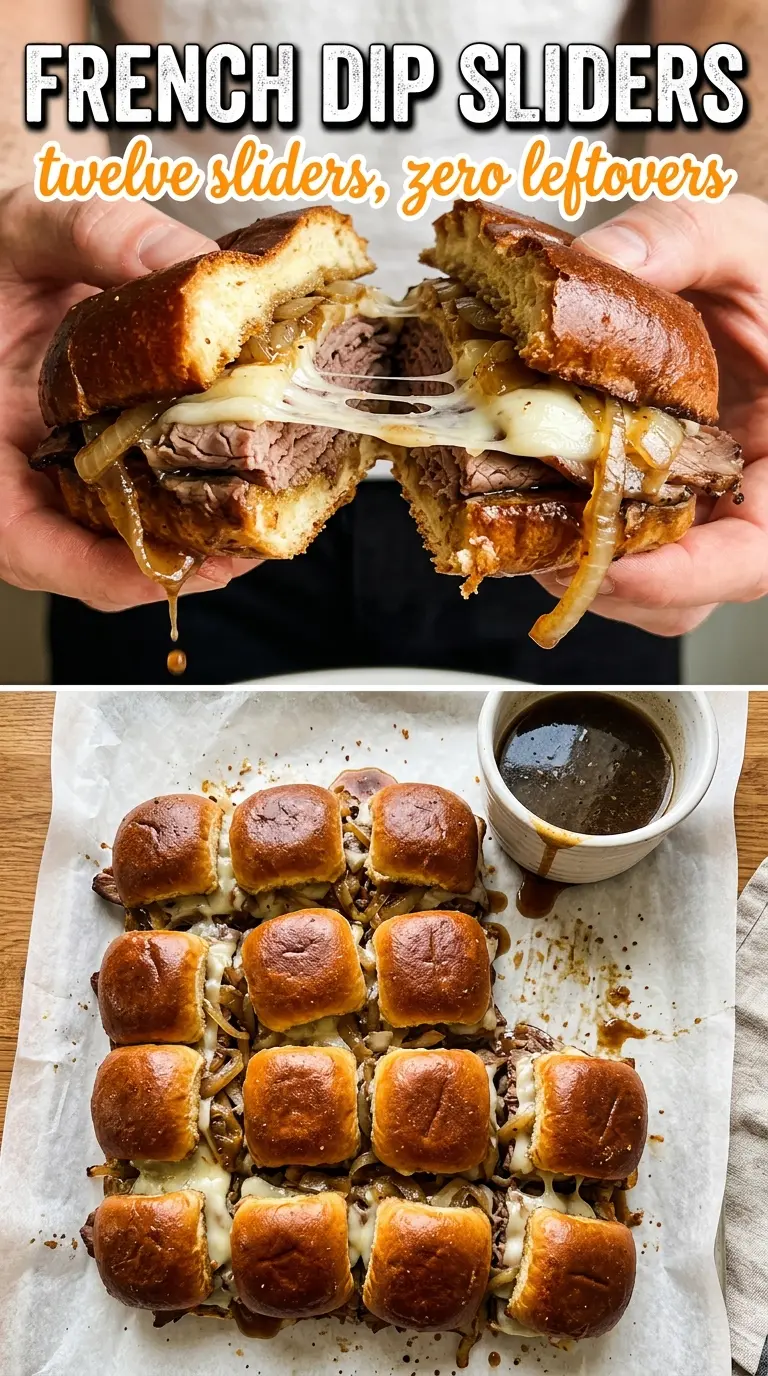
French dip sliders hit that sweet spot between party food and real dinner: soft rolls, melty provolone, savory roast beef, and a buttery top that bakes into a deep golden crust. The best part is the dip. When the sliders land on the table with a bowl of hot au jus, they disappear fast because every bite gets a little messy in the best possible way.
What makes this version work is the balance of moisture and structure. Hawaiian rolls bring enough sweetness to keep the beef from tasting flat, but they also hold up once the juices and butter hit the pan. The roast beef stays tender because it only needs to warm through, and the cheese goes between the meat and the roll tops so it melts into the filling instead of sliding off the bread.
Below, I’m walking through the one trick that keeps the bottoms from getting soggy, plus a few swaps that make these work for game day, casual dinners, or a crowd that shows up hungry.
The buttery topping baked into the rolls without making them greasy, and the au jus was dark and savory instead of salty. My husband kept going back for “just one more” slider until the pan was gone.
These French dip sliders are the kind of pull-apart pan dinner you’ll want for game day, with buttery tops and a rich au jus for dipping.
The Roll Bottoms Are What Keep These from Turning Soggy
The mistake with slider trays is piling on filling and then drowning the bread in butter before it has a chance to bake. That gives you soft tops and wet bottoms. Here, the rolls are split as one slab, the beef and cheese go in a tidy layer, and the butter mixture goes on the tops only, so the bread bakes through without losing its shape.
Foil matters for the first part of baking. It traps enough steam to melt the cheese and heat the roast beef without scorching the rolls, then the final uncovered bake gives you that shiny, bronzed top. If the tops brown too fast, the oven was hot or the foil sat too loosely; keep the foil snug for the first 15 minutes and let the last 5 minutes do the browning work.
What Each Ingredient Is Actually Doing in These Sliders
- Hawaiian sweet rolls — These bring softness and a little sweetness, which works against the savory beef and sharp au jus. Any soft slider roll can work, but plain dinner rolls lose that signature contrast.
- Deli roast beef — Thin slices heat quickly and stay tender. Buy it sliced thin at the deli counter if you can; thicker cuts can turn chewy in the short bake time.
- Provolone — It melts cleanly and gives the sliders that classic deli feel. Swiss is the best swap if you want a nuttier bite, but provolone gives the smoothest melt and the least fuss.
- Butter, Worcestershire, garlic powder, onion powder, parsley — This is the top-layer seasoning that turns plain rolls into something worth remembering. Melted butter carries the flavor across the whole pan, and Worcestershire adds the deep savory note that makes the tops taste like more than just garlic bread.
- Beef broth, Worcestershire, soy sauce, garlic powder — The au jus needs broth with enough body to taste like a dip, not salted water. Soy sauce deepens the color and rounds out the beef flavor; use low-sodium broth if your deli meat runs salty.
How to Assemble the Sliders So the Cheese Melts Before the Bread Browns
Building the Pan
Slice the rolls in half as one connected slab so the sliders bake like a pull-apart tray instead of a bunch of loose sandwiches. Set the bottom half into the greased dish first, then layer the roast beef evenly so every slider gets a full bite of meat. Uneven filling leads to dry corners and one overstuffed middle slider, and that’s the first place people notice a weak pan.
The Cheese Layer
Lay the provolone directly over the roast beef and cover the surface as evenly as you can. The cheese acts like glue and helps keep the beef tucked inside when you slice or pull the sliders apart. If you stack the cheese only in the center, the edges of the rolls lift and the filling shifts when the butter hits.
Butter the Tops, Then Bake in Two Phases
Whisk the melted butter with the Worcestershire, garlic powder, onion powder, and parsley, then brush it generously over the tops. Cover the pan with foil and bake until the cheese is fully melted and the center feels hot to the touch, then uncover for the last few minutes until the tops are shiny and deeply golden. If the tops are pale after the uncovered bake, give them another minute or two, but don’t walk away — these move from golden to too dark fast.
Make the Au Jus Last
Simmer the broth, Worcestershire, soy sauce, and garlic powder for about 5 minutes while the sliders bake. You’re not reducing it into gravy; you’re just concentrating it enough to taste rich and beefy. If it tastes flat, let it go another minute, but don’t overboil or it can turn salty and harsh.
Three Ways to Make These Work for Different Tables
Gluten-Free Sliders
Swap in gluten-free dinner rolls and use tamari instead of soy sauce in the au jus. The texture will be a little more delicate, so handle the rolls gently and watch the top browning closely, since gluten-free bread can dry out faster.
Sharper, More Deli-Style Flavor
Use Swiss cheese instead of provolone and add a few thin sautéed onions over the beef. This makes the sliders taste a little closer to a classic French dip sandwich and gives the filling more bite, but it takes away some of the mild, melty comfort of the original.
Dairy-Free Version
Use a plant-based butter and a good melting dairy-free cheese. The flavor still lands because the beef and au jus carry most of the dish, but the top won’t brown quite the same way, so lean on the herb butter for extra flavor.
Make-Ahead for a Crowd
Assemble the sliders up to a few hours ahead, cover them, and keep the butter topping separate until right before baking. That keeps the rolls from getting too soft before they go in the oven, which is the difference between neat pull-apart sliders and a soggy pan.
Storage and Reheating
- Refrigerator: Store leftovers in an airtight container for up to 3 days. The rolls soften a bit as they sit, but the flavor stays strong.
- Freezer: These freeze best before baking. Wrap the assembled, unbaked pan tightly and freeze for up to 1 month, then thaw in the fridge before baking.
- Reheating: Reheat covered in a 325°F oven until warmed through. The microwave makes the bread rubbery and the beef tougher, so the oven is the better move for keeping the sliders closer to freshly baked.
Answers to the Questions Worth Asking

French Dip Sliders
Ingredients
Equipment
Method
- Preheat the oven to 350°F and grease a 9x13 baking dish.
- Slice the Hawaiian sweet rolls in half horizontally without separating the individual rolls, then place the roll bottoms in the baking dish.
- Layer the roast beef and provolone cheese evenly over the roll bottoms, then place the roll tops on.
- Whisk the melted butter with Worcestershire sauce, garlic powder, onion powder, and chopped parsley, then brush generously over the roll tops.
- Cover with foil and bake at 350°F for 15 minutes, then uncover and bake 5 more minutes at 350°F until the tops are golden.
- Simmer the beef broth with Worcestershire sauce, soy sauce, and garlic powder for 5 minutes.
- Serve the sliders hot with the au jus on the side for dipping.