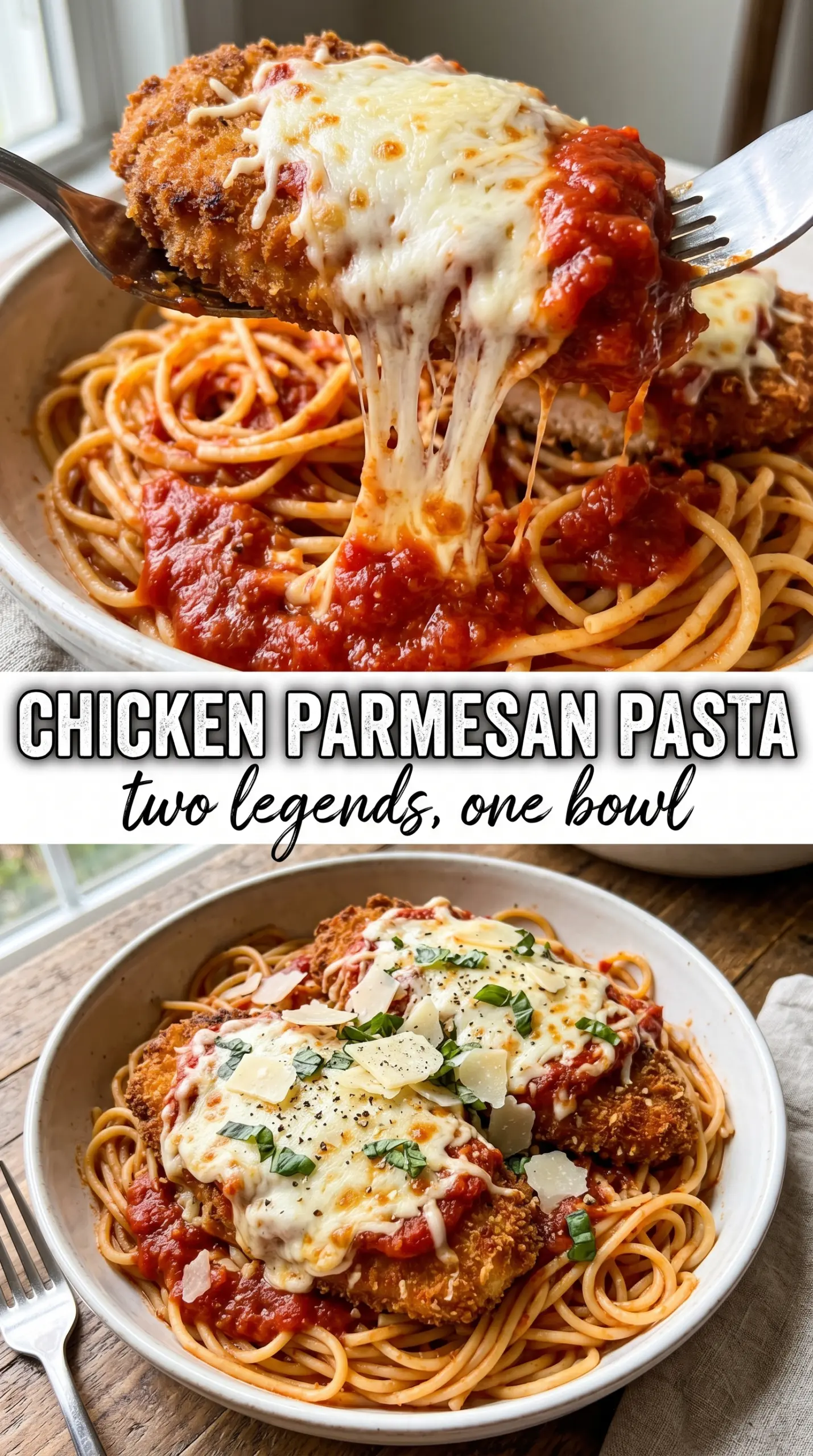
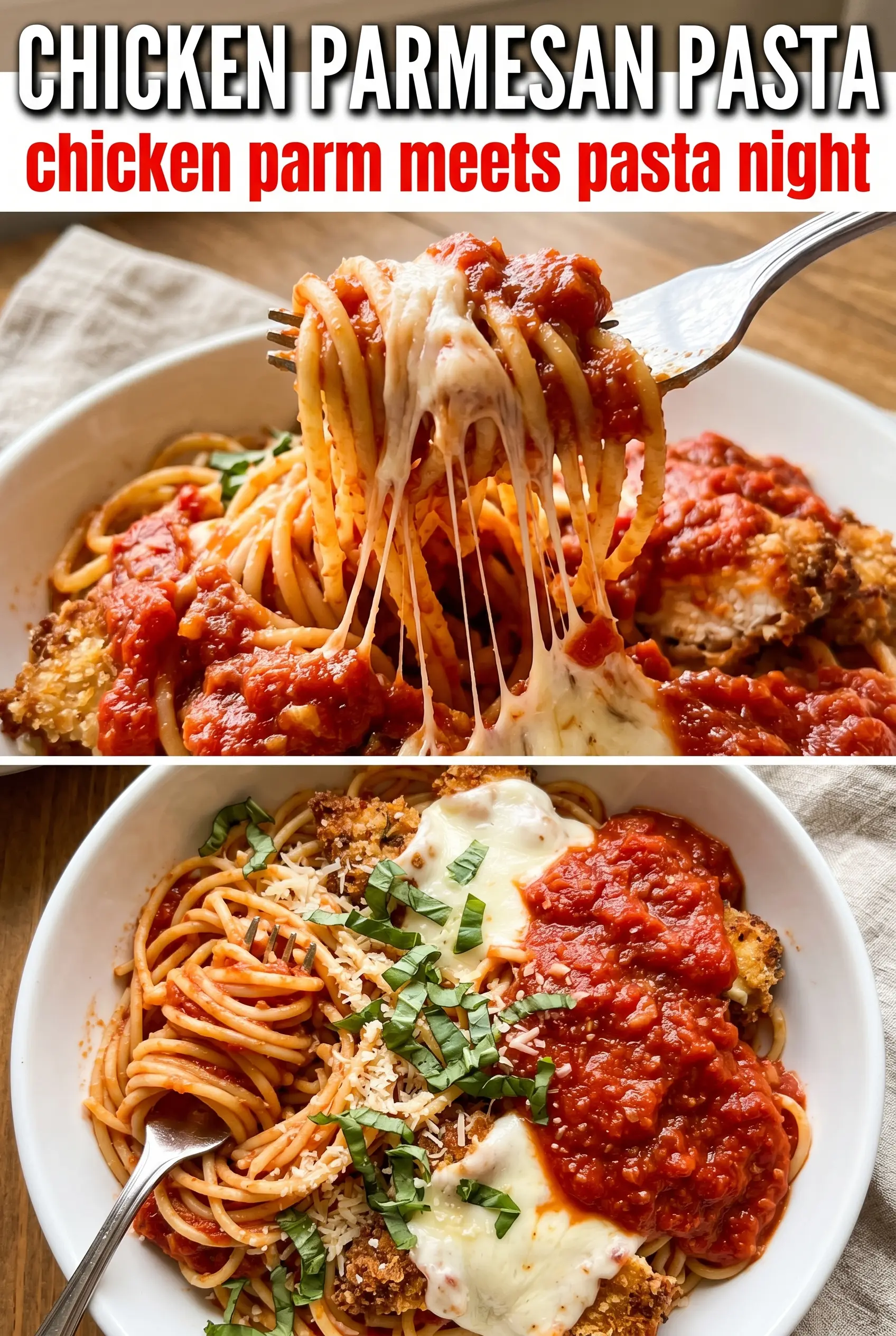
Penne, crispy breaded chicken, and bubbling mozzarella come together here in a way that tastes like classic chicken Parmesan without the fussy plating. The pasta bakes under the chicken, so every forkful gets a mix of saucy noodles, crunchy edges, and that stretchy cheese blanket on top. It’s the kind of pan that disappears fast because it hits all the right textures at once.
The key is keeping the chicken crisp before it goes into the oven. A light flour-eggs-breadcrumbs coating gives you a sturdy crust, but it only stays crunchy if the chicken is browned until golden in the skillet first and then moved right onto the sauced pasta. The other piece that matters is using a marinara that’s thick enough to coat the penne without turning the whole dish watery.
Below, I’ll walk through the part that keeps the chicken from going soft, plus a few smart swaps for making this work with what you already have in the kitchen.
The chicken stayed crisp on top of the pasta, and the mozzarella browned just enough without turning greasy. I used a thick jarred marinara and the whole dish came out rich, not runny.
Save this chicken Parmesan pasta for the nights when you want crispy chicken, saucy penne, and melted mozzarella in one pan.
The Step That Keeps the Chicken Crispy Under All That Sauce
The biggest mistake in chicken Parmesan pasta is treating the chicken like it can sit around once it’s fried. It can’t. The crust starts to soften as soon as it meets steam, so the goal is to build enough color and texture in the skillet that it can stand up to the bake. That means medium-high heat, enough oil to coat the pan, and chicken pieces spread out so they brown instead of steam.
The other thing people get wrong is the sauce-to-pasta ratio. If the penne is swimming, the breadcrumb coating turns soggy before the cheese even melts. You want the marinara to cling to the noodles and leave just enough moisture for the bake to finish the dish, not drown it.
What the Breadcrumb Coating, Marinara, and Cheese Are Each Doing
- Boneless skinless chicken breasts — Cutting them into bite-sized pieces gives you more browned surface area and keeps the chicken easy to serve with the pasta. Chicken thighs work too, but they’ll taste richer and cook a little faster, so watch closely near the end.
- Flour, egg, and Italian breadcrumbs — This three-part coating is what gives you that classic chicken parm crunch. The flour helps the egg stick, the egg helps the crumbs adhere, and the breadcrumbs form a shell that can survive the sauce better than a simple flour dredge.
- Parmesan in the coating and on top — The Parmesan in the breadcrumbs adds saltiness and a deeper savory note, while the topping melts into the mozzarella and helps the top brown. Freshly grated Parmesan melts and tastes cleaner than the shelf-stable stuff, which can stay gritty.
- Marinara sauce — Use a thick sauce here. A thin, watery marinara will pool at the bottom of the baking dish and soften the chicken faster. If your jarred sauce looks loose, simmer it for a few minutes before mixing it with the pasta.
- Mozzarella — Shredded mozzarella gives you the melt and the stretch. Low-moisture mozzarella works best because fresh mozzarella releases too much liquid in the oven and can make the top greasy.
Building the Dish So the Chicken Stays Crisp
Coating the Chicken Evenly
Start by coating the chicken pieces in flour, then egg, then the breadcrumb-Parmesan mixture. Press the crumbs on with your fingers so you get a full, even crust instead of a patchy coating that flakes off in the pan. If the chicken is wet when it goes into the flour, shake off the excess first or the breading gets gummy and slides around.
Frying for Color, Not Just Doneness
Cook the chicken in olive oil over medium-high heat until the outside is deep golden and the pieces are cooked through. Don’t crowd the pan or the chicken will steam before it browns. If the breading is darkening too fast, lower the heat a little and give it another minute; if it’s pale after 3 to 4 minutes, the pan wasn’t hot enough to begin with.
Baking the Pasta and Topping
Toss the cooked penne with marinara before it goes into the baking dish so every noodle gets coated. Spread the chicken over the top, then blanket everything with mozzarella and Parmesan. Bake just until the cheese melts and turns spotty gold at the edges; if you leave it in too long, the pasta dries out and the chicken crust loses the texture you worked for.
How to Adapt It When You Need a Different Version
Gluten-Free Chicken Parmesan Pasta
Swap the flour for a gluten-free all-purpose blend and use gluten-free breadcrumbs. The texture stays crisp if you fry the chicken the same way, but gluten-free crumbs can brown a little faster, so keep the heat steady and watch the color closely.
Make It Spicier
Stir crushed red pepper into the marinara or add a pinch to the breadcrumb mixture. That gives the whole dish a slow heat instead of just a hot finish on top, which is a better match for the rich cheese.
Use Chicken Thighs Instead
Boneless thighs work if you want juicier chicken with a little more richness. Cut them into even pieces so they cook at the same pace as the breasts, and expect them to need a minute or two less in the skillet.
Turn It Into a Lighter Bake
Bake the breaded chicken pieces on a rack until crisp, then layer them over the sauced pasta and cheese without frying. You lose a little richness, but you keep the crunch and cut down on the oil.
Storage and Reheating
- Refrigerator: Store leftovers covered for up to 4 days. The chicken crust will soften a bit, but the flavor stays good.
- Freezer: It freezes fairly well in portions for up to 2 months. Let it cool completely first, then wrap tightly; the cheese and sauce hold up better than the chicken coating.
- Reheating: Warm in a 350°F oven until hot in the center. The microwave works in a pinch, but it makes the breading soft and the cheese rubbery, so use the oven if you want the closest texture to fresh.
Questions I Get Asked About This Recipe
Chicken Parmesan Pasta
Ingredients
Equipment
Method
- Dredge the boneless skinless chicken breasts in all-purpose flour, then dip them into the beaten eggs. Visually coat each piece fully so it looks matte after flour and glossy after egg.
- Coat the flour-and-egg chicken in Italian breadcrumbs mixed with 1/2 cup Parmesan cheese. Press lightly so the breading adheres and the coating looks even and thick.
- Pan-fry the breaded chicken in olive oil over medium-high heat for 3-4 minutes per side until golden and cooked through. When done, the chicken should be browned with no pink in the center; drain on paper towels.
- Toss the cooked penne pasta with marinara sauce and pour into a greased 9x13 baking dish. The pasta should be evenly coated and spread out in an even layer.
- Arrange the crispy chicken pieces over the pasta. Place them so they’re distributed across the dish, not piled in one spot.
- Top with shredded mozzarella cheese and the remaining Parmesan cheese for topping. Make sure the surface is covered so it bakes into a bubbly layer.
- Bake at 375°F for 20-22 minutes until cheese is melted and golden, then garnish with fresh basil. Look for bubbling at the edges and a browned top before serving.