Golden seared chicken thighs tucked into a silky coconut sauce are the kind of dinner that gets scraped clean from the skillet. The chicken stays juicy under a crisp, seasoned skin, and the sauce turns rich without feeling heavy because the coconut milk is balanced with broth, lime, and a little soy sauce. It tastes layered, not flat, which is what keeps this dish in regular rotation.
The key is building flavor in stages. First you sear the thighs hard enough to render the skin and leave browned bits in the pan, then you soften the onion and bloom the ginger, garlic, and red pepper flakes right in those drippings. Full-fat coconut milk gives the sauce its body; light coconut milk won’t cling the same way, and it can taste thin next to the chicken.
Below you’ll find the little things that matter most: how to keep the sauce from breaking, what to do if you only have boneless chicken, and how to reheat leftovers without turning the meat stringy.
The coconut sauce thickened into this silky gravy and the lime at the end kept it from tasting heavy. I used rice, and my husband went back for thirds.
Save this creamy coconut milk chicken for the nights when you want a glossy skillet sauce, juicy thighs, and rice that soaks up every drop.
The Secret to Keeping Coconut Milk Chicken from Turning Thin
The biggest mistake with coconut milk chicken is rushing the simmer and expecting the sauce to behave like cream. Coconut milk is different. It needs a gentle heat so the fat stays emulsified instead of separating into oily streaks and a watery base. That’s why the chicken goes back into the skillet skin-side up and the pot stays at a steady, lazy simmer rather than a hard boil.
The other thing that matters is what’s left in the pan after searing. Those browned bits are concentrated chicken flavor, and the onion, garlic, and ginger pick them up before the coconut milk goes in. If the pan looks dry after you remove the chicken, that’s a sign you seared well, not a problem.
- Chicken thighs — Bone-in, skin-on thighs stay tender through the simmer and give the sauce extra flavor. Breasts can work, but they dry out faster and need less cook time.
- Full-fat coconut milk — This is what gives the sauce its body. Shake the can before opening, then stir it well in the skillet so the cream and liquid combine again.
- Lime juice and zest — Add these at the end so the sauce stays bright. If they go in too early, the citrus taste fades and the sauce can taste flatter than it should.
- Turmeric — A small amount adds color and a warm background note. It’s not there to make the dish taste like curry; it helps the sauce look as rich as it tastes.
Building the Skillet Sauce in the Right Order
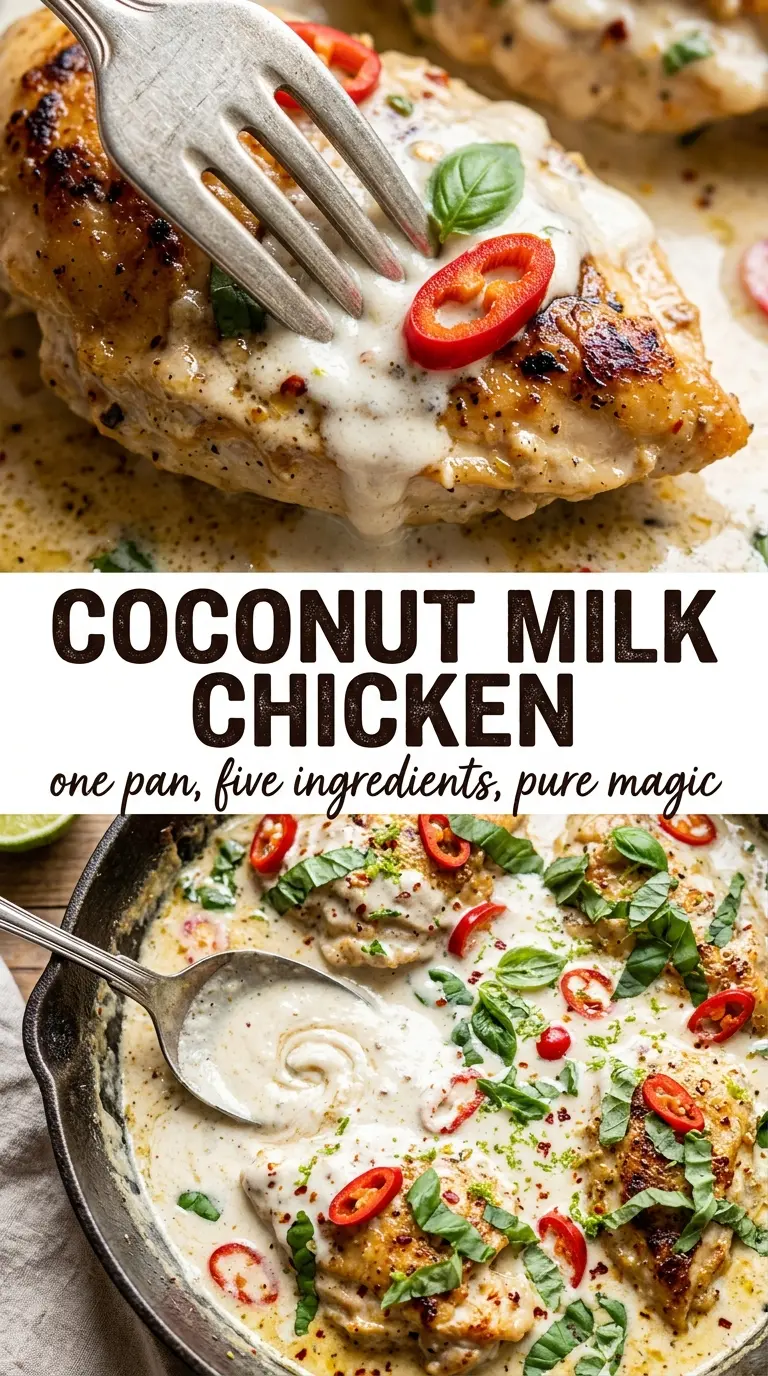
Seasoning and Searing the Chicken
Season the thighs all over, including under the skin if you can get there without tearing it. Heat the coconut oil until it shimmers, then lay the chicken in skin-side down and leave it alone until the skin releases easily and turns deep golden. If you try to flip too soon, the skin will stick and tear, and you’ll lose the crisp layer that gives the dish its best texture. The goal here is color first, then doneness later.
Softening the Aromatics
After the chicken comes out, the onion goes into the same skillet and should pick up the browned bits as it softens. Add the garlic, ginger, and red pepper flakes only after the onion has lost its raw edge; earlier than that, the garlic can scorch before the sauce even starts. You want the kitchen to smell fragrant and sharp, not burnt. That quick minute of cooking wakes up the ginger without drying it out.
Simmering the Coconut Sauce
When the coconut milk and broth go in, stir from the bottom of the pan to dissolve anything stuck there. Bring the mixture to a simmer, not a boil. A hard boil can make coconut milk separate, especially once the chicken goes back in. Nestle the thighs skin-side up so the skin stays as intact as possible while the meat finishes cooking in the sauce.
Finishing with Lime
Turn off the heat before adding the lime juice and zest. That keeps the citrus bright and keeps the sauce from tasting dull or overly sharp. If the sauce seems a little loose at this point, give it a minute off the heat; it thickens as it sits. Cilantro goes on at the end so it stays fresh and doesn’t disappear into the sauce.
Make It Dairy-Free Without Losing Richness
This recipe is already dairy-free as written, which is part of why the sauce works so well. Full-fat coconut milk gives you the creamy texture without needing cream or butter, and the lime at the end keeps it from feeling heavy.
Using Boneless Chicken Thighs
Boneless thighs cook faster and are easier to serve, but they won’t give you quite the same depth of flavor from the bones. Start checking them around 12 to 15 minutes in the simmer, and pull them as soon as they reach 165°F so they stay juicy.
Making It Mild or Spicier
The red pepper flakes are easy to control. Leave them out for a gentler sauce, or add another pinch with the garlic and ginger if you want more heat. The lime and coconut can handle it; just don’t push the spice so far that it overwhelms the sauce.
Storage and Reheating
- Refrigerator: Store in an airtight container for up to 4 days. The sauce may thicken as it chills.
- Freezer: It freezes well for up to 2 months, though the sauce may separate slightly after thawing. Stir it well while reheating.
- Reheating: Warm gently on the stovetop over low heat with a splash of broth or water. Don’t boil it, or the chicken can dry out and the coconut sauce can break.
Answers to the Questions Worth Asking

Creamy Coconut Milk Chicken
Ingredients
Equipment
Method
- Pat the chicken thighs dry and season all over with salt, pepper, garlic powder, and turmeric to taste.
- Heat coconut oil in a large skillet over medium-high heat and sear the chicken skin-side down for 6-7 minutes until deep golden; remove to a plate.
- In the same skillet, cook the diced onion for 3 minutes until softened.
- Add garlic, grated ginger, and red pepper flakes and cook for 1 minute, stirring until fragrant.
- Pour in full-fat coconut milk and chicken broth, stir in soy sauce, and bring to a simmer.
- Return chicken to the skillet skin-side up; cover and simmer over medium-low for 18-20 minutes until the internal temperature reaches 165°F.
- Stir in lime juice and lime zest to brighten the silky sauce.
- Garnish with fresh cilantro and serve with lime wedges over jasmine rice.