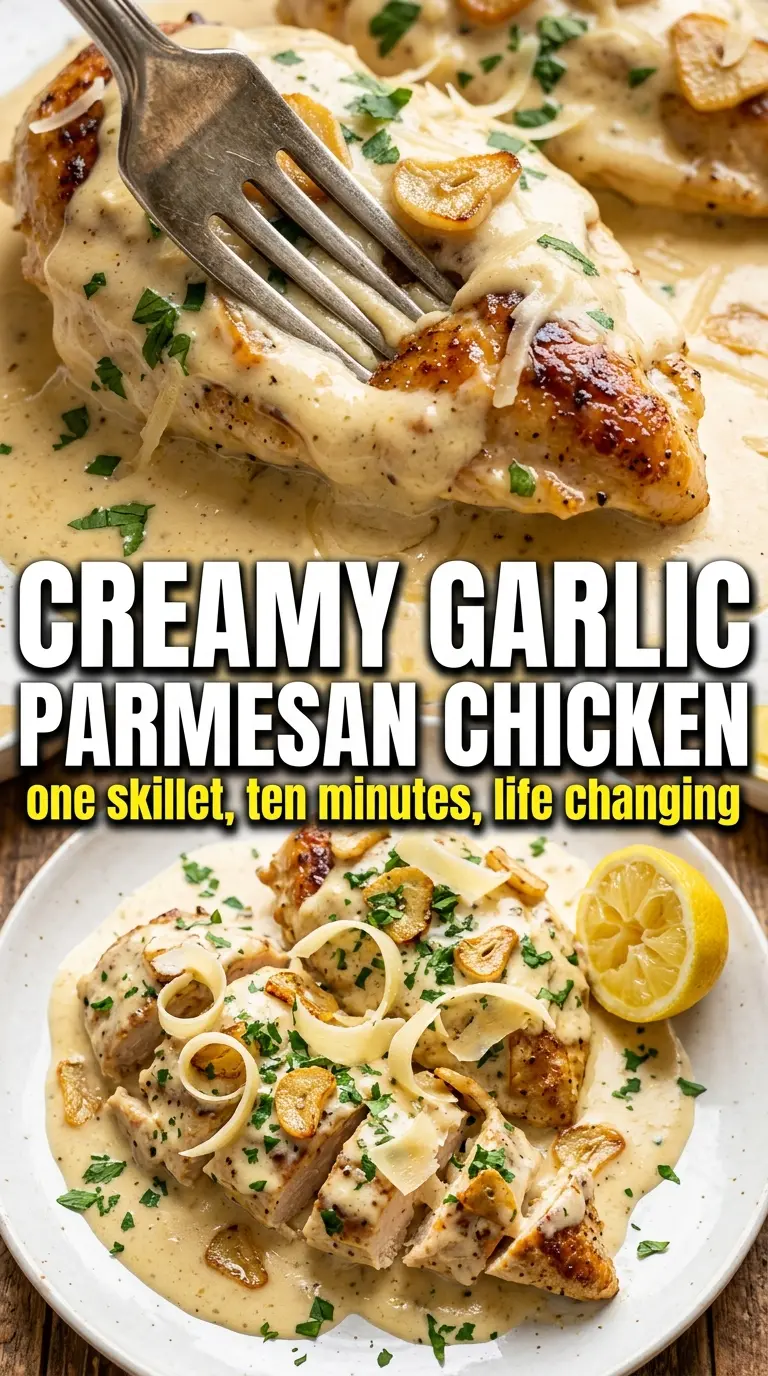
Golden seared chicken breasts in a garlic Parmesan cream sauce are the kind of skillet dinner that disappears fast because the sauce clings instead of pooling on the plate. The chicken stays juicy, the garlic softens into the sauce instead of tasting sharp, and the Parmesan gives it that salty, glossy finish that feels richer than the ingredient list suggests.
The trick is getting color on the chicken before the cream goes in. Those browned bits at the bottom of the pan build the whole sauce, so this isn’t a recipe where you want to rush the sear or scrub the skillet clean. A little wine helps lift everything off the pan, and freshly grated Parmesan melts into a smoother sauce than the pre-shredded kind ever will.
Below you’ll find the exact point where the sauce thickens, why the pan temperature matters, and a few smart swaps if you want to make it with broth instead of wine or lighten it up a bit.
The sauce thickened up beautifully and stayed silky even after I put the chicken back in. My husband said the garlic-Parmesan combo tasted like something from a restaurant.
Save this creamy garlic Parmesan chicken for the night you want a silky skillet sauce and a fast dinner that still feels special.
The Sear Is Doing More Than Browning the Chicken
If the chicken goes into the sauce pale, the finished dish tastes flat. The skillet sear gives you flavor at two levels: a browned crust on the chicken itself and the fond left behind in the pan. That fond is what the wine or broth loosens up, and once it dissolves, it becomes the backbone of the sauce.
The other common miss is overcrowding the pan. If the chicken steams, you lose color and you also lose the chance to build enough browned bits for the sauce to taste deep and savory. Work in batches if your skillet is tight, then pull the chicken once it hits 165°F so it can finish gently in the sauce without drying out.
- Salt, pepper, garlic powder, and smoked paprika — This seasoning layer matters because the sauce is creamy, not heavily spiced. The paprika adds a little warmth and color, while the garlic powder seasons the chicken itself so you’re not relying on the fresh garlic alone.
- Olive oil — Use a neutral, everyday olive oil here. You need enough fat to promote browning without smoking aggressively at medium-high heat.
- Fresh garlic — Fresh minced garlic is worth using. It perfumes the sauce and gives it that sharp, savory edge that garlic powder can’t duplicate. Mince it finely so it cooks in the brief minute before deglazing and doesn’t taste raw.
- Heavy cream — This is what gives the sauce its body and stability. Half-and-half can work in a pinch, but the sauce will be thinner and a little more prone to splitting if it boils too hard.
- Freshly grated Parmesan — Grate it yourself if you can. Pre-shredded cheese often has anti-caking agents that make the sauce grainy instead of smooth. Fresh Parmesan melts cleaner and tastes saltier and sharper, so you may not need much extra seasoning.
Building the Sauce in the Same Pan Without Breaking It
Getting Color on the Chicken
Season the chicken generously before it ever touches the skillet. That dry seasoning helps the surface brown, and the smoked paprika gives the finished dish a little depth without turning it into a paprika sauce. Heat the oil until it shimmers, then lay the chicken in and leave it alone long enough to form a real crust. If you keep nudging it, the surface won’t brown evenly and the chicken can stick.
Using the Brown Bits Instead of Throwing Them Away
Once the chicken comes out, the pan should look messy in the best way. Add the butter and garlic to that same skillet and stir just until fragrant, about a minute, because garlic burns fast once the pan is hot. Pour in the wine or broth and scrape the bottom with a wooden spoon until the stuck-on bits dissolve into the liquid. That deglazing step is where the flavor comes from, and if the pan looks perfectly clean, you’ve left taste behind.
Finishing With Cream and Parmesan
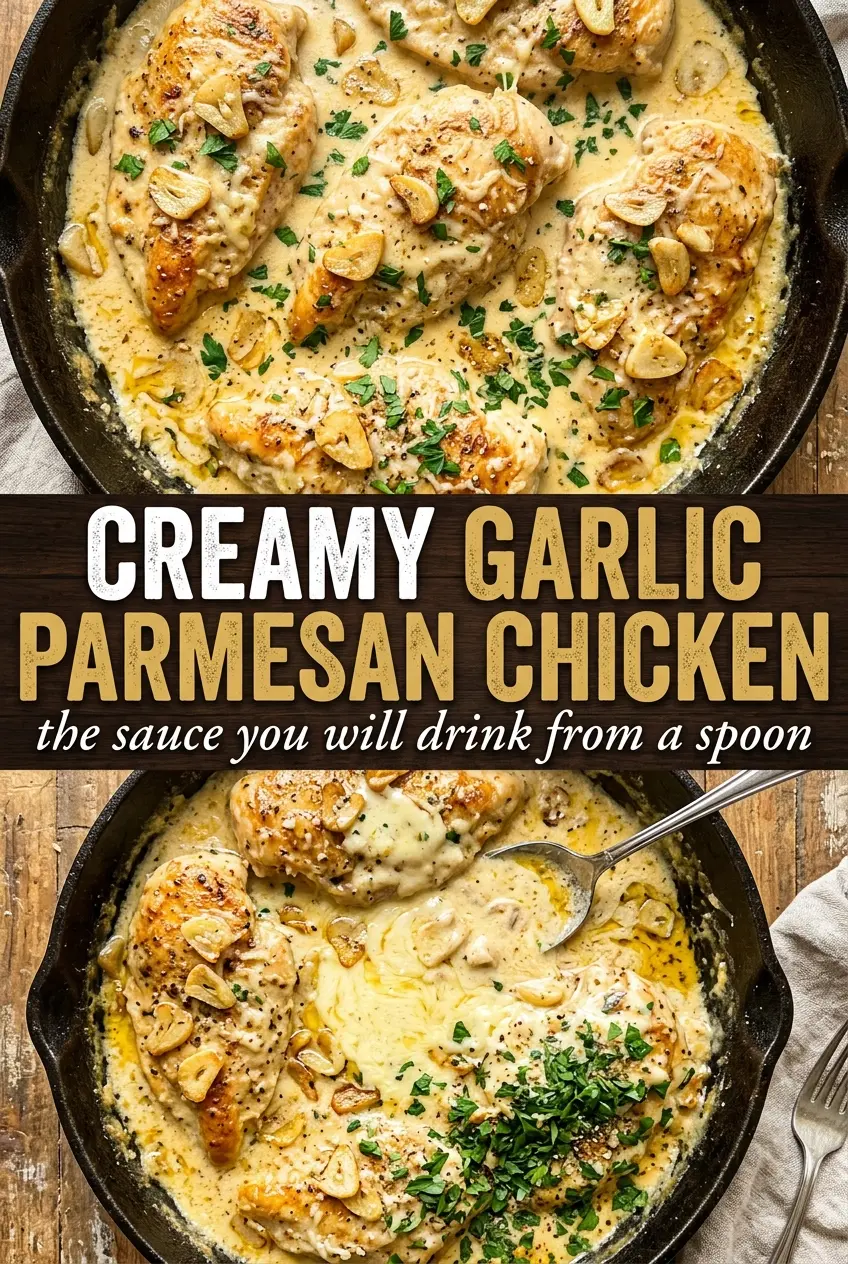
Lower the heat before the cream goes in. High heat is what turns a cream sauce grainy or broken, not the cream itself. Stir in the broth, Parmesan, and Italian seasoning, then let the sauce simmer until it coats a spoon thickly and looks glossy instead of thin and milky. Return the chicken only after the sauce has thickened a bit, then spoon it over the top so the breasts rewarm without overcooking.
Make it without wine
Use chicken broth instead of wine if that’s what you have. You’ll lose a little of the sharp, bright edge that wine brings to the pan, but the sauce still tastes rich and balanced because the garlic, Parmesan, and browned bits do most of the work.
Lighter creamy chicken skillet
Swap the heavy cream for half-and-half if you want a lighter sauce. It will still taste good, but you’ll need to keep the simmer gentle and accept a looser finish. Don’t boil it hard or the texture can turn thin and a little curdled around the edges.
Gluten-free version
This recipe is naturally gluten-free as written if your broth is certified gluten-free. The sauce doesn’t need flour because the cream and Parmesan thicken on their own as they reduce.
Thighs instead of breasts
Boneless skinless thighs work well if you prefer darker meat. They stay juicy even with a little extra time in the pan, but they won’t slice and plate as neatly as breasts. Give them a few extra minutes on the first side so they brown deeply before you add the sauce.
Storage and Reheating
- Refrigerator: Store leftovers in an airtight container for up to 3 days. The sauce will thicken as it chills.
- Freezer: It can be frozen, but cream sauces often separate a bit when thawed. Freeze only if needed, and expect the texture to be less silky after reheating.
- Reheating: Warm it slowly on the stove over low heat with a splash of broth or cream. The biggest mistake is microwaving it on high, which can make the sauce split and the chicken turn tough.
Questions I Get Asked About This Recipe
Creamy Garlic Parmesan Chicken
Ingredients
Equipment
Method
- Season the chicken breasts generously on both sides with salt, pepper, garlic powder, and smoked paprika.
- Heat olive oil in a large skillet over medium-high heat until shimmering, then sear chicken for 5-6 minutes per side until golden and internal temperature reaches 165°F.
- Remove the chicken from the pan and set aside.
- Add butter and minced garlic to the same pan and cook for 1 minute until fragrant.
- Pour in the white wine (or chicken broth) to deglaze and cook for 2 minutes.
- Stir in heavy cream, chicken broth, Parmesan cheese, and Italian seasoning, then simmer for 4-5 minutes until the sauce is thick and glossy.
- Return the chicken to the pan, then spoon the sauce over each breast to coat.
- Garnish with fresh thyme and fresh parsley and serve.