Silky custard, tart rhubarb, and a tender almond flour crust make this pie the kind of dessert people remember after the first bite. The filling sets up creamy instead of rubbery, and the rhubarb keeps every slice bright enough to cut through the richness. It tastes like a classic custard pie that just happens to fit a low carb table.
The trick is in the balance. Rhubarb brings plenty of sharpness on its own, so the sweetener has to soften it without turning the filling heavy. Almond flour in both the crust and the custard helps the pie hold together cleanly once it cools, which matters more here than in a standard fruit pie. If you slice it too soon, the custard will still be loose in the center, so the cooling time isn’t optional.
Below, I’ve included the small details that make this pie slice neatly and stay creamy, plus a few swaps for different sweeteners and a couple of ways to handle the crust if you’ve made almond flour pies before and want the texture a little different.
The custard set up perfectly after chilling, and the rhubarb stayed tangy instead of turning mushy. I loved how the almond crust held its shape when I sliced it cold.
Save this keto rhubarb custard pie for the next time you want a creamy low carb dessert with a bright tart finish.
The Part That Stops Custard Pie From Going Watery
Rhubarb is full of moisture, and if it sits around with sweetener long enough, it starts leaking liquid before it even hits the oven. That extra juice can thin out the custard and leave you with a pie that slices poorly. Keeping the rhubarb diced evenly and baking the crust first gives the filling a better chance to set without turning soggy underneath.
The other thing people miss is that almond flour behaves differently from wheat flour. It browns faster, but it doesn’t build structure the same way, so the eggs and cooling time are doing a lot of the work here. Pull the pie when the center still has a slight wobble; if it looks fully firm in the oven, it usually bakes past creamy and ends up dry at the edges.
What Each Ingredient Is Actually Doing in This Pie

- Almond flour — This is the backbone of both the crust and the custard. It gives the pie its low carb structure and helps the filling slice cleanly after chilling. Fine almond flour works best; coarse meal makes the crust crumbly and the custard a little gritty.
- Butter — Melted butter binds the crust and adds that short, rich bite you want in a pie shell. If you use a substitute, expect a drier crust unless it has the same fat content and melt behavior.
- Erythritol — It keeps the pie sugar free while still giving the filling enough sweetness to balance rhubarb’s sharp edge. If you prefer monk fruit blends, use one that measures like sugar so the custard sets and tastes balanced.
- Eggs — These set the custard. There isn’t a real substitute here if you want that classic pie texture; the eggs are what turn cream and sweetener into a sliceable filling.
- Heavy cream — This keeps the custard smooth and rich. Half-and-half can work in a pinch, but the pie will bake up lighter and less velvety.
- Fresh rhubarb — Fresh rhubarb gives you the best tart contrast and the cleanest texture. If you use frozen, thaw and drain it well first or the filling can loosen too much.
Building the Custard So It Sets Cleanly
Press and Prebake the Crust
Mix the almond flour, melted butter, erythritol, and egg until the dough looks evenly damp and holds together when pressed. Press it firmly into the pie plate, including the sides, because a loose crust crumbles when you cut the first slice. Bake it until it looks set and just beginning to color at the edges. If it puffs anywhere, press it down gently with a spoon while it is still hot.
Whisk the Filling Until It’s Smooth
Whisk the eggs, cream, sweetener, almond flour, vanilla, and salt until the mixture looks fully combined with no dry pockets of almond flour floating on top. That small amount of almond flour thickens the custard just enough to help it stand up once cooled. Pour slowly over the rhubarb so the fruit stays evenly distributed instead of floating to the top.
Bake for a Gentle Set
Bake until the edges are lightly golden and the center still jiggles a little when you tap the pan. That wobble means the custard is done enough to finish setting as it cools. If the top starts browning too fast, lay a loose piece of foil over it for the last part of baking. Overbaking is what turns a silky custard grainy and dry.
Cool All the Way Before Slicing
Let the pie cool completely, then chill it long enough to firm up properly before you cut it. Warm custard always looks softer than it will once cold, and cutting early is the fastest way to end up with a messy wedge. A chilled pie slices cleanly and tastes more balanced because the rhubarb settles into the custard instead of bleeding through it.
Three Ways to Adjust the Pie Without Losing the Texture
Use a monk fruit blend instead of erythritol
A monk fruit sweetener that measures like sugar will give you a cleaner sweetness and usually a softer finish than straight erythritol. The texture stays the same, but the flavor can read less cool on the tongue, which works nicely with tart rhubarb.
Make it dairy-free with coconut cream
Use full-fat coconut cream in place of the heavy cream and expect a faint coconut note in the finished pie. The custard still sets, but the filling will taste a little softer and less classic; it works best if you like rhubarb with a tropical edge.
Swap in strawberries for part of the rhubarb
Replacing up to one cup of the rhubarb with diced strawberries softens the tartness and gives the pie a more mellow fruit flavor. Strawberries release more juice, though, so don’t push the swap too far or the custard can turn looser.
Storage and Reheating
- Refrigerator: Keep covered for up to 4 days. The crust softens a little over time, but the filling stays creamy and neat when chilled.
- Freezer: This pie freezes better than many custard pies if you wrap slices tightly and freeze them after they are fully chilled. Thaw overnight in the refrigerator for the best texture; don’t thaw on the counter or the custard can weep.
- Reheating: Serve it cold or let a slice sit at room temperature for 10 to 15 minutes. Warming custard pie in the oven tends to break the texture and can make the filling separate.
Answers to the Questions Worth Asking
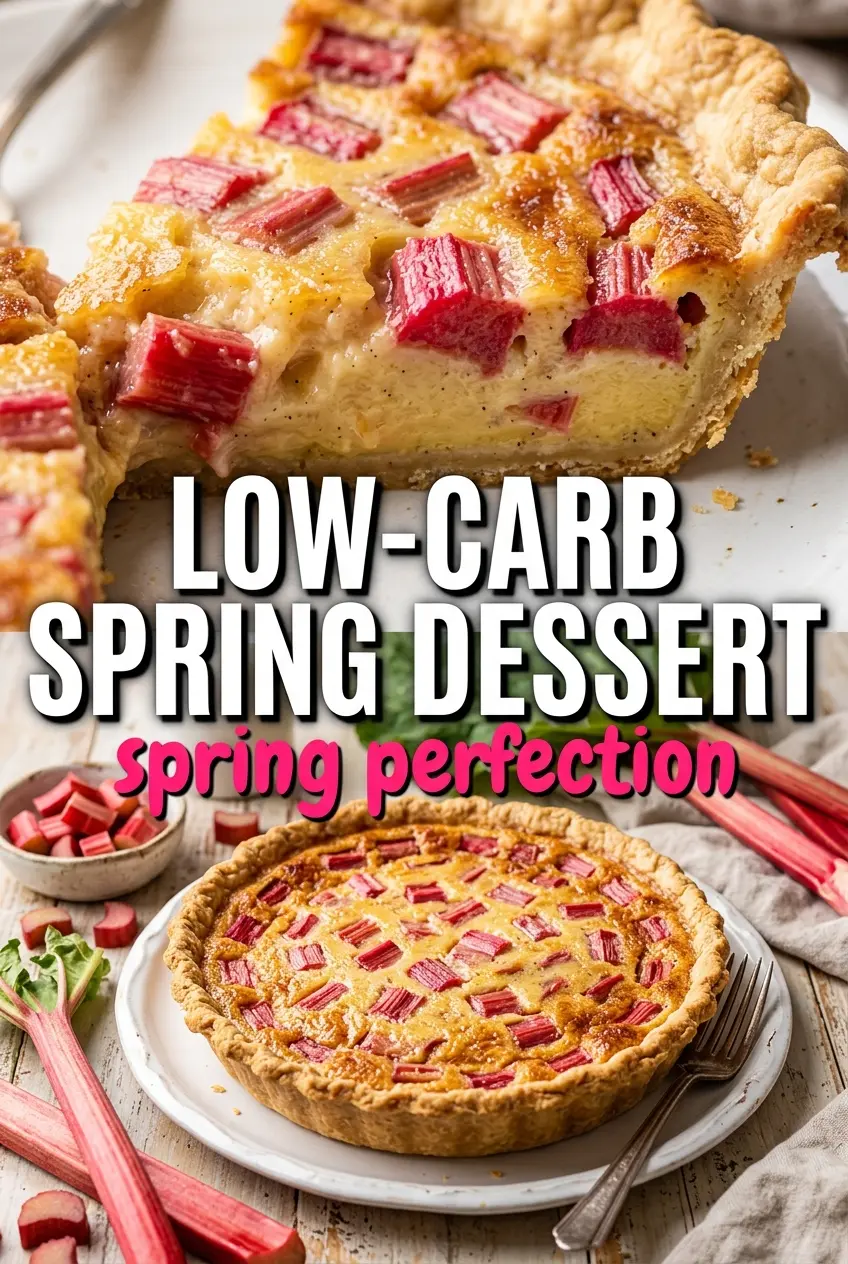
Keto Rhubarb Custard Pie
Ingredients
Equipment
Method
- Preheat the oven to 350°F and grease a 9-inch pie plate.
- Mix almond flour, melted butter, erythritol, and egg until a dough forms, then press it into the pie plate.
- Bake the crust for 10 minutes, until lightly set, then remove to hold for the filling.
- Arrange the diced rhubarb in an even layer over the baked crust.
- Whisk together erythritol, eggs, heavy cream, almond flour, vanilla extract, and salt until smooth.
- Pour the custard mixture over the rhubarb and bake for 40-45 minutes at 350°F, until set in the center and lightly golden.
- Cool the pie completely for at least 3 hours before slicing, so the custard firms up.
- Refrigerate and serve chilled for the cleanest keto custard texture.