Strawberry rhubarb custard pie comes out with the kind of slice that holds together at the plate but still gives you that soft, creamy center when the fork goes in. The fruit stays bright and tangy, the custard sets around it, and the flaky crust keeps every bite from feeling heavy. It’s the sort of pie that disappears quietly at the table because everyone is too busy reaching for a second slice.
What makes this version work is the balance between the fruit and the custard. Rhubarb brings the tart edge that keeps the filling awake, strawberries round it out with sweetness, and the eggs plus a little flour give the custard enough structure to slice cleanly after a long chill. The two-temperature bake matters here too: the higher heat helps the crust start setting and the filling rise, then the lower heat finishes the custard gently so it doesn’t curdle or crack.
Below you’ll find the timing that keeps the filling silky, the ingredient choices that matter most, and a few ways to adapt the pie without losing that creamy fruit-pie texture.
The custard set beautifully and the strawberries stayed juicy instead of disappearing into the filling. I chilled it overnight, and the slices came out clean with that perfect creamy middle.
Save this strawberry rhubarb custard pie for the kind of dessert that slices clean, chills beautifully, and shows off every pink-and-red bite.
The Reason This Custard Sets Cleanly Instead of Turning Soupy
The biggest mistake with fruit custard pies is rushing the filling or overloading it with juice. Strawberries and rhubarb both release liquid as they bake, and if the custard base is too thin, you end up with a loose center that never quite slices well. Here, the flour gives the eggs enough backbone to thicken properly without turning the filling dense or eggy.
The other detail that matters is cooling time. This pie needs a full chill so the custard can finish setting after it leaves the oven. If you cut it warm, the center will look underdone even if it’s actually close. Let the pie cool all the way down, and the texture turns from soft and shaky to creamy and stable.
- Eggs — These build the custard structure. There isn’t a perfect substitute if you want the same sliceable texture.
- All-purpose flour — Just enough to stabilize the filling. Don’t swap in cornstarch here unless you want a different, slightly glossier set.
- Heavy cream — It softens the custard and keeps the texture rich. Half-and-half works in a pinch, but the filling won’t be quite as lush.
- Rhubarb — Fresh rhubarb gives the sharp bite this pie needs. Frozen rhubarb works too; use it straight from frozen and expect a little extra liquid.
- Strawberries — Fresh berries hold their shape better than thawed ones. If yours are very sweet, the filling will taste rounder; if they’re pale, the rhubarb will stand out more.
Building the Filling So the Fruit Stays Distinct

- Pie crust — An unbaked crust is right for this pie because the filling bakes long enough to cook it through. If your crust tends to brown fast, set the pie on a lower oven rack.
- Fruit — Layer the diced rhubarb and sliced strawberries in the crust before adding the custard. That keeps the fruit distributed instead of floating to the top.
- Sugar — This does more than sweeten. It pulls the tartness of the rhubarb into balance and helps the custard taste smooth instead of sharp.
- Vanilla and salt — Vanilla rounds out the dairy and fruit, while the salt keeps the pie from tasting flat. Use real vanilla if you can, because the flavor shows up in a custard filling.
The Two-Temperature Bake That Protects the Custard
Start Hot to Set the Structure
The first 15 minutes at 400°F help the crust start baking and give the custard a quick lift. You’re looking for the edges to begin setting while the center still looks loose and glossy. If the oven is too cool at the start, the crust can go soggy before the filling firms up.
Lower the Heat and Let the Middle Finish Gently
After that first burst of heat, drop the oven to 350°F and bake until the center is set but still has a slight wobble. The middle should move like Jell-O, not slosh like liquid. If the top is browning too quickly, tent loosely with foil so the custard can finish without the crust overcooking.
Cool Until the Slice Holds Its Shape
This pie needs at least 3 hours at room temperature, and longer in the refrigerator if you want neater slices. The custard finishes tightening as it cools, so patience pays off here. Cut it too early and the filling will run; wait, and the slices come out clean with that creamy center intact.
Make It a Little More Tart
Increase the rhubarb by another half cup and keep the strawberries the same. The pie will taste brighter and a little less candy-sweet, which works well if your berries are especially ripe.
Dairy-Free Version
Use a full-fat canned coconut milk in place of the heavy cream. The filling will set, but it will taste a little less classic and carry a faint coconut note that works better with strawberries than with rhubarb alone.
Gluten-Free Crust Swap
Use your favorite gluten-free pie crust and keep the filling the same. The custard itself is naturally gluten-free if you use a certified GF flour blend or a starch-based thickener in place of the all-purpose flour.
Storage and Reheating
- Refrigerator: Store covered for up to 4 days. The custard stays nice and firm, though the crust softens a little after the first day.
- Freezer: This pie freezes better as whole or in slices wrapped tightly and stored for up to 1 month. Thaw in the refrigerator overnight; the texture is best chilled, not warm from frozen.
- Reheating: This pie is meant to be served cold or cool. If you want it slightly warmer, let a slice sit at room temperature for 15 to 20 minutes instead of microwaving it, which can split the custard.
Questions I Get Asked About This Recipe
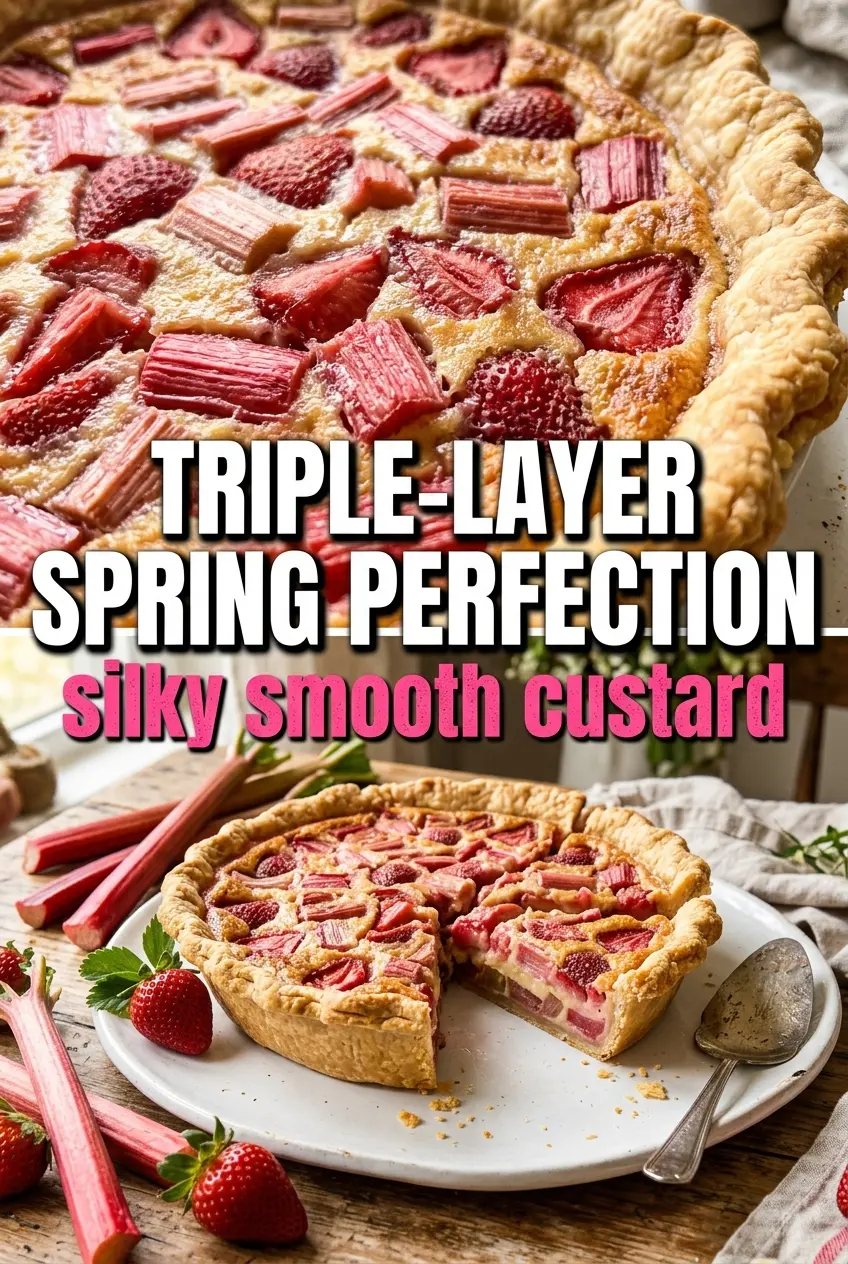
Strawberry Rhubarb Custard Pie
Ingredients
Equipment
Method
- Preheat the oven to 400°F and place the pie crust in a 9-inch pie plate (keep it level). Press gently into the corners so it holds fruit and custard.
- Arrange the rhubarb and strawberries in the bottom of the crust in an even layer. Spread them so fruit pieces are visible across the base.
- Whisk together the sugar, eggs, flour, heavy cream, vanilla extract, and salt until smooth and no dry flour remains. Stop when the mixture looks glossy like thin pudding.
- Pour the custard mixture over the fruit and tap the pie plate lightly to settle the filling. Use a spoon to nudge any fruit under the surface.
- Bake for 15 minutes at 400°F until the edges look set and slightly golden. The center may still jiggle when you gently move the pie.
- Reduce the heat to 350°F and bake for 35-40 minutes more until the custard is set. Look for a gentle wobble in the middle, not sloshing.
- Cool completely for at least 3 hours before slicing. The custard should firm up as it cools.
- Serve chilled. Add a whipped cream dollop on top for contrast to the pink fruit filling.