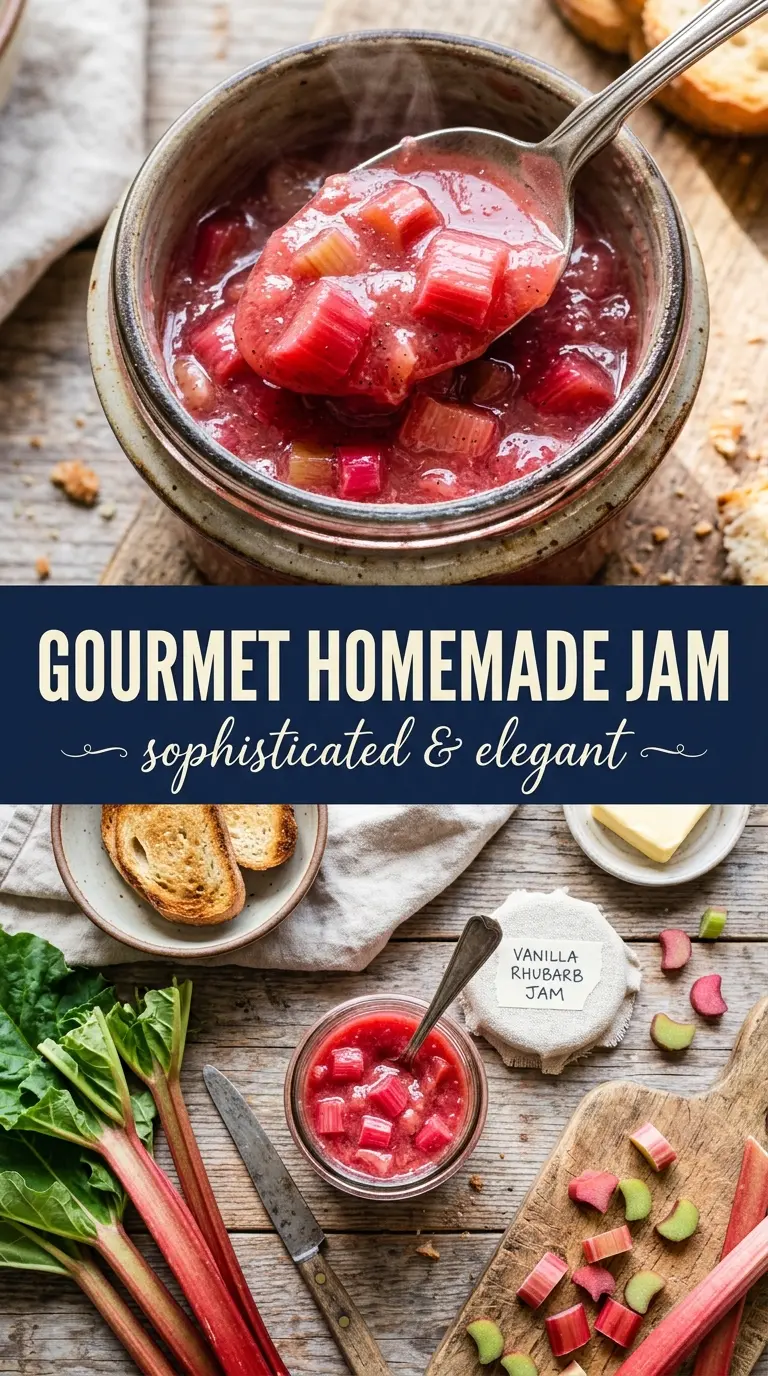
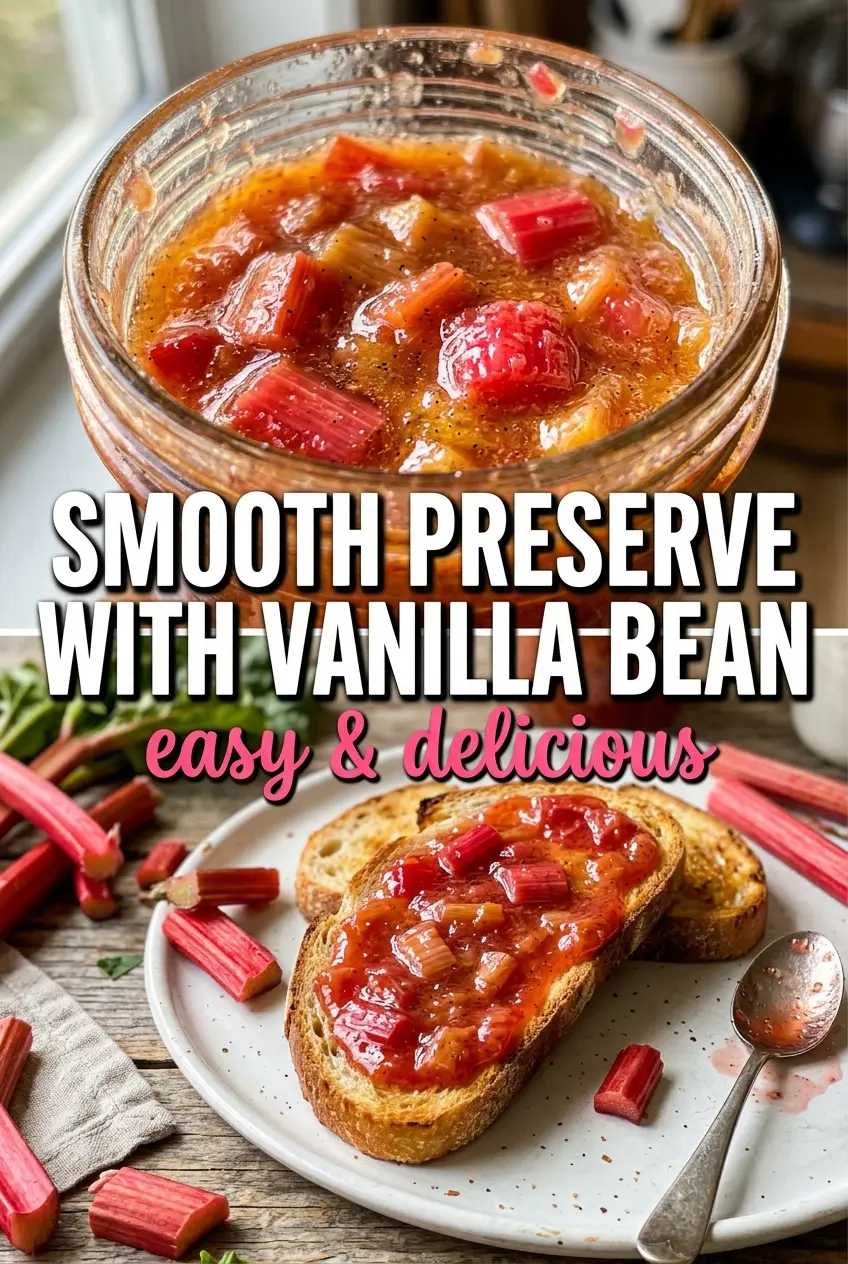
Ruby-pink vanilla-rhubarb jam sets into a spoonable, glossy preserve with just enough tang to keep the sweetness honest. The vanilla softens rhubarb’s sharp edge without hiding it, and the final texture lands right between soft-set and spreadable, which is exactly what you want on warm toast or a biscuit fresh from the oven.
What makes this version work is the sequence. The rhubarb goes in first so it can release juice, the pectin gets fully dissolved before the sugar hits, and the sugar is boiled hard for just long enough to activate the set without cooking the fruit into a dull, stringy jam. The vanilla bean does more than flavor the pot; those little black flecks tell you at a glance that this isn’t an ordinary rhubarb preserve.
Below you’ll find the small timing details that matter, plus a few notes on jar size, pectin, and how to tell when the boil has gone far enough. If you’ve ever ended up with rhubarb syrup instead of jam, this version will save you a few headaches.
The jam set up beautifully after the 24-hour rest, and the vanilla kept the rhubarb from tasting too sharp. I loved that it thickened into a spreadable jam instead of staying runny.
Want that ruby-pink vanilla-rhubarb jam set on your pantry shelf? Save it for the next time rhubarb shows up and you want a thick, glossy preserve with real vanilla flavor.
The Boil That Makes or Breaks Rhubarb Jam
The biggest mistake with rhubarb jam is rushing the boil or backing off too early. Rhubarb gives up a lot of water, and pectin won’t do its job unless the mixture reaches a hard, rolling boil after the sugar goes in. A lazy simmer leaves you with a loose preserve that never sets properly, no matter how long you leave it in the jars.
Once the sugar is in, the pot needs constant stirring and enough heat to keep the boil active across the whole surface. You want bubbles that keep breaking even when you stir through the center. If the boil dies down every time your spoon moves, the jam hasn’t reached the temperature and evaporation needed for a clean set.
- Rolling boil — This is the point where the jam starts to thicken for real. Don’t count on the pot looking syrupy yet; rhubarb jam often looks a little loose until it cools.
- One-minute hard boil after sugar — That short window activates the pectin and cooks off excess water without dragging the fruit into mush.
- 24-hour rest — The set happens after the jars cool. If you judge the texture too soon, you’ll think it failed when it hasn’t finished setting.
What the Vanilla Bean and Pectin Are Doing Here
- Fresh rhubarb — Fresh stalks give the cleanest tart flavor and the best color. Frozen rhubarb works in a pinch, but it tends to release more water, so expect a slightly longer boil before the set is right.
- Vanilla bean — This is where the jam gets its round, warm note and those visible flecks. Vanilla extract won’t give the same body or those specks, so if you swap it in, add it off heat at the end and know the flavor will be softer.
- Powdered pectin — This is what keeps the jam from turning into rhubarb sauce. Different brands behave similarly here, but don’t substitute a different type of pectin without checking the package directions, since the sugar and boil timing can change.
- Lemon juice — It sharpens the flavor and helps the pectin set consistently. Bottled lemon juice is fine for canning because the acidity is dependable.
How to Move from Fruit to Jars Without Losing the Set
Start the Rhubarb Base First
Combine the diced rhubarb, split vanilla bean, scraped seeds, and lemon juice in your pot before anything else. The fruit starts releasing juice right away, which helps the pectin dissolve evenly once it goes in. If the pieces are cut too large, they take longer to break down and the jam can cook unevenly, so keep the dice fairly small.
Dissolve the Pectin Before the Sugar Goes In
Stir in the powdered pectin and bring the mixture to a rolling boil, stirring constantly. This step matters because pectin needs direct heat and good movement to dissolve fully; if it clumps, you’ll get little stubborn bits in the finished jam. The pot should be bubbling all across the surface before you move on.
Give the Sugar a Hard, Fast Boil
Add the sugar all at once, then bring the pot back to a hard boil for exactly one minute while stirring. Don’t let the boil soften into a simmer, because that extra minute is where the set locks in. If foam rises on top, skim it off after removing the pot from the heat so the jars look clean and the texture stays smooth.
Fill, Process, and Wait for the Set
Ladle the jam into sterilized half-pint jars with 1/4-inch headspace, wipe the rims, and process them in a boiling water bath for 10 minutes. If you overfill the jars, the seals can fail, and if you under-process them, the preserves may not keep safely. Once the jars are out of the pot, leave them alone for 24 hours; moving them around early can interfere with the final set.
How to Adapt This Vanilla-Rhubarb Jam for Different Pantries
Use frozen rhubarb when fresh isn’t available
Frozen rhubarb works, but it sheds more liquid as it heats, so the jam may need a little more time at the boil before it reaches the right thickness. Thawing isn’t necessary; just measure it frozen and expect a softer, slightly longer cook.
Swap in vanilla extract if that’s what you have
A teaspoon or two of vanilla extract will give you the flavor, but not the speckled look or the deeper aroma of the bean. Add it after the pot comes off the heat so the flavor doesn’t cook away.
Make it lower sugar with caution
This version is built around a full sugar set, so cutting the sugar changes both texture and preservation. If you want a less sweet preserve, use a low-sugar pectin designed for that purpose and follow that package’s ratios instead of reducing the sugar here.
Storage and Reheating
- Refrigerator: Once sealed jars are opened, keep the jam refrigerated and use within 3 to 4 weeks. The texture stays best when you scoop it with a clean spoon each time.
- Freezer: This jam can be frozen in freezer-safe jars with headspace left at the top, though the canning step is no longer needed for freezer storage. Thaw it overnight in the fridge and expect the texture to soften a little.
- Reheating: Jam isn’t meant to be reheated like a sauce; if it thickens too much in the fridge, let the jar sit at room temperature for a few minutes or stir a spoonful into warm toast, oatmeal, or yogurt. Microwaving a full jar can overheat the edges and loosen the set.
Answers to the Questions Worth Asking
Vanilla-Rhubarb Jam
Ingredients
Equipment
Method
- Combine diced rhubarb, vanilla bean pod and seeds, and lemon juice in a large pot, then stir to combine.
- Stir in the powdered pectin and bring to a rolling boil over high heat, stirring constantly.
- Add the sugar all at once and return to a hard boil for 1 minute, stirring constantly.
- Remove from heat, skim off any foam, and remove the vanilla bean pod.
- Ladle the hot jam into sterilized half-pint jars, leaving 1/4-inch headspace.
- Process jars in a boiling water bath for 10 minutes.
- Let jars sit undisturbed at room temperature for 24 hours to set completely.