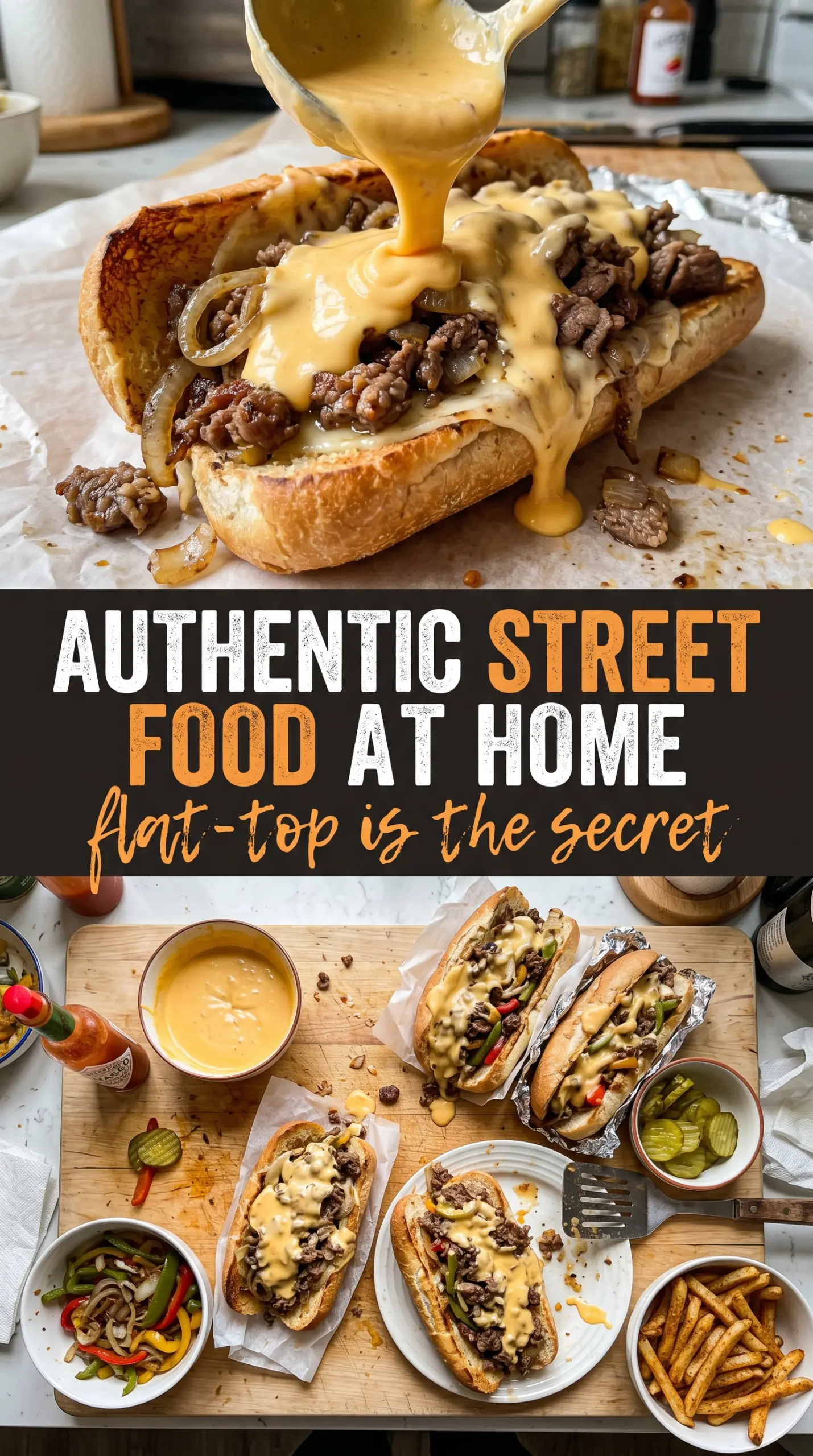
Blackstone Philly cheesesteak sandwiches hit the griddle with the kind of sizzle that tells you dinner is about to be worth every minute. Thin ribeye, sweet onions, softened peppers, and melted provolone pile into a toasted hoagie roll with enough juice to soak the bread without turning it soggy. The best part is the balance: the steak stays beefy and tender, the vegetables go jammy and sweet, and the roll gets just enough crunch to hold everything together.
The griddle changes the game here because it gives you space to cook the vegetables properly before the steak goes down. That matters. If you crowd everything at once, the onions steam, the steak throws off too much moisture, and you miss the deep browning that makes this sandwich taste like a real cheesesteak instead of just steak on bread. Ribeye is the right cut because it stays flavorful and tender even when sliced thin and cooked fast.
Below, I’m breaking down the one part people usually rush, the ingredient swaps that still work, and the little toast-and-fill trick that keeps the rolls from falling apart before the first bite.
The steak stayed tender, the peppers and onions got that sweet browned edge, and the provolone melted right over everything without getting greasy. Toasting the rolls on the griddle was the best part — it kept the sandwich from getting soggy.
Blackstone Philly cheesesteak sandwiches with melty provolone and toasted rolls are the kind of griddle dinner that disappears fast.
The Griddle Needs Space Before the Steak Goes On
The mistake that ruins most cheesesteaks is trying to cook everything together from the start. On a Blackstone, the vegetables need their own space long enough to lose their raw bite and pick up real browning. That caramelization is what gives the sandwich depth. If they’re pale and watery, they’ll steam the steak instead of supporting it.
Cook the onions and peppers first until the edges soften and pick up color, then move them aside before the steak hits the surface. That order matters because ribeye cooks fast and doesn’t need much time. The steak should be chopped as it cooks so it stays loose and easy to scoop into the rolls, not clumped into one heavy slab.
What Each Ingredient Is Actually Doing in This Sandwich
- Ribeye steak — This is the cut that gives you tenderness and real beef flavor in a fast cook. Slice it thin across the grain, and if it’s easier, chill it for 20 to 30 minutes first so you can get cleaner slices.
- Onions and green bell peppers — These add sweetness, texture, and the classic cheesesteak balance. Yellow or white onions work too, but green peppers give that familiar Philly-style bite.
- Provolone — It melts smoothly and blankets the steak without getting gluey. American cheese will melt even more aggressively, but provolone keeps the flavor a little cleaner and less salty.
- Hoagie rolls — The roll has to be sturdy enough to hold hot steak and melted cheese without collapsing. Soft sandwich bread won’t survive the filling; use a proper hoagie roll and toast the cut sides on the griddle.
- Butter for toasting — This gives the roll a crisp, rich surface that helps it stand up to the juicy filling. Mayo on the roll works too if you want extra browning and a little tang.
Building the Cheesesteak on the Griddle Without Losing the Juices
Cook the Vegetables Until They Taste Sweet
Heat the Blackstone to medium-high and add the oil, then spread out the onions and peppers in a thin layer. Let them sit long enough to brown at the edges before stirring, because constant flipping keeps them pale. When they soften and turn golden, move them to a cooler spot on the griddle or onto a plate. If they release a lot of liquid, keep cooking until that moisture cooks off or the sandwich will turn soggy.
Sear and Chop the Ribeye Fast
Add the sliced steak to the hot surface and season it with salt and pepper. Cook it for just a few minutes, chopping and turning with spatulas so the pieces stay bite-sized and tender. You want browned edges and no raw pink streaks, but not long enough for the meat to dry out. If the steak starts steaming instead of browning, the griddle is overloaded.
Let the Cheese Melt on Top of the Pile
Divide the steak into four portions, then top each one with the cooked vegetables and two slices of provolone. The cheese should soften and slump over the meat from the residual heat; if it isn’t melting, cover the pile with a dome or metal bowl for a minute. Don’t stack the cheese onto cold steak off the heat — it won’t melt evenly, and you’ll end up with rubbery slices instead of that gooey layer you want.
Toast the Rolls Before You Fill Them
Butter the hoagie rolls and place them cut-side down on the griddle until they’re golden and crisp. This is the difference between a sandwich that holds together and one that collapses halfway through eating. The inside should be lightly toasted, not hard like croutons. Spoon the cheesesteak mixture into the warm rolls, add mayo if you want it, and serve right away while the cheese is still stretching.
How to Adapt These Blackstone Cheesesteak Sandwiches for Different Eaters
Swap the provolone for dairy-free cheese
If you need a dairy-free version, use your favorite meltable plant-based slices and toast the rolls with oil instead of butter. The flavor will be a little less rich, but the texture still works if you let the cheese melt over the hot steak before filling the buns.
Use mushrooms for a heavier vegetable filling
Add sliced mushrooms with the onions and peppers if you want a deeper, earthier filling. They release moisture, so cook them until the pan dries out and the mushrooms start to brown before adding the steak.
Turn it into a gluten-free sandwich plate
Skip the hoagie roll and serve the steak, vegetables, and cheese over roasted potatoes, rice, or a gluten-free roll. The filling itself is naturally gluten-free as long as you check the cheese and any condiments for hidden additives.
Storage and Reheating
- Refrigerator: Store the steak, vegetables, and rolls separately for up to 3 days. The filling holds up better than a fully assembled sandwich.
- Freezer: The cooked steak and vegetables freeze well for up to 2 months. Thaw in the fridge overnight before reheating; don’t freeze the assembled sandwiches because the rolls turn soft and spongy.
- Reheating: Warm the filling in a skillet over medium heat or on the griddle until hot. Re-toast the rolls separately so they stay crisp, then assemble right before serving.
Answers to the Questions Worth Asking

Blackstone Philly Cheesesteak Sandwiches
Ingredients
Equipment
Method
- Heat the Blackstone griddle to medium-high and add the oil.
- Cook the onions and peppers until caramelized, about 8-10 minutes, then set aside.
- Season the steak with salt and pepper and cook for 3-4 minutes.
- Chop the steak while cooking with spatulas until bite-size pieces form.
- Divide the steak into 4 portions and top each with caramelized vegetables and 2 slices of provolone.
- Butter and toast the hoagie rolls on the griddle until golden.
- Scoop the steak mixture into rolls, add mayo if desired, and serve immediately.