Golden chicken breasts in garlic butter sauce hit that sweet spot between fast and worth repeating. The chicken gets a deep, savory crust first, then the pan turns into a glossy sauce with softened garlic, thyme, and a little lemon to keep the butter from feeling heavy. It’s the kind of skillet dinner that looks like you worked harder than you did.
What makes this version work is the order. The chicken sears before the sauce goes in, so you get browning instead of steamed chicken. Then the broth loosens the fond on the bottom of the pan and carries all that flavor back into the sauce. A short simmer keeps the garlic from turning harsh and gives the butter time to emulsify with the broth instead of separating.
Below you’ll find the little details that matter: how to keep the chicken juicy, when to pull the pan off the heat, and what to do if your garlic starts to color too fast. It’s a simple dinner, but the technique gives it real depth.
The sauce came together silky and clung to the chicken instead of pooling at the bottom. I added the lemon at the end like you said and the garlic stayed mellow, not bitter.
Save this garlic butter chicken for the nights when you want a pan sauce that tastes rich, garlicky, and finished in 30 minutes.
The Sear Is What Keeps This Chicken Juicy
Chicken breasts dry out when people rush the pan or chase the center temperature too aggressively. The goal here is a hard enough sear to build color, then a short finish that gets the chicken to 165°F without squeezing out every bit of juice. If the heat is too low, the chicken will pale and rubbery. If it’s too high and you keep flipping, the outside burns before the middle is done.
The skillet also matters. A heavy pan holds heat better, which means the chicken starts browning the moment it hits the oil. Let it sit until it releases on its own; that’s the sign the crust has formed. If it sticks, it’s not ready yet.
What the Garlic, Broth, and Butter Each Bring to the Pan

- Chicken breasts — Boneless breasts cook quickly and slice cleanly for serving. If yours are thick on one end, pound them to an even thickness so the thinner side doesn’t dry out while the thick side finishes.
- Butter — This is the body of the sauce, not just richness. Salted or unsalted both work, but if you use salted butter, ease up on seasoning the chicken at the start.
- Garlic — Fresh minced garlic gives the sauce its sharp, savory edge. Jarred garlic works in a pinch, but it’s softer and a little duller; the main thing is not to brown it, or the sauce turns bitter.
- Chicken broth — Broth pulls up the browned bits and turns the pan drippings into sauce. Water won’t do the same work, so use broth here even if it’s the inexpensive kind.
- Lemon juice — A small squeeze at the end keeps the butter sauce from tasting flat. Add it gradually and taste as you go; too much can overpower the garlic.
Build the Sauce After the Chicken Comes Out
Seasoning and Searing
Pat the chicken dry, then season it well with salt and pepper. Lay it in the hot oil and leave it alone for 6 to 7 minutes so the underside can turn deeply golden. Flip once and cook the second side until the chicken reaches 165°F in the thickest part. If the pan is crowded, the chicken will steam instead of sear, so use a large skillet.
Working the Garlic Without Burning It
Once the chicken is out, drop the heat to medium before the butter goes in. Garlic only needs a minute or two to turn fragrant, and if the pan is still ripping hot, it will scorch before the butter has a chance to mellow it. Stir constantly and watch for the moment the garlic turns glossy and aromatic, not browned.
Finishing the Pan Sauce
Pour in the broth and scrape the bottom of the skillet well. Those browned bits carry the best flavor in the dish, and they need the liquid to release cleanly. Let the sauce simmer for 2 to 3 minutes so it reduces slightly, then return the chicken and spoon the sauce over the top. Finish with lemon juice and parsley right before serving so the sauce stays bright.
Add a little cream for a richer sauce
Stir in 2 to 3 tablespoons of heavy cream after the broth simmers if you want a fuller, silkier sauce. The flavor gets rounder and a little softer, but the garlic won’t come through as sharply.
Use chicken thighs instead of breasts
Boneless thighs stay juicier and are more forgiving if you cook them a minute too long. They do need a few extra minutes in the skillet, and the finished dish will taste a little richer and more savory.
Make it dairy-free
Use a good plant-based butter with a clean flavor and keep the broth and lemon the same. The sauce won’t have quite the same roundness, but it will still coat the chicken well if you simmer it long enough to reduce.
Serve it over pasta, rice, or mashed potatoes
The sauce is thin enough to soak into starches, which is part of what makes this dinner feel complete. Pasta catches the garlic best, while mashed potatoes turn the whole dish into something closer to a comfort meal.
Storage and Reheating
- Refrigerator: Store leftovers for up to 3 days. The chicken stays good, but the sauce thickens in the fridge.
- Freezer: You can freeze it, but the butter sauce may separate a bit when thawed. Freeze in a sealed container for up to 2 months for best texture.
- Reheating: Reheat gently in a covered skillet over low heat with a splash of broth. High heat can make the chicken dry and can cause the sauce to break.
Answers to the Questions Worth Asking
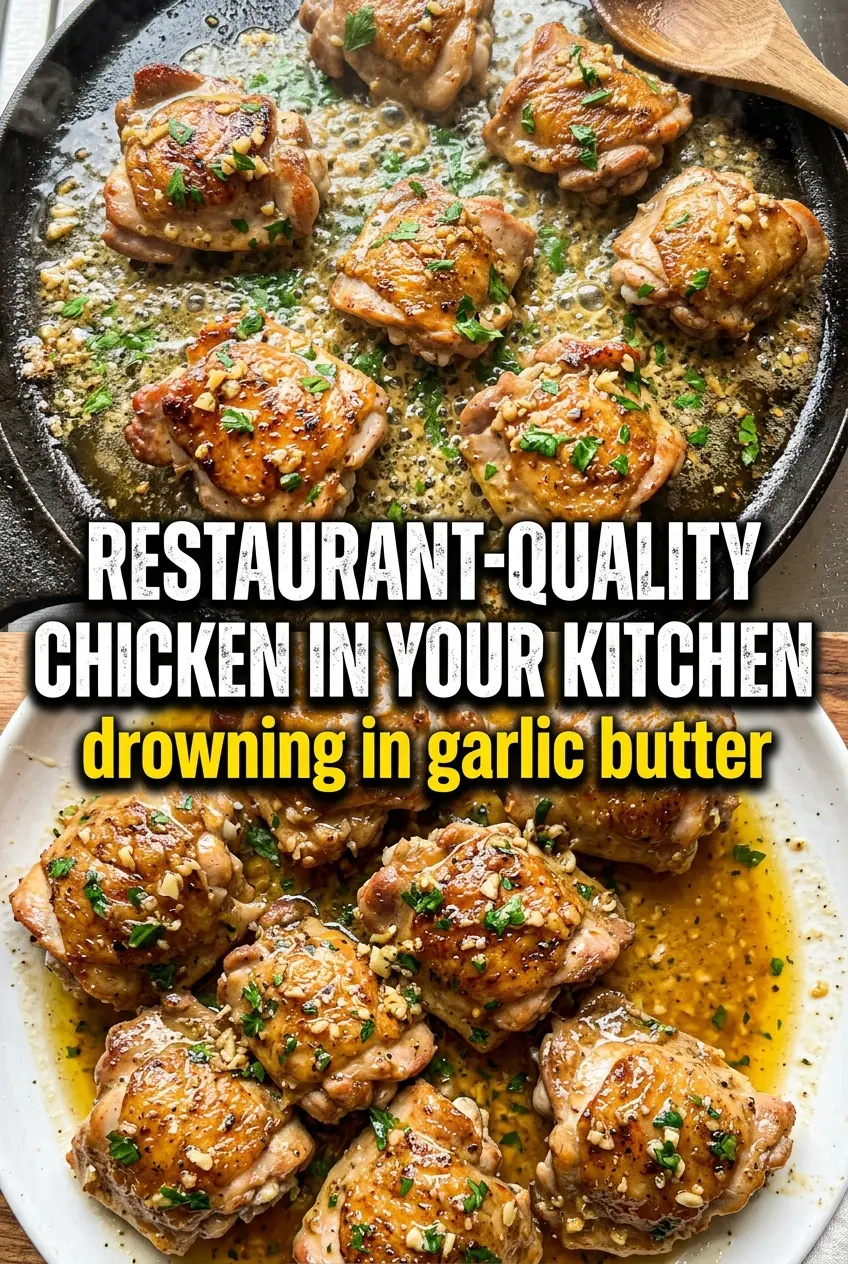
Garlic Butter Chicken
Ingredients
Equipment
Method
- Season the boneless chicken breasts generously with salt and pepper.
- Heat the olive oil in a large skillet over medium-high heat, then sear chicken for 6-7 minutes per side until golden and cooked through to 165°F.
- Remove the chicken and set aside, then reduce the heat to medium.
- Add the butter and garlic to the skillet and cook for 1-2 minutes until fragrant.
- Add the chicken broth and thyme, scraping up any browned bits from the pan, then simmer for 2-3 minutes.
- Return the chicken to the pan and spoon the garlic butter sauce over top.
- Add lemon juice to taste and sprinkle with fresh parsley, then serve immediately.