Rhubarb curd lands with that sharp, clean tang that wakes up a spoonful of yogurt, a warm scone, or a plain slice of cake. The texture is what keeps me coming back: smooth, glossy, and thick enough to hold its shape, but still soft enough to swoop onto toast without tearing it apart.
This version keeps the rhubarb flavor front and center by cooking the fruit down first, then straining it for a silkier finish. The butter goes in at the end, off the heat, which gives the curd that round, buttery finish without dulling the brightness. Egg yolks do the thickening, but low heat is what keeps them from scrambling.
Below, I’ve included the small details that matter most here: how to keep the curd smooth, what to do if it looks a little grainy, and a few ways to use it once it’s chilled.
The curd thickened up exactly when you said it would, and straining it made it unbelievably smooth. I spread it on warm scones and it tasted like something from a bakery.
Save this rhubarb curd for the next batch of scones, sponge cake, or anything that needs a bright pink tart-sweet topping.
The Trick to Keeping Rhubarb Curd Smooth Instead of Eggy
The biggest risk with fruit curd is pushing the heat too high once the yolks go in. Rhubarb brings plenty of water to the pan, but it doesn’t protect the eggs from curdling, so the mixture needs steady stirring over medium-low heat until it thickens gradually. If it starts looking grainy or speckled, the heat was too aggressive and the eggs tightened too fast.
Straining the cooked rhubarb before the yolks go in gives you a much cleaner texture. Rhubarb fibers can stay stringy even after they soften, and they show up in the final curd if you skip that step. The puree should be smooth enough to pour easily before you return it to the pan.
What Each Ingredient Is Actually Doing in the Bowl
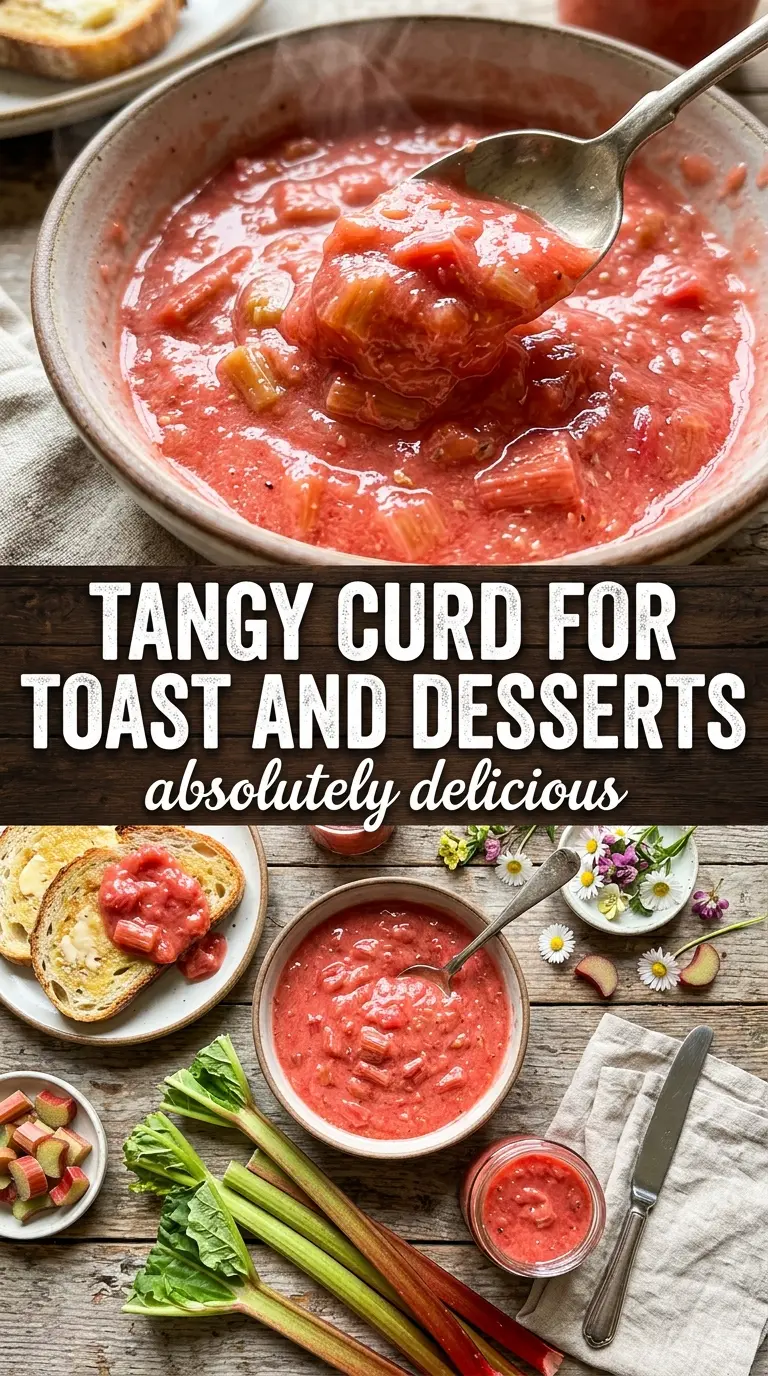
- Fresh rhubarb — This is the whole point of the curd. Fresh stalks cook down into a bright, tart puree with a clean flavor that frozen rhubarb can’t quite match as well, though frozen will work in a pinch if you thaw it first and drain off excess liquid.
- Sugar — It softens the sharpness of the rhubarb and helps the curd set with a smoother mouthfeel. The first half cooks with the fruit to encourage it to break down, and the rest goes in later to balance the tartness in the finished curd.
- Egg yolks — Yolks are the thickener here, and they give the curd its rich, custardy body. Whole eggs will set more firmly and taste less lush, so use yolks if you want that classic curd texture.
- Butter — Whisking in cubed butter off the heat makes the curd glossy and gives it that soft finish on the tongue. Use real butter here; it changes the texture in a way margarine can’t replicate.
- Salt — Just a pinch sharpens the fruit and keeps the sweetness from flattening out. It doesn’t make the curd salty, but it does make the rhubarb taste more vivid.
How to Cook It Without Scrambling the Yolks
Softening the Rhubarb
Start by cooking the chopped rhubarb with half the sugar until it falls apart and looks jammy, about 10 minutes. Stir often enough to prevent scorching on the bottom, especially once the fruit starts releasing its liquid and then reducing again. You want a spoon-tender mixture with no hard pieces left, because undercooked rhubarb makes the final curd less smooth even after blending.
Blending and Straining
Blend the softened rhubarb until it looks completely smooth, then push it through a fine-mesh sieve. Don’t skip the sieve if you want a silky curd; rhubarb strings and pulp will otherwise stay in the mixture. If the puree seems thick, press it through with the back of a spoon, but don’t force seeds or tough fibers through the mesh.
Cooking the Curd Base
Return the puree to the pan and whisk in the remaining sugar, egg yolks, and salt before heating it again. Keep the burner at medium-low and stir constantly, scraping the bottom and corners of the pan so nothing catches. The curd is ready when it coats the back of a spoon and leaves a clear line when you run a finger through it.
Finishing with Butter
Pull the pan off the heat before adding the butter cubes. Whisk until every piece melts and disappears, and the curd turns glossy and slightly lighter in color. If you add the butter over direct heat, the emulsion can split and the finish will look greasy instead of velvety.
How to Adapt Rhubarb Curd for Different Uses
Dairy-Free Version
Use a good plant-based butter with a higher fat content and add it off the heat the same way. The curd will still set, but it won’t have quite the same round, buttery finish, so lean a little harder on the chill time before judging the texture.
Strawberry-Rhubarb Curd
Replace one cup of the rhubarb with chopped strawberries. The curd turns sweeter and a little softer in flavor, with less of that sharp edge, so it works well if you want a gentler topping for pancakes or cake layers.
A Less Sweet, More Tart Finish
Cut the sugar by 2 to 3 tablespoons if your rhubarb is especially mild and you want a sharper curd. Don’t reduce it much farther, or the flavor gets aggressive and the texture can feel thinner because sugar also helps the curd hold together.
Storage and Reheating
- Refrigerator: Store in clean jars for up to 2 weeks. The curd will thicken as it chills and may look looser while warm than it does later.
- Freezer: It freezes well for up to 3 months. Leave a little headspace in the container because it expands slightly as it freezes, then thaw overnight in the refrigerator.
- Reheating: Rhubarb curd is best served chilled or at cool room temperature. If you want it softer for spreading, let it sit on the counter for 10 to 15 minutes rather than microwaving it, which can break the texture.
Answers to the Questions Worth Asking
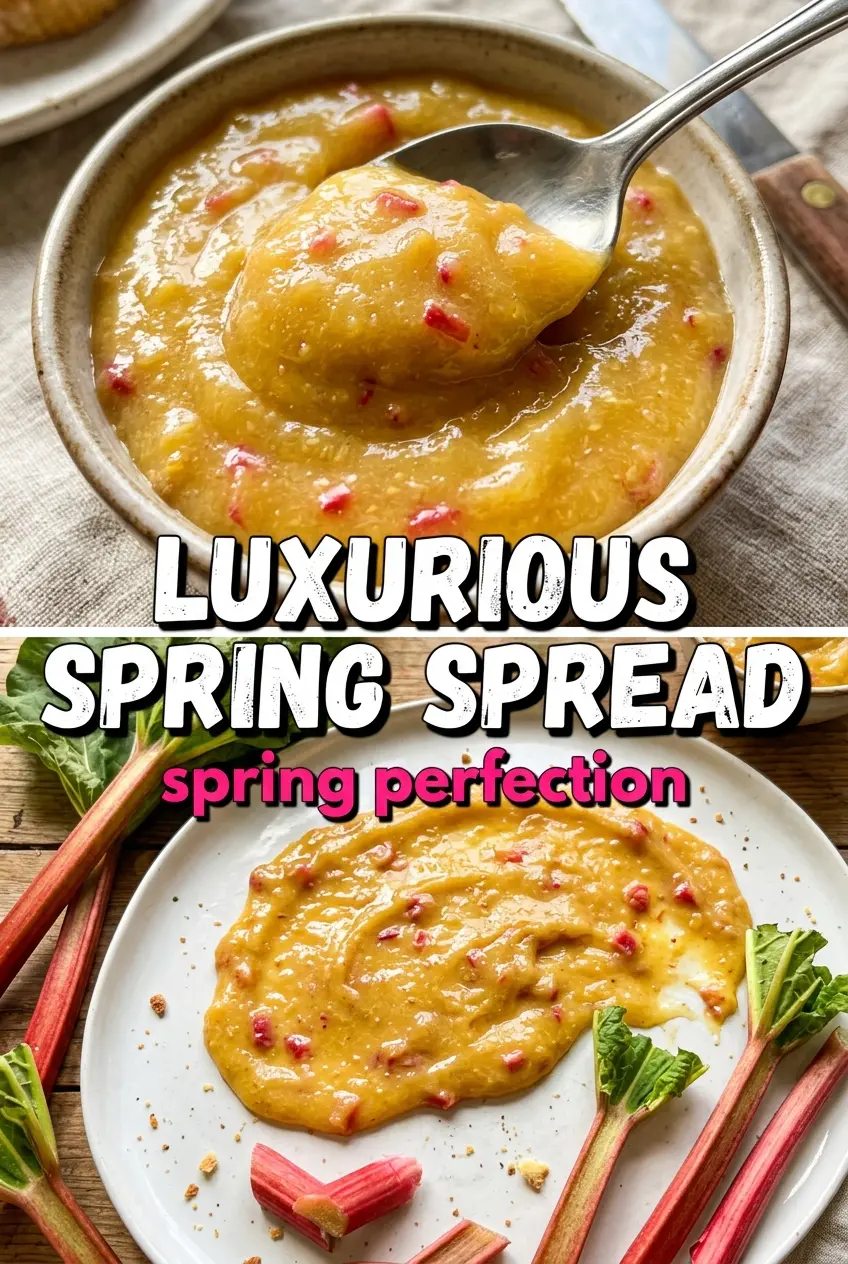
Rhubarb Curd
Ingredients
Equipment
Method
- Add chopped fresh rhubarb and 1/2 cup sugar to a saucepan and cook over medium heat until very soft, about 10 minutes, stirring occasionally so it breaks down evenly.
- Blend the cooked rhubarb mixture until smooth, then strain it through a fine-mesh sieve to remove any fibers and get a silky texture.
- Return the strained rhubarb puree to the saucepan and whisk in the remaining 1/2 cup sugar, egg yolks, and a pinch of salt.
- Cook over medium-low heat, stirring constantly, until the mixture thickens and coats the back of a spoon, about 8-10 minutes, keeping it at a gentle simmer so the yolks don’t scramble.
- Remove from heat and whisk in the cubed butter until fully melted and incorporated for a smooth, glossy curd.
- Pour the curd into clean jars, cover the surface with plastic wrap to prevent a skin, and refrigerate for at least 2 hours until set.