Thick, spoonable rhubarb butter is one of those small-batch condiments that earns its spot fast. It starts bright and tart, then cooks down into a smooth, pink spread with enough body to mound on a spoon and hold its shape on toast. The flavor lands somewhere between fruit preserve and apple butter, but with rhubarb’s sharper edge still intact, which keeps it from tasting flat.
The trick is patience. Rhubarb gives up a lot of water at first, so the early stage looks loose and almost soup-like. Keep cooking uncovered until the mixture has reduced enough to turn glossy and heavy, then blend it smooth and finish with the spices only after it has concentrated. That order matters: if you add the vanilla and spices too early, they can fade while the fruit cooks down.
Below, you’ll find the cue I watch for when the butter is done, plus the small adjustments that help if your rhubarb is especially tart or very pale. A little attention here gives you a jar that spreads cleanly and tastes like real rhubarb, not just sweetened fruit.
I cooked it until the spoon left a trail on the bottom of the pot, and the finished butter was smooth, not stringy at all. The cinnamon and vanilla gave the rhubarb a warmer flavor without hiding that tart edge.
Save this rhubarb butter for the days when you want a bright, spreadable fruit preserve with deep pink color and slow-cooked flavor.
The Part Where Rhubarb Stops Being Watery and Starts Becoming Butter
Rhubarb is full of water, and that’s the part that trips people up. If you stop cooking too early, you end up with a loose sauce instead of a spread, and it won’t thicken much more once it cools. The goal is to reduce the fruit until the bubbles look heavier, the foam settles down, and a spoon dragged across the bottom leaves a brief trail before the mixture fills in.
Cooking uncovered matters here. Covered pots trap steam and slow the reduction, which works against the whole point of fruit butter. The other mistake is rushing the blend before the rhubarb has softened enough; give it the full simmer so the final puree turns silky instead of fibrous.
What the Sugar, Vanilla, and Spices Are Really Doing Here
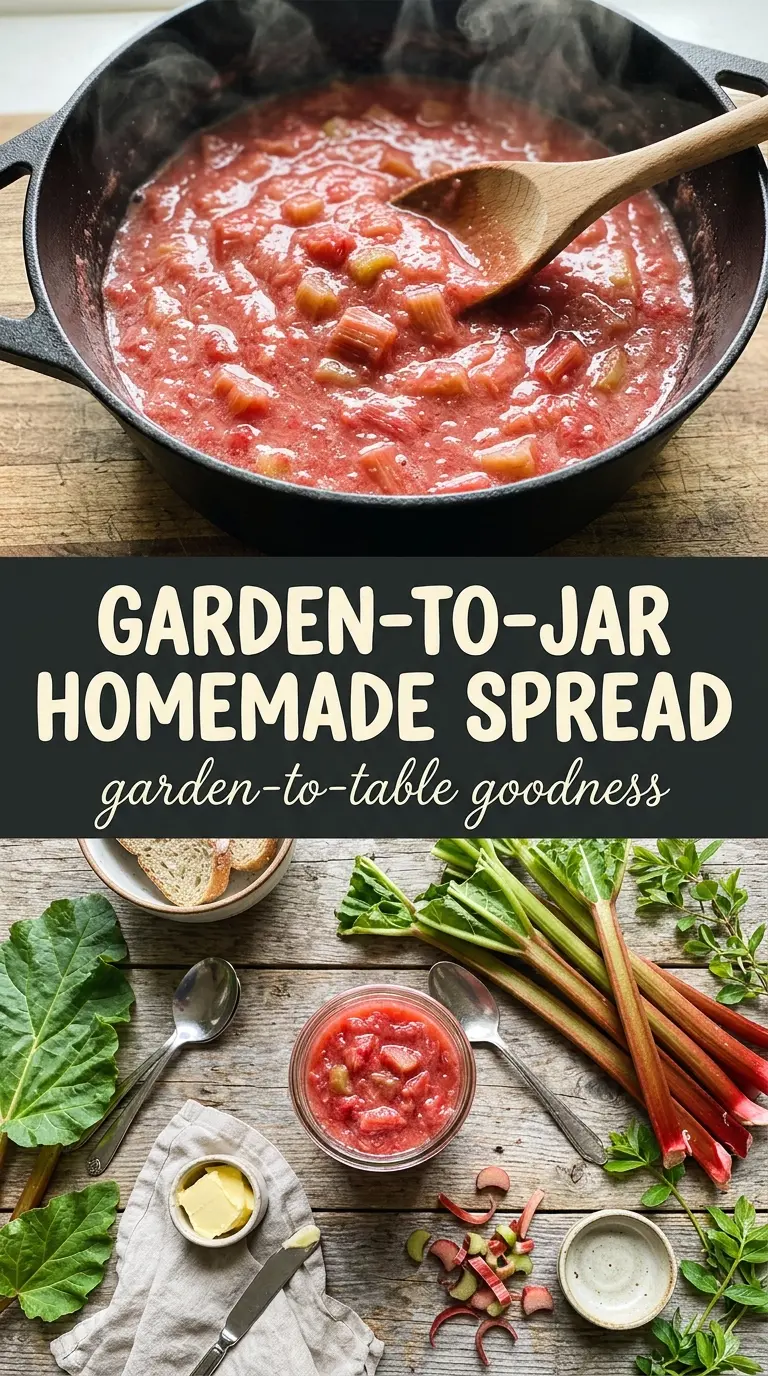
- Rhubarb — Fresh stalks give the brightest color and the cleanest tart flavor. Frozen rhubarb works in a pinch, but it softens faster and can release even more liquid, so expect a longer reduction.
- Sugar — This balances the tartness and helps the butter thicken. You can cut it a little if your rhubarb is mild, but too much reduction makes the final spread taste sharp and thin rather than rounded.
- Water — Just enough to help the mixture start cooking before the rhubarb breaks down. Don’t add extra unless the pot looks dry at the very beginning.
- Vanilla, cinnamon, and nutmeg — These turn the rhubarb from plain fruit puree into a finished condiment. Add them after blending so their flavor stays clean and warm instead of cooking off during the long reduction.
Getting the Purée Thick Enough to Mound on a Spoon
Starting the Cook
Combine the rhubarb, sugar, and water in a large, heavy pot and bring it to a boil over medium-high heat. As soon as it starts bubbling, lower the heat to a steady simmer. The pot should stay active without splashing; if it boils too hard, the bottom can scorch before the fruit breaks down.
Reducing the Fruit
Keep it uncovered and stir every few minutes, scraping the bottom well. At first the mixture will look loose and pale, then it will darken and thicken as the water cooks off. When the spoon starts moving through it with a little resistance, you’re in the right range. If it still pours like sauce, it needs more time.
Blending It Smooth
Use an immersion blender right in the pot, or blend in batches if you’re using a regular blender. The fruit should be soft enough to puree without any stringy bits left behind. If you skip the blending or rush it while the rhubarb is still chunky, the finished butter won’t have that plush, spreadable texture.
Finishing the Flavor and Final Reduction
Stir in the vanilla, cinnamon, and nutmeg, then keep cooking for 5 to 10 minutes more. This is the part where the mixture should start to mound instead of flow. Lift a spoonful and let it drop back into the pot; if it sits in a thick ribbon for a moment before settling, it’s ready.
Make It Brighter With Orange
Add 1 to 2 teaspoons of orange zest near the end of cooking for a sharper, more fragrant finish. It lifts the rhubarb without making the butter taste citrusy, and it works especially well if your stalks lean extra tart.
Lower-Sugar Version
You can reduce the sugar a bit, but expect a sharper, less jammy result and a slightly longer cook time. The butter will still thicken, but the flavor will stay more tart and the texture may need extra simmering to reach the same body.
Vegan and Gluten-Free as Written
This rhubarb butter already fits both diets without changes. Just check your vanilla extract and spices for anything added, then store it in clean jars so it keeps its best flavor in the fridge or water bath.
Storage and Reheating
- Refrigerator: Keeps up to 3 weeks in a sealed jar. It may firm up a little more after chilling, which is exactly what you want.
- Freezer: Freezes well for up to 6 months. Leave headspace in the jar or freeze in smaller portions so the expansion doesn’t crack the container.
- Reheating: No reheating is needed for serving, but if it gets too firm in the fridge, let it sit at room temperature for 10 to 15 minutes. Don’t microwave it hard or it can loosen unevenly and lose that thick spreadable texture.
Questions I Get Asked About This Recipe
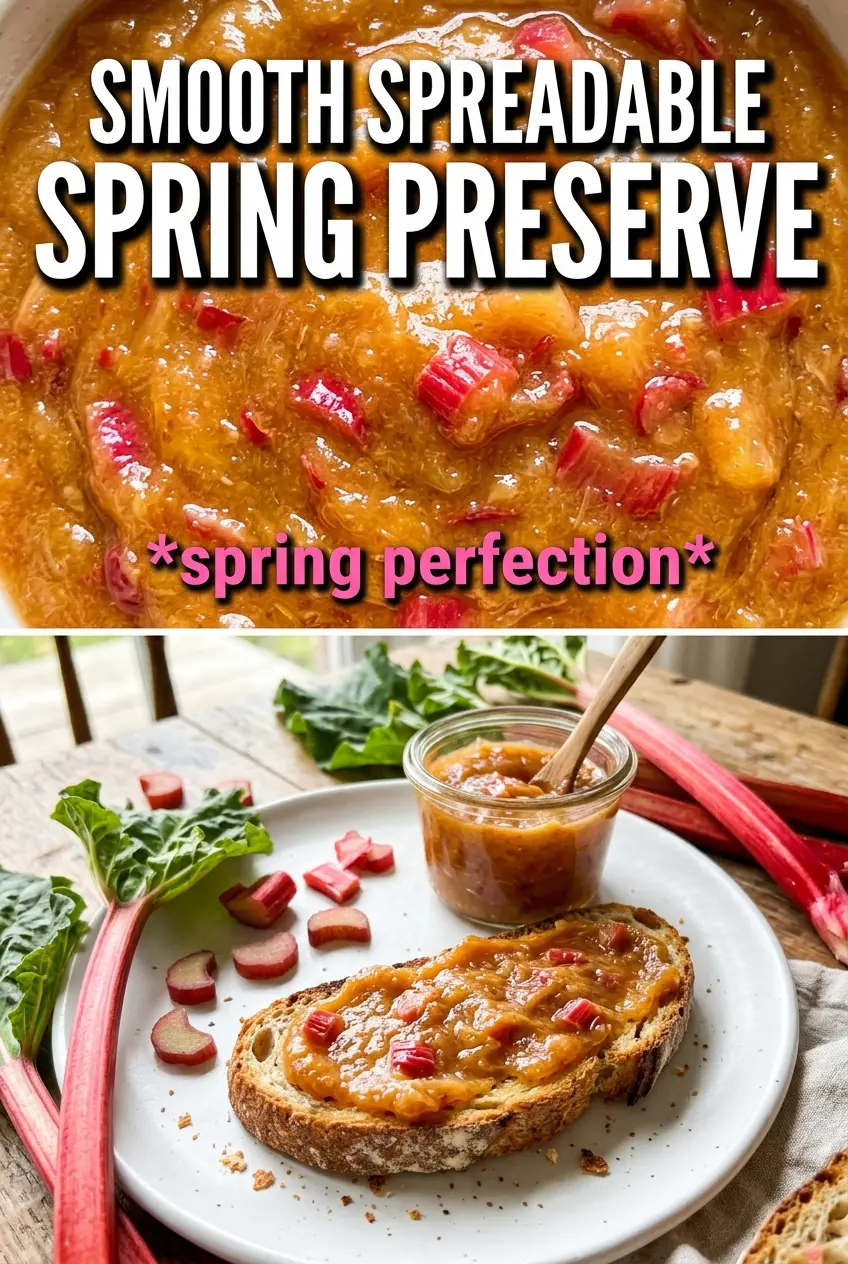
Rhubarb Butter
Ingredients
Equipment
Method
- Combine fresh rhubarb, sugar, and water in a large pot and bring to a boil over medium-high heat.
- Reduce heat to a gentle simmer and cook uncovered for 30-40 minutes, stirring occasionally, until the mixture is very thick.
- Use an immersion blender to puree the mixture until smooth (or transfer to a regular blender in batches).
- Stir in vanilla extract, cinnamon, and nutmeg, then continue cooking for 5-10 minutes until very thick and mounds on a spoon.
- Pour the hot rhubarb butter into sterilized jars, cool, and store in the refrigerator for up to 3 weeks or process in a water bath for longer storage.