Bright lime cake with a soft crumb and a tangy tequila-lime glaze has a way of disappearing fast, especially when the frosting gets that subtle salty edge that makes each bite taste colder, sharper, and more balanced. This isn’t a novelty cake that leans on the name alone. It tastes like a real margarita translated into dessert form, with enough citrus to wake up the butter and enough richness to keep the whole thing from turning thin or sharp.
The texture depends on a few small choices. Sour cream keeps the cake plush without making it heavy, and alternating the dry ingredients with the dairy keeps the batter from tightening up before it hits the oven. The tequila goes in both the cake and the frosting, but not in a way that overwhelms the lime; it just rounds out the citrus and gives the frosting that unmistakable cocktail note.
Below, I’ll walk through the part that matters most: how to keep the crumb tender and the glaze smooth, plus the small finishing details that make the salt rim work instead of feeling gimmicky.
The cake stayed unbelievably moist for two days, and the lime-tequila frosting set up perfectly without sliding off the sides. The salted plate rim was such a good touch — it made each bite taste exactly like a margarita, just softer.
Love the lime-salty finish on this Margarita Cake? Save it to Pinterest for the next time you want a citrus dessert with a cocktail twist.
The Reason the Salt Rim Belongs on the Plate, Not Just the Frosting
A lot of cocktail cakes borrow the name and stop there. The part that makes this one work is balance: the lime in the cake needs sugar, the tequila needs fat, and the salt needs a place to land without turning the whole slice into a gimmick. That’s why the rim is best kept subtle and mostly on the serving plate. You want a hint of salt in a bite, not a crust that dominates every forkful.
The other thing that matters here is the glaze and frosting timing. If the cake is even a little warm, the buttercream softens too fast and the plate rim starts to dissolve. Let the cake cool all the way through, then frost, then add the garnish right before serving. That keeps the finish sharp and clean.
What Each Ingredient Is Actually Doing in This Cake
All-purpose flour gives the cake enough structure to hold the glaze and frosting without turning bready. Cake flour would make it softer, but it would also leave less backbone under the tequila and citrus. The baking powder does the lifting, but not in a dramatic way; the goal is a tender crumb with a fine, even rise.
- Sour cream — This is what keeps the crumb moist and gives the cake a little tang that plays well with lime. Plain full-fat Greek yogurt can stand in, but the cake will taste slightly firmer and a bit less rich.
- Fresh lime juice and zest — Zest gives you the aromatic lime note; juice gives the sharpness. Bottled juice tastes flat here, so fresh lime is the place where quality matters.
- Tequila — The tequila doesn’t make the cake boozy. It adds the floral, peppery note people recognize from a margarita. Use a blanco tequila for the cleanest flavor, and don’t overpour or it can thin the batter.
- Butter — Softened butter in both the cake and frosting gives you body and a smooth finish. Cold butter won’t cream properly, and melted butter changes the texture completely, making the cake denser.
- Powdered sugar — This sweetens the frosting and gives it the structure to spread cleanly. If your frosting feels loose, add a little more sugar rather than more liquid, because extra lime juice can push it past the point where it holds its shape.
Building the Batter So the Crumb Stays Tender
Creaming the Butter and Sugar Until It Looks Pale
Start with butter that gives slightly when pressed, not butter that’s greasy or melting. Beat it with the sugar until the mixture turns lighter in color and looks fluffy around the edges of the bowl. That air you build here helps the cake rise without leaning on extra flour. If you stop too early, the cake bakes up tighter and the lime flavor can feel heavy instead of bright.
Adding the Eggs and Dry Ingredients in the Right Order
Beat in the eggs one at a time so the batter stays smooth and doesn’t look curdled. Once the eggs are in, alternate the flour mixture with the sour cream, beginning and ending with flour. That order protects the emulsion and keeps the batter from breaking, which is the easiest way to end up with a dense cake. Stop mixing as soon as the flour disappears; overmixing after the dry ingredients go in makes the crumb tougher.
Finishing with Lime and Tequila
Stir in the lime juice, tequila, and zest at the end so the citrus stays fresh and fragrant. The batter will look a little looser once those go in, and that’s normal. Pour it into the pan right away so the baking powder keeps working in the oven instead of on the counter.
Baking to the Point of Doneness, Not Past It
Bake until the top springs back when touched lightly and a toothpick comes out clean or with a few moist crumbs. If you wait until the center is dry, the cake will lose the soft, plush texture that makes it worth serving. Let it cool completely before frosting, because warm cake melts the buttercream and turns the finish messy.
How to Adapt This for Different Diets and Different Occasions
Make it dairy-free
Use a plant-based butter with a neutral flavor and swap the sour cream for a thick dairy-free yogurt. The cake will still be tender, though the frosting may need a little extra powdered sugar to hold its shape. Pick a dairy-free butter that creams well, since some spreads stay too soft for a stable frosting.
Skip the alcohol
Replace the tequila with an equal amount of milk or extra lime juice plus a little extra zest. You’ll lose the margarita edge, but the cake will still taste bright and citrusy. If you use only more lime juice, the frosting can turn thin, so keep the replacement balanced.
Turn it into cupcakes
This batter works well as cupcakes, and they’ll bake faster, usually in about 18 to 22 minutes. Fill the liners only two-thirds full so the tops stay rounded instead of spilling over. Cupcakes lose a little of the dramatic plate-rim effect, but they’re easier to serve at a party.
Storage and Reheating
- Refrigerator: Store covered for up to 4 days. The frosting will firm up, and the lime flavor gets a little sharper after the first day.
- Freezer: Freeze unfrosted layers tightly wrapped for up to 2 months. Frosting can be frozen separately, but the texture is better when you whip it again after thawing.
- Reheating: Bring slices to room temperature before serving. Microwaving softens the frosting too much and dulls the citrus, so room-temp is the better call for this cake.
Answers to the Questions Worth Asking
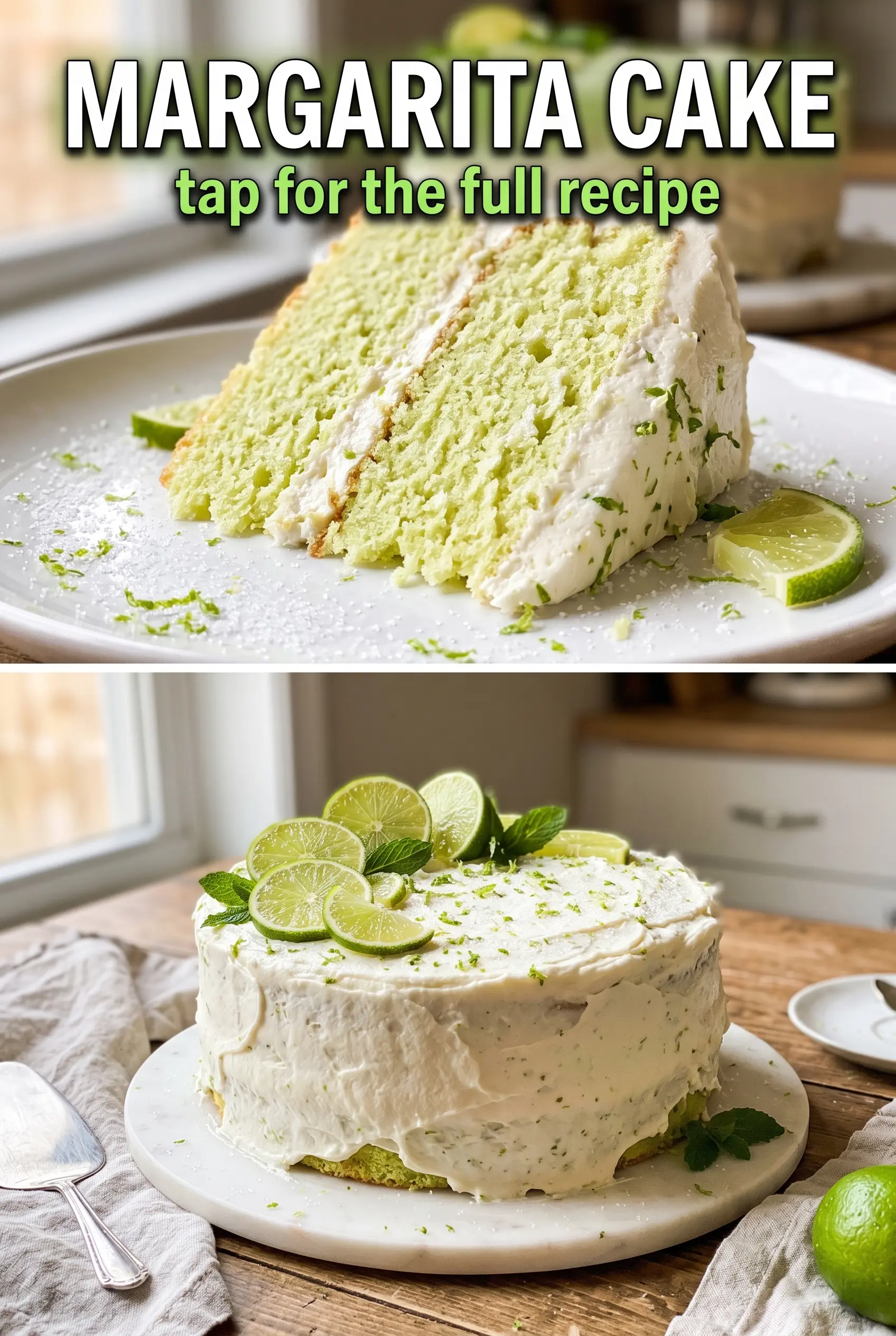
Margarita Cake
Ingredients
Equipment
Method
- Preheat the oven to 350°F and grease a 9-inch round cake pan to prevent sticking.
- Whisk together all-purpose flour, baking powder, and salt until evenly combined and no dry pockets remain.
- Cream softened unsalted butter and granulated sugar until light and fluffy, about 2-3 minutes, scraping the bowl as needed.
- Beat in eggs one at a time, then alternate adding the flour mixture and sour cream, beginning and ending with flour to keep the batter smooth.
- Stir in fresh lime juice, tequila, and lime zest until the batter looks evenly speckled with zest.
- Pour batter into the prepared cake pan and bake at 350°F for 25-30 minutes, until a toothpick comes out clean.
- Allow the cake to cool completely before frosting, about 2 hours.
- Beat together softened butter, powdered sugar, fresh lime juice, and tequila until light and fluffy for a spreadable frosting.
- Frost the cooled cake with the margarita frosting, smoothing the top and sides evenly.
- Rim the serving plate with salt for the margarita look and garnish the cake with lime wheels and fresh mint before serving.