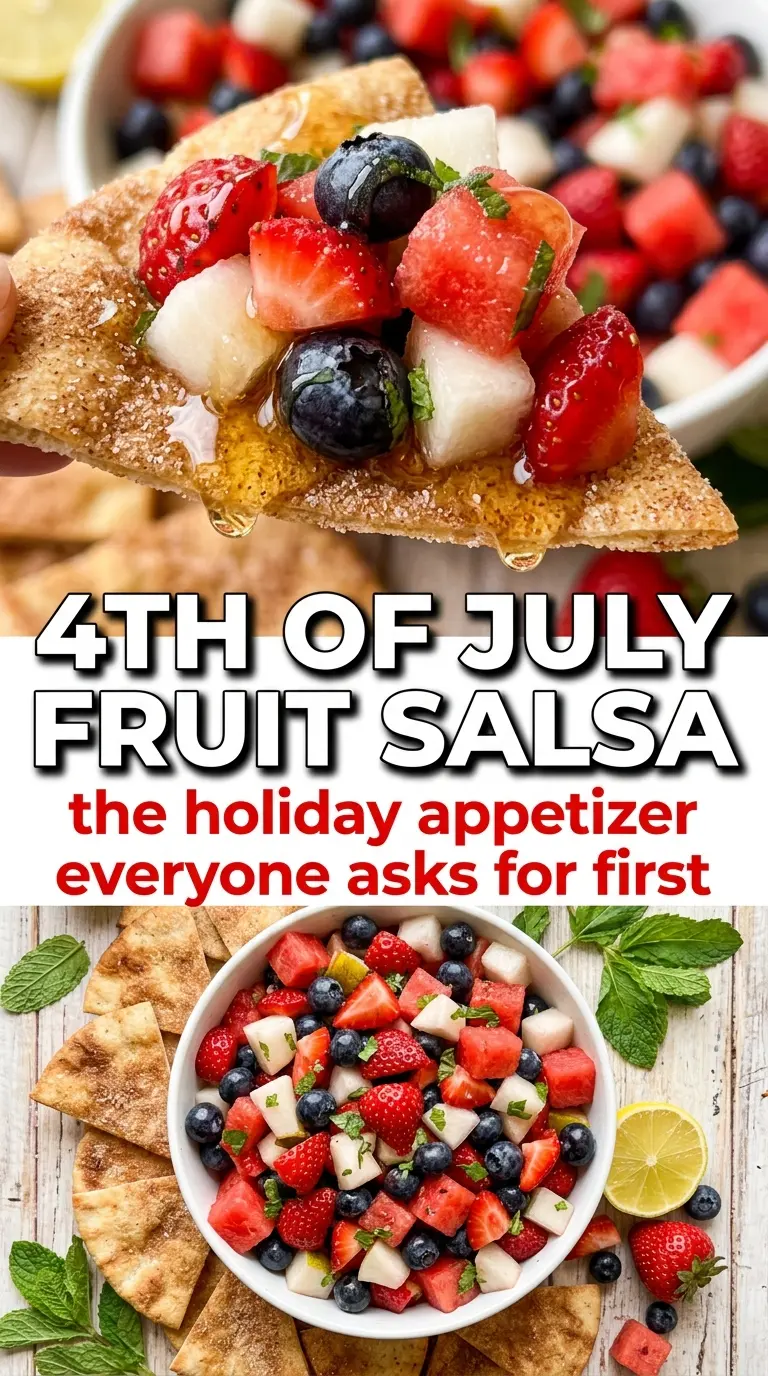
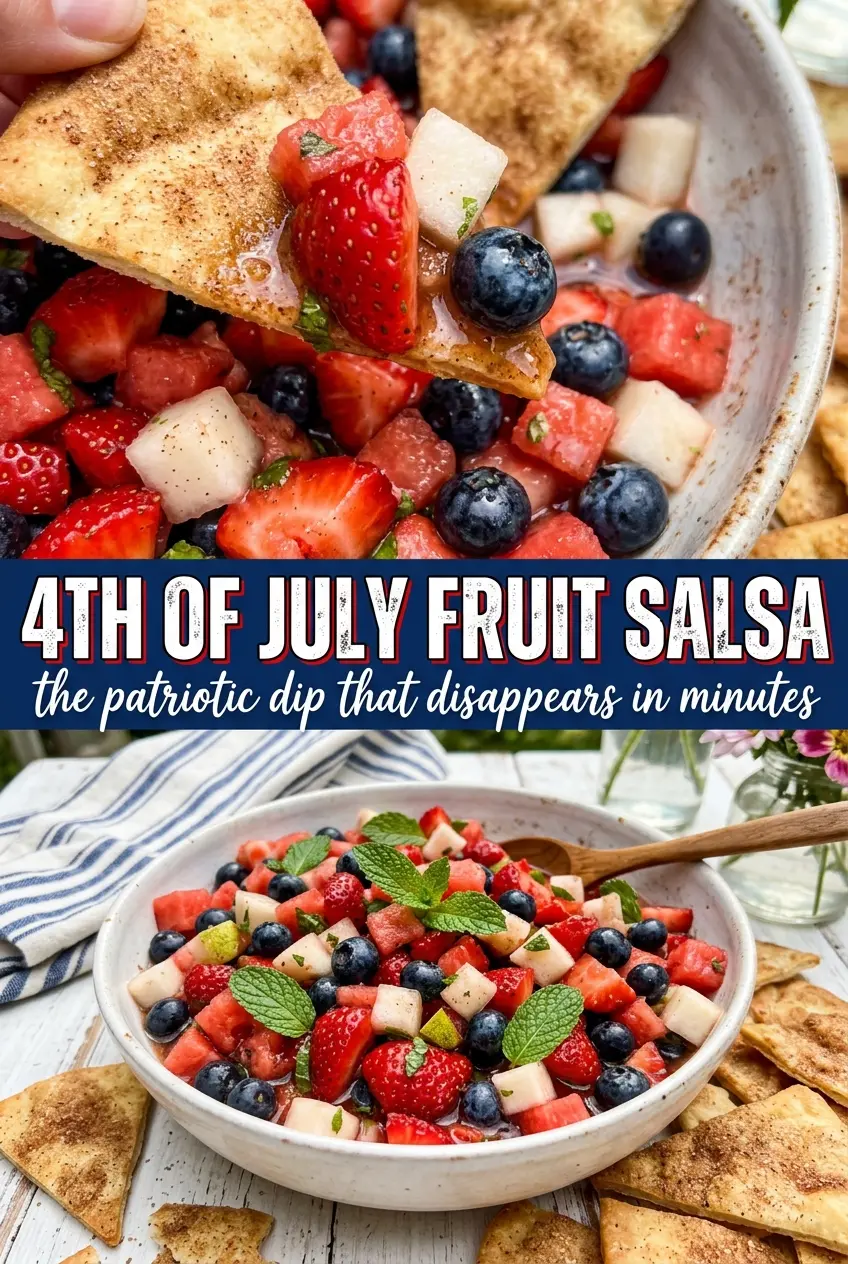
Bright, juicy fruit salsa turns into the kind of appetizer people hover over without realizing they’ve had three helpings. The strawberries and white peaches soften just enough in the honey-lime syrup to taste glossy and plush, while the blueberries stay whole and give each bite a pop of freshness. Served with cinnamon sugar chips, it lands somewhere between snack, dessert, and the first thing gone from the table.
The trick here is cutting the fruit small and even so the salsa eats like a scoopable dip instead of a bowl of mixed fruit. A short chill time matters too: it gives the honey, lime, and mint time to pull juices from the fruit without turning everything watery. The result is bright, balanced, and sturdy enough to sit out through a party without collapsing in on itself.
Below, I’ve included the one texture detail that keeps this from getting soggy, plus a few smart swaps if you want to use what’s already in the fridge. It’s the kind of recipe that looks festive on the table but takes almost no effort once the fruit is cut.
The honey-lime syrup soaked in just enough after chilling, and the mint made it taste fresh instead of overly sweet. I served it with cinnamon chips and the bowl was empty in minutes.
Like this red, white, and blue fruit salsa? Save it to Pinterest for the party tray that disappears fast with cinnamon sugar chips.
The Small Cut That Keeps Fruit Salsa Spoonable Instead of Soupy
Fruit salsa falls apart when the pieces are too large or uneven. Big chunks don’t release their juices evenly, so you end up with a bowl that looks pretty at first and then turns into a puddle around the edges. Finely dicing the strawberries and peaches gives you a scoopable texture that clings to the chips instead of sliding off them.
The other piece people miss is the rest time. Thirty minutes in the fridge is enough for the honey, lime, and mint to pull the fruit together without breaking it down. If you leave it much longer, the fruit softens too far and the salsa loses that fresh, clean bite that makes it work in the first place.
- Strawberries — Dice them small so they blend into the salsa instead of overpowering each bite. If they’re very juicy, pat them dry after hulling and chopping.
- White peaches or nectarines — These bring sweetness and a soft, fragrant texture. If they’re firm, let them sit at room temperature first so they cut cleanly and don’t crumble.
- Blueberries — Keep them whole for contrast. They add little bursts of tartness and help the salsa look sharp and festive.
- Honey, lime juice, and lime zest — This is the part that makes the fruit taste finished. Bottled lime juice works in a pinch, but fresh lime juice and zest give the salsa a brighter edge and keep it from tasting flat.
- Fresh mint — Use it sparingly and chop it fine. Too much mint can take over, but the right amount lifts the fruit and keeps the salsa from reading like dessert.
What Each Ingredient Is Actually Doing in This Recipe
- Primary ingredient (the star) — This carries the main flavor and defines the dish. Quality matters here.
- Base sauce or cooking medium (the carrier) — This brings all flavors together and keeps the dish from being dry.
- Aromatics (onion, garlic, ginger) — These add depth and complexity. They mellow and become sweet when cooked.
- Seasonings (salt, spices, herbs) — These define the personality and prevent the dish from tasting one-dimensional.
- Vegetables (nutrition and texture) — These add freshness and color. Cut to size so they cook evenly.
- Acid (lemon, vinegar, tomato, wine) — This brightens the dish and prevents it from tasting heavy or flat.
- Fat (oil, butter, cream) — This carries flavors and creates a satisfying mouthfeel. Don’t skip it.
- Proper technique (heat, time, temperature) — The right method turns good ingredients into great food. Follow the instructions carefully.
How to Build the Fruit Base So It Stays Bright
Cutting the Fruit the Right Size
Start by dicing the strawberries and peaches into small, even pieces. You want each spoonful to catch a little of everything, not a few oversized chunks that fall apart under the chips. If the peaches are very ripe, use a sharp knife and work gently so you don’t crush the flesh before it even reaches the bowl.
Coating Without Crushing
Add the blueberries, honey, lime juice, lime zest, and mint, then stir with a light hand. The goal is a glossy coating, not fruit jam. If you stir hard, the strawberries will smear and the blueberries will burst, which makes the salsa watery and muddy instead of jewel-like.
Chilling for the Right Amount of Time
Cover the bowl and refrigerate it for 30 minutes. That short chill lets the honey dissolve into the fruit juices and gives the lime time to sharpen the flavor. If you skip this step, the salsa tastes scattered; if you chill it for hours, the fruit softens too much and the texture starts to go flat.
Serving With the Right Scoop
Stir once before serving and spoon it into a clean bowl so the juices redistribute evenly. Serve it with cinnamon sugar pita chips or graham crackers that can stand up to the moisture. Thin, delicate crackers get soggy fast, and this salsa deserves a chip that can actually carry it.
How to Adapt This for Different Fruit, Dairy-Free Needs, or a Bigger Crowd
Swap in what’s ripe and in season
If peaches aren’t at their best, use nectarines, mango, or even diced strawberries and kiwi for a different look. The key is keeping the pieces firm enough to hold shape after chilling. Softer fruit adds more juice, so cut it slightly larger if you want the salsa to stay textured.
Make it vegan
Use maple syrup instead of honey if you need a fully vegan fruit salsa. Maple gives a deeper sweetness than honey, so start with the same amount and taste before adding more. It changes the character a little, but the lime still keeps everything bright.
Make it ahead for a party
You can dice the fruit a few hours ahead and store it separately, then mix in the honey, lime, and mint about 30 minutes before serving. That keeps the texture fresh and prevents too much liquid from collecting in the bowl. If you assemble it too early, the strawberries soften first and the whole salsa starts leaning watery.
Storage and Reheating
- Refrigerator: Store the salsa in an airtight container for up to 2 days. The fruit softens and releases more liquid as it sits, so it’s best on day one.
- Freezer: Don’t freeze it. The fruit turns mushy once thawed and the texture loses everything that makes this recipe work.
- Reheating: No reheating needed. Just stir well before serving and, if there’s excess juice, drain off a spoonful before plating so the chips don’t get soggy.
Questions I Get Asked About This Recipe
4th of July Fruit Salsa
Ingredients
Method
- Dice the strawberries and peaches into small, uniform pieces, then place them in a medium bowl with the blueberries.
- Add the honey, fresh lime juice, lime zest, and chopped mint, then stir gently to combine without mashing the fruit.
- Cover and refrigerate the bowl for 30 minutes so the flavors meld and juices release.
- Stir once more before serving, then transfer to a serving bowl and serve with cinnamon sugar pita chips or graham crackers.