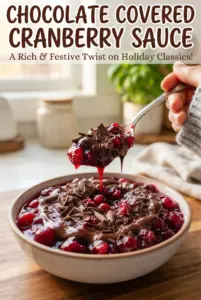
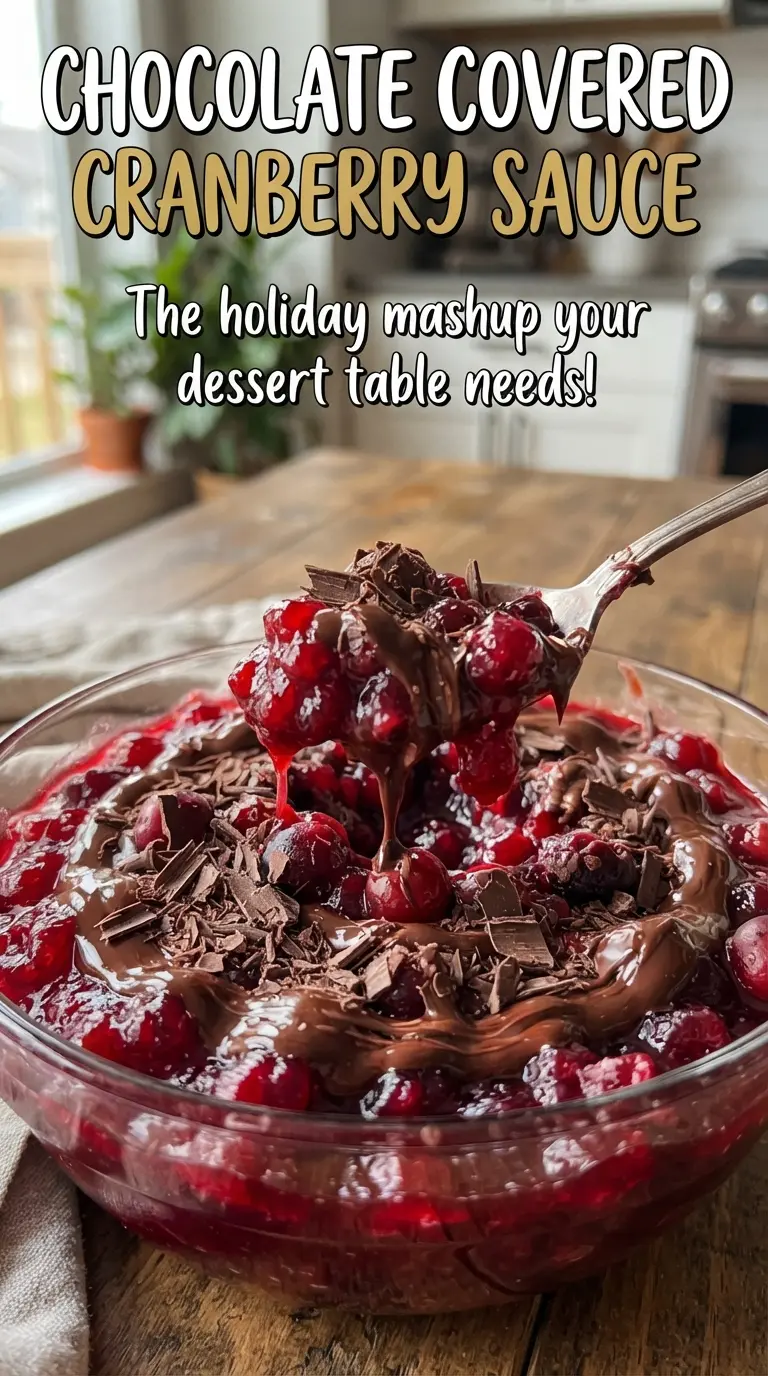
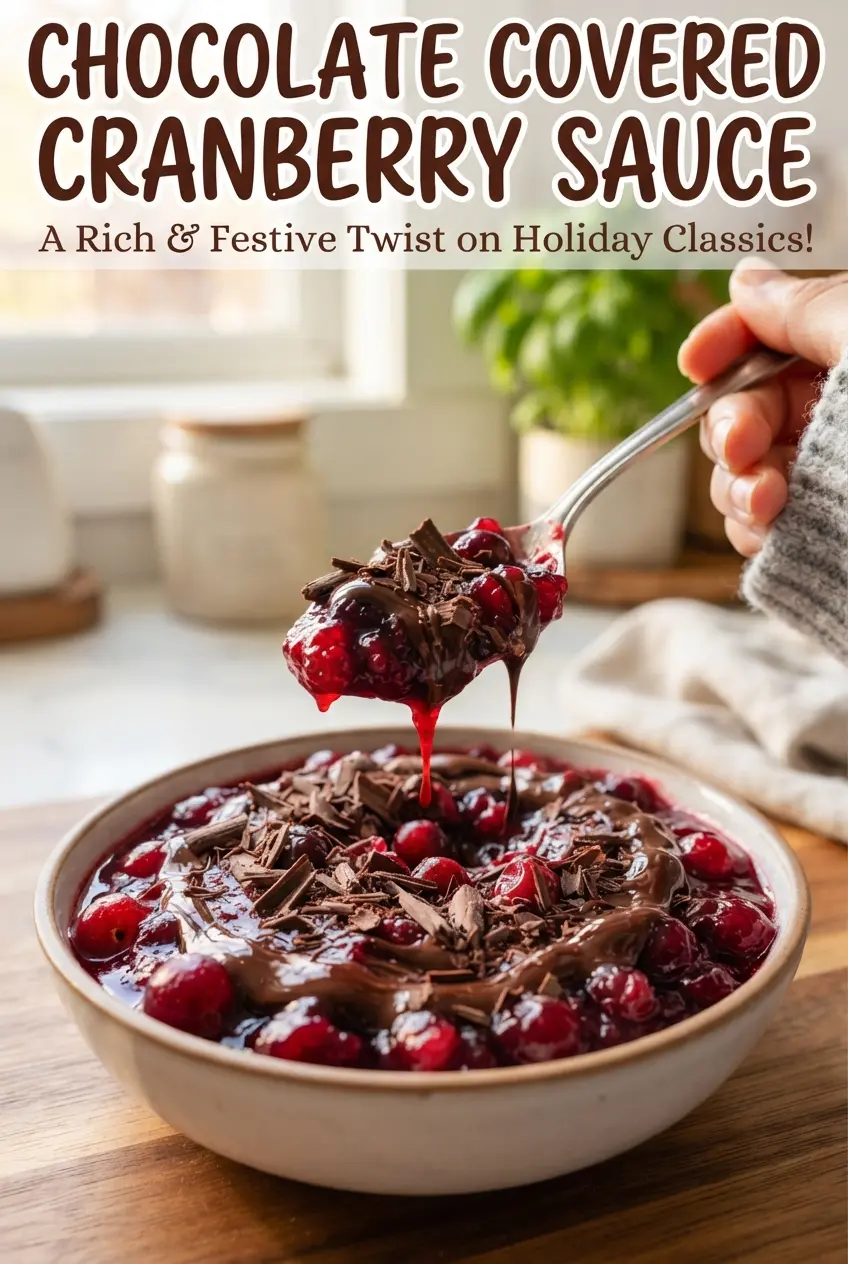
Chocolate covered cranberry sauce lands somewhere between bright, tart holiday sauce and a spoonable chocolate dessert topping, and that contrast is exactly why it gets attention at the table. The cranberries keep it lively instead of flat, while the dark chocolate rounds out the sharp edges and turns the whole bowl glossy and rich. It tastes familiar for the first bite, then a little unexpected in the best way.
The trick is to cook the cranberry base until the berries have burst and the liquid has reduced enough to coat a spoon before the chocolate goes in. If you add chocolate too early, it can seize or melt into a dull, grainy mess. Taking the pan off the heat before stirring it in keeps the sauce smooth and shiny, and the orange juice gives the cranberries a deeper, fruitier finish without making the sauce taste citrusy.
Below, I’ve included the little details that matter most: how to keep the sauce glossy, what kind of chocolate works best, and how to use leftovers over cheesecake, ice cream, or roast turkey.
The cranberries burst into a thick sauce and the chocolate melted in smooth without turning gritty. I served it with turkey first, then used the rest on cheesecake and it worked on both.
Love the glossy cranberry and dark chocolate contrast? Save this Chocolate Covered Cranberry Sauce for turkey night or dessert topping duty.
The Step That Keeps Cranberries Bright Instead of Muddy
Most cranberry sauces go wrong because they’re cooked until the fruit collapses into a deep jammy mass before the add-ins go in. That works for plain sauce, but here the chocolate needs enough acidity and texture left in the pot to stay distinct. If you over-reduce the cranberries, the finished sauce tastes heavy and loses the bright pop that makes this recipe worth making in the first place.
Watch for two cues: the berries should burst, and the liquid should thicken just enough that a spoon drawn through the pan leaves a trail for a second before filling back in. That’s the point where the sauce is ready for the chocolate. Pulling it off the heat at that moment keeps the chocolate glossy instead of grainy.
What Each Ingredient Is Actually Doing in This Recipe
- Primary ingredient (the star) — Quality matters most. Choose the best you can find.
- Cooking medium (oil, butter, or broth) — This carries flavors and prevents dryness.
- Seasonings (salt, pepper, spices, herbs) — Layer flavors so nothing overpowers. Build depth gradually.
- Aromatics (garlic, onion, herbs) — Cook with fat to bloom flavors. Become the foundation.
- Supporting ingredients — Complement the main ingredient without overpowering it.
- Sauce or liquid (if applicable) — Brings flavors together. Balance richness with acid.
- Acid (lemon, vinegar, wine, or other) — Brightens and prevents flat-tasting results.
- Final finish (garnish, glaze, or sauce) — Prevents one-dimensional taste and adds visual appeal.
What the Chocolate and Orange Juice Are Really Doing
- Fresh cranberries — They bring the sharp, clean tartness that keeps this from tasting like chocolate jam. Frozen cranberries work too; use them straight from the freezer and expect a slightly longer simmer.
- Dark chocolate, 60–70% — This is what gives the sauce its dark, plush finish. Milk chocolate turns the sauce sweeter and softer, but it also muddies the cranberry flavor and can make the whole dish taste flat.
- Orange juice — It deepens the fruit flavor and rounds out the tartness without making the sauce taste like orange dessert. Fresh-squeezed is best here, but bottled juice works fine as long as it’s 100% juice.
- Vanilla — Stir it in off the heat so its aroma stays soft and warm instead of cooking off. It doesn’t make the sauce taste like vanilla; it smooths the finish.
- Pinch of salt — This keeps the chocolate from reading bitter and helps the cranberry flavor stay defined. Even a small pinch matters in a sauce this simple.
Building the Sauce So It Stays Smooth and Glossy
Starting the Cranberry Base
Bring the sugar, water, and orange juice to a full boil before the cranberries go in. That quick boil dissolves the sugar completely and gives the berries an even start, so you don’t end up with a gritty bottom layer. Once the cranberries hit the pan, the simmer should be lively enough to pop the skins without scorching the sugars at the edges. Stir now and then, but don’t mash the berries unless you want a much smoother sauce.
Knowing When to Stop Cooking
After 10 to 12 minutes, the berries should have burst and the sauce should look thick and glossy, not watery. If it still looks thin, give it another minute or two; if it already looks jam-like and pastey, it’s gone too far. The biggest mistake here is waiting for it to look fully finished in the pan, because it thickens more as it cools. Stop when it’s a little looser than the texture you want to serve.
Melting in the Chocolate Off the Heat
Take the pan off the burner before adding the chopped chocolate, vanilla, and salt. Residual heat is enough to melt the chocolate into the sauce, and that gentler heat keeps the texture smooth and glossy. Stir until the last streaks disappear, then stop; overworking it can make the chocolate look dull. If a few tiny pieces remain, let the sauce sit for 30 seconds and stir again instead of putting it back over heat.
Cooling for the Right Final Texture
The sauce needs time to cool before it is truly finished. Hot cranberry sauce looks looser than it will later, so resist the urge to judge it straight from the pan. Once it reaches room temperature and chills, the pectin in the berries helps it set into that spoonable, rich texture. Finish with chocolate shavings only after it has cooled so the garnish stays distinct.
Three Ways to Put This Sauce to Work
Make it dairy-free without changing the texture
This recipe is already dairy-free as written, which is part of why it works so well for a mixed holiday table. Just use a dark chocolate with no milk solids listed on the label. The result stays glossy and rich without needing any extra fat or cream.
Use it as a dessert topping
Spoon it over cheesecake, vanilla ice cream, or pound cake while it’s chilled but still soft enough to pour. The tartness keeps a rich dessert from feeling cloying, and the chocolate makes the sauce taste more like a finished topping than a leftover side. If you want a cleaner drizzle, warm it for a few seconds and stir before serving.
Lean it sweeter for kids or a milder table
Cut the chocolate back to 2 ounces and add another tablespoon or two of sugar if you want the cranberry flavor to stay bright but less sharp. You’ll lose some of the bittersweet depth, but the sauce will read more like a fruit dessert topping and less like a bold side dish. That version also pairs nicely with plain yogurt the next morning.
Storage and Reheating
- Refrigerator: Store in an airtight container for up to 5 days. It thickens as it chills, so don’t judge the final texture while it’s still warm.
- Freezer: It freezes well for up to 2 months. Thaw overnight in the refrigerator and stir well after thawing, since the texture may loosen a little.
- Reheating: Warm it gently on the stovetop or in short bursts in the microwave. High heat can make the chocolate separate, so use low heat and stop as soon as it loosens.
Answers to the Questions Worth Asking
Chocolate Covered Cranberry Sauce
Ingredients
Equipment
Method
- Bring sugar, water, and orange juice to a boil in a saucepan over medium-high heat. Watch for active bubbling across the surface.
- Add fresh cranberries, then reduce to a simmer. Simmer for 10-12 minutes until the berries burst and the sauce thickens, stirring occasionally so it cooks evenly.
- Remove the saucepan from heat and stir in chopped dark chocolate, vanilla extract, and salt until fully melted and glossy. Scrape the bottom and corners to keep the texture smooth.
- Cool the cranberry sauce to room temperature, then transfer to a container and chill. Refrigerate until set, about 2 hours, for a firm, spoonable texture.
- Top with dark chocolate shavings just before serving. Serve with turkey, or spoon over cheesecake or ice cream.