Thanksgiving turkey cheese ball disappears fast because it hits that sweet spot between nostalgic and practical: creamy, salty, a little sweet, and sturdy enough to shape into a centerpiece without falling apart. The pecan coating gives each bite a little crunch, while the dried cranberries and green onions keep the filling from tasting flat or heavy.
What makes this version work is the balance in the base. Cream cheese gives you the structure, sharp cheddar brings bite, and the cranberries cut through all that richness with just enough chew. Chilling the mixture before rolling it in pecans matters more than people think; if you skip that rest, the ball softens under your hands and the turkey shape turns into a mess before it ever reaches the board.
Below, you’ll find the trick for getting the cheese ball firm enough to decorate cleanly, plus a few swaps that keep the same festive look when you need to adjust for allergies or what’s already in the fridge.
The pecans stayed crunchy and the cheese ball held its shape even after sitting out for our whole appetizer hour. The cranberries and sharp cheddar were such a good combo, and the kids loved helping add the candy eyes.
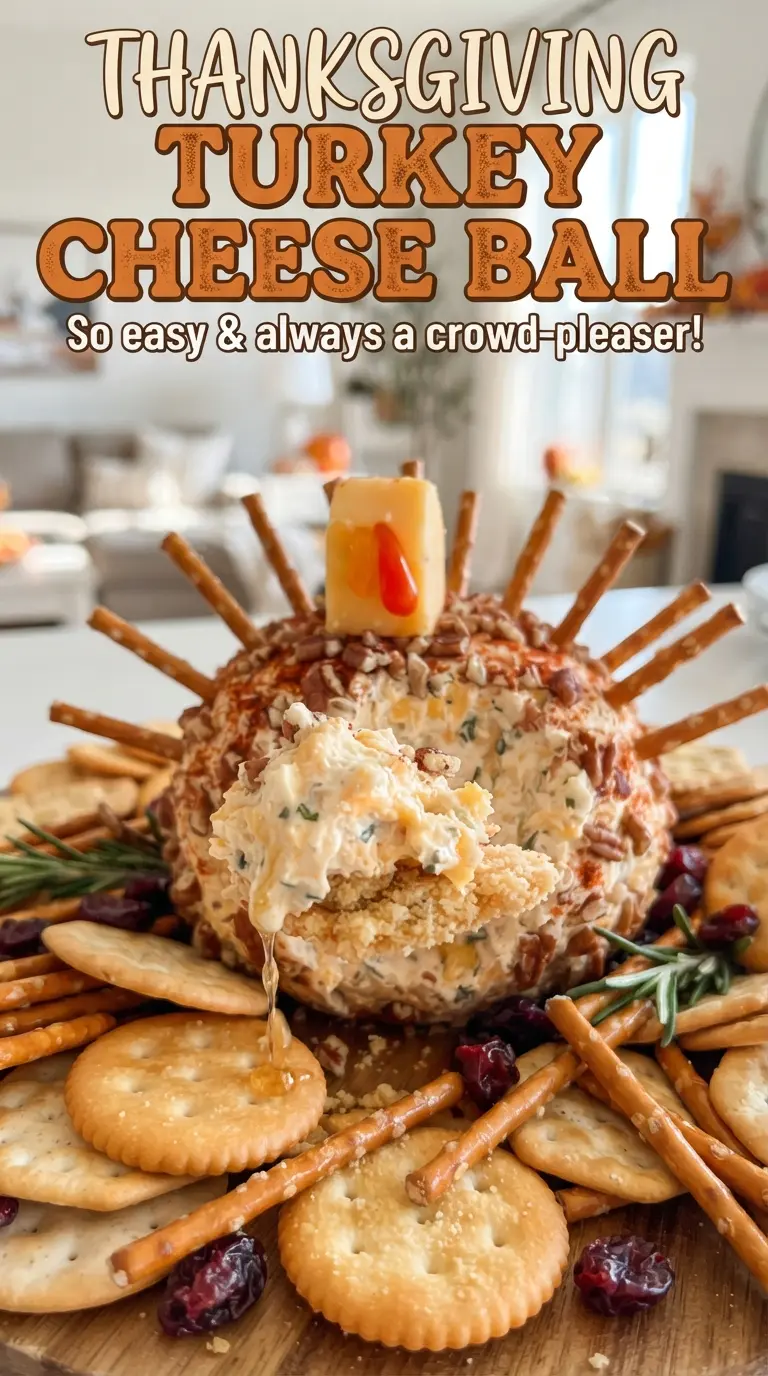
Save this Thanksgiving Turkey Cheese Ball for a festive appetizer that’s creamy inside, pecan-crusted outside, and easy to decorate with crackers and pretzels.
The Chill Time That Keeps the Turkey Shape Standing Up
The biggest failure with a cheese ball like this isn’t flavor, it’s temperature. If the mixture is even a little soft when you try to roll it, the pecans won’t stick evenly and the decorative pieces start sliding before the platter hits the table. Chilling the shaped ball for a full two hours gives the cream cheese time to firm back up so the coating goes on cleanly and the “turkey” keeps its shape.
That resting time also helps the cheddar and cranberries settle into the base instead of smearing around. You want a mixture that feels moldable but not sticky. If it’s still tacky after the first chill, give it another 20 to 30 minutes instead of forcing it along.
What the Pecans, Cheddar, and Cranberries Are Each Doing
- Cream cheese — This is the structure of the whole dish. Full-fat cream cheese gives the best shape and the smoothest bite; reduced-fat versions tend to loosen faster and can taste a little thin once the ball sits out. Let it soften fully before mixing so the cheddar blends in without lumps.
- Sharp cheddar — Sharp cheddar is what keeps the cheese ball from tasting bland. Mild cheddar works, but it loses some backbone, especially once you add the sweet cranberries. Freshly shredded cheese melts into the base better than bagged shreds, which are coated to keep from clumping.
- Dried cranberries — These bring little bursts of sweetness and chew that play against the saltier cheese. Chop them small so they distribute evenly; big pieces can make slicing and shaping awkward. If you only have whole dried cherries, chop those too and expect a darker, slightly tangier result.
- Pecans — The pecan coating gives the turkey its look and its texture. Chop them finely enough to cling well, but not so fine that they turn into dust. Walnuts can step in if needed, though they taste more bitter and don’t have quite the same buttery finish.
- Butter crackers and pretzel rods — These aren’t just garnish; they set the scene and give you a salty scoop for the cheese ball. Keep the pretzel rods dry until the last minute so they stay crisp, and use round crackers for the head and body details because they’re sturdier than thinner crisp crackers.
Building the Cheese Ball Before the Decorations Go On
Mixing the Base
Beat the cream cheese, cheddar, cranberries, green onions, and garlic powder until everything looks evenly distributed, but stop once the mixture comes together. Overmixing can make the filling lose a little of its body and turn glossy instead of thick. If the cranberries are left in clumps, break them up with your fingers as you stir.
Shaping and Chilling
Form the mixture into one compact ball, then wrap it tightly in plastic so it chills with a smooth exterior. The tighter you pack it now, the better it will hold once the pecans go on. If the surface cracks while shaping, pinch it back together before chilling; cracks only get worse after the coating is added.
Rolling in Pecans
Spread the chopped pecans on a plate and roll the cold cheese ball through them until the surface is fully covered. Press the nuts in gently with your hands to fill any bare spots, especially around the bottom where they like to slip off. If the pecans start sticking to your hands instead of the cheese ball, the mixture needs a little more time in the fridge.
Assembling the Turkey Face and Feathers
Set the coated cheese ball on a board and fan the pretzel rods and crackers behind it like tail feathers. Press a cracker onto the front for the head, then add the candy eyes, carrot tip, and red pepper wattle. Do the decorative pieces last so the cheese ball doesn’t get handled more than it has to; too much touching warms the surface and loosens the coating.
How to Adjust This for Different Crowds and Pantry Swaps
Make it ahead for a party spread
You can mix and shape the cheese ball up to 2 days ahead, then keep it wrapped in the fridge until you’re ready to coat it in pecans and decorate. For the cleanest presentation, add the tail feathers and face the day you serve it so the crackers and pretzels stay crisp.
Dairy-free version
Use a firm dairy-free cream cheese and a shredded dairy-free cheddar-style cheese that melts and chills well. The texture will be a little softer, so give it an extra 30 to 45 minutes in the fridge before rolling it in pecans. The flavor stays festive, though the tang will be milder than the original.
Nut-free coating
If pecans aren’t an option, roll the cheese ball in finely crushed pretzels or a mix of crushed pretzels and chopped parsley for a rustic look. You’ll lose the buttery crunch of pecans, but the saltier coating pairs nicely with the creamy filling and still gives you a defined surface for decoration.
Swap the add-ins for a sharper bite
Diced jalapeños, chopped chives, or a little crumbled bacon can replace the cranberries if you want a more savory cheese ball. Bacon adds smoke and salt, while jalapeños bring heat without changing the texture much. Just keep the pieces small so the ball still shapes cleanly.
Storage and Reheating
- Refrigerator: Store the undecorated or decorated cheese ball covered for up to 4 days. The pecans may soften slightly, but the flavor holds well.
- Freezer: Freeze the cheese ball base without the pecan coating or decorations for up to 1 month. Thaw overnight in the fridge, then roll in pecans and decorate after it firms back up.
- Reheating: No reheating needed. Serve it straight from the fridge after a short 10 to 15 minute rest so it softens just enough to spread without losing its shape.
Answers to the Questions Worth Asking

Thanksgiving Turkey Cheese Ball
Ingredients
Equipment
Method
- Beat the softened cream cheese, shredded sharp cheddar, chopped cranberries, finely sliced green onions, and garlic powder until completely combined and smooth-looking.
- Shape the mixture into a ball and wrap it tightly in plastic wrap.
- Chill the wrapped cheese ball in the refrigerator for 2 hours, until firm to the touch.
- Roll the chilled cheese ball in the finely chopped pecans until coated completely, then place it on a large board.
- Fan the pretzel rods and round butter crackers behind the ball as tail feathers, spacing them so the “turkey” shape shows.
- Press a cracker onto the front as the head, then add the candy eyes.
- Place a baby carrot tip as the beak and use the small piece of red bell pepper as the red pepper wattle under the eyes.
- Serve immediately with extra crackers.