Parmesan roasted Brussels sprouts earn their place on the table because the edges turn deeply caramelized while the bottoms pick up a salty, lacy crust of cheese. You get tender centers, crisp little leaves, and enough toasted Parmesan to make even the skeptical eaters reach for seconds. The lemon at the end wakes everything up without masking the roasted flavor.
The key move here is putting the sprouts cut-side down directly on the Parmesan after tossing them with oil, garlic, salt, and pepper. That contact is what builds the crust. If the sprouts are piled too close together, they steam instead of roast, so a roomy sheet pan matters more than people think. Freshly grated Parmesan melts and browns better than the shelf-stable kind, which can turn sandy instead of forming that crisp edge.
Below, I’ve included the small details that make the crust work, plus a few smart swaps and fixes for when your sprouts are bigger than expected or your cheese isn’t browning the way it should.
The Parmesan formed that thin crispy layer I was hoping for, and the sprouts stayed tender instead of getting mushy. I used a big sheet pan so they could roast instead of steam, and it made a huge difference.
Love that cheesy crust and lemon finish? Save these Parmesan roasted Brussels sprouts for an easy side with real crunch.
The Cut-Side-Down Trick That Gives You the Crust
The mistake most people make with roasted Brussels sprouts is treating the cheese like a topping instead of a cooking surface. Parmesan needs direct contact with the pan and the cut side of the sprouts to brown into a crust. If it lands loose on top of a crowded tray, it melts, clumps, and never gets that brittle edge.
The oven needs to be hot enough to drive off moisture fast. At 425°F, the sprouts soften while the exposed Parmesan toasts before the vegetables have time to turn soggy. The other part that matters is spacing: if the sprouts touch too much, the steam from one flattens the crust on the next.
- Cut side down — That flat surface is what caramelizes and locks onto the cheese.
- Roomy sheet pan — Give the sprouts space so they roast instead of sweat.
- Hot oven — Lower heat softens the sprouts without creating enough browning for the cheese.
- Fresh lemon at the end — The acid cuts the salt and keeps the dish from tasting heavy.
What Each Ingredient Is Actually Doing Here
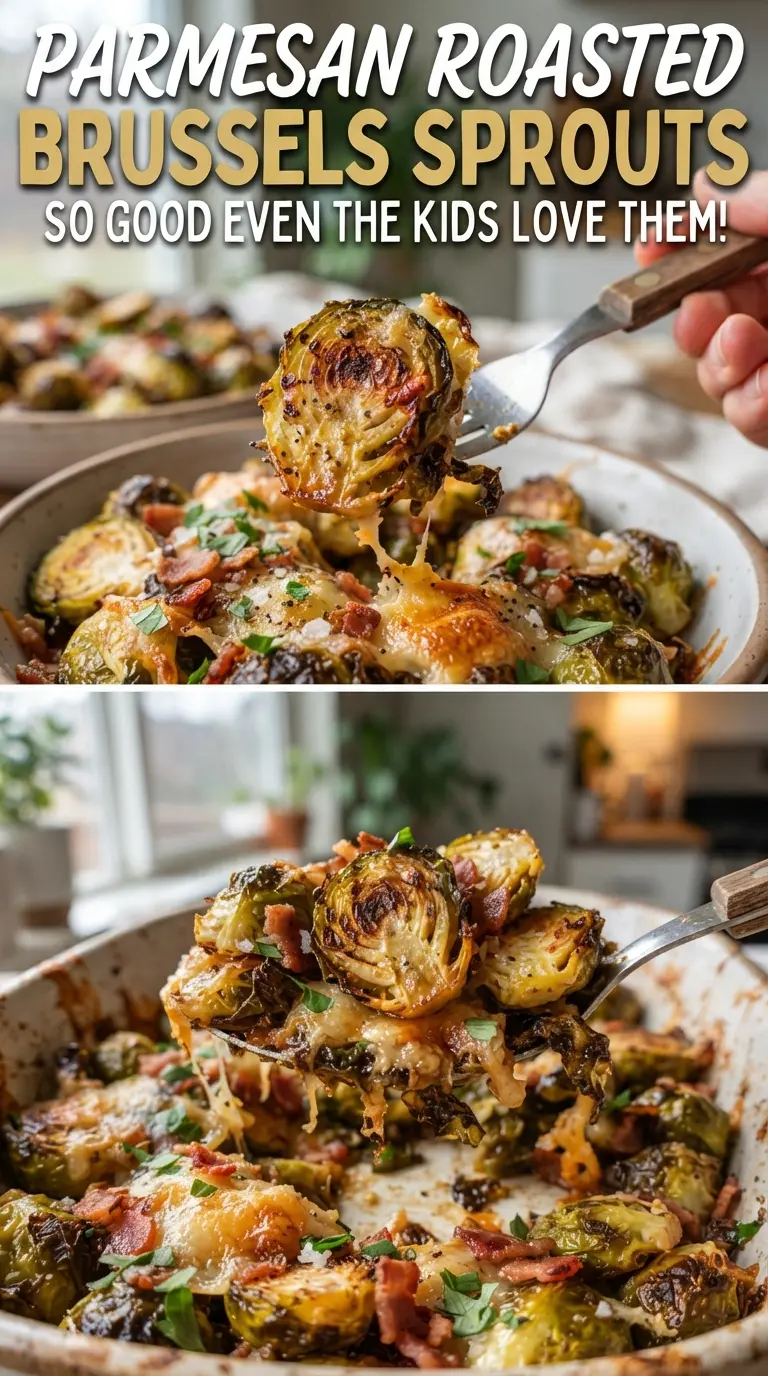
- Brussels sprouts — Halving them gives you more cut surface, which is where the browning happens. Smaller sprouts roast more evenly; if yours are large, trim off any loose outer leaves and keep the halves close in size.
- Olive oil — It coats the sprouts so they roast instead of dry out, and it helps the Parmesan cling. Don’t skimp here or the cheese will stick in patches instead of forming an even layer.
- Garlic — Minced garlic cooks right along with the sprouts and perfumes the oil. If it’s left in big pieces, it can burn before the vegetables are done, so keep it fine.
- Parmesan — This is the crust. Freshly grated Parmesan melts into a thinner, crisper layer than pre-shredded cheese, which often contains anti-caking agents that block smooth browning.
- Lemon juice — Added after roasting, it brightens the whole pan. If you add it before baking, the extra moisture works against the crisp edges you’re trying to build.
Roasting the Sprouts Until the Cheese Turns Lace-Crisp
Coating the Sprouts Evenly
Toss the halved Brussels sprouts with olive oil, garlic, salt, and pepper until every cut side looks lightly glossed. The coating should be thin, not greasy, or the cheese will slide instead of sticking. If the garlic starts clumping, break it up with your hands or the back of a spoon so it spreads through the pan evenly.
Building the Parmesan Layer
Sprinkle the Parmesan evenly over the parchment-lined sheet pan before the sprouts go on. Then place the sprouts cut-side down on top of the cheese and press them gently so the flat surface makes contact. That contact is what creates the crisp, golden underside, and if you skip it, you’ll lose the crust.
Roasting Until Tender and Deeply Browned
Roast for 20 to 25 minutes, but start checking near the end. The sprouts should be tender when pierced and the cheese should look golden at the edges with some darker toasted spots. If the cheese is browning too fast before the centers are tender, drop the pan to a lower rack for the last few minutes instead of pulling it early.
Finishing With Lemon
Squeeze the lemon juice over the hot sprouts right before serving. The steam from the pan helps the juice spread without washing away the crust. Serve them immediately while the Parmesan is still crisp, because that texture softens as they sit.
How to Adapt These Brussels Sprouts Without Losing the Crust
Make Them Dairy-Free
Skip the Parmesan and roast the sprouts with olive oil, garlic, salt, and pepper only, then finish with lemon. You won’t get the same crackly crust, but you’ll still get good caramelization and a bright, savory edge. A sprinkle of nutritional yeast at the end adds some cheesy depth without changing the roasting setup.
Use Pecorino Instead of Parmesan
Pecorino Romano gives you a sharper, saltier crust and browns just as well. Because it’s saltier than Parmesan, cut the added salt back a little so the finished dish doesn’t tip too far in that direction.
Add Bacon for a Heartier Side
Scatter cooked, crumbled bacon over the sprouts after roasting so the bacon stays crisp. Adding it before baking can make the fat pool and soften the cheese layer, which works against the texture this recipe is known for.
Storage and Reheating
- Refrigerator: Store leftovers in an airtight container for up to 4 days. The crust softens in the fridge, but the flavor holds up well.
- Freezer: Not a great freezer side. The sprouts turn soft and the Parmesan loses its crisp texture after thawing.
- Reheating: Use a 400°F oven or air fryer until the sprouts are hot and the edges crisp again. The microwave will warm them, but it also turns the cheese leathery and the sprouts watery.
Answers to the Questions Worth Asking
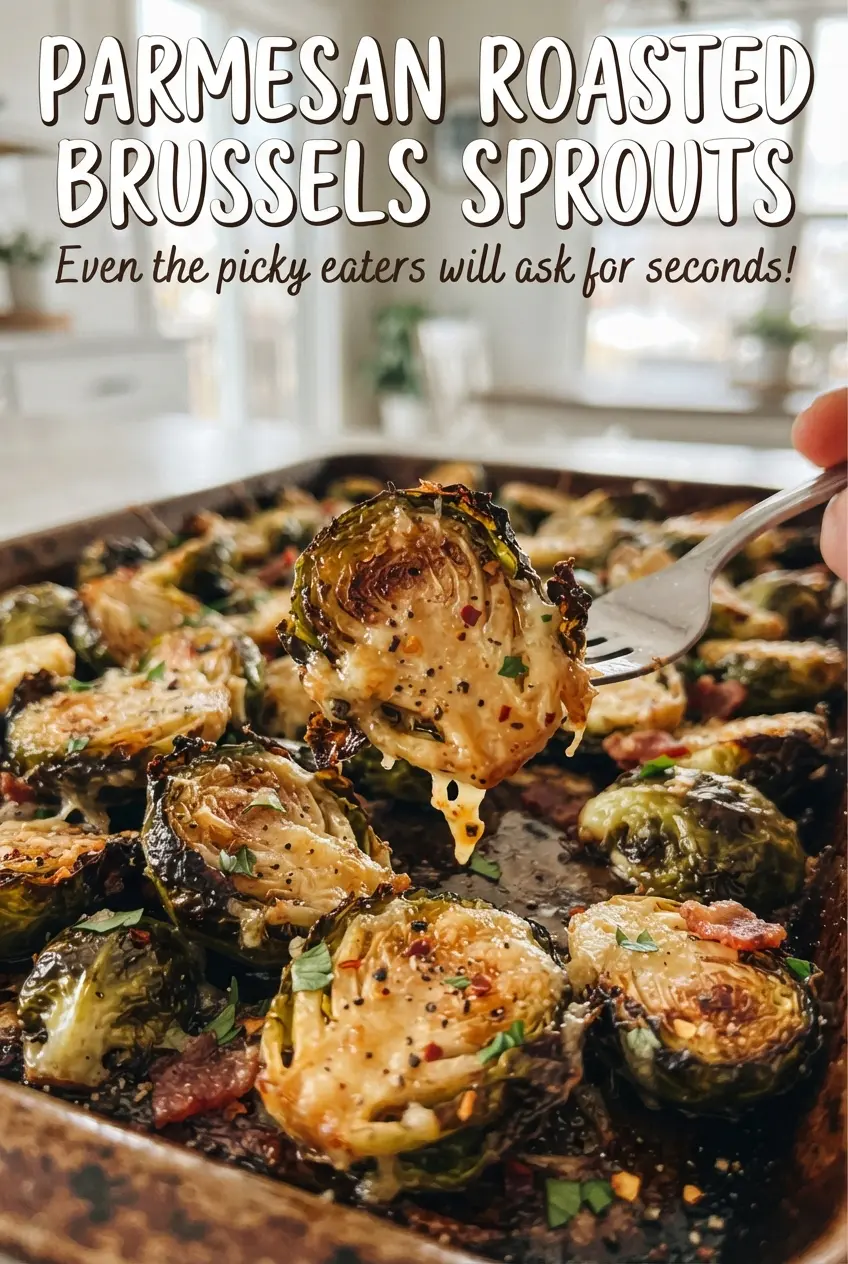
Parmesan Roasted Brussels Sprouts
Ingredients
Equipment
Method
- Preheat oven to 425F and line a sheet pan with parchment, so it’s ready for roasting.
- Toss Brussels sprouts with olive oil, garlic, salt, and black pepper until evenly coated.
- Sprinkle grated Parmesan evenly over the pan, then place Brussels sprouts cut-side down on top of the cheese (watch for an even layer under the flat sides).
- Roast for 20-25 minutes at 425F until the sprouts are tender and the Parmesan forms a golden crust, with browned edges visible.
- Squeeze lemon juice over the top and serve hot (you should see a fresh, bright sheen right after).