Caramelized butternut squash and crisp-edged Brussels sprouts make a side dish that earns its place next to almost anything on the table. The squash turns soft and sweet in the center, the sprouts pick up deep browned edges, and the cranberries and pecans bring the kind of contrast that keeps each bite interesting instead of heavy. The maple balsamic ties it together without turning the vegetables soggy or overly sweet.
The trick is giving the vegetables enough space and enough heat. A crowded pan traps steam, which leaves you with pale squash and Brussels sprouts that taste cooked instead of roasted. Cutting the squash into even cubes and halving the sprouts the same way helps everything finish at the same time, and tossing the glaze in after roasting keeps the pecans crisp and the cranberries plump.
Below, you’ll find the timing that keeps the vegetables browned but not mushy, plus a few smart swaps if you need to work with what’s already in your pantry.
The squash got caramelized at the edges and the Brussels sprouts stayed crisp-tender instead of soft. I also loved that the pecans stayed crunchy after tossing everything with the maple balsamic.
Bookmark these maple roasted butternut squash and Brussels sprouts for an easy side with caramelized edges, tart cranberries, and crunchy pecans.
The Reason the Vegetables Brown Instead of Steam
Roasting works here because the vegetables have room to lose moisture fast. Butternut squash is dense and naturally sweet, while Brussels sprouts need direct heat on the cut side to turn nutty instead of cabbagey. If the pan is crowded, the moisture coming off the vegetables hangs around long enough to soften everything before browning can happen.
The other thing that matters is when the maple balsamic goes on. Add it after roasting, not before. Maple syrup burns fast at 425°F, and balsamic vinegar can turn harsh if it cooks too long. Tossing it in at the end gives you shine, balance, and just enough glaze to coat the vegetables without wetting down the crisp edges.
What Each Ingredient Is Doing in the Pan
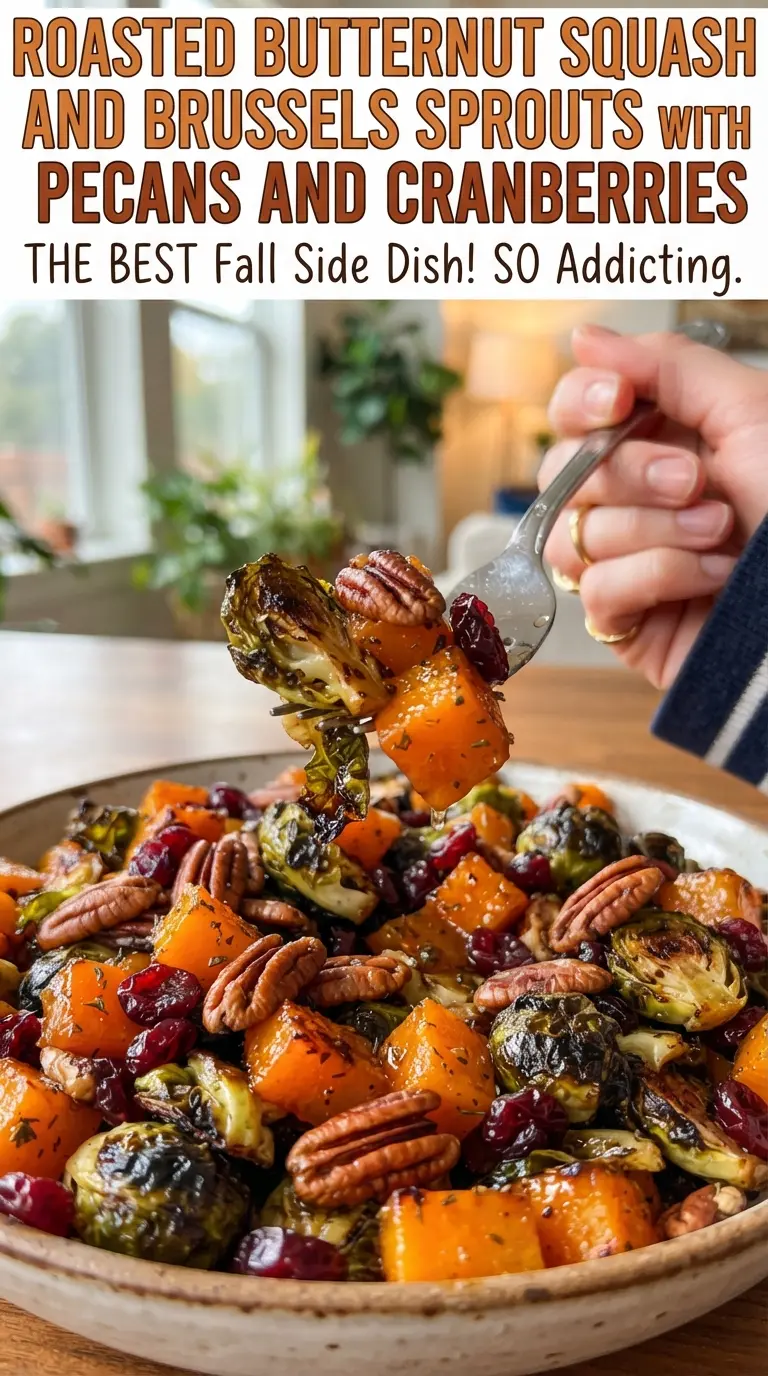
- Butternut squash — This brings the sweet, creamy contrast that makes the dish feel substantial. Cut it into even cubes so the edges brown before the centers collapse. If you buy pre-cut squash, check the pieces for size and trim any giant chunks down to match the rest.
- Brussels sprouts — Halving them exposes the cut side, which is where the best caramelization happens. Smaller sprouts can stay in halves; larger ones should be quartered so they cook at the same pace as the squash. Frozen Brussels sprouts won’t give you the same roasted edges because they release too much water.
- Maple syrup and balsamic vinegar — This is the finishing glaze, not the roasting sauce. Maple gives the dish gloss and sweetness, while balsamic adds the sharp note that keeps it from tasting flat. Honey can stand in for maple if needed, but it lands a little heavier and less woodsy.
- Pecans and cranberries — The pecans add crunch and a toasted, buttery note; the cranberries bring tart chew. Toast the pecans if they aren’t already toasted, because raw nuts taste dull next to roasted vegetables. Add both after the oven so they stay distinct instead of softening in the glaze.
Getting the Color Right Before You Toss Everything Together
Prep the vegetables for even roasting
Cut the squash into cubes that are close to the same size, then halve the Brussels sprouts from stem to tip. Toss them with olive oil, salt, and pepper until every surface looks lightly coated, not slick. Too much oil makes the vegetables greasy; too little leaves dry spots that brown unevenly. Spread them across the pan in a single layer with a little breathing room between pieces.
Roast until the edges turn deep gold
Put the sheet pan in a hot oven and leave it alone long enough for the vegetables to take on color. After about halfway through, toss them so the other sides can touch the pan and pick up those browned spots. The squash should be tender enough to pierce with a fork, and the Brussels sprouts should have crisped, blistered edges with soft centers. If they still look pale, keep roasting for a few more minutes instead of pulling them early.
Finish with the glaze, nuts, and cranberries
Whisk the maple syrup and balsamic together, then toss it with the hot vegetables just before serving. The heat loosens the glaze and helps it coat without soaking in. Add the cranberries and pecans last so the cranberries stay chewy and the pecans keep their snap. Serve it warm, while the contrast between crisp, tender, sweet, and tart is still at its best.
How to Adapt This Side Dish Without Losing the Good Parts
Make it dairy-free and naturally vegetarian
This dish already fits both dairy-free and vegetarian eating as written, which is part of why it’s such an easy side to bring to a mixed table. If you want a richer finish, add a small drizzle of good olive oil after roasting instead of butter. That keeps the glaze bright and the vegetables clean-tasting.
Swap the pecans for walnuts or pumpkin seeds
Walnuts bring a slightly more bitter, earthy note, while pumpkin seeds add extra crunch without the buttery sweetness of pecans. Toast either one first so the flavor holds up next to the maple balsamic. If you skip the nuts entirely, the dish still works, but you lose the crunch that makes the texture feel finished.
Use dried cherries instead of cranberries
Dried cherries taste a little rounder and less sharp than cranberries, so the side dish will read sweeter overall. They work well if you want a softer tart note. Keep the quantity the same and add them at the end so they stay chewy.
How to make it nut-free
Leave out the pecans and add sunflower seeds or roasted pepitas for crunch. You’ll lose a little of the rich, buttery flavor, but the dish still keeps its texture contrast. If you’re serving it for a holiday meal, this is the easiest way to make it more inclusive without changing the base recipe.
Storage and Reheating
- Refrigerator: Store leftovers in an airtight container for up to 4 days. The vegetables soften a bit as they sit, but the flavor stays good.
- Freezer: It freezes, but the texture changes. The squash gets softer after thawing and the Brussels sprouts lose some of their edge, so I only freeze it if I’m using the leftovers in a grain bowl or hash later.
- Reheating: Warm it on a sheet pan in a 375°F oven until heated through. The oven brings back more texture than the microwave, which tends to make the sprouts limp and the pecans chewy instead of crisp.
Answers to the Questions Worth Asking
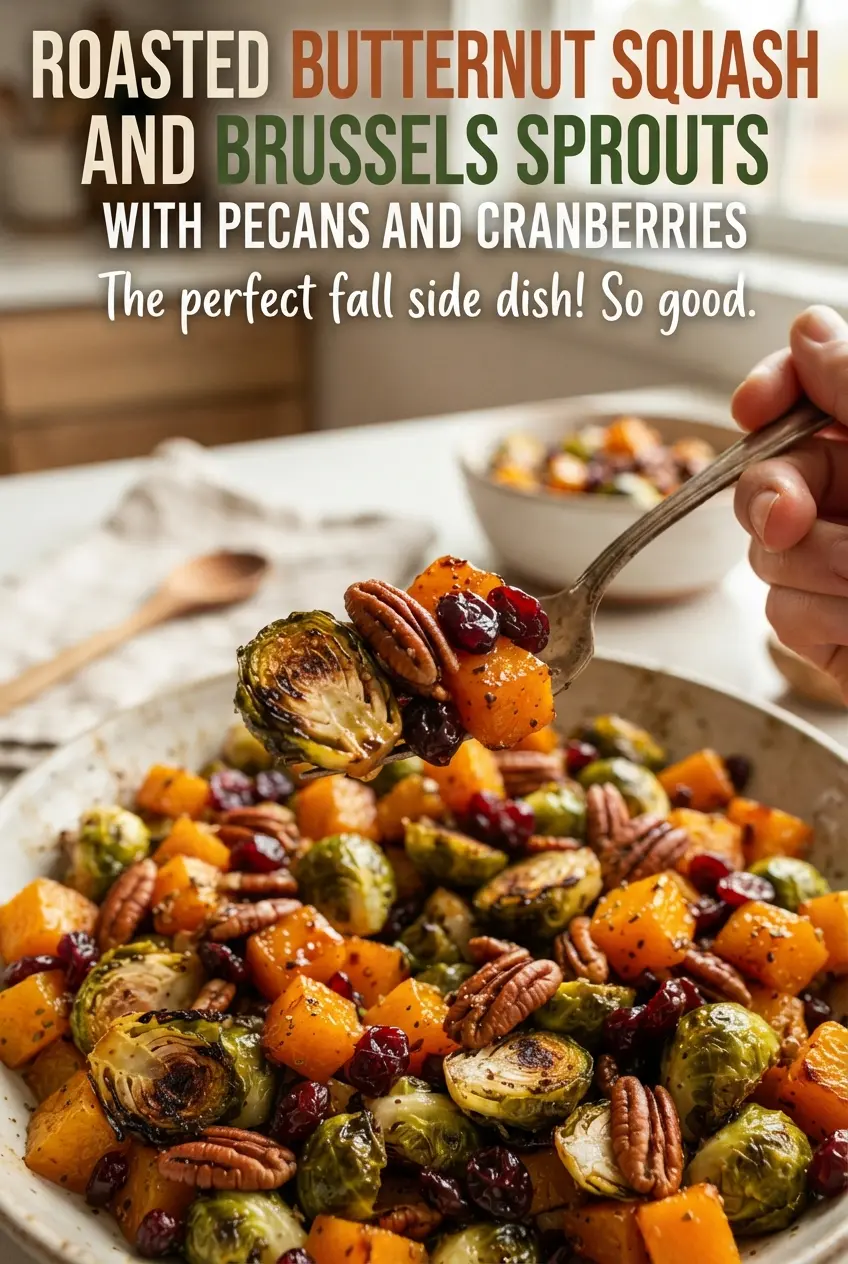
Roasted Butternut Squash and Brussels Sprouts with Pecans and Cranberries
Ingredients
Equipment
Method
- Preheat the oven to 425F. Let the oven fully come to temperature for best caramelization.
- Toss butternut squash and Brussels sprouts with olive oil, salt, and black pepper on a large sheet pan. Spread them into an even layer so the cut sides can brown.
- Roast for 25-30 minutes, tossing halfway, until tender and caramelized. Look for deep golden edges on the Brussels sprouts and browned corners on the squash.
- Whisk maple syrup and balsamic vinegar in a bowl until combined. The mixture should look glossy and evenly dark.
- Toss the roasted vegetables with the maple balsamic, dried cranberries, and toasted pecans, then serve warm. The pecans should stay crunchy and the cranberries should look lightly coated.